To save content items to your account,
please confirm that you agree to abide by our usage policies.
If this is the first time you use this feature, you will be asked to authorise Cambridge Core to connect with your account.
Find out more about saving content to .
To save content items to your Kindle, first ensure no-reply@cambridge.org
is added to your Approved Personal Document E-mail List under your Personal Document Settings
on the Manage Your Content and Devices page of your Amazon account. Then enter the ‘name’ part
of your Kindle email address below.
Find out more about saving to your Kindle.
Note you can select to save to either the @free.kindle.com or @kindle.com variations.
‘@free.kindle.com’ emails are free but can only be saved to your device when it is connected to wi-fi.
‘@kindle.com’ emails can be delivered even when you are not connected to wi-fi, but note that service fees apply.
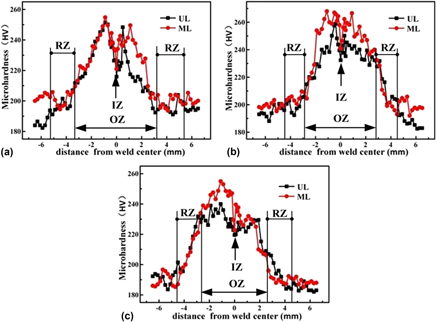
The flash allowance and upset allowance have significant effects on characteristics of flash butt welded RS590CL steel joints. The overheated zone (OZ) widths increased with flash allowance (δf) increase, and decreased as the upset allowance (δu) increased. The coarsened upper bainite was formed in interface zone (IZ) and OZ as δf increased. With increasing δu, the large plastic deformation occurred and the interface formability improved. The hardness in IZ was a little lower than that in its vicinity OZ due to some ferrite existence and dislocation amount decreased in IZ. The tensile strengths of flash butt welding (FBW) joints were in good match with base metal and the ductilities were lower. The maximum bending crack length was 0.68 mm which indicated that the bending properties of FBW joints were good. Under this experiment, relatively large δf (10–12 mm) and δu (5.5–6.5 mm) were recommended for the benefit of high quality FBW joints.
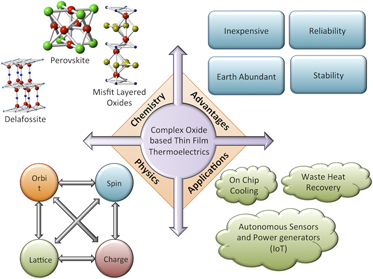
Over the years, the search for high performance thermoelectric materials has been dictated by the “phonon glass and electron crystal (PGEC)” paradigm, which suggests that low band gap semiconductors with high atomic number elements and high carrier mobility are the ideal materials to achieve high thermoelectric figure of merit. Complex oxides provide alternative mechanisms such as large density of states and strong electron correlation for high thermoelectric efficiency, albeit having low carrier mobility. Due to vast structural and chemical flexibility, they provide a fertile playground to design high efficiency thermoelectric materials. Further, developments in oxide thin film growth methods have enabled synthesis of high quality, atomically precise low dimensional structures such as heterostructures and superlattices. These materials and structures act as excellent model systems to explore nanoscale thermal and thermoelectric transport, which will not only expand the frontier of our knowledge, but also continue to enable cutting edge applications.
Besides the high spatial resolution achieved in aberration-corrected scanning transmission microscopy, beam-induced dynamic effects have to be considered for quantitative chemical characterization on the level of single atomic columns. The present study investigates the influence of imaging conditions in an aberration-corrected scanning transmission electron microscope on the beam-induced atomic migration at a complex Ag-segregated, nanofaceted Cu grain boundary. Three distinct imaging conditions including static single image and serial image acquisition have been utilized. Chemical information on the Ag column occupation of single atomic columns at the grain boundary was extracted by the evolution of peak intensity ratios and compared to idealized scanning transmission electron microscopy image simulations. The atomic column occupation is underestimated when using conventional single frame acquisition due to an averaging of Ag atomic migration events during acquisition. Possible migration paths for the beam-induced atomic motion at a complex Cu grain boundary are presented.
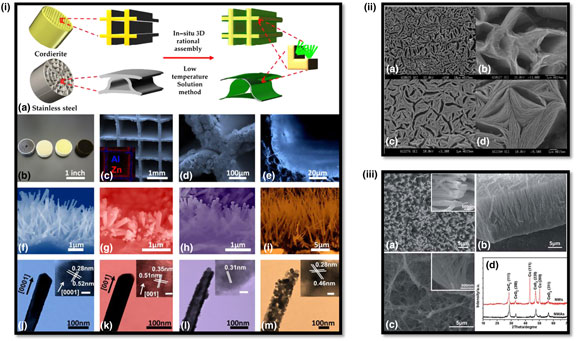
Nanostructured cerium oxide (CeO2) with outstanding physical and chemical properties has attracted extensive interests over the past few decades in environment and energy-related applications. With controllable synthesis of nanostructured CeO2, much more features were technologically brought out from defect chemistry to structure-derived effects. This review highlights recent progress on the synthesis and characterization of nanostructured ceria-based materials as well as the traditional and new applications. Specifically, several typical applications based on the desired ceria nanostructures are focused to showcase the importance of nanostructure-derived effects. Moreover, some challenges and perspectives on the nanostructured ceria are presented, such as defects controlling and retainment, scale-up fabrication, and monolithic devices. Hopefully, this review can provide an improved understanding of nanostructured CeO2 and offer new opportunities to promote the further research and applications in the future.
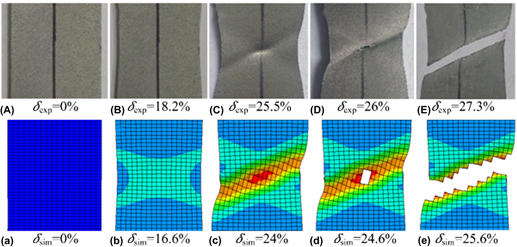
The instability and fracture process during uniaxial tension was observed from load-stop tensile tests and finite element simulation. The results indicate that at the end of instability, the direction of the maximum principle stress near the necking groove turns to being perpendicular to the groove. This tensile stress is critical to the growth of fracture. The fracture initiates from the internal of the sheet at the center of volume where the two local necking grooves intersect. Material here is under triaxial tensile stress state and the principle stresses in all three directions are the largest. Once the initial crack occurs, it propagates along the zero-strain-rate necking groove. Moreover, the final fracture angle between the fracture plane and the tensile axis is always larger than theoretical value. An important reason is the ignorance of the triaxial stress state evolution during instability in theoretical calculation.
We evaluate the potential of inserting metallic, metal-dielectric core-shell, and fully dielectric nanoparticles in ultrathin chalcopyrite solar cells to enhance absorption which experiences a significant drop for absorber thicknesses below 500 nm. For different integration positions at the front or at the rear of the solar cell structure theoretical expectations and potential benefits originating from light scattering, near-field enhancement and coupling into waveguide modes by the nanoparticles are presented. These benefits are always balanced against experimental challenges arising for particular geometries due to the very specific fabrication processes of chalcopyrite solar cells. In particular high absorber deposition temperatures as well as contact layers that are relatively thick compared to other devices need to be considered. Based on this, we will need to go beyond some geometries that have proven beneficial for other types of solar cells and identify the most promising configurations for chalcopyrite-based devices.
Novel nanogranular flakes in which magnetic metallic nanoparticles are highly dispersed in an oxide matrix were fabricated for use as a constituent material in bulk nanogranular composites. A simple milling process using core/shell nanoparticles of magnetic metal/oxide was used to produce nanogranular flakes composed of magnetic metallic nanoparticles in an oxide matrix. The high dispersion of the metallic nanoparticles in the oxide matrix increased the electrical resistivity of the flakes. In addition, neighboring nanoparticles in the flakes interacted with each other via magnetic exchange coupling, and the flakes exhibited good soft magnetism with low coercivity when they contained a high concentration of highly dispersed magnetic metallic nanoparticles. The coercivity of the flakes could be decreased significantly by annealing and by modifying the surface of the flakes. A minimum coercivity of 8.7 Oe was obtained using flakes with a composition of Fe0.5Ni0.5–4 wt% Si.
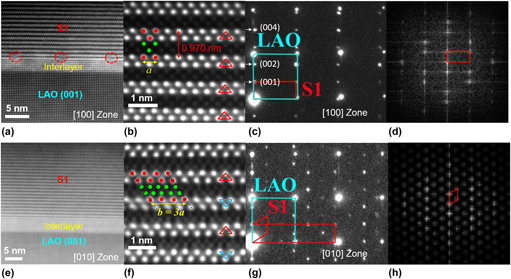
Growth of unexpected phases from a composite target of BiFeO3:BiMnO3 and/or BiFeO3:BiCrO3 has been explored using pulsed laser deposition. The Bi2FeMnO6 tetragonal phase can be grown directly on SrTiO3 (STO) substrate, while two phases (S1 and S2) were found to grow on LaAlO3 (LAO) substrates with narrow growth windows. However, introducing a thin CeO2 buffer layer effectively broadens the growth window for the pure S1 phase, regardless of the substrate. Moreover, we discovered two new phases (X1 and X2) when growing on STO substrates using a BiFeO3:BiCrO3 target. Pure X2 phase can be obtained on CeO2-buffered STO and LAO substrates. This work demonstrates that some unexpected phases can be stabilized in a thin film form by using composite perovskite BiRO3 (R = Cr, Mn, Fe, Co, Ni) targets. Furthermore, it also indicates that CeO2 can serve as a general template for the growth of bismuth compounds with potential room-temperature multiferroicity.
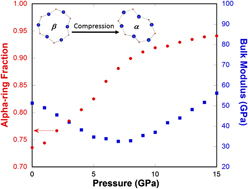
By using a combination of experiments and molecular dynamics simulations, our studies show that the elastic response of silica glass to initial compression gradually changes from abnormal to normal with increasing quench pressure, helium content or alkali modifier added in the glass matrix. We uncovered the structural origin of the elastic anomaly in silica glass as localized structural transitions between motifs of different stiffness that are similar to those found in its crystalline counterparts. Pressure-quenching, helium-stuffing, or alkali-modifying plays a different role in changing the structure of silica glass, but all of the resulting structures reduce the propensity for such local structural transitions to take place, thus the degree of elastic anomaly. Our studies demonstrate that by processing in ways that gradually eliminates the elastic anomaly, the degree of silica glass to undergo irreversible densification can be eventually eradicated. This provides a solid foundation for the bottom-up design of new glasses with tunable structure and properties.
Petroleum coke (PC) is a low-cost and potential carbon source for electrochemical energy storage. To expand the utilization of PC in supercapacitor, PC-based activated carbons (PCACs) with heteroatoms-doped were prepared from PC by KOH chemical activation. The as-prepared carbon exhibited a high surface area (2326.4 m2/g) and hierarchical micro-mesoporous structure, resulting in a high specific capacitance (421 F/g at 1 A/g) and excellent rate performance in KOH electrolyte (217 F/g at 50 A/g). Meanwhile, to improve the high-rate capacitive performance of PCACs in H2SO4 electrolyte, functionalized activated carbon (HQ/PCAC-4) was prepared by physically adsorbing the hydroquinone (HQ) on PCACs. The HQ/PCAC-4 showed an unprecedented capacitance value of 300.2 F/g even at an ultrahigh current density of 50 A/g. In addition, the energy density of HQ/PCAC-4 in H2SO4 electrolyte reached 19.5 W h/kg. The high energy density and excellent rate performance ensured their prosperous application in high-power energy storage system.
Cu–FeS composites without lead were prepared by power metallurgy process. The friction and wear properties were examined on a “block-on-ring” testing machine under dry sliding conditions with and without oil immersion. Results showed that both the frictional coefficient and the wear volumes decreased with increased FeS content in the composite under dry sliding conditions. In the condition of dry friction without oil immersion, the FeS solid lubricating film formed and played a role of antifriction and adhesion resistance. Under the dry friction condition with oil immersion, the lubricant oil stored in the porous FeS layer precipitated to the surface to form the oil film, which could work together to achieve a liquid–solid synergistic lubrication with the FeS transfer film. The lubrication performance of the collaborative lubrication reaction is better than that of the solid transfer film. With the increase of FeS, the collaborative lubrication became more obvious.
The fracture toughness of NiAl single crystals is evaluated with a new method based on the J-integral concept. The new technique allows the measurement of continuous crack resistance curves at the microscale by continuously recording the stiffness of the microcantilevers with a nanoindenter. The experimental procedure allows the determination of the fracture toughness directly at the onset of stable crack growth. Experiments were performed on notched microcantilevers which were prepared by focused ion beam milling from NiAl single crystals. Stoichiometric NiAl crystals and NiAl crystals containing 0.14 wt% Fe were investigated in the so-called “hard” orientation. The fracture toughness was evaluated to be 6.4 ± 0.5 MPa m1/2 for the stoichiometric sample and 7.1 ± 0.5 MPa m1/2 for the iron containing sample, indicating that the addition of iron enhances the ductility. This effect is intensified with ongoing crack propagation where the Fe-containing sample exhibits a stronger crack resistance behavior than the stoichiometric NiAl single crystal. These findings are in good agreement with macroscopic fracture toughness measurements, and validate the new micromechanical testing approach.
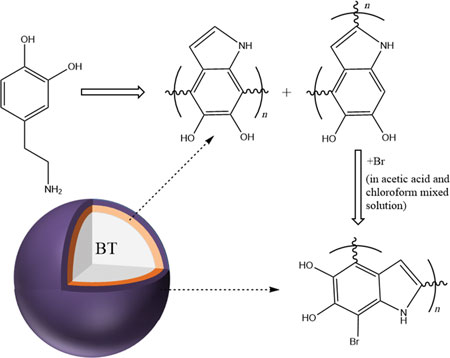
Dual-coated barium titanate (BT) particles were prepared using dopamine (DP) in conjunction with bromine (Br) in order to enhance the dielectric constant of silicone rubber (SR) composites containing evenly distributed BT particles. The results showed that both DP and Br were deposited on the BT particles. The dielectric constant of the SR/BT composite was significantly increased from 3.6 to 4.7 at 1 kHz with the addition of BT modified with dopamine (DP–BT). Moreover, the dielectric constant further rose to 4.9 at 1 kHz when the DP–BT particle was grafted with bromine (Br–DP–BT).
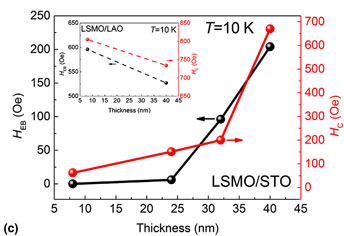
Oxygen vacancies have a significant impact on the structure and electrical/magnetic properties of doped manganites. Magnetic La0.5Sr0.5MnO3 (LSMO) films were epitaxial grown on (001) SrTiO3 substrate by pulsed laser deposition. Structural studies from the x-ray diffraction suggest that the as-grown films are fully constrained by the substrate with the thickness ranging from 8 to 40 nm. By examining the valence of Mn by x-ray photoelectron spectroscopy and x-ray absorption spectroscopy, we find the ratio of Mn4+/Mn3+ increases along with the increased film thickness, which implies that the oxygen vacancies concentration induced by tensile strain correspondingly decreases. Therefore, the magnetization of LSMO is depressed with the exchange bias effect arising, and the electrical conductivity decreases significantly. This work builds a bridge between modulation of electric/magnetic properties and epitaxial strain in LSMO films.
In-doped tin (II) sulfide nanoparticles (NPs), synthesized by ultrasonication method and their optical and photovoltaic properties, have been investigated. FESEM images show NPs which have a flower-like morphology that sizes are <100 nm. Optical energy band gap estimation of tin sulfide NPs with the Tauc plot method had shown an increase with minimum of indium concentration and then decreases with higher concentration of indium. Photovoltaic experiment shows the highly photovoltaic efficiency of tin sulfide NPs with indium doping, can be obtained.
We demonstrate formation of allylamine (AAm) and acrylic acid (AAc)-functionalized colloidal silicon nanocrystals (Si NCs) exhibiting near-infrared (NIR) luminescence and immobilization of the NCs on substrates via covalent bond. The surface functionalization is confirmed by IR absorption spectroscopy and specific binding property of functionalized NCs. Atomic force microscope observations reveal that AAm- and AAc-functionalized Si NCs are chemically immobilized on self-assembled monolayers via covalent bonds. The functionalized Si NCs exhibit photoluminescence in a NIR region (1.5–1.6 eV), which is not significantly affected by the functionalization.
In this paper, a novel afterglow phosphor based on praseodymium ion doped Sr2Ta2O7 was synthesized successfully by solid-state reaction in the ambient atmosphere. The photoluminescence, afterglow, afterglow decay, and thermoluminescence (TL) properties were investigated in detail. The dependence of photoluminescence properties and long afterglow (LAG) performances on Pr3+ contents were investigated systematically. The optimal concentrations of Pr3+ ions for the best photoluminescence and LAG properties were experimentally to be 2 mol% and 0.5 mol%, respectively. Pr3+ exhibits prominent red emission in most reports, which derives from the 1D2 → 3H4 transition. However, the predominant blue emission locating at ∼489 and ∼507 nm coming from 3P0,1 → 3H4 transitions were observed in praseodymium ion-doped Sr2Ta2O7. Based on TL measurements, the trapping and de-trapping processes of charge carriers between shallower and deep traps were illustrated. A model was proposed on the basis of experimental results to explain the mechanisms of photoluminescence and LAG.
Materials for scintillator radiation detectors need to fulfill a diverse set of requirements such as radiation hardness and highly specific response to incoming radiation, rendering them a target of current materials design efforts. Even though they are amenable to cutting-edge theoretical spectroscopy techniques, surprisingly many fundamental properties of scintillator materials are still unknown or not well explored. In this work, we use first-principles approaches to thoroughly study the optical properties of four scintillator materials: NaI, LaBr3, BaI2, and SrI2. By solving the Bethe–Salpeter equation for the optical polarization function we study the influence of excitonic effects on dielectric and electron-energy loss functions. This work sheds light into fundamental optical properties of these four scintillator materials and lays the ground-work for future work that is geared toward accurate modeling and computational materials design of advanced radiation detectors with unprecedented energy resolution.