To save content items to your account,
please confirm that you agree to abide by our usage policies.
If this is the first time you use this feature, you will be asked to authorise Cambridge Core to connect with your account.
Find out more about saving content to .
To save content items to your Kindle, first ensure no-reply@cambridge.org
is added to your Approved Personal Document E-mail List under your Personal Document Settings
on the Manage Your Content and Devices page of your Amazon account. Then enter the ‘name’ part
of your Kindle email address below.
Find out more about saving to your Kindle.
Note you can select to save to either the @free.kindle.com or @kindle.com variations.
‘@free.kindle.com’ emails are free but can only be saved to your device when it is connected to wi-fi.
‘@kindle.com’ emails can be delivered even when you are not connected to wi-fi, but note that service fees apply.
The crystal structure of norgestimate has been solved and refined using synchrotron X-ray powder diffraction data, and optimized using density functional techniques. Norgestimate crystallizes in space group P212121 (#19) with a = 11.523 67(9), b = 16.130 72(20), c = 22.247 93(20) Å, V = 4135.56(7) Å3, and Z = 8. There are two independent molecules in the asymmetric unit, with opposite conformations of the acetate groups. Molecule 2 is 7.3 kcal mole−1 lower in energy than molecule 1, and is in the minimum energy conformation. The hydroxyimine groups form O–H⋯O hydrogen bonds to the acetate carbonyl groups, resulting in two separate C(15) chains along the b-axis. The powder pattern is included in the Powder Diffraction File™ as entry 00-064-1503.
The deflection (curvature) of embedded single-crystal silicon chips was investigated by rocking curve X-ray diffraction techniques at two significant manufacturing stages in the process chain of printed circuit boards with embedded components. An overview of the curvature deduction by two different approaches was presented: (1) the measurement of the variation of the rocking curve maximum as a function of the lateral sample position along a specific traverse; the slope in such a diagram is then proportional to the corresponding curvature in that direction. (2) The evaluation of the rocking curve width; here the peak width is inversely proportional to the curvature at known beam diameter, diffraction angle, and beam divergence. It was shown that the rocking curve method is applicable to determine the curvature inside single crystalline chips. Furthermore, the method is also suitable to determine the curvature of fully embedded or encapsulated chips. Additionally the absorption of the radiation in the embed medium was quantitatively discussed. The curvature of two different prepared samples was determined at temperatures up to 200 °C in a heating stage attached to the diffractometer device.
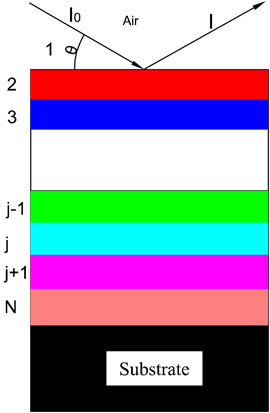
TiAlN, CrAlN films and alternate CrAlN/TiAlN multilayers with different repeated bilayer thickness ranging from 10 to 30 nm were prepared by reactive magnetron sputtering. The interface structures of the films were characterized using x-ray reflectometry method. The individual thickness of the repeated bilayers in multilayers and total thickness of the films are close to the nominal thickness and they are more accurate for thicker films. The interface roughness increases as the thickness of the repeated bilayer in mutilayers decreases. The scattering length density profiles of the films suggests that the chemical composition is more accurate for thicker films.
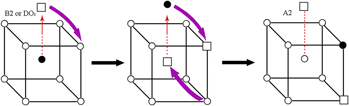
Ordered phases and ductility of Fe–6.5 wt% Si magnetic material were investigated under different rolling temperatures, and the constitutive equation of the warm deformation was established. The results show that at high rolling temperature, accompanying with the appearance of some shallow dimples, the intergranular fracture can be transformed into the quasicleavage fracture, which makes the ductility of warm-rolled sheets greatly improved. In the 450–650 °C rolling temperature range, the antiphase domains (APDs) of warm-rolled sheets are cut, the superdislocation density increases greatly with decreasing warm rolling temperatures, resulting in a decrease in APD sizes during warm deformation. Meanwhile, more B2 and DO3 ordered phases occurring in the matrix improve the long range order parameters, thereby significantly reducing ductility of the alloy. The work softening of Fe–6.5 wt% Si alloy is attributed to a contribution combining the sizes of APDs with ordered phases.
GeTe–Sb2Te3 superlattices have attracted major interest in the field of phase-change memories due to their improved properties compared with their mixed counterparts. However, their crystal structure and resistance-switching mechanism are currently not clearly understood. In this work epitaxial GeTe–Sb2Te3 superlattices have been grown with different techniques and were thoroughly investigated to unravel the structure of their crystalline state with particular focus on atomic stacking and van-der-Waals bonding. It is found that, due to the bonding anisotropy of GeTe and Sb2Te3, the materials intermix to form van-der-Waals heterostructures of Sb2Te3 and stable GeSbTe. Moreover, it is found through annealing experiments that intermixing is stronger for higher temperatures. The resulting ground state structure contradicts the dominant ab-initio results in the literature, requiring revisions of the proposed switching mechanisms. Overall, these findings shed light on the bonding nature of GeTe–Sb2Te3 superlattices and open a way to the understanding of their functionality.
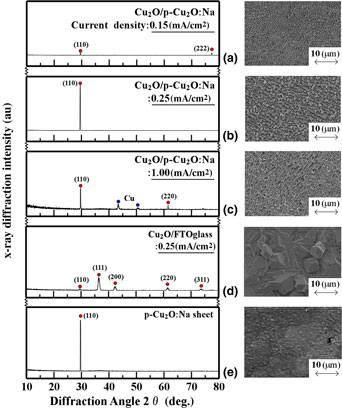
The Cu2O homojunction was formed by epitaxially growing a manganese-doped Cu2O (Cu2O:Mn) thin film on thermally oxidized polycrystalline p-type sodium-doped Cu2O (p-Cu2O:Na) sheets by electrochemical deposition. A significant improvement of photovoltaic properties was achieved in solar cells fabricated by inserting a Cu2O:Mn thin film between an Al-doped ZnO (AZO) transparent electrode and p-Cu2O:Na sheets. The photovoltaic properties obtained in AZO/Cu2O:Mn/p-Cu2O:Na solar cells were controlled by changing the Mn content doped into the Cu2O:Mn thin film. An efficiency of 4.21% was obtained in an AZO/Cu2O:Mn/p-Cu2O:Na solar cell fabricated with a Cu2O:Mn thin film that was identified as an i-type semiconductor.
Physical properties of In0.5(ZrMg)0.75Mo3O12, including the coefficient of thermal expansion, phase stability, hygroscopicity, and decomposition temperature have been thoroughly studied by in situ x-ray powder diffraction, Raman spectroscopy and thermal methods. These investigations show that In0.5(ZrMg)0.75Mo3O12 exists in a monoclinic phase (P21/a) at room temperature and transforms to an orthorhombic (Pbcn) phase at ∼82 °C. In the orthorhombic form this material presents intrinsic near-zero thermal expansion (−0.16 × 10⁻⁶ K−1) in the range between 100 and 500 °C. The phase is not hygroscopic, but starts to decompose into its constituent oxides at temperatures higher than 700 °C. In comparison to the end member phase ZrMgMo3O12 in the In2Mo3O12–ZrMgMo3O12 solid solution, In0.5(ZrMg)0.75Mo3O12 is less promising for near room-temperature applications due to the phase transition from monoclinic to orthorhombic slightly above room temperature. However, the orthorhombic phase of In0.5(ZrMg)0.75Mo3O12 has potential for applications that require zero thermal expansion at temperatures higher than 100 °C.
A new lab-based aerosol jet fog (ajFOG) deposition system with an atomizer consisting of two opposing jets located within the deposition chamber is introduced and its capabilities are examined. The unique opposing configuration of the atomizer enables the formation of a highly uniform fog even from low volatility precursors. Aluminum oxide phosphate (AlPO) thin films were deposited onto Si wafers at room temperature and sub-atmospheric pressure by using an aqueous precursor. Films were characterized by spectroscopic ellipsometry, x-ray diffraction and reflectivity, scanning electron microscopy, and metal/oxide/semiconductor (MOS) capacitor electrical measurements. Film thickness uniformity, density, surface roughness, and charge transport mechanisms were found to be comparable to spin-coated thin films deposited using the same precursor, demonstrating the effectiveness of this aerosol technique. A process model was developed to predict film thickness as a function of precursor concentration, exposure time, fog settling time, and number of exposures.
There has been controversy over the localized corrosion mechanism of super-austenitic stainless steel weld due mainly to the lack of effective evaluation technique for identification of corrosion nucleation site in weld. For this reason, an electrochemical polarization method followed by an observation of microstructure using the back-scattered electron mode in field emission-scanning electron microscopy is used. To clarify the localized corrosion mechanism, energy dispersive spectroscopy line profile analyzed by transmission electron microscopy is additionally utilized. It clearly reveals that the selective corrosion is preferentially initiated around the σ-phase precipitated in the interdendritic region in weld. The local depletion of Cr and Mo around the σ-phase can be partly replenished by the diffusion of the elements into the depleted area during the subsequent heat treatment at 1180 °C.
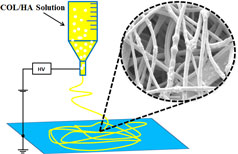
In this work, a composite nanofibrous scaffold of collagen/hydroxyapatite was prepared by electrospinning using a mild solvent. Hydroxyapatite particles dispersed into a collagen/acetic acid/water solution was electrospun to yield composite nanofibers. Scanning electron microscopy reveals nanofibers with an average diameter of 342 ± 67 nm, and a rough surface caused by the hydroxyapatite particles. Both X-ray and infrared spectroscopy confirmed the presence of the hydroxyapatite particles embedded in the collagen fibers. The inclusion of hydroxyapatite particles does not alter the native collagen structure. Lastly, these composite nanofibers support pre-osteoblast adhesion. These results show how “green” electrospinning could be used to generate nanocomposite scaffolds with potential biomedical applications.
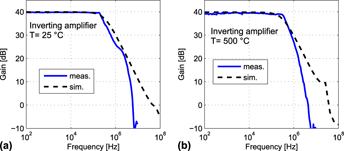
Silicon carbide (SiC) is the main semiconductor alternative for low loss high voltage devices. The wide energy band gap also makes it suitable for extreme environment electronics, including very high temperatures. Operating integrated electronics at 500–600 °C poses several materials challenges. However, once electronics is available for these high temperatures, the added challenge is designing integrated circuits capable of operating in the entire range from room temperature to 500 °C. Circuit designers have to take into account parameter variations of resistors and transistors, and models are needed for several temperatures. A common circuit design technique to manage parameter variations between different transistors, without wide temperature variations, is to use negative feedback in amplifier circuits. In this paper we show that this design technique is also useful for adapting to temperature changes during operation. Two different amplifier designs in SiC are measured and simulated from room temperature up to 500 °C.
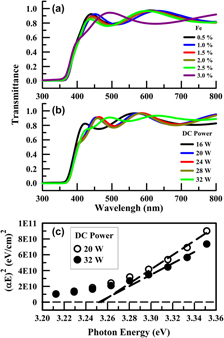
Iron (Fe)-doped zinc oxide (ZnO) thin films were deposited using two techniques: (i) radio-frequency (RF) sputtering of Fe-doped ZnO targets, and (ii) co-sputtering, where ZnO was RF-sputtered and iron was direct-current (DC)-sputtered. The as-deposited films were polycrystalline, with predominant growth along the (002) direction of hexagonal ZnO, and possessed a considerable concentration of oxygen vacancies. From an optoelectronic point of view, the films were highly transparent, with a band gap of 3.25 eV, and had electrical resistivity values in the range of 100–103 Ω cm. To improve the electrical conductivity of the films, they were annealed in a vacuum and in a hydrogen atmosphere. The annealing process did not affect the optical properties of the films. However, there were substantial structural and chemical changes in the films. Moreover, the electrical conductivity of the films was enhanced drastically upon annealing in hydrogen, where the electrical resistivity was reduced to 3.2 × 10⁻³ Ω cm.
Phosphorene is a new-emerging two-dimensional material with many fascinating electronic and thermal properties. Using nonequilibrium Green's function technique, we investigate the thermoelectric transport properties of phosphorene in the ballistic transport regime. We find that while the electronic conductance and thermal conductance of phosphorene are highly anisotropic, the Seebeck coefficient is isotropic. The maximum predicted thermopower reaches 2500 μV/K. We also find that the Wiedemann–Franz law is valid only when the chemical potential is inside valence band or conduction band. When the chemical potential is near the valence band maximum or conduction band minimum; however, the Wiedemann–Franz law becomes invalid, and interestingly, the figure of merit ZT reaches its maximum value. We also find that figure of merit ZT increases with the increase of temperature, and ZT in the armchair direction is much higher than that in the zigzag direction. By analyzing the various effects on ZT, we discuss the possible routines to enhance figure of merit ZT.
An electrodeposition method for growing epitaxial Co(OH)2 films on single crystalline gold (111), (100), and (110) substrates is described. The films were grown by electrochemical reduction of [Co(en)3]3+ in an alkaline electrolyte. The Co(OH)2 grew with a [0001] out-of-plane orientation on all the gold crystal orientations. The in-plane orientation follows the symmetry of the gold (111), (100), and (110) substrates. The Co(OH)2 can be converted to CoOOH by electrochemical oxidation in 1 M KOH at 95 °C, and after conversion remains epitaxial with a [0001] out-of-plane orientation. The CoOOH film can be further converted to epitaxial Co3O4 with a [111] out-of-plane orientation by decomposition of the CoOOH film in air at 300 °C. This synthesis method allows for a simple fabrication of epitaxial catalysts and could be useful to probe the catalytic activity of specific crystal planes.
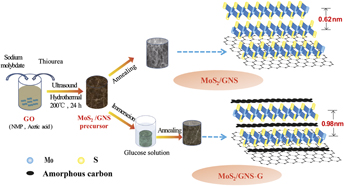
In this article, we report on the preparation of few-layered MoS2/graphene nanocomposite (MoS2/GNS-G) with enlarged interlayer distance as the lithium-ion battery anode via a facile hydrothermal method followed by glucose-assisted thermal annealing. During the synthesis, glucose serving as a small organic molecule can interlay into MoS2 nanosheets, which effectively hinder the aggregation and restacking of MoS2 during the process of heat treatment, retaining a sandwich structure of the composite. The enlarged interlayer distance (approximately 0.98 nm), along with the inserted amorphous carbon, could promote efficient lithium migration into active sites, buffer the volume change and stabilize the electrode structure effectively during the lithium insertion/extraction cycling. Electrochemical tests demonstrate that the MoS2/GNS-G delivers a high discharge capacity of 1583.0 mA h/g in the initial cycle at current density of 100 mA/g. The specific capacity remained at the relative high value of 673.5 mA h/g even at a current density of 1000 mA/g.
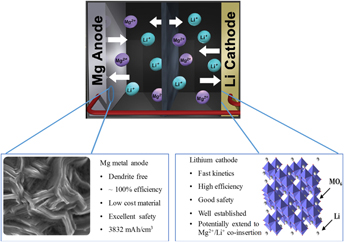
A magnesium–lithium (Mg–Li) hybrid battery consists of an Mg metal anode, a Li+ intercalation cathode, and a dual-salt electrolyte with both Mg2+ and Li+ ions. The demonstration of this technology has appeared in literature for few years and great advances have been achieved in terms of electrolytes, various Li cathodes, and cell architectures. Despite excellent battery performances including long cycle life, fast charge/discharge rate, and high Coulombic efficiency, the overall research of Mg–Li hybrid battery technology is still in its early stage, and also raised some debates on its practical applications. In this regard, we focus on a comprehensive overview of Mg–Li hybrid battery technologies developed in recent years. Detailed discussion of Mg–Li hybrid operating mechanism based on experimental results from literature helps to identify the current status and technical challenges for further improving the performance of Mg–Li hybrid batteries. Finally, a perspective for Mg–Li hybrid battery technologies is presented to address strategic approaches for existing technical barriers that need to be overcome in future research direction.
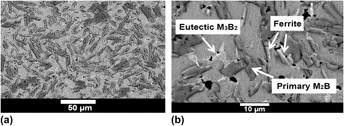
The microstructure formation and wear resistance of a superduplex stainless steel modified with the addition of 3 wt% boron produced by spray forming were investigated. Thermodynamic simulations were used as comparison basis and to explain the experimentally observed microstructure, which was composed by primary M2B-type borides, an austenitic-ferritic matrix, and eutectic M3B2-type borides. The predicted solidification sequence started with the precipitation of primary M2B boride, followed by ferrite/austenite formation and a final eutectic reaction resulting in M3B2 borides. A good correlation with the simulations and final microstructure was found. The abrasive wear resistance was investigated with the dry sand/rubber wheel test and the results indicated an outstanding performance, similar to the cobalt-based Stellite 1016 alloy. The excellent wear resistance resulted from the presence of a significant amount (about 35 vol%) of hard borides homogeneously dispersed in the microstructure, which was effective at increasing hardness and protecting the duplex matrix against abrasion.
Among the different energy storage technologies under study, lithium–oxygen batteries are one of the most promising due to their great gravimetric energies and capacities 6–10 times greater than other technologies such as conventional lithium-ion cells. The current study provides a comprehensive understanding of how the anodic (e.g., dendrites) and cathodic designs (e.g., porosity of the carbon cathode and mass fraction of oxygen) affect the discharge characteristics of lithium–oxygen cells. When comparing all changes in dendrite surface, porosity and oxygen restriction, it is concluded that although the changes in porosity and oxygen decrease the performance of the cells, the dendrites led to the greatest decrease in performance of the battery when examining the capacity of the cell. This comprehensive understanding will aid in the design of a cyclable and commercially viable lithium–oxygen battery that could be used for a wide range of energy storage applications.