To save content items to your account,
please confirm that you agree to abide by our usage policies.
If this is the first time you use this feature, you will be asked to authorise Cambridge Core to connect with your account.
Find out more about saving content to .
To save content items to your Kindle, first ensure no-reply@cambridge.org
is added to your Approved Personal Document E-mail List under your Personal Document Settings
on the Manage Your Content and Devices page of your Amazon account. Then enter the ‘name’ part
of your Kindle email address below.
Find out more about saving to your Kindle.
Note you can select to save to either the @free.kindle.com or @kindle.com variations.
‘@free.kindle.com’ emails are free but can only be saved to your device when it is connected to wi-fi.
‘@kindle.com’ emails can be delivered even when you are not connected to wi-fi, but note that service fees apply.
JANNUS (Joint Accelerators for Nanosciences and Nuclear Simulation), the unique triple beam facility in Europe, offers the possibility to produce three ion beams simultaneously for nuclear recoil damage and implantation of a large array of ions for well-controlled modeling-oriented experiments. The first triple beam irradiation was performed in March 2010. Along with irradiation developments, continuous efforts have been made to implement ex situ and in situ characterization tools. In this study, we set out the present status of the JANNUS facility of the Saclay site. We focus on the instrumentation used for conducting multi-ion beam irradiations and implantations as well as for characterizing bombarded samples. On-line control of irradiation parameters, in situ modification monitoring using Raman spectroscopy or ion beam induced luminescence, and ex situ characterization by ion beam surface analysis [Rutherford backscattering spectrometry (RBS), nuclear reaction analysis (NRA), and elastic recoil detection analysis (ERDA)] of implanted samples are detailed. Some examples of single, dual, and triple beam irradiation configurations are presented. Access to the facility is provided by the French network EMIR for national and international users (http://emir.in2p3.fr/).
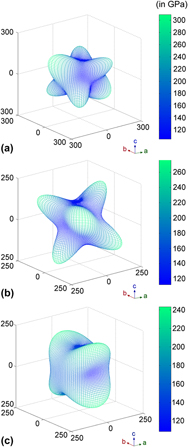
Yttrium disilicates (Y2Si2O7), well known for its complex polymorphism, are promising candidates for high-temperature structural materials and environmental barrier coatings due to their good properties in harsh environments. In this study, the crystal structure, elastic stiffness, and temperature dependence of the lattice thermal conductivity of β-, γ-, and δ-Y2Si2O7 are studied using first-principles calculations. Divergences of elastic stiffness are attributed to the different crystal structures and bonding strength of the polymorphs. Specially, the Si–O–Si bridge of δ phase bends with an angle of 158.1°, and this configuration enhances the bonding heterogeneity but weakens the bonding strength and stability. According to the prediction of lattice thermal conductivity using the Debye–Slack model, β-, γ-, and δ-Y2Si2O7 are characterized with very low thermal conductivity. In addition, the deviation of lattice thermal conductivities of Y2Si2O7 polymorphs is dominated by two vital factors, anharmonicity of phonon scattering and complexity of crystal structure. The present method could be used to investigate the specific factors dominating lattice thermal conductivity and may promisingly be generalized to search novel candidates with extremely low lattice thermal conductivity.
The fracture behavior of precracked nanocrystals with grain size gradients is simulated using the molecular dynamics method. A large grain size gradient is found to elevate resistance to crack propagation and transform the fracture mode from intergranular to intragranular when the crack is obstructed by a coarse grain. But the intragranular crack is nipped in its bud due to the difficulty of intragranular fracture. However, intergranular fractures can be always kept in nanocrystals with a small grain size gradient. Both the Schmid factors for the slip systems of grains near the crack tip and the critical stress intensity factors are calculated, and energy partitioning is conducted to analyze the mechanisms behind this phenomenon. The research exhibits the key role of grain size gradient in improving the antifracture ability of nanocrystals.
Spintronics utilizes spin or magnetism to provide new ways to store and process information and is primarily associated with the utilization of spin polarized currents in memory and logic devices. With the end of silicon transistor technology in sight, spintronics can provide new paradigms for information processing and storage. Compared to charge based electronics, the advantages of magnetism/spin based devices are nonvolatility and ultra low power. In particular, magnetoresistive random access memories (MRAMs) are known to be “Rad Hard” [HXNV0100 64K x 16 Non-Volatile Magnetic RAM (www.honeywell.com/aerospace), S. Gerardin and A. Paccagnella, IEEE Trans. Nucl. Sci.57(6), 3016–3039 (2010), R.R. Katti, J. Lintz, L. Sundstrom, T. Marques, S. Scoppettuolo, and D. Martin, Proceedings of IEEE Radiation Effects Data Workshop, 103–105 (2009)] and are considered to be critical components for space and military systems due to their very low power consumption and nonvolatility. However, advances in the magnetic nanostructures and new materials for the scalability of MRAM and other potential applications require a re-evaluation of their radiation hardness. This review focuses mainly on recent progress in understanding the effects of irradiation on the magnetic materials and magnetic structures that are related to MRAM technology. Up to date, the most pronounced effects on the microstructures and the properties are linked to the displacement damage associated with heavy ion irradiation; however, the thermal effect is also important as it acts as an annealing process to recover the damage partially. Critical metrics for the magnetic tunnel junctions for postmortem characterizations will also be discussed. Finally, with the introduction of new perpendicular magnetic layers and the very thin MgO barrier layer in the next generation MRAM, the effects of the ionization damage shall be studied in the future.
In this work, the effects of different preparation methods on the microstructures and properties of the Ti45.7Zr33Ni3Cu5.8Be12.5 alloy were systematically studied by both experimental and numerical ways. It is found that the heating methods and the cooling rate during the process of preparation have great influences not only on the morphology and crystalline structure of the solid solutions but also on the thermal stability of the amorphous phase. Furthermore, the different crystalline structures and micromorphologies of the ductile phase will also influence the mechanical properties. And the uniaxial compression tests at room temperature verify that the Ti45.7Zr33Ni3Cu5.8Be12.5 samples obtained by different preparation methods possess different degrees of plasticity. The better comprehensive properties were found for samples with a larger size under the copper mold cooling conditions. The variation of the morphology of the solid solution phase under different preparation conditions is believed to be the vital factor that leads to the diversity in properties.
A systematic x-ray diffraction (XRD) study was performed on room-temperature Xe-irradiated and postirradiation annealed CeO2. Large scale XRD did not show any additional irradiation-induced phases upon irradiation. Depth profiling the CeO2 (111) diffraction peak over the 150 nm deep Xe-irradiated layer (400 keV, 1 × 10²⁰ Xe/m2) by grazing incidence XRD indicated a lattice expansion at the irradiated layer. Postirradiation annealing (1 h at 1000 °C) in an oxygen-containing environment removed the observed XRD features. Electron energy loss spectroscopy (EELS) was performed for cross-sectional samples before and after postirradiation annealing. EELS showed that the Ce charge state changed from +4 to +3 at the CeO2 surface indicating the presence of O vacancies in both as-irradiated and annealed samples. EELS also indicated that the amount of O vacancies was reduced at the irradiated region by annealing. The experimental results are discussed based on electronic properties of CeO2, annihilation of oxygen vacancies, and evolution of irradiation damage.
The macroscopic properties of materials exposed to irradiation are determined by radiation damage effects which occur on the nanoscale. These phenomena are complex dynamic processes in which many competing mechanisms contribute to the evolution of the microstructure and thus to its end-state. To explore and understand the behavior of existing materials and to develop new technologies, it is highly advantageous to be able to observe the microstructural effects of irradiation as they occur. Transmission electron microscopy with in situ ion irradiation is ideally suited to this kind of study. This review focuses on some of the important factors in designing this type of experiment including sample preparation and ion beam selection. Also presented are a brief history of the development of this technique and an overview of the instruments in operation today including the latest additions.
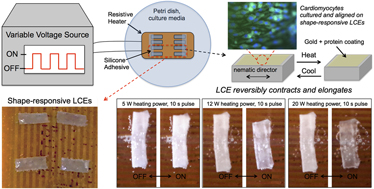
Responsive, biocompatible substrates are of interest for directing the maturation and function of cells in vitro during cell culture. This can potentially provide cells and tissues with desirable properties for regenerative therapies. Here, we demonstrate a straightforward and scalable approach to attach, align, and dynamically load cardiomyocytes on responsive liquid crystal elastomer (LCE) substrates. Monodomain LCEs exhibit reversible shape changes in response to cyclic heating, and when immersed in an aqueous medium on top of resistive heaters, shape changes are fast, reversible, and produce minimal temperature changes in the surroundings. We systematically characterized the strain response of LCEs in water and demonstrated the attachment and alignment of neonatal rat ventricular myocytes on LCE substrates. Cardiomyocytes attached to both static and stimulated LCE substrates, and under cyclic stimulation, cardiomyocytes aligned along the primary direction of strain. This work demonstrates the potential of LCEs as stimuli-responsive substrates for dynamic cell culture.
Fission energy deposition in nuclear fuel has been experimentally observed to influence diffusion in uranium dioxide (UO2). This deposition is initially dominated by inelastic interactions with the electronic structure. Subsequently, energy is transferred to the lattice through electron–phonon (e–p) coupling resulting in a thermal spike and an associated pressure spike, which are presumed to contribute to diffusion enhancement. Molecular dynamics (MD) simulations were performed to investigate uranium diffusion enhancement in UO2 while varying the e–p coupling. The model was composed of 10 × 60 × 60 unit cells and used a Buckingham potential. A two-temperature model captured energy deposition in the electronic subsystem and its transfer to the atomic lattice. Experimentally, the fission enhanced diffusion coefficient (D*) of uranium in UO2 is observed to be athermal and proportional to fission rate density. For fission rate densities that are reported in experiment, the MD predicted D* was found to be on the order of 10−18 cm2/s, in reasonable agreement with experimental trends, and to decrease as e–p coupling was weakened.
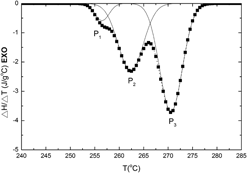
The effect of gamma radiation in vacuum on the isothermal crystallization kinetics of syndiotactic polystyrene (sPS) was investigated via differential scanning calorimetry (DSC), Fourier transform infrared spectroscopy (FTIR), and x-ray diffraction (XRD). Amorphous sPS samples were irradiated in vacuum, heated to 310 °C, cooled down to crystallization temperatures (Tcs) from 220 to 260 °C, and annealed for different times. Upon reheating, overlapping endothermic melting peaks depicted the various crystallization forms, α, β, and β′. The endotherms were resolved using Gaussian functions relating enthalpy changes to the endothermic envelope. Isothermal crystallization kinetic data were analyzed using Avrami's model with Gaussian functions. The extent of crystallization of β and β′ forms increased with increasing crystallization time and temperature, while that of α form decreased. Crystallization half-time followed a modified Arrhenius equation. Crystallization activation energies for the β and β′ forms of sPS increased with increasing radiation doses. The results are compared to those of air irradiated sPS reported in the literature.
Microstructure modification and room temperature tensile properties of Ti–6Al–4V plates fabricated by electron-beam melting (EBM) were investigated. Firstly, Ti–6Al–4V slabs were direct rolled at various preheat temperatures below β transus with various reductions, then the deformed samples were annealed at 800 °C for various soaking times. After rolling, the microstructure modification consists of elongation, bending, kinking, and rotation of α lamellae. Specimens rolled below 900 °C exhibited flow instability (local deformation bands). The mean aspect ratio of α lamellae was further decreased following annealing, and the fraction of α particles showed a relatively strong dependence on preceding rolling reduction. The variations of mean aspect ratio and spheroidization fraction with annealing time were rationalized on the basis of various processes during spheroidization. The mechanical properties of Ti–6Al–4V plates fabricated by EBM were significantly improved after rolling compared with as-cast Ti–6Al–4V plates. The following annealing of 1 h resulted in significant improvements on elongation without obvious loss of ultimate tensile strength (UTS).
Subcritical crack growth in SiC based composites is controlled by fiber creep processes. This lifetime limiting mechanism is of special concern under irradiation as it can enhance creep related mechanisms. To evaluate the impact of irradiation on the mechanical behavior of Tyranno SA3 fibers, in situ tensile tests were conducted on single fibers. These tests were conducted under irradiation with 92 MeV Xe23+ ions at 1000 °C for different ion fluxes and stress loads using a dedicated experimental facility. It has been found that irradiation induces time-dependent deformation of the fibers under conditions where thermal creep is negligible, i.e., 300 MPa and 1000 °C. Irradiation strain rate shows linear dependence with the ion beam flux and square root dependence with the applied stress. Finally, the irradiation creep compliance is estimated to be 1.01 × 10⁻⁵ MPa−1 dpa−1.
Transmission electron microscopy (TEM) based orientation mapping has been used to measure the length fraction of coherent and incoherent Σ3 grain boundaries in a series of six nanocrystalline Cu thin films with thicknesses in the range of 26–111 nm and grain sizes from 51 to 315 nm. The films were annealed at the same temperature (600 °C) for the same length of time (30 min), have random texture, and vary only in grain size and film thickness. A strong grain size dependence of Σ3 (coherent and incoherent) and coherent Σ3 boundary fraction was observed. The experimental results are quantitatively compared with three physical models for the formation of annealing twins developed for microscale materials. The experimental results for the nanoscale Cu films are found to be in good agreement with the two microscale models that explain twin formation as a growth accident process.
Fracture toughness testing of materials at the micrometer scale has become essential due to the continuing miniaturization of devices accompanied by findings of size effects in fracture behavior. Many techniques have emerged in the recent past to carry out fracture toughness measurements at the relevant micro and nanolength scales, but they lack ASTM standards that are prescribed for bulk scale tests. Also, differences in reported values arise at the microscale due to the sample preparation technique, test method, geometry, and investigator. To correct for such discrepancies, we chose four different fracture toughness test geometries in practice, all of them micromachined in the focused ion beam (FIB), to investigate the fracture toughness of Si(100) at the micrometer scale. The average KIC that emerges from all four cases is a constant (0.8 MPa m1/2). The advantages and limitations of each of these geometries in terms of test parameters and the range of materials that can be tested are discussed.
Material property measurements at the micro-/nanoscale are required for within many materials systems, such as thin-films, coatings, nanostructured materials, and interface/interphase. An innovative approach through micro-/nano-indentation testing with a cylindrical flat-tip indenter and coupled with computer modeling was proposed to characterize the material's elastic–plastic properties. A mechanical model proposed for directly extracting the yield strength of the tested materials, based on the hemi-spherical stress–strain distribution assumption, was analytically derived and numerically validated. Specimens being tested are aluminum alloy, low carbon steel, and alloy steel. A micro-/nano-indentation solid model was constructed and computer modeling was conducted. The load point in the indentation load–depth curve and the modifier for extracting the yield strength were identified through computer modeling and validated by indentation tests. The material properties measured by indentation were compared with tensile tests. The indentation testing errors induced by residual stresses in specimens were investigated by a residual stress measurement system.
The effect of adding nucleic acids to gold seeds during the growth stage of either nanospheres or nanorods was investigated using UV–Vis spectroscopy to reveal any oligonucleotide base or structure-specific effects on nanoparticle growth kinetics or plasmonic signatures. Spectral data indicate that the presence of DNA duplexes during seed aging drastically accelerated nanosphere growth while the addition of single-stranded polyadenine at any point during seed aging induces nanosphere aggregation. For seeds added to a gold nanorod growth solution, single-stranded polythymine induces a modest blue shift in the longitudinal peak wave length. Moreover, a particular sequence comprised of 50% thymine bases was found to induce a faster, more dramatic blue shift in the longitudinal peak wave length compared to any of the homopolymer incubation cases. Monomeric forms of the nucleic acids, however, do not yield discernable spectral differences in any of the gold suspensions studied.
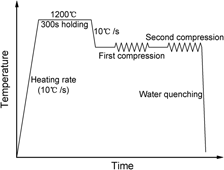
The metadynamic recrystallization (MDRX) behaviors in deformed Nimonic 80A superalloy were investigated by isothermal interrupted hot compression tests on a Gleeble-1500 thermo-mechanical simulator. Compression tests were performed using double hit schedules in the deformation temperature range of 1050–1150 °C, the interpass time range of 0.5–10 s, the strain rate range of 0.01–4 s−1, and the prestrain range of 0.30–0.50. To characterize the MDRX behaviors of the alloy, the effects of deformation temperature, strain rate, and prestrain on the metadynamic softening and recrystallized grain size were analyzed. The results reveal that the effects of deformation temperature and strain rate on the metadynamic softening fraction and recrystallized grain size are significant. However, the effects of prestrain on the metadynamic softening fraction and recrystallized grain size are not very marked and can be neglected. Then, by regression analysis of the experimental data, the MDRX kinetic model and recrystallized grain size model were proposed. The predicted results show good agreement with the experimental ones, which indicates that the proposed models can give an accurate prediction of the softening behaviors and microstructural evolution for Nimonic 80A.
Understanding the structural unit of crystalline solids is vital in determining their optical and electronic properties. However, the disordered nature of amorphous semiconductors, where no long-range order is retained, makes it difficult to determine their structure using traditional methods. This book shows how computer modelling can be used to overcome the difficulties that arise in the atomic scale identification of amorphous semiconductors. The book explains how to generate a random structure using computer modelling, providing readers with the techniques to construct realistic material structures. It shows how the optical and electronic properties are related to random structures. Readers will be able to understand the characteristic features of disordered semiconductors. The structural and electronic modifications by photon irradiation are also discussed in detail. This book is ideal for both physicists and engineers working in solid state physics, semiconductor engineering and electrical engineering.
We demonstrate a resonant Bragg structure formed by quasi-two-dimensional excitons in periodic systems of InGaN quantum wells (QWs) separated by GaN barriers. When the Bragg resonance and exciton–polariton resonance are tuned to each other, the medium exhibits an exciton-mediated resonantly enhanced optical Bragg reflection. The enhancement factor appeared to be largest for the system of 60 QWs. Owing to a high binding energy and oscillator strength of the excitons in InGaN QWs, the resonant enhancement was achieved at room temperature. The samples were grown by the metal–organic vapor-phase epitaxy (MOVPE) on GaN-on-sapphire templates. The most important technological problem of the developed structures is inhomogeneous broadening of the excitonic states due to nonuniform chemical composition of the QWs driven by InN–GaN phase separation trend. We addressed this problem by variation of the vapor pressure, growth rate, growth interactions, and admixing of hydrogen during the MOVPE. The lowest width of 74 meV at room temperature and 41 meV at 77 K was achieved for the excitonic emission line from a single InGaN QW.
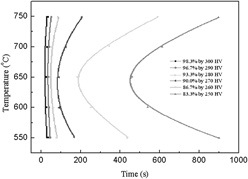
The variation of properties and evolution of microstructure of Cu–10Ni–3Al–0.8Si alloy during isothermal and aging treatment was studied. The time–temperature–property curves of the alloy were established. The nose temperature of the alloy was about 662 °C, and the alloy presented high quench sensitivity when quenched in the nose temperature zone. Discontinuous precipitation occurred when Cu–10Ni–3Al–0.8Si alloy was isothermally treated at 550 °C, and the discontinuous precipitates at the grain boundary became coarse when the isothermal temperature increased to 650 °C. Further increasing the isothermal temperature to 750 °C, cellular precipitation occurred in the alloy. Both Ni3Al precipitates with L12 ordered structure and δ-Ni2Si precipitates with DO22 ordered structure precipitated in the isothermally treated Cu–10Ni–3Al–0.8Si alloy. The orientation relationships between the precipitates and matrix were determined as ${[001]_{{\rm{Cu}}}}{\left\| {{{[001]}_{{\rm{N}}{{\rm{i}}_3}{\rm{Al}}}}\left\| {[001]} \right.} \right._\delta }$, ${(110)_{{\rm{Cu}}}}{\left\| {{{(110)}_{{\rm{N}}{{\rm{i}}_3}{\rm{Al}}}}\left\| {(010)} \right.} \right._\delta }$, and ${(1\bar 10)_{{\rm{Cu}}}}\left\| {{{(1\bar 10)}_{{\rm{N}}{{\rm{i}}_3}{\rm{Al}}}}} \right\|{(100)_\delta }$.