To save content items to your account,
please confirm that you agree to abide by our usage policies.
If this is the first time you use this feature, you will be asked to authorise Cambridge Core to connect with your account.
Find out more about saving content to .
To save content items to your Kindle, first ensure no-reply@cambridge.org
is added to your Approved Personal Document E-mail List under your Personal Document Settings
on the Manage Your Content and Devices page of your Amazon account. Then enter the ‘name’ part
of your Kindle email address below.
Find out more about saving to your Kindle.
Note you can select to save to either the @free.kindle.com or @kindle.com variations.
‘@free.kindle.com’ emails are free but can only be saved to your device when it is connected to wi-fi.
‘@kindle.com’ emails can be delivered even when you are not connected to wi-fi, but note that service fees apply.
This paper presents the effect of oxygen, nitrogen, and carbon concentration on the microstructure and properties of titanium foams produced with a powder metallurgy process. Oxygen and nitrogen reduce the ductility and increase the compression yield strength of CpTi foams. The effect of nitrogen appears to be similar to the effect of oxygen, a trend different from the ones reported in the literature for dense titanium in tension, where the effect of nitrogen is recognized to be significantly more important than the effect of oxygen. For carbon, the levels investigated were above the room temperature solubility limit of carbon in α-Ti and titanium carbides were observed in the microstructure. The volume fraction of carbides observed in the microstructure increased with carbon content. The effect of the carbides on the compression properties and ductility of the titanium foams is, however, small compared to the effect of oxygen and nitrogen.
Ultrathin metal film dewetting continues to grow in interest as a simple means to make nanostructures with well-defined properties. Here, we explored the quantitative thickness-dependent dewetting behavior of Au films under nanosecond (ns) pulsed laser melting on glass substrates. The trend in particle spacing and diameter in the thickness range of 3–16 nm was consistent with predictions of the classical spinodal dewetting theory. The early stage dewetting morphology of Au changed from bicontinuous-type to hole-like at a thickness between 8.5 and 10 nm, and computational modeling of nonlinear dewetting dynamics also captured the bicontinuous morphology and its evolution quite well. The thermal gradient forces were found to be significantly weaker than dispersive forces in Au due to its large effective Hamaker coefficient. This also resulted in Au dewetting length scales being significantly smaller than those of other metals such as Ag and Co.
In the semiconductor industry, ion implantation and the subsequent annealing have ubiquitously been used to mitigate residual stresses and crystallographic defects in a film-on-substrate system. However, the relationship between crystal quality and residual stresses induced by lattice mismatch and disparate thermal expansions has not yet been understood. This paper aims to clarify the mist through an in-depth investigation into the stress and microstructure variations in the ion implantation and annealing processes. It was found that a higher-energy implantation with a higher ion dose density leads to a more significant relief of residual stresses. However, a higher annealing temperature, which results in fewer defects, will bring about greater residual stress regeneration. To achieve a higher crystal quality but lower stresses, it is necessary to enable the ions to penetrate through the film to cause substrate expansion, such that the mismatch between the film and substrate is mitigated and the high temperature annealing can be utilized to minimize the interface defects.
Porous thermoplastic polyurethane (TPU) membranes were produced by the electrospinning process. Two different TPUs and their blends were used to investigate the effects of material composition, solution concentration, and rheological properties on the microstructure, fiber diameter, and fiber diameter distribution of the electrospun membranes. The ratios of hard and soft segments in the solutions were adjusted by varying the blend ratios of TPUs dissolved in N, N-dimethylformamide. The solutions with higher TPU concentrations and more hard segments exhibited a higher viscosity, larger storage and loss moduli, and greater electrospun jet stability. Solutions with concentrations around the critical chain entanglement concentration (Ce) produced bead or beaded fiber structures, while bead-free fibers of a uniform diameter were obtained when the concentration increased to about two times that of Ce. Relationships between the electrospun fiber diameter, the Berry number, and the normalized concentration of the solutions were studied as well.
Colloidal quantum dot photovoltaic devices have improved from initial, sub-1% solar power conversion efficiency to current record performance of over 7%. Rapid advances in materials processing and device physics have driven this impressive performance progress. The highest-efficiency approaches rely on a fabrication process that starts with nanocrystals in solution, initially capped with long organic molecules. This solution is deposited and the resultant film is treated using a solution containing a second, shorter capping ligand, leading to a cross-linked, non-redispersible, and dense layer. This procedure is repeated, leading to the widely employed layer-by-layer solid-state ligand exchange. We will review the properties and features of this process, and will also discuss innovative pathways to creating even higher-performing films and photovoltaic devices.
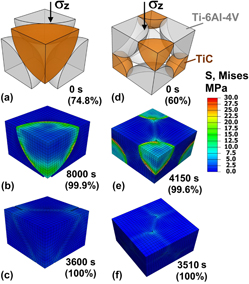
Ti-6Al-4V alloy with attractive properties such as corrosion resistance and high specific strength has a broad impact on daily life in the field of aerospace and medicine. The addition of TiC to Ti-6Al-4V is to further improve abrasion resistance and hardness. To have a low processing cost and precise control of the TiC volume fraction and distribution, the composite is densified with a blend of Ti-6Al-4V and TiC powders through a powder metallurgy route. The densification kinetics of the blend is studied for uniaxial die pressing (i) under isothermal conditions at 1020 °C, where β-Ti-6Al-4V deforms by creep and (ii) upon thermal cycling from 860 to 1020 °C, where the α-β transformation leads to transformation superplasticity. Densification curves for both isothermal and thermal cycling for various applied stresses and TiC fractions are in general agreement with predictions from continuum models and finite element simulation models performed at the powder level.
From bone to dentin to nacre, biomaterials are structurally advanced composites with superior toughness and significant stiffness, based on simple building blocks. Here, using a series of molecular mechanics models with bioinspired topologies, we propose design mechanisms rooted in the simplest mechanical interactions—perfectly brittle linear elastic—which are shown to be sufficient to achieve superior toughness at high stiffness in biological composites. In a two-phase composite system, we show that by adapting the elastic constitutive laws of the matrix phase and by tuning the interactions of the constituents we can realize materials with a large range of combinations of toughness and stiffness. Notably, this can be achieved without changing the fracture energy of the individual composite components. Through a systematic analysis and the development of a simple model, we unveil basic design principles that lead to fundamental insights into the mechanics of natural composites for applications in a range of engineering disciplines.
Some hydrides that could replace TiH2 as the hitherto most suitable blowing agent for foaming aluminum alloys were investigated. Hydrides taken from the group MBH4 (M = Li, Na, K) and LiAlH4 were selected since these have not been studied in the past although their decomposition characteristics appear to be suitable. Foamable precursors of alloy AlSi8Mg4 were manufactured by pressing blends of metal and blowing agent powders. Powders, precursors and precursor filings were studied by mass spectrometry to obtain the hydrogen desorption profile. Foaming experiments were conducted with simultaneous x-ray radiographic monitoring. Two Li-containing blowing agents were found to perform well and can be considered alternatives to TiH2.
A nanostructured surface layer was fabricated in the surface of 316L stainless steel by a novel fast multiple rotation rolling (FMRR) technique. The microstructure and the tensile properties of the treated sample were investigated in detail. The experimental results indicate that a nanograined (NG) film was successfully obtained in the surface of the sample. Equiaxed nanograins with the average grain size of about 12 nm are achieved in the surface layer. At the sample time, deformation-induced α-martensite is produced during the FMRR treatment. The volume fraction of martensite is about 20%. The yield strength (0.2% offset) of the sample, of which one side is of NG structure and the other is coarse grained (CG), is increased by 51% in comparison with that of the CG sample. Though the plasticity is diminished slightly for the FMRR specimen, the elongation still reaches a high value of about 38% owing to the contribution of the CG structure.
A nanocomposite-modified electrode has been prepared by functionalizing multiwalled carbon nanotubes (MWCNTs) with N-(1,3-dimethylbutyl)-N′-phenyl-p-phenylenediamine (p-PDA). The physical characterization of the prepared composite has been done using infrared spectroscopy and ultraviolet-visible spectroscopy. The morphologies of the prepared p-PDA/MWCNTs/ionophore film have been characterized using scanning electron microscopy and transmission electron microscopy. The electrochemical studies of the prepared composite electrode have been investigated by cyclic voltammetry technique. We observed that the p-PDA/MWCNTs/ionomer composite has better electrochemistry, film adhesion with homogeneous dispersion at the electrode surface and an electrocatalytic activity toward the oxidation of dopamine (DA) in 0.1 M phosphate buffer solution (pH 7.0) at a potential of 50 mV. The linear range and detection limit for the detection of DA was found to be 62–625 and 5 µM respectively. The modified electrode also exhibited several attractive features such as simple preparation, fast response, good stability and repeatability.
The effects of boundaries such as grain boundaries and phase boundaries on low-field magnetoresistance (LFMR) have been investigated in single-phase lanthanum strontium manganates, in this case La0.7Sr0.3MnO3 (LSMO) and LSMO: zinc oxide (ZnO) nanocomposite thin films. In the pure LSMO films with similar grain size, it is found that the LFMR increases as the grain misorientation factor (β) increases. The LFMR in the nanocomposite films is greatly enhanced, as compared with single-phase films, due to the reduced grain size, and increased phase boundary (PB) and β effects. The composition study shows that the LFMR can be dramatically enhanced when the secondary phase content approaches the percolation threshold. The increased β and secondary phase concentration reduce the cross-section of electron conduction paths and favor the formation of the quasi-one-dimensional transport channels. Our results demonstrate that the reduction of cross-section of the electron conduction paths by tuning the grain orientation and secondary phase composition is necessary for enhancing LFMR effect.
The mechanical properties of porous ceramics are greatly influenced by their microstructure. Therefore, mechanical behavior of highly porous ceramics is different from that of dense ceramics. In this work, we evaluate different mechanical testing methods such as static compression, Brazilian disc test and 3-point bending on their suitability for comparison of highly porous ceramic materials. It is shown that 3-point bending is more suitable than static compression or Brazilian disc testing, as the material exhibits no critical crack propagation under compressive loading. With 3-point bending tests, a quantitative comparison of the mechanical properties of foams with different microstructures and porosities is possible. Under cyclic compression the foams exhibit a very high degree of crack tolerance in combination with preservation of their structural integrity even at high strains of 10%.
We study the behavior of fluorohectorite synthetic clay particles dispersed in paraffin wax. We report wide-angle x-ray scattering related to electric-field-induced alignment of the embedded clay particles. The development of anisotropic arrangement of the particles is measured during melting and crystallization of the composites. The degree of anisotropy is quantified by fitting azimuthal changes of the clay diffraction peak intensity to the Maier-Saupe function. This parametric function is then used to extract both the full width at half maximum (FWHM) and the amplitude of the anisotropic scattering and eventually to estimate a nematic order parameter for this system. Finally, the time evolution of the one-to-zero and zero-to-one water layer transition in paraffin embedded fluorohectorite clay galleries is presented, and we demonstrate that such particles can be used as “meso-detectors” for monitoring the local water content in bulk carrier matrices, such as paraffin wax.
We investigate the size-dependent carrier dynamics and activation energy in cadmium telluride/zinc telluride (CdTe/ZnTe) quantum dots (QDs) grown on silicon (Si) substrates. Photoluminescence (PL) spectra show that the excitonic peak corresponding to transitions from the ground electronic subband to the ground heavy-hole band in CdTe/ZnTe QDs shifts to a lower energy level with increasing CdTe thickness, owing to an increase in the size of the CdTe QDs. Time-resolved PL measurements performed to study the carrier dynamics reveal a longer exciton lifetime for CdTe/ZnTe QDs with increasing CdTe thickness on account of the reduction of the exciton oscillator strength resulting from a strong built-in electric field in the larger QDs. The activation energy of the electrons confined in the CdTe/ZnTe QDs, as obtained from the temperature-dependent PL spectra, increases with increasing CdTe thickness. These results indicate that the carrier dynamics and activation energy of CdTe/ZnTe QDs are affected by the size of the CdTe QDs.
Under the strategies of doping to extend the absorptive response region of a semiconductor and fabricating a mesoporous structure with large specific surface area to enhance the photocatalytic property, an efficient visible-light-driven photocatalyst of bismuth-doped titanium dioxide (Bi/TiO2) was prepared via a facile sol-gel route. The resulting materials were characterized by powder x-ray diffraction (XRD), transmission electron microscopy (TEM), thermogravimetric analysis (TG), UV–vis diffuse reflectance spectrum (DRS), and N2 adsorption–desorption measurements (BET). The photocatalytic performances of as-synthesized particles were monitored by degradation of 2,4-dichlorophenol (2,4-DCP) in transparent aqueous solutions under visible light illumination. The results revealed that mesoporous PEG-modified Bi-doped TiO2 exhibited much higher photocatalytic activities than Bi-doped TiO2 without modification, and noticeably the optimized doping level was increased from 2 to 4 mol%. The visible-light photocatalytic activity enhancement of PEG-modified Bi-doped TiO2 could be attributed to appropriate proportional mixed crystal phase, large surface area, porosity, mesoporous network with interconnected small nanocrystals, and its strong absorption in the visible region.
The platforms described in the previous chapter access a range of states via a number of thermodynamic loading paths taken by a material as it deforms. Some load to the elastic limit, some up to the finis extremis where electronic bonding changes its nature, and some beyond that. What follows will concern loading from the elastic limit to the point at which ambient descriptions of strength cease to apply. A few of the loading paths necessary to define an equation of state for a material are shown in the schematic of Figure 4.1. There are a range of outputs which may be sensed to give insight into the response of materials under load. Experiments should aim to map their states beyond the yield point statically and dynamically. In the first case they induce an ideal stress state to define operating mechanisms represented in suitable models, which are later tested against other loading down more complex paths. Thus shock experiments map out Hugoniot curves but can also yield information that allows one to deduce compression isotherms and isentropes. Isotherms are generally measured using static compression experiments at some fixed temperature in the diamond anvil cell (DAC). To briefly recap, the isentrope generally lies between the isotherm and Hugoniot curves and is in fact tangent to the Hugoniot at the common starting state. Although shock experiments generally yield only a final P–V state on the Hugoniot, an ideal isentropic compression experiment (ICE) yields a continuous locus of points along a different loading path. Although not precisely following the isentrope, it is certainly possible to load more slowly and avoid the adiabatic conditions of shock, and so this is better dubbed shockless loading. To record this data demands sensors capable of acquiring pressure, density and temperature as a function of time, which requires sub-nanosecond data collection under the fastest loadings. To measure deviatoric quantities entails measures of the stress state in the target which is itself directional. Thus a series of accurate, time-resolved sensors has been developed to make such measurements in these experiments. Another means of recording the data is to use a quantitative imaging technique (such as X-rays) to deduce state parameters from the flow. Imaging itself allows the visualisation of geometries changing under load whist offering non-invasive measurements of flow parameters.
In the text a range of problems encountered by materials under extreme conditions has been described. To understand them, knowledge of the response of structure at the microscale is necessary and this has been assembled in the ambient state by materials science. Chemical reaction is possible in some substances in the condensed phase, and these are described as energetic, but in general physical deformation precedes chemistry in loaded materials. A fundamental focus for this field will be to try and understand the nature of the strength of solids. It will become clear that this is a difficult objective since complex behaviour results from the two classes of process that define strain: that in which length or volume changes with constant shape and one in which the shape changes at constant volume.
In what follows the response of these will be followed through from the microstructure at the atomic level to their form at the continuum. The various materials classes – metals, brittle materials, polymers and composites of all three – will be looked at to highlight particular features of their behaviour which go towards defining how the macroscopic boundary conditions of the loading excite response from the individual atomic architectures. The framework to describe observations is materials physics and this will be summarised below to aid the reader. It is by no means complete and much more rigorous texts exist for the student of materials science; however, it serves to allow a reader from an alternative background access to the necessary concepts to make the comments elsewhere in the text more tractable.
A rapid low-pressure plasma sintering process of inkjet-printed silver nanoparticles is reported, yielding a conductivity of 11.4% of bulk silver within 1 min of plasma exposure and a final conductivity up to 40% of bulk silver for longer sintering times. The maximum processing temperature did not exceed 70 °C, which enabled the use of cost-effective polyethylene terephthalate (PET) foils. Fully functional radio-frequency identification (RFID) tags were prepared with inkjet-printed antennas, which showed similar results as screen-printed devices. The inkjet-printed antennas require significantly less materials, hence thinner layers, than the screen-printed references.