Refine search
Actions for selected content:
106129 results in Materials Science

Platinum nanoparticle-functionalized tin dioxide nanowires via radiolysis and their sensing capability
-
- Journal:
- Journal of Materials Research / Volume 27 / Issue 13 / 14 July 2012
- Published online by Cambridge University Press:
- 24 May 2012, pp. 1688-1694
- Print publication:
- 14 July 2012
-
- Article
- Export citation
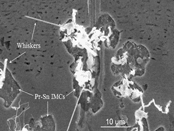
Evaluation of the microstructure and whisker growth in Sn–Zn–Ga solder with Pr content
-
- Journal:
- Journal of Materials Research / Volume 27 / Issue 14 / 28 July 2012
- Published online by Cambridge University Press:
- 24 May 2012, pp. 1887-1894
- Print publication:
- 28 July 2012
-
- Article
- Export citation

Effect of strain hardening on the elastic properties and normalized velocity of hybrid UHMWPE–nylon 6–SWCNT nanocomposites fiber
-
- Journal:
- Journal of Materials Research / Volume 27 / Issue 20 / 28 October 2012
- Published online by Cambridge University Press:
- 24 May 2012, pp. 2657-2667
- Print publication:
- 28 October 2012
-
- Article
- Export citation
-
Hybrid ultrahigh molecular weight polyethylene–nylon 6–single-wall carbon nanotube fibers were processed using solution spinning method. Elastic properties and normalized velocity ( $\root 3 \of \Omega $) of the hybrid fibers were measured before and after strain hardening through repeated loading–unloading cycles. Phenomenal improvement in the properties was found: strength, modulus, and normalizing velocity increased by almost one order of magnitude after strain hardening. Neat and reinforced filaments were characterized through differential scanning calorimetry, Raman spectroscopy, and scanning electron microscope before and after strain hardening. It has been revealed that nylon 6 contributed to the deformation ability of the composite fiber, while carbon nanotubes contributed to the sharing of load as they aligned during extrusion and strain hardening processes. Important morphological features determining the fiber properties were the change in crystallinity and rate of crystallization, formation of microdroplets, interfacial sliding, polymer coating of nanotubes, alignment of polymer fibrils and nanotubes.

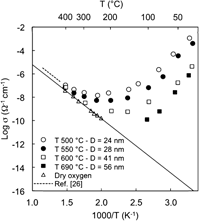
Low temperature proton conduction in bulk nanometric TiO2 prepared by high-pressure field assisted sintering
-
- Journal:
- Journal of Materials Research / Volume 27 / Issue 15 / 14 August 2012
- Published online by Cambridge University Press:
- 24 May 2012, pp. 1975-1981
- Print publication:
- 14 August 2012
-
- Article
- Export citation

Transport and surface conductivity in ZnO
-
- Journal:
- Journal of Materials Research / Volume 27 / Issue 17 / 14 September 2012
- Published online by Cambridge University Press:
- 22 May 2012, pp. 2205-2213
- Print publication:
- 14 September 2012
-
- Article
- Export citation

Microstructure and mechanical properties of sub-micron zinc structures
-
- Journal:
- Journal of Materials Research / Volume 27 / Issue 16 / 28 August 2012
- Published online by Cambridge University Press:
- 22 May 2012, pp. 2140-2147
- Print publication:
- 28 August 2012
-
- Article
- Export citation

Spontaneous formation of filamentary Cd whiskers and degradation of CdMgYb icosahedral quasicrystal under ambient conditions
-
- Journal:
- Journal of Materials Research / Volume 27 / Issue 14 / 28 July 2012
- Published online by Cambridge University Press:
- 22 May 2012, pp. 1895-1904
- Print publication:
- 28 July 2012
-
- Article
- Export citation
-
The whiskers spontaneously grown in Cd–Mg–Yb alloy containing icosahedral quasicrystal as dominant phase have been investigated by electron microscopy. It is found that: (i) the whiskers are mainly composed of Cd with growth direction along
 . CdO particles are frequently observed on surfaces of whiskers and the alloy, indicating the importance of the oxidation process during the whisker growth; (ii) there exist four types of orientation relationship between Cd and CdO. The interfaces between them are shown to accommodate large lattice misfit, which is well explained by near coincidence site lattice model; (iii) nanosized Cd particles are observed to aggregate around the whisker root, providing a convincing experimental evidence for the long-range atomic diffusion. Our study offers a unique opportunity to unveil the relationship between unstability of quasicrystal structure and whisker formation and may have some implications for oxidation process of metals.
 . CdO particles are frequently observed on surfaces of whiskers and the alloy, indicating the importance of the oxidation process during the whisker growth; (ii) there exist four types of orientation relationship between Cd and CdO. The interfaces between them are shown to accommodate large lattice misfit, which is well explained by near coincidence site lattice model; (iii) nanosized Cd particles are observed to aggregate around the whisker root, providing a convincing experimental evidence for the long-range atomic diffusion. Our study offers a unique opportunity to unveil the relationship between unstability of quasicrystal structure and whisker formation and may have some implications for oxidation process of metals.
Electrical conductivity and magnetic properties of core-shell silver-coated magnetite composite nanoparticles
-
- Journal:
- Journal of Materials Research / Volume 27 / Issue 14 / 28 July 2012
- Published online by Cambridge University Press:
- 21 May 2012, pp. 1853-1858
- Print publication:
- 28 July 2012
-
- Article
- Export citation

Effect of annealing temperature on the electrical characteristics of Ti–Zn–Sn–O thin-film transistors fabricated via a solution process
-
- Journal:
- Journal of Materials Research / Volume 27 / Issue 17 / 14 September 2012
- Published online by Cambridge University Press:
- 18 May 2012, pp. 2293-2298
- Print publication:
- 14 September 2012
-
- Article
- Export citation
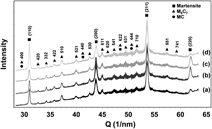
Micrometer-scale synchrotron diffraction mapping analysis of carbide precipitation in deep cryogenically treated low carbon steel
-
- Journal:
- Journal of Materials Research / Volume 27 / Issue 16 / 28 August 2012
- Published online by Cambridge University Press:
- 18 May 2012, pp. 2122-2130
- Print publication:
- 28 August 2012
-
- Article
- Export citation

Hydrogen in oxide semiconductors
-
- Journal:
- Journal of Materials Research / Volume 27 / Issue 17 / 14 September 2012
- Published online by Cambridge University Press:
- 18 May 2012, pp. 2190-2198
- Print publication:
- 14 September 2012
-
- Article
- Export citation

Structural and electrical properties of single Ga/ZnO nanofibers synthesized by electrospinning
-
- Journal:
- Journal of Materials Research / Volume 27 / Issue 13 / 14 July 2012
- Published online by Cambridge University Press:
- 17 May 2012, pp. 1672-1679
- Print publication:
- 14 July 2012
-
- Article
- Export citation

Charge transport in solution-processed zinc tin oxide thin film transistors
-
- Journal:
- Journal of Materials Research / Volume 27 / Issue 17 / 14 September 2012
- Published online by Cambridge University Press:
- 16 May 2012, pp. 2286-2292
- Print publication:
- 14 September 2012
-
- Article
- Export citation

On the selective decoration of facets in metallic nanoparticles
-
- Journal:
- Journal of Materials Research / Volume 27 / Issue 14 / 28 July 2012
- Published online by Cambridge University Press:
- 16 May 2012, pp. 1777-1786
- Print publication:
- 28 July 2012
-
- Article
- Export citation

Micrometer-sized quasicrystals in the Al85Ni5Y6Co2Fe2 metallic glass: A TEM study and a brief discussion on the formability of quasicrystals in bulk and marginal glass-forming alloys
-
- Journal:
- Journal of Materials Research / Volume 27 / Issue 16 / 28 August 2012
- Published online by Cambridge University Press:
- 16 May 2012, pp. 2131-2139
- Print publication:
- 28 August 2012
-
- Article
- Export citation
JMR volume 27 issue 11 Cover and Front matter
-
- Journal:
- Journal of Materials Research / Volume 27 / Issue 11 / 14 June 2012
- Published online by Cambridge University Press:
- 15 May 2012, pp. f1-f5
- Print publication:
- 14 June 2012
-
- Article
-
- You have access
- Export citation
JMR volume 27 issue 11 Cover and Back matter
-
- Journal:
- Journal of Materials Research / Volume 27 / Issue 11 / 14 June 2012
- Published online by Cambridge University Press:
- 15 May 2012, pp. b1-b4
- Print publication:
- 14 June 2012
-
- Article
-
- You have access
- Export citation

Syntheses and characterizations of multiwalled carbon nanotubes-supported palladium nanocomposites
-
- Journal:
- Journal of Materials Research / Volume 27 / Issue 13 / 14 July 2012
- Published online by Cambridge University Press:
- 14 May 2012, pp. 1680-1687
- Print publication:
- 14 July 2012
-
- Article
- Export citation

Evaporation-induced self-assembly of capillary cylindrical colloidal crystal in a face-centered cubic structure with controllable thickness
-
- Journal:
- Journal of Materials Research / Volume 27 / Issue 13 / 14 July 2012
- Published online by Cambridge University Press:
- 14 May 2012, pp. 1663-1671
- Print publication:
- 14 July 2012
-
- Article
- Export citation
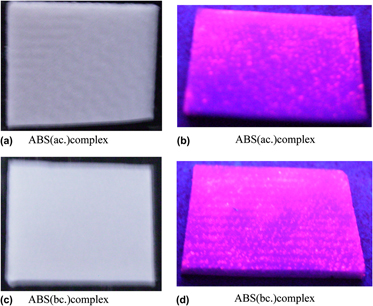
Ultraviolet sensors using a luminescent europium (III) complex on acrylonitrile butadiene styrene polymer
-
- Journal:
- Journal of Materials Research / Volume 27 / Issue 16 / 28 August 2012
- Published online by Cambridge University Press:
- 14 May 2012, pp. 2088-2095
- Print publication:
- 28 August 2012
-
- Article
- Export citation
