To save content items to your account,
please confirm that you agree to abide by our usage policies.
If this is the first time you use this feature, you will be asked to authorise Cambridge Core to connect with your account.
Find out more about saving content to .
To save content items to your Kindle, first ensure no-reply@cambridge.org
is added to your Approved Personal Document E-mail List under your Personal Document Settings
on the Manage Your Content and Devices page of your Amazon account. Then enter the ‘name’ part
of your Kindle email address below.
Find out more about saving to your Kindle.
Note you can select to save to either the @free.kindle.com or @kindle.com variations.
‘@free.kindle.com’ emails are free but can only be saved to your device when it is connected to wi-fi.
‘@kindle.com’ emails can be delivered even when you are not connected to wi-fi, but note that service fees apply.
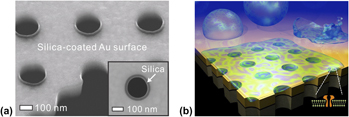
Although atomic layer deposition (ALD) has been used for many years as an industrial manufacturing method for microprocessors and displays, this versatile technique is finding increased use in the emerging fields of plasmonics and nanobiotechnology. In particular, ALD coatings can modify metallic surfaces to tune their optical and plasmonic properties, to protect them against unwanted oxidation and contamination, or to create biocompatible surfaces. Furthermore, ALD is unique among thin film deposition techniques in its ability to meet the processing demands for engineering nanoplasmonic devices, offering conformal deposition of dense and ultrathin films on high-aspect-ratio nanostructures at temperatures below 100 °C. In this review, we present key features of ALD and describe how it could benefit future applications in plasmonics, nanosciences, and biotechnology.
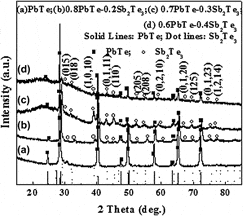
In this article, the binary-phased PbTe–Sb2Te3 nanopowders were synthesized via a hydro/solvo-thermal route to improve the thermoelectric properties of PbTe matrix material. The single-phased PbTe powders exhibit pure nanoparticles, but the binary-phased PbTe–Sb2Te3 powders have a mixed morphology composed of nanospheres and nanoribbons. Our results suggest that the thermal conductivity of the binary-phased PbTe–Sb2Te3 bulks can be reduced significantly and the Seebeck coefficient can be increased obviously, although the electrical conductivity can also be decreased sharply. Consequently, a large figure of merit 0.85 at 623 K can be achieved for 0.7PbTe–0.3Sb2Te3 bulk, which is enhanced by about one time as compared to that of the single-phased PbTe bulk. This large enhancement could be attributed to the lowered carrier concentration and the increased interface scattering in the binary-phased PbTe–Sb2Te3 materials with a mixed morphology.
A clickable surface was prepared using nanoporous SBA-15 support. Methylimidazolium, an ionic liquid, was immobilized on this surface through the click reaction. Detailed characterization using nitrogen adsorption, elemental analysis, x-ray diffraction, scanning electron microscopy, Fourier transform infrared spectroscopy, and thermogravimetric analysis showed that the ionic system was fixed inside the channels and the ordered porous structure remained stationary. Influence of this material on photoluminescence emission of 5-amino-4-hydroxy-7-sulfonaphthalene-2-sulfonate anion (H-acid) in aqueous solutions was evaluated. This click reaction product can be used effectively for H-acid removal from wastewater.
A review is given on the use of ion-beam-assisted deposition (IBAD) to the growth of films within the B–C–N system, both as monolithic and multilayer coatings. The films considered include elemental, binary, and ternary materials like pure carbon (diamond-like carbon), pure boron (B), boron nitrides (c‑BN, h‑BN, and BNx), boron carbides (B4C and BxC), carbon nitrides (CNx), and ternary BxCyNz. The use of non-reactive IBAD with argon ions and reactive IBAD with nitrogen ions is discussed in connection with control of the composition, physical and chemical sputtering, film density, internal stress, and promotion of metastable phases.
We developed a polyatomic cluster ion beam system for materials processing, and polyatomic clusters of materials such as alcohol and water were produced by an adiabatic expansion phenomenon. In this article, cluster formation is discussed using thermodynamics and fluid dynamics. To investigate the interactions of polyatomic cluster ions with solid surfaces, various kinds of substrates such as Si(100), SiO2, mica, polymethyl methacrylate, and metals were irradiated by ethanol, methanol, and water cluster ion beams. To be specific, chemical reactions between radicals of polyatomic molecules and surface Si atoms were investigated, and low-irradiation damage as well as high-rate sputtering was carried out on the Si(100) surfaces. Furthermore, materials processing methods including high-rate sputtering, surface modification, and micropatterning were demonstrated with ethanol and water cluster ion beams.
Chips produced by turning a commercial purity magnesium billet were cold compacted and then hot extruded at four different temperatures: 250, 300, 350, and 400 °C. Cast billets, of identical composition, were also extruded as reference material. Chip boundaries, visible even after 49:1 extrusion at 400 °C, were observed to suppress grain coarsening. Although 250 °C extruded chip-consolidated product showed early onset of yielding and lower ductility, fully dense material (extruded at 400 °C) had nearly 40% reduction in grain size with 22% higher yield strength and comparable ductility as that of the reference. The study highlights the role of densification and grain refinement on the compression behavior of chip consolidated specimens.
This article reports on microstructure and dielectric properties of Ba0.5Sr0.5Ti1−3y/2WyO3 ceramics. Dielectric peaks of the Ba0.5Sr0.5Ti1−3y/2WyO3 ceramics were markedly suppressed, broadened, and shifted to low temperature with increasing content of W. The limit of W incorporating into the barium strontium titanate (BST) lattice was y = 0.02. Two second phases (BaWO4 and Ba2Ti5O12) were formed above the solid solution limit of W in BST. The doping mechanism represents a new approach to develop microwave tunable materials. Dielectric properties of the Ba0.5Sr0.5Ti1−3y/2WyO3 ceramics could be optimized by the content of W. The sample with y = 0.05 had ε′ of 431, quality factor of 365 (at 2.111 GHz), and tunability of 11.5%, which makes a potential candidate for tunable microwave device applications in the wireless communication.
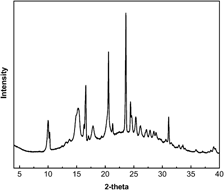
Tetra(4-dihydroxyborylphenyl)germanium as the tetrahedral units and 1,2,4,5-tetrahydroxybenzene as linkers were selected to form a crystalline porous aromatic framework, CPAF-13, with the planar five-membered BO2C2 ring in its structure by a dehydration reaction. The crystallinity of CPAF-13 was confirmed by x-ray diffraction analysis. The Ar sorption measurement on activated CPAF-13 results in a surface area of 417 m2/g, using Brunauer Emmett Teller model. CPAF-13 also shows a considerable adsorption capacity of H2.
We observed the formation of dominant shear bands in model ZrCuAl metallic glass (MG) nanowires (18-nm-long) in molecular dynamics simulations, which implies size-independent incipient plasticity in MG materials. The MG nanowires were prepared using the simulated casting technique to ensure proper relaxation of sample surfaces. Under uniaxial compression, shear bands initiate at the surfaces and lead to reduced icosahedral short-range order. The shear band formation is sensitive to sample thermal history, which calls for careful consideration of sample preparation effects in both experimental and numerical studies of size effect in MG samples.
There has been a rapid expansion of activity in the field of biomaterials and related medical devices, both in scientific terms and in clinical and commercial applications. The author of this book has been influential in setting the standard for the accurate definition of some of the terms used, and in particular his definition of biocompatibility, agreed at a 1987 conference, has been accepted around the world. The book presents definitions and explanations of 6000 terms used not only in the fields of biomaterials and medical devices, but also in materials science, biological sciences, and clinical medicine and surgery.
Thin native oxide layers can dominate the mechanical properties of metallic thin films. However, to date there has been little quantification of how such overlayers affect yield and fracture during indentation in constrained film systems. To gain insight into such processes, electrical contact resistance was measured in situ during nanoindentation on constrained thin films of epitaxial Cr and polycrystalline Al, both possessing a native oxide overlayer. Measurements during loading of the films show both increases and decreases in current, which can then be used to distinguish between various sources of plasticity. Ex situ measurements of the oxide thickness are used to provide a starting point for elasticity simulations of stress in both systems. The results show that dislocation nucleation in the metal film can be differentiated from oxide fracture during indentation.
Polyaniline (PANI) microtubes were successfully synthesized by a simple way without using any templates. Their structure was characterized by scanning electron microscopy, transmission electron microscopy, x-ray diffraction, ultraviolet–visible absorption spectra, and Fourier transform infrared spectroscopy. The average length and diameter of the microtubes were about 12.0 and 3.0 μm, respectively. In addition, silver microrods were further prepared using the PANI microtubes as templates. Scanning electron microscopy, energy-dispersive x-ray spectra, x-ray diffraction, and ultraviolet–visible absorption spectra analyses were performed to characterize the structure of the sample. The results indicated the formation of silver microrods inside PANI microtubes. Moreover, the microwave absorption and electrical properties of PANI microtubes, PANI particles, and silver microrods were compared. It shows that the silver microrods coated with PANI have good microwave absorption and electrical properties, which can apply on electromagnetic interference shielding and microwave absorption materials.
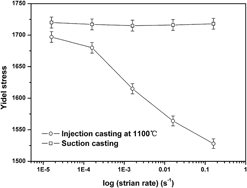
The Zr65Al7.5Ni10Cu17.5 bulk metallic glasses were prepared by injection casting (casting temperature of 1100 °C) and in situ suction casting (casting temperature as high as 3000 °C). The strain-rate-dependent mechanical behaviors of the specimens were investigated under axial compression at room temperature over a wide strain rate range (1.6 × 10⁻⁵–1.6 × 10⁻¹ s−1). The specimens prepared by injection casting exhibited negative strain rate sensitivity, i.e., the yield stress decreased with increasing strain rate. In contrast, no strain rate sensitivity was observed for the specimens prepared by in situ suction casting. The different strain rate sensitivities in the specimens prepared at different temperatures were probably caused by the diversities of the local atomic structures.
Indentations tests have been performed on two standard materials SiO2 and Si (100) using two Berkovich indenters presenting different tip defects. Estimations of the tip radii deduced from analyses of maximal applied load versus contact depth and stiffness versus contact depth curves have been compared for experimental observation of each indenter tip obtained with atomic force microscopy (AFM). Results indicate that the determination of the tip defect from data extracted form load–displacement curves is partly dependent on the mechanical properties of the tested material. Then, an original study is proposed to evidence the influence of the tip defect on mechanical response during indentation. Experimental AFM observations of the tip indenter geometries have been introduced in finite element software MSC MARC to reproduce indentation tests on bulk material surfaces. We demonstrated at very shallow penetration depth (less than 50 nm) that the real indenter tip defects have to be considered in the simulation runs, especially to identify accurately the rheological parameters of the tested surface.
The ability to tune the functional interface of single-walled carbon nanotubes in a versatile manner is key to the success of deploying them as an active material in chemical and biological sensors. Here we present an overview of our device strategies demonstrating the use of controlled electrochemical functionalization to tune this interface by bringing in different functionalities ranging from metallic nanoparticles to biomolecules onto the nanotube surface. The extent of such a functionalization is tunable, providing us with a good control over sensitivity, selectivity, and detection limit of the realized sensors. Moreover, the sensor mechanisms have been analyzed. Taken together the methods and results outlined here constitute a general framework for the rational design of nanoscale field-effect-based chemical sensors and biosensors.
There is much interest in the recent years in the nanoscale metallic multilayered composite materials due to their unusual mechanical properties, such as very high flow strength and stable plastic flow to large strains. These unique mechanical properties have been proposed to result from the interface-dominated plasticity mechanisms in nanoscale composite materials. Studying how the dislocation configurations and densities evolve during deformation will be crucial in understanding the yield, work hardening, and recovery mechanisms in the nanolayered materials. In an effort to shed light on these topics, uniaxial compression experiments on nanoscale Cu/Nb single-crystal multilayer pillars using ex situ synchrotron-based Laue x-ray microdiffraction technique were conducted. Using this approach, we studied the nanoscale Cu/Nb multilayer pillars before and after uniaxial compression to about 14% of plastic strain and found significant Laue peak broadening in the Cu phase, which indicates storage of statistically stored dislocations, while no significant Laue peak broadening was observed in the Nb phase in the nanoscale multilayers. These observations suggest that at 14% plastic strain of the nanolayered pillars, the deformation was dominated by plasticity in the Cu nanolayers and elasticity or possibly a zero net plasticity (due to the possibility of annihilation of interface dislocations) in the Nb nanolayers.
This article presents a novel microscratch technique for the determination of the fracture toughness of materials from scratch data. While acoustic emission and optical imaging devices provide quantitative evidence of fracture processes during scratch tests, the technique proposed here provides a quantitative means to assess the fracture toughness from the recorded forces and depth of penetration. We apply the proposed method to a large range of materials, from soft (polymers) to hard (metal), spanning fracture toughness values over more than two orders of magnitude. The fracture toughness values so obtained are in excellent agreement with toughness values obtained for the same materials by conventional fracture tests. The fact that the proposed microscratch technique is highly reproducible, almost nondestructive, and requires only small material volumes makes this technique a powerful tool for the assessment of fracture properties for microscale materials science and engineering applications.
Interrod regions exist between the enamel rods and are known to have different crystallite orientations and a higher organic content compared to the enamel rods (the intrarod regions). This study aims to characterize the mechanical properties of both regions especially the time-dependent properties by using spherical indentation. Despite the very small amount of proteins, the interrod region shows statistically significantly higher inelastic energy dissipation than the intrarod region with increased deformation times. The total displacement under constant load (creep), viscosity, and stress relaxation behavior of both regions are also reported. Similar to the observation of previous studies, the elastic modulus and hardness in the intrarod region are significantly higher than in the interrod region.
This experimental study presents a comparison of differently tensile stressed silicon nitride (SiN) layers and their response to irradiation in a vacuum ultraviolet (VUV) curing system. Therefore, three types of silicon nitride with initial stress levels of 450 MPa, 700 MPa and 980 MPa were deposited by plasma enhanced chemical vapor deposition (PECVD). In contrast to industrial standard VUV curing with broadband lamps ≥ 220 nm radiation wavelengths, we analyzed the effects of curing with single wavelengths at 172 nm and 222 nm. The samples were characterized by Fourier Transform Infrared Spectroscopy, ellipsometry, and wafer bow measurement. It could be shown that high energy photons are able to dehydrogenize SiN films more than lower energetic photons compared with lower Si-N-Si crosslinking effects. Furthermore, we could show that a dual combined 172 nm and 222 nm VUV curing procedure can produce films with very low hydrogen concentration and high percentage of structural units consisting of Si-N-Si bonds. In conclusion of this study, an up to +900 MPa stress increasing process could be established.