To save content items to your account,
please confirm that you agree to abide by our usage policies.
If this is the first time you use this feature, you will be asked to authorise Cambridge Core to connect with your account.
Find out more about saving content to .
To save content items to your Kindle, first ensure no-reply@cambridge.org
is added to your Approved Personal Document E-mail List under your Personal Document Settings
on the Manage Your Content and Devices page of your Amazon account. Then enter the ‘name’ part
of your Kindle email address below.
Find out more about saving to your Kindle.
Note you can select to save to either the @free.kindle.com or @kindle.com variations.
‘@free.kindle.com’ emails are free but can only be saved to your device when it is connected to wi-fi.
‘@kindle.com’ emails can be delivered even when you are not connected to wi-fi, but note that service fees apply.
A survey of failure criteria for brittle and ductile materials is presented. The maximum principal stress and the maximum principal strain criterion for brittle materials are introduced. The Tresca maximum shear stress and the von Mises energy criterion for ductile materials are formulated and applied to study the onset of plastic yield in thin-walled tubes and other structural members. The Mohr failure criterion is based on the consideration of Mohr's circles. The Coulomb–Mohr criterion for geomaterials incorporates the normal and shear stress, and the coefficient of internal friction. According to Drucker–Prager’s criterion, plastic yield occurs when the shear stress on octahedral planes overcomes the cohesive and frictional resistance to sliding. The fracture mechanics based failure criterion takes into account the presence of cracks. Failure occurs if the release of potential energy accompanying the crack growth is sufficient to supply the increase of the surface energy of expanded crack faces. The fracture criterion is also formulated in terms of the stress intensity factor K, whose critical value is the fracture toughness of the material.
The components of the infinitesimal strain tensor are defined, which represent measures of the relative length changes (longitudinal strains or dilatations) and the angle changes (shear strains) at a considered material point with respect to the chosen coordinate axes. The principal strains (maximum and minimum dilatations) and the maximum shear strains are determined, as well as the areal and volumetric strains. The expressions for the strain components are derived in terms of the spatial gradients of the displacement components. The Saint-Venant compatibility equations are introduced which assure the existence of single-valued displacements associated with a given strain field. The matrix of local material rotations, which accompany the strain components in producing the displacement gradient matrix, is defined. The determination of the displacement components by integration of the strain components is discussed.
The representation of the stress and strain tensors and the formulation of the boundary-value problem of linear elasticity in cylindrical coordinates is considered. The Cauchy equations of equilibrium, expressed in terms of stresses, the strain–displacement relations, the compatibility equations, the generalized Hooke's law, and the Navier equations of equilibrium, expressed in terms of displacements, are all cast in cylindrical coordinates. The axisymmetric boundary-value problem of a pressurized hollow cylinder with either open or closed ends is formulated and solved. The results are used to obtain the elastic fields for a pressurized circular hole in an infinite medium, and to solve a cylindrical shrink-fit problem. A pressurized hollow sphere and a spherical shrink-fit problem are also considered to illustrate the solution procedure in the case of problems with spherical symmetry.
Antiplane shear is a type of deformation in which the only nonvanishing displacement component is the out-of-plane displacement, orthogonal to the (x,y) plane. The corresponding nonvanishing shear stresses are within that plane. For this type of deformation, the displacement is a harmonic function of (x,y), satisfying the Laplace's equation. We solve and discuss the problems of antiplane shear of a circular annulus, a concentrated line force along the surface of a half-space, antiplane shear of a medium weakened by a circular or an elliptical hole, and the problem of a medium strengthened by a circular inhomogeneity. The stress field near a crack tip under remote antiplane shear loading is derived, as well as the stress field around a screw dislocation in infinite and semi-infinite media. The stresses produced by a screw dislocation near a circular hole or a circular inhomogeneity in an infinite homogeneous medium, and the stresses produced by a screw dislocation in the vicinity of a bimaterial interface are examined.
Two-dimensional problems of plane stress and plane strain are considered. The plane stress problems are the problems of thin plates loaded over their lateral boundary by tractions which are uniform across the thickness of the plate, while its flat faces are traction free. The plane strain problems involve long cylindrical bodies, loaded by tractions which are orthogonal to the longitudinal axis of the body and which do not vary along this axis. The tractions over the bounding curve of each cross section are self-equilibrating. Two rigid smooth constraints at the ends of the body prevent its axial deformation. The stress components are expressed in terms of the Airy stress function such that the equilibrium equations are automatically satisfied. The Beltrami–Michell compatibility equations require that the Airy stress function is a biharmonic function. The Airy theory is applied to analyze pure bending of a thin beam, bending of a cantilever beam by a concentrated force, and bending of a simply supported beam by a distributed load. The approximate character of the plane stress solution is discussed, as well as the transition from the plane stress to the plane strain solution.
The analysis of normal and shear stresses over differently oriented surface elements through a considered material point is presented. The Cauchy relation for traction vectors is introduced, which leads to the concept of a stress tensor. The analysis is presented of one-, two-, and three-dimensional states of stress, the principal stresses (maximum and minimum normal stresses), the maximum shear stress, and the deviatoric and spherical parts of the stress tensor.The equations of equilibrium are derived and the corresponding boundary conditions are formulated.
In addition to rotation, non-circular cross sections of twisted rods undergo longitudinal displacement, which causes warping of the cross section. This warping is independent of the longitudinal z coordinate and is a harmonic function of the (x,y) coordinates within the cross section. The Prandtl stress function is introduced, in terms of which the shear stresses are given as its gradients. This automatically satisfies equilibrium equations, while the compatibility conditions require that the stress function is the solution to Poisson’s equation. From the boundary condition of a traction-free lateral surface, it follows that the stress function is constant along the boundary of the cross section. The applied torque is related to the angle of twist by the integral condition of moment equilibrium. This theory is applied to determine the stress and displacement components in twisted rods of elliptical, triangular, rectangular, semi-circular, grooved-circular, thin-walled open, thin-walled closed, and multicell cross sections. The expressions for the torsional stiffness are derived in each case. The maximum shear stress and the warping displacement are also evaluated and discussed.
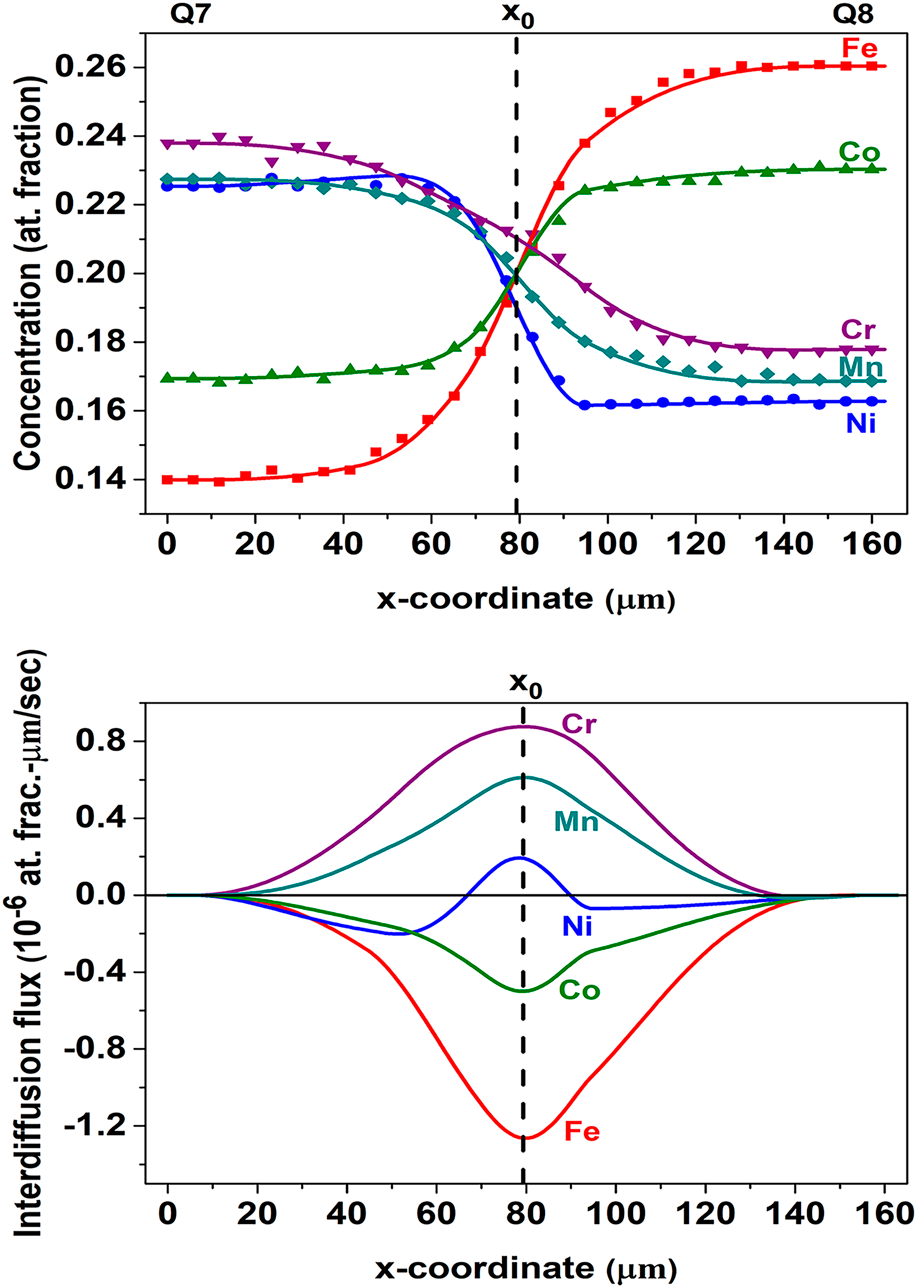
For the first time in the literature, experimental determination of entire sets of exact interdiffusion coefficients in quaternary and quinary alloy systems is reported. Using the method of body-diagonal diffusion couple, a set of nine quaternary interdiffusion coefficients were evaluated in Fe–Ni–Co–Cr and a set of sixteen quinary interdiffusion coefficients were determined in a Fe–Ni–Co–Cr–Mn system, both at approximately equimolar compositions. Regions of uphill interdiffusion and zero flux planes were observed for nickel and cobalt in quinary couples, indicating the existence of strong diffusional interactions in Fe–Ni–Co–Cr–Mn alloys. The strong diffusional interactions were also manifested in the large magnitudes of cross coefficients in both the systems. The existence of strong diffusional interactions in high-entropy alloys (HEAs) as observed through experimentally determined interdiffusion coefficients in this study establishes beyond doubt the fact that cross interdiffusion coefficients cannot be ignored in HEAs.
Partial differential equations whose solution specifies the elastic response of a loaded body are summarized. If all boundary conditions are given in terms of tractions, the boundary-value problem can be specified entirely in terms of stresses. The governing differential equations are then the Cauchy equations of equilibrium and the Beltrami–Michell compatibility equations. If some of the boundary conditions are given in terms of the displacements, the boundary-value problem is formulated in terms of the displacement components through the Navier equations of equilibrium. The boundary conditions can be expressed in terms of displacements, or in terms of displacement gradients. Due to the linearity of all equations and boundary conditions, the principle of superposition applies in linear elasticity. The semi-inverse method of solution and the Saint-Venant principle are introduced and discussed. The solution procedure is illustrated in the analysis of the stretching of a prismatic bar by its own weight, thermal expansion of a compressed prismatic bar, pure bending of a prismatic bar, and torsion of a prismatic rod with a circular cross section.
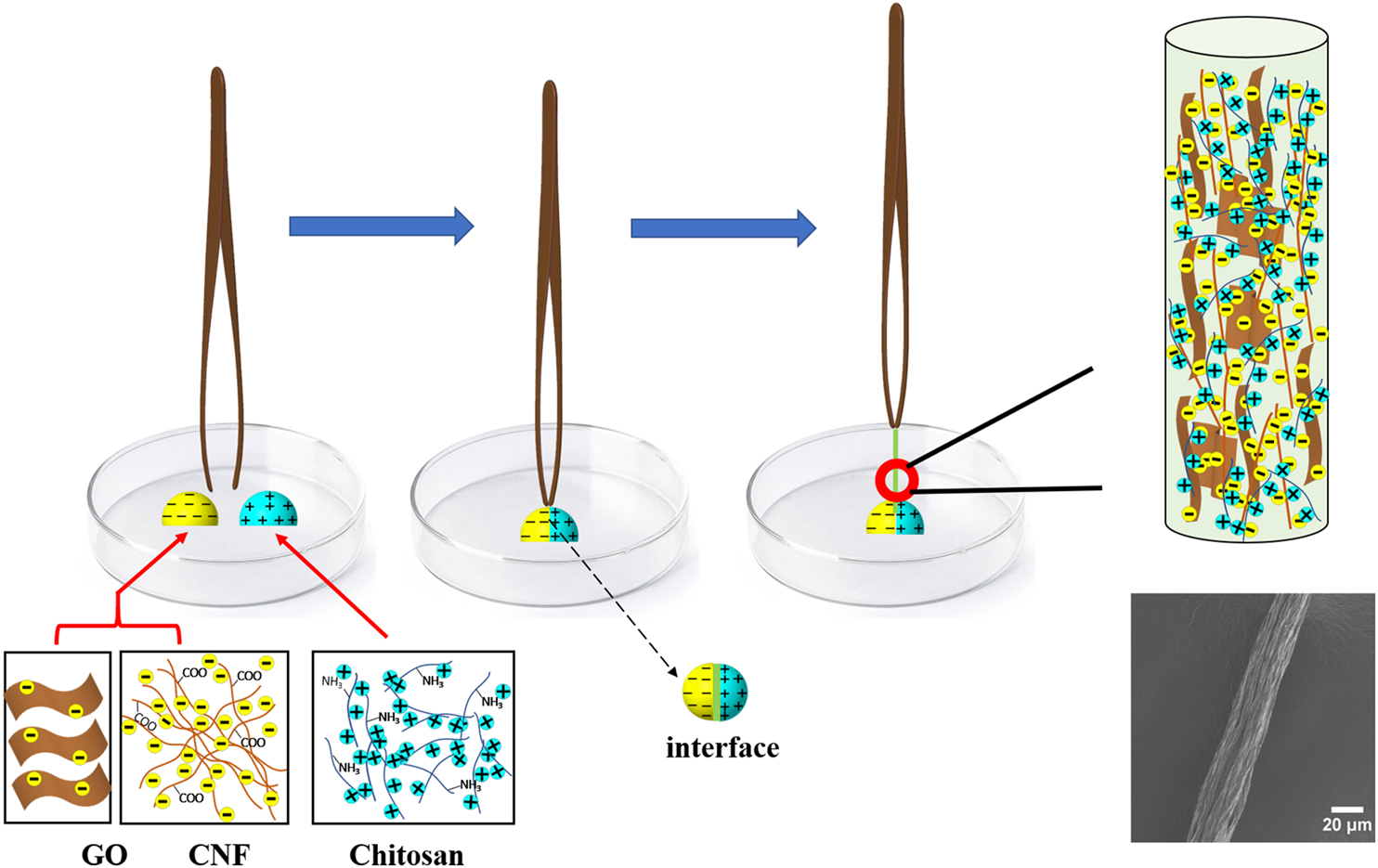
Graphene-based flexible and wearable supercapacitors have been produced by wetspinning, in which organic solvent coagulating bath was prerequisite and spacerswere usually incorporated to improve the electrochemical property butsacrificing the mechanical property. In this work, a nonorganic solvent spinningtechnology named as interfacial polyelectrolyte complexation (IPC), which wasbased on the spontaneous self-assembly of two oppositely charged polyelectrolytesolutions/suspensions to form continuous fibers on drawing in their interfaces,was proposed to fabricate graphene fiber–shaped electrodes forsupercapacitors. Due to the excellent mechanical performance and hydrophilicity,cellulose nanofibrils (CNFs) were added to serve as an efficient reinforcingagent and spacer of graphene fiber electrodes. Consequently, the mechanicalperformance and specific capacitance of the fibers were improved but electricalconductivity was declined. Taking overall consideration, CNF/rGO60 fiberelectrode possessed a superior integrated performance with a capacitance of182.6 F/g, tensile strength of 480 MPa, and electrical conductivity of 5538.7S/m. The IPC spinning provided an environmentally friendly strategy for thefabrication of fiber-shaped functional devices.
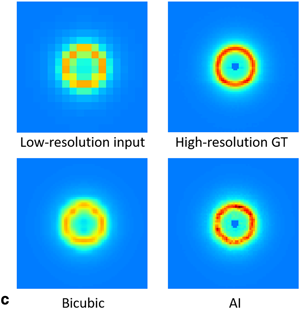
The authors propose an alternative route to circumvent the limitation of neutron flux using the recent deep learning super-resolution technique. The feasibility of accelerating data collection has been demonstrated by using small-angle neutron scattering (SANS) data collected from the EQ-SANS instrument at Spallation Neutron Source (SNS). Data collection time can be reduced by increasing the size of binning of the detector pixels at the sacrifice of resolution. High-resolution scattering data is then reconstructed by using a deep learning-based super-resolution method. This will allow users to make critical decisions at a much earlier stage of data collection, which can accelerate the overall experimental workflow.
Flucytosine, CAS #2022-85-7, crystallizes in the tetragonal space group P41212 (#94) with a = 6.643768(27), c = 23.89009(10) Å, V = 1054.500(7) Å3, and Z = 8. In this work, the sample was obtained from the United States Pharmacopeial Convention (USP) Lot #R03100 and analyzed as-received. The room temperature (295 K) crystal structure was refined using synchrotron (λ = 0.412826 Å) powder diffraction data and optimized using the density functional theory (DFT). When looking down the a-axis, the crystal structure consists of multiple ribbon-like structures stacked into columns. The powder X-ray diffraction pattern of the compound has been submitted to ICDD® for inclusion in the Powder Diffraction File™ (PDF®). The agreement of the Rietveld-refined and DFT-optimized structures is good, with the largest difference in the external amine group with an overall root mean displacement of 0.056 Å. There is also evidence of unit cell expansion at higher temperatures, as the volume of the unit cell at 298 K was 1.6–1.9% greater than the two unit cells obtained at 150 K. A N–H⋯O hydrogen bond exists in the inter-ribbon region between the flucytosine molecules, resulting in a 3D hydrogen bond network.
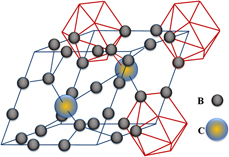
The thermal expansion coefficient (TEC) of nano-B4C having 50 nm mean particle size was measured as a function of applied direct current (DC) electric field strength varying from 0 to 12.7 V/mm and over a temperature range from 298 K up to 1273 K. The TEC exhibits a linear variation with temperature despite being measured over a range that is well below 50% of B4C’s normal melting temperature. The zeroth- and first-order TEC coefficients under zero-field condition are 4.8220 ± 0.009 × 10⁻⁶ K−1 and 1.462 ± 0.004 × 10⁻⁹ K−1, respectively. Both TECs exhibit applied DC electric field dependence. The higher the applied field strength, the steeper the linear thermal expansion response in nano-B4C, which suggests that the applied field affects the curvature of the interatomic potentials at the equilibrium bond length at a given temperature. No anisotropic thermal expansion with and without applied electric field was observed, although nano-B4C has a rhombohedral unit cell symmetry. The rhombohedral unit cell angle was determined as δR= 65.7046° (0.0007), and it remains unaffected by a change in temperature and applied electric field strength, which we attribute to B4C nanoparticle size and its carbon saturation.