Refine search
Actions for selected content:
26077 results in Abstract analysis
Appendix B - Tensor Products
-
- Book:
- Functional Analysis
- Published online:
- 23 June 2022
- Print publication:
- 07 July 2022, pp 633-636
-
- Chapter
- Export citation
6 - Spectral Theory
-
- Book:
- Functional Analysis
- Published online:
- 23 June 2022
- Print publication:
- 07 July 2022, pp 211-228
-
- Chapter
- Export citation
References
-
- Book:
- Functional Analysis
- Published online:
- 23 June 2022
- Print publication:
- 07 July 2022, pp 701-710
-
- Chapter
- Export citation
A Berestycki–Lions type result for a class of degenerate elliptic problems involving the Grushin operator
- Part of
-
- Journal:
- Proceedings of the Royal Society of Edinburgh. Section A: Mathematics / Volume 153 / Issue 4 / August 2023
- Published online by Cambridge University Press:
- 05 July 2022, pp. 1244-1271
- Print publication:
- August 2023
-
- Article
- Export citation
-
In this work we study the existence of nontrivial solution for the following class of semilinear degenerate elliptic equations
\[ -\Delta_{\gamma} u + a(z)u = f(u) \quad \mbox{in}\ \mathbb{R}^{N}, \]where $\Delta _{\gamma }$
 is known as the Grushin operator, $z:=(x,y)\in \mathbb {R}^{m}\times \mathbb {R}^{k}$
 and $m+k=N\geqslant 3$
 , $f$
, $f$ and $a$
 are continuous function satisfying some technical conditions. In order to overcome some difficulties involving this type of operator, we have proved some compactness results that are crucial in the proof of our main results. For the case $a=1$
 , we have showed a Berestycki–Lions type result.


Clustered colouring of graph classes with bounded treedepth or pathwidth
- Part of
-
- Journal:
- Combinatorics, Probability and Computing / Volume 32 / Issue 1 / January 2023
- Published online by Cambridge University Press:
- 05 July 2022, pp. 122-133
-
- Article
- Export citation
-
The clustered chromatic number of a class of graphs is the minimum integer $k$ such that for some integer $c$ every graph in the class is $k$-colourable with monochromatic components of size at most $c$. We determine the clustered chromatic number of any minor-closed class with bounded treedepth, and prove a best possible upper bound on the clustered chromatic number of any minor-closed class with bounded pathwidth. As a consequence, we determine the fractional clustered chromatic number of every minor-closed class.


Which states can be reached from a given state by unital completely positive maps?
- Part of
-
- Journal:
- Proceedings of the Edinburgh Mathematical Society / Volume 65 / Issue 3 / August 2022
- Published online by Cambridge University Press:
- 05 July 2022, pp. 632-651
-
- Article
- Export citation
-
For a state $\omega$
 on a C$^{*}$
 -algebra $A$
 , we characterize all states $\rho$
 in the weak* closure of the set of all states of the form $\omega \circ \varphi$
 , where $\varphi$
 is a map on $A$
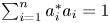
 of the form $\varphi (x)=\sum \nolimits _{i=1}^{n}a_i^{*}xa_i,$ $\sum \nolimits _{i=1}^{n}a_i^{*}a_i=1$
 ($a_i\in A$
 , $n\in \mathbb {N}$
 ). These are precisely the states $\rho$
 that satisfy $\|\rho |J\|\leq \|\omega |J\|$
 for each ideal $J$
 of $A$
 . The corresponding question for normal states on a von Neumann algebra $\mathcal {R}$
 (with the weak* closure replaced by the norm closure) is also considered. All normal states of the form $\omega \circ \psi$
 , where $\psi$
 is a quantum channel on $\mathcal {R}$
 (that is, a map of the form $\psi (x)=\sum \nolimits _ja_j^{*}xa_j$
 , where $a_j\in \mathcal {R}$
 are such that the sum $\sum \nolimits _ja_j^{*}a_j$
 converge to $1$
 in the weak operator topology) are characterized. A variant of this topic for hermitian functionals instead of states is investigated. Maximally mixed states are shown to vanish on the strong radical of a C$^{*}$
 -algebra and for properly infinite von Neumann algebras the converse also holds.


Triangles in randomly perturbed graphs
- Part of
-
- Journal:
- Combinatorics, Probability and Computing / Volume 32 / Issue 1 / January 2023
- Published online by Cambridge University Press:
- 05 July 2022, pp. 91-121
-
- Article
-
- You have access
- Open access
- HTML
- Export citation
-
We study the problem of finding pairwise vertex-disjoint triangles in the randomly perturbed graph model, which is the union of any $n$-vertex graph $G$ satisfying a given minimum degree condition and the binomial random graph $G(n,p)$. We prove that asymptotically almost surely $G \cup G(n,p)$ contains at least $\min \{\delta (G), \lfloor n/3 \rfloor \}$ pairwise vertex-disjoint triangles, provided $p \ge C \log n/n$, where $C$ is a large enough constant. This is a perturbed version of an old result of Dirac.
Our result is asymptotically optimal and answers a question of Han, Morris, and Treglown [RSA, 2021, no. 3, 480–516] in a strong form. We also prove a stability version of our result, which in the case of pairwise vertex-disjoint triangles extends a result of Han, Morris, and Treglown [RSA, 2021, no. 3, 480–516]. Together with a result of Balogh, Treglown, and Wagner [CPC, 2019, no. 2, 159–176], this fully resolves the existence of triangle factors in randomly perturbed graphs.
We believe that the methods introduced in this paper are useful for a variety of related problems: we discuss possible generalisations to clique factors, cycle factors, and $2$-universality.


On birationally trivial families and adjoint quadrics
- Part of
-
- Journal:
- Proceedings of the Edinburgh Mathematical Society / Volume 65 / Issue 3 / August 2022
- Published online by Cambridge University Press:
- 04 July 2022, pp. 587-617
-
- Article
- Export citation
-
Let $\pi \colon \mathcal {X}\to B$
 be a family whose general fibre $X_b$
 is a $(d_1,\,\ldots,\,d_a)$
 -polarization on a general abelian variety, where $1\leq d_i\leq 2$
 , $i=1,\,\ldots,\,a$
 and $a\geq 4$
 . We show that the fibres are in the same birational class if all the $(m,\,0)$
 -forms on $X_b$
 are liftable to $(m,\,0)$
 -forms on $\mathcal {X}$
 , where $m=1$
 and $m=a-1$
 . Actually, we show a general criteria to establish whether the fibres of certain families belong to the same birational class.


Classification of singularities of cluster algebras of finite type: the case of trivial coefficients
- Part of
-
- Journal:
- Glasgow Mathematical Journal / Volume 65 / Issue 1 / January 2023
- Published online by Cambridge University Press:
- 04 July 2022, pp. 170-204
-
- Article
-
- You have access
- Open access
- HTML
- Export citation
Hitting times for second-order random walks
- Part of
-
- Journal:
- European Journal of Applied Mathematics / Volume 34 / Issue 4 / August 2023
- Published online by Cambridge University Press:
- 04 July 2022, pp. 642-666
-
- Article
- Export citation
JMJ volume 21 issue 4 Cover and Front matter
-
- Journal:
- Journal of the Institute of Mathematics of Jussieu / Volume 21 / Issue 4 / July 2022
- Published online by Cambridge University Press:
- 20 July 2022, pp. f1-f2
- Print publication:
- July 2022
-
- Article
-
- You have access
- Export citation
JMJ volume 21 issue 4 Cover and Back matter
-
- Journal:
- Journal of the Institute of Mathematics of Jussieu / Volume 21 / Issue 4 / July 2022
- Published online by Cambridge University Press:
- 20 July 2022, pp. b1-b2
- Print publication:
- July 2022
-
- Article
-
- You have access
- Export citation
Hardy Martingales
- Stochastic Holomorphy, L^1-Embeddings, and Isomorphic Invariants
-
- Published online:
- 30 June 2022
- Print publication:
- 14 July 2022
MODEL THEORY OF GALOIS ACTIONS OF TORSION ABELIAN GROUPS
- Part of
-
- Journal:
- Journal of the Institute of Mathematics of Jussieu / Volume 22 / Issue 6 / November 2023
- Published online by Cambridge University Press:
- 30 June 2022, pp. 2943-2985
- Print publication:
- November 2023
-
- Article
-
- You have access
- Open access
- HTML
- Export citation
On a class of critical N-Laplacian problems
- Part of
-
- Journal:
- Proceedings of the Edinburgh Mathematical Society / Volume 65 / Issue 2 / May 2022
- Published online by Cambridge University Press:
- 27 June 2022, pp. 556-576
-
- Article
- Export citation
-
We establish some existence results for a class of critical $N$
 -Laplacian problems in a bounded domain in $\mathbb {R}^{N}$
 . In the absence of a suitable direct sum decomposition of the underlying Sobolev space to which the classical linking theorem can be applied, we use an abstract linking theorem based on the $\mathbb {Z}_2$
 -cohomological index to obtain a non-trivial critical point.


On the computation of Hopf 2-cocycles with an example of diagonal type
- Part of
-
- Journal:
- Glasgow Mathematical Journal / Volume 65 / Issue 1 / January 2023
- Published online by Cambridge University Press:
- 24 June 2022, pp. 141-169
-
- Article
- Export citation
-
We present a framework for the computation of the Hopf 2-cocycles involved in the deformations of Nichols algebras over semisimple Hopf algebras. We write down a recurrence formula and investigate the extent of the connection with invariant Hochschild cohomology in terms of exponentials. As an example, we present detailed computations leading to the explicit description of the Hopf 2-cocycles involved in the deformations of a Nichols algebra of Cartan type $A_2$ with $q=-1$, a.k.a. the positive part of the small quantum group $\mathfrak{u}^+_{\sqrt{-\text{1}}}(\mathfrak{sl}_3)$. We show that these cocycles are generically pure, that is they are not cohomologous to exponentials of Hochschild 2-cocycles.


Functional Analysis
-
- Published online:
- 23 June 2022
- Print publication:
- 07 July 2022
Homogenisation of a two-phase problem with nonlinear dynamic Wentzell-interface condition for connected–disconnected porous media
- Part of
-
- Journal:
- European Journal of Applied Mathematics / Volume 34 / Issue 4 / August 2023
- Published online by Cambridge University Press:
- 21 June 2022, pp. 617-641
-
- Article
- Export citation
-
We investigate a reaction–diffusion problem in a two-component porous medium with a nonlinear interface condition between the different components. One component is connected and the other one is disconnected. The ratio between the microscopic pore scale and the size of the whole domain is described by the small parameter $\epsilon$. On the interface between the components, we consider a dynamic Wentzell-boundary condition, where the normal fluxes from the bulk domains are given by a reaction–diffusion equation for the traces of the bulk solutions, including nonlinear reaction kinetics depending on the solutions on both sides of the interface. Using two-scale techniques, we pass to the limit $\epsilon \to 0$ and derive macroscopic models, where we need homogenisation results for surface diffusion. To cope with the nonlinear terms, we derive strong two-scale convergence results.


Singularities of 3-parameter line congruences in $\mathbb {R}^{4}$

- Part of
-
- Journal:
- Proceedings of the Royal Society of Edinburgh. Section A: Mathematics / Volume 153 / Issue 3 / June 2023
- Published online by Cambridge University Press:
- 21 June 2022, pp. 1045-1070
- Print publication:
- June 2023
-
- Article
- Export citation
-
In this paper, we give the generic classification of the singularities of 3-parameter line congruences in $\mathbb {R}^{4}$
 . We also classify the generic singularities of normal and Blaschke (affine) normal congruences.


Revisiting closed asymptotic couples
- Part of
-
- Journal:
- Proceedings of the Edinburgh Mathematical Society / Volume 65 / Issue 2 / May 2022
- Published online by Cambridge University Press:
- 20 June 2022, pp. 530-555
-
- Article
-
- You have access
- Open access
- HTML
- Export citation
-
Every discrete definable subset of a closed asymptotic couple with ordered scalar field ${\boldsymbol {k}}$
 is shown to be contained in a finite-dimensional ${\boldsymbol {k}}$
 -linear subspace of that couple. It follows that the differential-valued field $\mathbb {T}$
 of transseries induces more structure on its value group than what is definable in its asymptotic couple equipped with its scalar multiplication by real numbers, where this asymptotic couple is construed as a two-sorted structure with $\mathbb {R}$
 as the underlying set for the second sort.


