Refine search
Actions for selected content:
26077 results in Abstract analysis
A distributionally ambiguous two-stage stochastic approach for investment in renewable generation
- Part of
-
- Journal:
- European Journal of Applied Mathematics / Volume 34 / Issue 3 / June 2023
- Published online by Cambridge University Press:
- 12 May 2022, pp. 484-504
-
- Article
- Export citation
Fractional interpolation inequality and radially symmetric ground states
- Part of
-
- Journal:
- Proceedings of the Royal Society of Edinburgh. Section A: Mathematics / Volume 153 / Issue 3 / June 2023
- Published online by Cambridge University Press:
- 12 May 2022, pp. 937-957
- Print publication:
- June 2023
-
- Article
- Export citation
-
In this paper, we establish a new fractional interpolation inequality for radially symmetric measurable functions on the whole space $R^{N}$
 and a new compact imbedding result about radially symmetric measurable functions. We show that the best constant in the new interpolation inequality can be achieved by a radially symmetric function. As applications of this compactness result, we study the existence of ground states of the nonlinear fractional Schrödinger equation on the whole space $R^{N}$
 . We also prove an existence result of standing waves and prove their orbital stability.


CATEGORICAL AND K-THEORETIC HALL ALGEBRAS FOR QUIVERS WITH POTENTIAL
- Part of
-
- Journal:
- Journal of the Institute of Mathematics of Jussieu / Volume 22 / Issue 6 / November 2023
- Published online by Cambridge University Press:
- 11 May 2022, pp. 2717-2747
- Print publication:
- November 2023
-
- Article
-
- You have access
- Open access
- HTML
- Export citation
-
Given a quiver with potential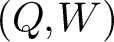 $(Q,W)$, Kontsevich–Soibelman constructed a cohomological Hall algebra (CoHA) on the critical cohomology of the stack of representations of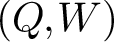 $(Q,W)$. Special cases of this construction are related to work of Nakajima, Varagnolo, Schiffmann–Vasserot, Maulik–Okounkov, Yang–Zhao, etc. about geometric constructions of Yangians and their representations; indeed, given a quiver Q, there exists an associated pair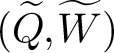 $(\widetilde{Q}, \widetilde{W})$ whose CoHA is conjecturally the positive half of the Maulik–Okounkov Yangian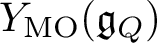 $Y_{\text {MO}}(\mathfrak {g}_{Q})$.
For a quiver with potential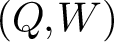 $(Q,W)$, we follow a suggestion of Kontsevich–Soibelman and study a categorification of the above algebra constructed using categories of singularities. Its Grothendieck group is a K-theoretic Hall algebra (KHA) for quivers with potential. We construct representations using framed quivers, and we prove a wall-crossing theorem for KHAs. We expect the KHA for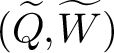 $(\widetilde{Q}, \widetilde{W})$ to recover the positive part of quantum affine algebra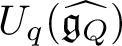 $U_{q}(\widehat {\mathfrak {g}_{Q}})$ defined by Okounkov–Smirnov.
The critical mean-field Chayes–Machta dynamics
- Part of
-
- Journal:
- Combinatorics, Probability and Computing / Volume 31 / Issue 6 / November 2022
- Published online by Cambridge University Press:
- 11 May 2022, pp. 924-975
-
- Article
-
- You have access
- Open access
- HTML
- Export citation
-
The random-cluster model is a unifying framework for studying random graphs, spin systems and electrical networks that plays a fundamental role in designing efficient Markov Chain Monte Carlo (MCMC) sampling algorithms for the classical ferromagnetic Ising and Potts models. In this paper, we study a natural non-local Markov chain known as the Chayes–Machta (CM) dynamics for the mean-field case of the random-cluster model, where the underlying graph is the complete graph on n vertices. The random-cluster model is parametrised by an edge probability p and a cluster weight q. Our focus is on the critical regime: $p = p_c(q)$ and $q \in (1,2)$, where $p_c(q)$ is the threshold corresponding to the order–disorder phase transition of the model. We show that the mixing time of the CM dynamics is $O({\log}\ n \cdot \log \log n)$ in this parameter regime, which reveals that the dynamics does not undergo an exponential slowdown at criticality, a surprising fact that had been predicted (but not proved) by statistical physicists. This also provides a nearly optimal bound (up to the $\log\log n$ factor) for the mixing time of the mean-field CM dynamics in the only regime of parameters where no non-trivial bound was previously known. Our proof consists of a multi-phased coupling argument that combines several key ingredients, including a new local limit theorem, a precise bound on the maximum of symmetric random walks with varying step sizes and tailored estimates for critical random graphs. In addition, we derive an improved comparison inequality between the mixing time of the CM dynamics and that of the local Glauber dynamics on general graphs; this results in better mixing time bounds for the local dynamics in the mean-field setting.


Compact and weakly compact Lipschitz operators
- Part of
-
- Journal:
- Proceedings of the Royal Society of Edinburgh. Section A: Mathematics / Volume 153 / Issue 3 / June 2023
- Published online by Cambridge University Press:
- 11 May 2022, pp. 1002-1020
- Print publication:
- June 2023
-
- Article
- Export citation
-
Any Lipschitz map $f : M \to N$
 between two pointed metric spaces may be extended in a unique way to a bounded linear operator $\widehat {f} : \mathcal {F}(M) \to \mathcal {F}(N)$
 between their corresponding Lipschitz-free spaces. In this paper, we give a necessary and sufficient condition for $\widehat {f}$
 to be compact in terms of metric conditions on $f$
 . This extends a result by A. Jiménez-Vargas and M. Villegas-Vallecillos in the case of non-separable and unbounded metric spaces. After studying the behaviour of weakly convergent sequences made of finitely supported elements in Lipschitz-free spaces, we also deduce that $\widehat {f}$
 is compact if and only if it is weakly compact.


THE HITCHIN CONNECTION IN ARBITRARY CHARACTERISTIC
-
- Journal:
- Journal of the Institute of Mathematics of Jussieu / Volume 22 / Issue 1 / January 2023
- Published online by Cambridge University Press:
- 11 May 2022, pp. 449-492
- Print publication:
- January 2023
-
- Article
- Export citation
The chromatic profile of locally colourable graphs
- Part of
-
- Journal:
- Combinatorics, Probability and Computing / Volume 31 / Issue 6 / November 2022
- Published online by Cambridge University Press:
- 10 May 2022, pp. 976-1009
-
- Article
-
- You have access
- Open access
- HTML
- Export citation
-
The classical Andrásfai-Erdős-Sós theorem considers the chromatic number of $K_{r + 1}$-free graphs with large minimum degree, and in the case, $r = 2$ says that any n-vertex triangle-free graph with minimum degree greater than $2/5 \cdot n$ is bipartite. This began the study of the chromatic profile of triangle-free graphs: for each k, what minimum degree guarantees that a triangle-free graph is k-colourable? The chromatic profile has been extensively studied and was finally determined by Brandt and Thomassé. Triangle-free graphs are exactly those in which each neighbourhood is one-colourable. As a natural variant, Luczak and Thomassé introduced the notion of a locally bipartite graph in which each neighbourhood is 2-colourable. Here we study the chromatic profile of the family of graphs in which every neighbourhood is b-colourable (locally b-partite graphs) as well as the family where the common neighbourhood of every a-clique is b-colourable. Our results include the chromatic thresholds of these families (extending a result of Allen, Böttcher, Griffiths, Kohayakawa and Morris) as well as showing that every n-vertex locally b-partite graph with minimum degree greater than $(1 - 1/(b + 1/7)) \cdot n$ is $(b + 1)$-colourable. Understanding these locally colourable graphs is crucial for extending the Andrásfai-Erdős-Sós theorem to non-complete graphs, which we develop elsewhere.


Delta-invariants of complete intersection log del Pezzo surfaces
-
- Journal:
- Proceedings of the Royal Society of Edinburgh. Section A: Mathematics / Volume 153 / Issue 3 / June 2023
- Published online by Cambridge University Press:
- 10 May 2022, pp. 1021-1036
- Print publication:
- June 2023
-
- Article
- Export citation
-
We show that complete intersection log del Pezzo surfaces with amplitude one in weighted projective spaces are uniformly $K$
 -stable. As a result, they admit an orbifold Kähler–Einstein metric.

Characterization of totally geodesic foliations with integrable and parallelizable normal bundle
- Part of
-
- Journal:
- Glasgow Mathematical Journal / Volume 65 / Issue 1 / January 2023
- Published online by Cambridge University Press:
- 10 May 2022, pp. 128-137
-
- Article
- Export citation
-
In this work, we study foliations of arbitrary codimension $\mathfrak{F}$ with integrable normal bundles on complete Riemannian manifolds. We obtain a necessary and sufficient condition for $\mathfrak{F}$ to be totally geodesic. For this, we introduce a special number $\mathfrak{G}_{\mathfrak{F}}^{\alpha}$ that measures when the foliation ceases to be totally geodesic. Furthermore, applying some maximum principle we deduce geometric properties for $\mathfrak{F}$. We conclude with a geometrical version of Novikov’s theorem (Trans. Moscow Math. Soc. (1965), 268–304), for Riemannian compact manifolds of arbitrary dimension.


Casting light on shadow Somos sequences
- Part of
-
- Journal:
- Glasgow Mathematical Journal / Volume 65 / Issue S1 / May 2023
- Published online by Cambridge University Press:
- 10 May 2022, pp. S87-S101
-
- Article
-
- You have access
- Open access
- HTML
- Export citation
-
Recently Ovsienko and Tabachnikov considered extensions of Somos and Gale-Robinson sequences, defined over the algebra of dual numbers. Ovsienko used the same idea to construct so-called shadow sequences derived from other nonlinear recurrence relations exhibiting the Laurent phenomenon, with the original motivation being the hope that these examples should lead to an appropriate notion of a cluster superalgebra, incorporating Grassmann variables. Here, we present various explicit expressions for the shadow of Somos-4 sequences and describe the solution of a general Somos-4 recurrence defined over the $\mathbb{C}$-algebra of dual numbers from several different viewpoints: analytic formulae in terms of elliptic functions, linear difference equations, and Hankel determinants.

The dual tree of a fold map germ from $\mathbb {R}^{3}$
 to $\mathbb {R}^{4}$
- Part of
-
- Journal:
- Proceedings of the Royal Society of Edinburgh. Section A: Mathematics / Volume 153 / Issue 3 / June 2023
- Published online by Cambridge University Press:
- 06 May 2022, pp. 958-977
- Print publication:
- June 2023
-
- Article
-
- You have access
- Open access
- HTML
- Export citation
-
Let $f\colon (\mathbb {R}^{3},0)\to (\mathbb {R}^{4},0)$
 be an analytic map germ with isolated instability. Its link is a stable map which is obtained by taking the intersection of the image of $f$
 with a small enough sphere $S^{3}_\epsilon$
 centred at the origin in $\mathbb {R}^{4}$
 . If $f$
 is of fold type, we define a tree, that we call dual tree, that contains all the topological information of the link and we prove that in this case it is a complete topological invariant. As an application we give a procedure to obtain normal forms for any topological class of fold type.


Integral representation of hydraulic permeability
- Part of
-
- Journal:
- Proceedings of the Royal Society of Edinburgh. Section A: Mathematics / Volume 153 / Issue 3 / June 2023
- Published online by Cambridge University Press:
- 06 May 2022, pp. 907-936
- Print publication:
- June 2023
-
- Article
-
- You have access
- Open access
- HTML
- Export citation
-
In this paper, we show that the permeability of a porous material (Tartar (1980)) and that of a bubbly fluid (Lipton and Avellaneda. Proc. R. Soc. Edinburgh Sect. A: Math. 114 (1990), 71–79) are limiting cases of the complexified version of the two-fluid models posed in Lipton and Avellaneda (Proc. R. Soc. Edinburgh Sect. A: Math. 114 (1990), 71–79). We assume the viscosity of the inclusion fluid is $z\mu _1$
 and the viscosity of the hosting fluid is $\mu _1\in \mathbb {R}^{+}$
 , $z\in \mathbb {C}$
 . The proof is carried out by the construction of solutions for large $|z|$
 and small $|z|$
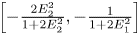
 with an iteration process similar to the one used in Bruno and Leo (Arch. Ration. Mech. Anal. 121 (1993), 303–338) and Golden and Papanicolaou (Commun. Math. Phys. 90 (1983), 473–491) and the analytic continuation. Moreover, we also show that for a fixed microstructure, the permeabilities of these three cases share the same integral representation formula (3.17) with different values of contrast parameter $s:=1/(z-1)$
 , as long as $s$
 is outside the interval $\left [-\frac {2E_2^{2}}{1+2E_2^{2}},-\frac {1}{1+2E_1^{2}}\right ]$
 , where the positive constants $E_1$
 and $E_2$
 are the extension constants that depend only on the geometry of the periodic pore space of the material.


Distribution of tree parameters by martingale approach
- Part of
-
- Journal:
- Combinatorics, Probability and Computing / Volume 31 / Issue 5 / September 2022
- Published online by Cambridge University Press:
- 29 April 2022, pp. 737-764
-
- Article
-
- You have access
- Open access
- HTML
- Export citation
Asymptotic and transient dynamics of SEIR epidemic models on weighted networks
- Part of
-
- Journal:
- European Journal of Applied Mathematics / Volume 34 / Issue 2 / April 2023
- Published online by Cambridge University Press:
- 26 April 2022, pp. 238-261
-
- Article
- Export citation
Absence of singularities in solutions for the compressible Euler equations with source terms in $\mathbb {R}^d$

- Part of
-
- Journal:
- Proceedings of the Royal Society of Edinburgh. Section A: Mathematics / Volume 153 / Issue 3 / June 2023
- Published online by Cambridge University Press:
- 26 April 2022, pp. 978-1001
- Print publication:
- June 2023
-
- Article
- Export citation
-
The present article is devoted to the study of global solution and large time behaviour of solution for the isentropic compressible Euler system with source terms in $\mathbb {R}^d$
 , $d\geq 1$
 , which extends and improves the results obtained by Sideris et al. in ‘T.C. Sideris, B. Thomases, D.H. Wang, Long time behavior of solutions to the 3D compressible Euler equations with damping, Comm. Partial Differential Equations 28 (2003) 795–816’. We first establish the existence and uniqueness of global smooth solution provided the initial datum is sufficiently small, which tells us that the damping terms can prevent the development of singularity in small amplitude. Next, under the additional smallness assumption, the large time behaviour of solution is investigated, we only obtain the algebra decay of solution besides the $L^2$
 -norm of $\nabla u$
 is exponential decay.


Stability and exponential decay for magnetohydrodynamic equations
- Part of
-
- Journal:
- Proceedings of the Royal Society of Edinburgh. Section A: Mathematics / Volume 153 / Issue 3 / June 2023
- Published online by Cambridge University Press:
- 25 April 2022, pp. 853-880
- Print publication:
- June 2023
-
- Article
- Export citation
-
This paper focuses on a 2D magnetohydrodynamic system with only horizontal dissipation in the domain $\Omega = \mathbb {T}\times \mathbb {R}$
 with $\mathbb {T}=[0,\,1]$
 being a periodic box. The goal here is to understand the stability problem on perturbations near the background magnetic field $(1,\,0)$
 . Due to the lack of vertical dissipation, this stability problem is difficult. This paper solves the desired stability problem by simultaneously exploiting two smoothing and stabilizing mechanisms: the enhanced dissipation due to the coupling between the velocity and the magnetic fields, and the strong Poincaré type inequalities for the oscillation part of the solution, namely the difference between the solution and its horizontal average. In addition, the oscillation part of the solution is shown to converge exponentially to zero in $H^{1}$
 as $t\to \infty$
 . As a consequence, the solution converges to its horizontal average asymptotically.


Steady state diffusion in tubular structures: Assessment of one-dimensional models
- Part of
-
- Journal:
- European Journal of Applied Mathematics / Volume 34 / Issue 2 / April 2023
- Published online by Cambridge University Press:
- 25 April 2022, pp. 262-279
-
- Article
-
- You have access
- Open access
- HTML
- Export citation
Left regular representations of Garside categories I. C*-algebras and groupoids
- Part of
-
- Journal:
- Glasgow Mathematical Journal / Volume 65 / Issue S1 / May 2023
- Published online by Cambridge University Press:
- 25 April 2022, pp. S53-S86
-
- Article
-
- You have access
- Open access
- HTML
- Export citation
Non-degeneracy of synchronized vector solutions for weakly coupled nonlinear schrödiner systems
- Part of
-
- Journal:
- Proceedings of the Edinburgh Mathematical Society / Volume 65 / Issue 2 / May 2022
- Published online by Cambridge University Press:
- 22 April 2022, pp. 441-459
-
- Article
- Export citation
-
In this paper, we consider the following two-component Schrödiner system
\[ \begin{cases} -\Delta u_1 +V_1(x) u_1= \mu_1 u_1^{3} +\beta u_1u_2^{2} & \text{in}\;\mathbb{R}^{3},\\ -\Delta u_2+V_2(x) u_2= \mu_2 u_2^{3} +\beta u_1^{2}u_2 & \text{in}\;\mathbb{R}^{3}. \end{cases} \]First, we revisit the proof of the existence of an unbounded sequence of non-radial positive vector solutions of synchronized type obtained in S. Peng and Z. Wang [Segregated and synchronized vector solutions for nonlinear Schrödinger systems, Arch. Rational Mech. Anal. 208 (2013), 305–339] to give a point-wise estimate of the solutions. Taking advantage of these estimates, we then show a non-degeneracy result of the synchronized solutions in some suitable symmetric space by use of the locally Pohozaev identities. The main difficulties of BEC systems come from the interspecies interaction between the components, which never appear in the study of single equations. The idea used to estimate the coupling terms is inspired by the characterization of the Fermat points in the famous Fermat problem, which is the main novelty of this paper.
The Atiyah–Patodi–Singer rho invariant and signatures of links
- Part of
-
- Journal:
- Proceedings of the Edinburgh Mathematical Society / Volume 65 / Issue 2 / May 2022
- Published online by Cambridge University Press:
- 22 April 2022, pp. 404-440
-
- Article
-
- You have access
- Open access
- HTML
- Export citation
-
Relations between the Atiyah–Patodi–Singer rho invariant and signatures of links have been known for a long time, but they were only partially investigated. In order to explore them further, we develop a versatile cut-and-paste formula for the rho invariant, which allows us to manipulate manifolds in a convenient way. With the help of this tool, we give a description of the multivariable signature of a link $L$
 as the rho invariant of some closed three-manifold $Y_L$
 intrinsically associated with $L$
 . We study then the rho invariant of the manifolds obtained by the Dehn surgery on $L$
 along integer and rational framings. Inspired by the results of Casson and Gordon and Cimasoni and Florens, we give formulas expressing this value as a sum of the multivariable signature of $L$
 and some easy-to-compute extra terms.


