Refine search
Actions for selected content:
26077 results in Abstract analysis
Corrigendum to “Topological complexity of real Grassmannians”
- Part of
-
- Journal:
- Proceedings of the Royal Society of Edinburgh. Section A: Mathematics / Volume 153 / Issue 3 / June 2023
- Published online by Cambridge University Press:
- 19 April 2022, pp. 1071-1072
- Print publication:
- June 2023
-
- Article
-
- You have access
- HTML
- Export citation
-
There is a problem with the proofs of [1], Lemma 4.4 and the related Theorems 4.5, 4.8 and 4.12 regarding the computation of zero-divisor cup-length of real Grassmann manifolds ${G_k({{\mathbb {R}}}^{n})}$
 . The correct statements and improved estimates of the topological complexity of ${G_k({{\mathbb {R}}}^{n})}$
 will appear in a separate paper by M. Radovanović [2].


The local cyclicity problem: Melnikov method using Lyapunov constants
- Part of
-
- Journal:
- Proceedings of the Edinburgh Mathematical Society / Volume 65 / Issue 2 / May 2022
- Published online by Cambridge University Press:
- 19 April 2022, pp. 356-375
-
- Article
- Export citation
-
In 1991, Chicone and Jacobs showed the equivalence between the computation of the first-order Taylor developments of the Lyapunov constants and the developments of the first Melnikov function near a non-degenerate monodromic equilibrium point, in the study of limit cycles of small-amplitude bifurcating from a quadratic centre. We show that their proof is also valid for polynomial vector fields of any degree. This equivalence is used to provide a new lower bound for the local cyclicity of degree six polynomial vector fields, so $\mathcal {M}(6) \geq 44$
 . Moreover, we extend this equivalence to the piecewise polynomial class. Finally, we prove that $\mathcal {M}^{c}_{p}(4) \geq 43$
 and $\mathcal {M}^{c}_{p}(5) \geq 65.$


On the algebraicity about the Hodge numbers of the Hilbert schemes of algebraic surfaces
- Part of
-
- Journal:
- Proceedings of the Edinburgh Mathematical Society / Volume 65 / Issue 2 / May 2022
- Published online by Cambridge University Press:
- 19 April 2022, pp. 392-403
-
- Article
- Export citation
-
Hilbert schemes are an object arising from geometry and are closely related to physics and modular forms. Recently, there have been investigations from number theorists about the Betti numbers and Hodge numbers of the Hilbert schemes of points of an algebraic surface. In this paper, we prove that Göttsche's generating function of the Hodge numbers of Hilbert schemes of $n$
 points of an algebraic surface is algebraic at a CM point $\tau$
 and rational numbers $z_1$
 and $z_2$
 . Our result gives a refinement of the algebraicity on Betti numbers.


Asymptotic behaviour in a doubly haptotactic cross-diffusion model for oncolytic virotherapy
- Part of
-
- Journal:
- Proceedings of the Royal Society of Edinburgh. Section A: Mathematics / Volume 153 / Issue 3 / June 2023
- Published online by Cambridge University Press:
- 19 April 2022, pp. 881-906
- Print publication:
- June 2023
-
- Article
- Export citation
-
This paper considers a model for oncolytic virotherapy given by the doubly haptotactic cross-diffusion system
\[ \left\{\begin{array}{@{}ll} u_t=D_u\Delta u-\xi_u\nabla\cdot(u\nabla v)+\mu_u u(1-u)-\rho uz,\\ v_t={-} (\alpha_u u+\alpha_w w)v,\\ w_t=D_w\Delta w-\xi_w\nabla\cdot(w\nabla v)- w+\rho uz,\\ z_t=D_z\Delta z-\delta_z z- \rho uz+\beta w, \end{array}\right. \]with positive parameters $D_u,D_w,D_z,\xi _u,\xi _w,\delta _z,\rho$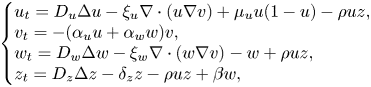
 , $\alpha _u,\alpha _w,\mu _u,\beta$
 . When posed under no-flux boundary conditions in a smoothly bounded domain $\Omega \subset {\mathbb {R}}^{2}$
 , and along with initial conditions involving suitably regular data, the global existence of classical solution to this system was asserted in Tao and Winkler (2020, J. Differ. Equ. 268, 4973–4997). Based on the suitable quasi-Lyapunov functional, it is shown that when the virus replication rate $\beta <1$
 , the global classical solution $(u,v,w,z)$
 is uniformly bounded and exponentially stabilizes to the constant equilibrium $(1, 0, 0, 0)$
 in the topology $(L^{\infty }(\Omega ))^{4}$
 as $t\rightarrow \infty$
 .
.


A pinching estimate for convex hypersurfaces evolving under a non-homogeneous variant of mean curvature flow
- Part of
-
- Journal:
- Proceedings of the Edinburgh Mathematical Society / Volume 65 / Issue 2 / May 2022
- Published online by Cambridge University Press:
- 18 April 2022, pp. 376-391
-
- Article
- Export citation
Homotopy commutativity in Hermitian symmetric spaces
- Part of
-
- Journal:
- Glasgow Mathematical Journal / Volume 64 / Issue 3 / September 2022
- Published online by Cambridge University Press:
- 18 April 2022, pp. 746-752
-
- Article
- Export citation
-
Ganea proved that the loop space of $\mathbb{C} P^n$ is homotopy commutative if and only if $n=3$. We generalize this result to that the loop spaces of all irreducible Hermitian symmetric spaces but $\mathbb{C} P^3$ are not homotopy commutative. The computation also applies to determining the homotopy nilpotency class of the loop spaces of generalized flag manifolds $G/T$ for a maximal torus T of a compact, connected Lie group G.


Existence of solution for a class of activator–inhibitor systems
- Part of
-
- Journal:
- Glasgow Mathematical Journal / Volume 65 / Issue 1 / January 2023
- Published online by Cambridge University Press:
- 12 April 2022, pp. 98-113
-
- Article
- Export citation
-
We prove the existence of a solution for a class of activator–inhibitor system of type $- \Delta u +u = f(u) -v$, $-\Delta v+ v=u$ in $\mathbb{R}^{N}$. The function f is a general nonlinearity which can grow polynomially in dimension $N\geq 3$ or exponentiallly if $N=2$. We are able to treat f when it has critical growth corresponding to the Sobolev space we work with. We transform the system into an equation with a nonlocal term. We find a critical point of the corresponding energy functional defined in the space of functions with norm endowed by a scalar product that takes into account such nonlocal term. For that matter, and due to the lack of compactness, we deal with weak convergent minimizing sequences and sequences of Lagrange multipliers of an action minima problem.


A boson-fermion correspondence in cohomological Donaldson–Thomas theory
- Part of
-
- Journal:
- Glasgow Mathematical Journal / Volume 65 / Issue S1 / May 2023
- Published online by Cambridge University Press:
- 11 April 2022, pp. S28-S52
-
- Article
-
- You have access
- Open access
- HTML
- Export citation
-
We introduce and study a fermionisation procedure for the cohomological Hall algebra $\mathcal{H}_{\Pi_Q}$ of representations of a preprojective algebra, that selectively switches the cohomological parity of the BPS Lie algebra from even to odd. We do so by determining the cohomological Donaldson–Thomas invariants of central extensions of preprojective algebras studied in the work of Etingof and Rains, via deformed dimensional reduction. Via the same techniques, we determine the Borel–Moore homology of the stack of representations of the $\unicode{x03BC}$-deformed preprojective algebra introduced by Crawley–Boevey and Holland, for all dimension vectors. This provides a common generalisation of the results of Crawley-Boevey and Van den Bergh on the cohomology of smooth moduli schemes of representations of deformed preprojective algebras and my earlier results on the Borel–Moore homology of the stack of representations of the undeformed preprojective algebra.


On the Lie symmetries of characteristic function hierarchy in compressible turbulence
- Part of
-
- Journal:
- European Journal of Applied Mathematics / Volume 34 / Issue 5 / October 2023
- Published online by Cambridge University Press:
- 11 April 2022, pp. 913-935
-
- Article
- Export citation
-
We compute the Lie symmetries of characteristic function (CF) hierarchy of compressible turbulence, ignoring the effects of viscosity and heat conductivity. In the probability density function (PDF) hierarchy, a typical non-local nature is observed, which is naturally eliminated in the CF hierarchy. We observe that the CF hierarchy retains all the symmetries satisfied by compressible Euler equations. Broadly speaking, four types of symmetries can be discerned in the CF hierarchy: (i) symmetries corresponding to coordinate system invariance, (ii) scaling/dilation groups, (iii) projective groups and (iv) statistical symmetries, where the latter define measures of intermittency and non-gaussianity. As the multi-point CFs need to satisfy additional constraints such as the reduction condition, the projective symmetries are only valid for monatomic gases, that is, the specific heat ratio, $\gamma = 5/3$. The linearity of the CF hierarchy results in the statistical symmetries due to the superposition principle. For all of the symmetries, the global transformations of the CF and various key compressible statistics are also presented.

Analytic partial-integrability of a symmetric Hopf-zero degeneracy
- Part of
-
- Journal:
- Proceedings of the Royal Society of Edinburgh. Section A: Mathematics / Volume 153 / Issue 3 / June 2023
- Published online by Cambridge University Press:
- 11 April 2022, pp. 833-852
- Print publication:
- June 2023
-
- Article
-
- You have access
- Open access
- HTML
- Export citation
ON A PROPERNESS OF THE HILBERT EIGENVARIETY AT INTEGRAL WEIGHTS: THE CASE OF QUADRATIC RESIDUE FIELDS
- Part of
-
- Journal:
- Journal of the Institute of Mathematics of Jussieu / Volume 22 / Issue 6 / November 2023
- Published online by Cambridge University Press:
- 08 April 2022, pp. 2645-2716
- Print publication:
- November 2023
-
- Article
-
- You have access
- Open access
- HTML
- Export citation
-
Let p be a rational prime. Let F be a totally real number field such that F is unramified over p and the residue degree of any prime ideal of F dividing p is $\leq 2$. In this paper, we show that the eigenvariety for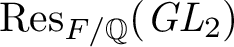 $\mathrm {Res}_{F/\mathbb {Q}}(\mathit {GL}_{2})$, constructed by Andreatta, Iovita, and Pilloni, is proper at integral weights for $p\geq 3$. We also prove a weaker result for $p=2$.


GMJ volume 64 issue 2 Cover and Back matter
-
- Journal:
- Glasgow Mathematical Journal / Volume 64 / Issue 2 / May 2022
- Published online by Cambridge University Press:
- 06 April 2022, pp. b1-b2
-
- Article
-
- You have access
- Export citation
JMJ volume 21 issue 3 Cover and Front matter
-
- Journal:
- Journal of the Institute of Mathematics of Jussieu / Volume 21 / Issue 3 / May 2022
- Published online by Cambridge University Press:
- 06 April 2022, pp. f1-f2
- Print publication:
- May 2022
-
- Article
-
- You have access
- Export citation
JMJ volume 21 issue 3 Cover and Back matter
-
- Journal:
- Journal of the Institute of Mathematics of Jussieu / Volume 21 / Issue 3 / May 2022
- Published online by Cambridge University Press:
- 06 April 2022, pp. b1-b2
- Print publication:
- May 2022
-
- Article
-
- You have access
- Export citation
GMJ volume 64 issue 2 Cover and Front matter
-
- Journal:
- Glasgow Mathematical Journal / Volume 64 / Issue 2 / May 2022
- Published online by Cambridge University Press:
- 06 April 2022, pp. f1-f2
-
- Article
-
- You have access
- Export citation
Exponential decay for the KdV equation on ℝ with new localized dampings
- Part of
-
- Journal:
- Proceedings of the Royal Society of Edinburgh. Section A: Mathematics / Volume 153 / Issue 4 / August 2023
- Published online by Cambridge University Press:
- 05 April 2022, pp. 1073-1098
- Print publication:
- August 2023
-
- Article
- Export citation
-
In this paper, we prove several results on the exponential decay in $L^{2}$
 norm of the KdV equation on the real line with localized dampings. First, for the linear KdV equation, the exponential decay holds if and only if the averages of the damping coefficient on all intervals of a fixed length have a positive lower bound. Moreover, under the same damping condition, the exponential decay holds for the (nonlinear) KdV equation with small initial data. Finally, with the aid of certain properties of propagation of regularity in Bourgain spaces for solutions of the associated linear system and the unique continuation property, the exponential decay for the KdV equation with large data holds if the damping coefficient has a positive lower bound on $E$
 , where $E$
 is equidistributed over the real line and the complement $E^{c}$
 has a finite Lebesgue measure.


Non-Hilbertian tangents to Hilbertian spaces
- Part of
-
- Journal:
- Proceedings of the Royal Society of Edinburgh. Section A: Mathematics / Volume 153 / Issue 3 / June 2023
- Published online by Cambridge University Press:
- 05 April 2022, pp. 811-832
- Print publication:
- June 2023
-
- Article
- Export citation
Efficient simulation of coupled gas and power networks under uncertain demands
- Part of
- Operations research and management science
- Partial differential equations, initial value and time-dependent initial-boundary value problems
- The Mathematics in Renewable Energy special issue
- Probabilistic methods, simulation and stochastic differential equations
- Compressible fluids and gas dynamics, general
-
- Journal:
- European Journal of Applied Mathematics / Volume 34 / Issue 3 / June 2023
- Published online by Cambridge University Press:
- 04 April 2022, pp. 505-531
-
- Article
-
- You have access
- Open access
- HTML
- Export citation
ERRATUM TO: CONNECTIVITY AND PURITY FOR LOGARITHMIC MOTIVES
-
- Journal:
- Journal of the Institute of Mathematics of Jussieu / Volume 22 / Issue 2 / March 2023
- Published online by Cambridge University Press:
- 04 April 2022, pp. 1001-1002
- Print publication:
- March 2023
-
- Article
-
- You have access
- Open access
- HTML
- Export citation
REDUCTIONS OF $2$-DIMENSIONAL SEMISTABLE REPRESENTATIONS WITH LARGE $\mathcal L$-INVARIANT
- Part of
-
- Journal:
- Journal of the Institute of Mathematics of Jussieu / Volume 22 / Issue 6 / November 2023
- Published online by Cambridge University Press:
- 01 April 2022, pp. 2619-2644
- Print publication:
- November 2023
-
- Article
-
- You have access
- Open access
- HTML
- Export citation
-
We determine reductions of $2$-dimensional, irreducible, semistable, and non-crystalline representations of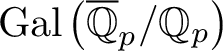 $\mathrm {Gal}\left (\overline {\mathbb {Q}}_p/\mathbb {Q}_p\right )$ with Hodge–Tate weights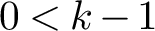 $0 < k-1$ and with $\mathcal L$-invariant whose p-adic norm is sufficiently large, depending on k. Our main result provides the first systematic examples of the reductions for $k \geq p$.


