Refine search
Actions for selected content:
26077 results in Abstract analysis
Part III: Bibliographic Notes and References
-
- Book:
- Matrix Analysis and Entrywise Positivity Preservers
- Published online:
- 10 March 2022
- Print publication:
- 31 March 2022, pp 276-276
-
- Chapter
- Export citation
20 - Functions Acting Outside Forbidden Diagonal Blocks
- from Part Two - Entrywise Functions Preserving Positivity in all Dimensions
-
- Book:
- Matrix Analysis and Entrywise Positivity Preservers
- Published online:
- 10 March 2022
- Print publication:
- 31 March 2022, pp 168-175
-
- Chapter
- Export citation
Contents
-
- Book:
- Matrix Analysis and Entrywise Positivity Preservers
- Published online:
- 10 March 2022
- Print publication:
- 31 March 2022, pp xi-xiii
-
- Chapter
- Export citation
29 - Cauchy and Littlewood’s Definitions of Schur Polynomials
- from Part Three - Entrywise Polynomials Preserving Positivity in a Fixed Dimension
-
- Book:
- Matrix Analysis and Entrywise Positivity Preservers
- Published online:
- 10 March 2022
- Print publication:
- 31 March 2022, pp 256-263
-
- Chapter
- Export citation
22 - Menger’s Results and Euclidean Distance Geometry
- from Part Two - Entrywise Functions Preserving Positivity in all Dimensions
-
- Book:
- Matrix Analysis and Entrywise Positivity Preservers
- Published online:
- 10 March 2022
- Print publication:
- 31 March 2022, pp 190-202
-
- Chapter
- Export citation
14 - Stronger Vasudeva and Schoenberg Theorems via Bernstein’s Theorem
- from Part Two - Entrywise Functions Preserving Positivity in all Dimensions
-
- Book:
- Matrix Analysis and Entrywise Positivity Preservers
- Published online:
- 10 March 2022
- Print publication:
- 31 March 2022, pp 127-134
-
- Chapter
- Export citation
24 - Entrywise Polynomial Preservers and Horn–Loewner-Type Conditions
- from Part Three - Entrywise Polynomials Preserving Positivity in a Fixed Dimension
-
- Book:
- Matrix Analysis and Entrywise Positivity Preservers
- Published online:
- 10 March 2022
- Print publication:
- 31 March 2022, pp 213-219
-
- Chapter
- Export citation
Inhomogeneous Helmholtz equations in wave guides – existence and uniqueness results with energy methods
- Part of
-
- Journal:
- European Journal of Applied Mathematics / Volume 34 / Issue 2 / April 2023
- Published online by Cambridge University Press:
- 30 March 2022, pp. 211-237
-
- Article
-
- You have access
- Open access
- HTML
- Export citation
-
The Helmholtz equation $-\nabla\cdot (a\nabla u) - \omega^2 u = f$ is considered in an unbounded wave guide $\Omega := \mathbb{R} \times S \subset \mathbb{R}^d$, $S\subset \mathbb{R}^{d-1}$ a bounded domain. The coefficient a is strictly elliptic and either periodic in the unbounded direction $x_1 \in \mathbb{R}$ or periodic outside a compact subset; in the latter case, two different periodic media can be used in the two unbounded directions. For non-singular frequencies $\omega$, we show the existence of a solution u. While previous proofs of such results were based on analyticity arguments within operator theory, here, only energy methods are used.


Fourier coefficients of functions in power-weighted L2-spaces and conditionality constants of bases in Banach spaces
- Part of
-
- Journal:
- Proceedings of the Royal Society of Edinburgh. Section A: Mathematics / Volume 153 / Issue 3 / June 2023
- Published online by Cambridge University Press:
- 30 March 2022, pp. 784-810
- Print publication:
- June 2023
-
- Article
- Export citation
-
We prove that, given $2< p<\infty$
 , the Fourier coefficients of functions in $L_2(\mathbb {T}, |t|^{1-2/p}\,{\rm d}t)$
 belong to $\ell _p$
 , and that, given $1< p<2$
 , the Fourier series of sequences in $\ell _p$
 belong to $L_2(\mathbb {T}, \vert {t}\vert ^{2/p-1}\,{\rm d}t)$
 . Then, we apply these results to the study of conditional Schauder bases and conditional almost greedy bases in Banach spaces. Specifically, we prove that, for every $1< p<\infty$
 and every $0\le \alpha <1$
 , there is a Schauder basis of $\ell _p$
 whose conditionality constants grow as $(m^{\alpha })_{m=1}^{\infty }$
 , and there is an almost greedy basis of $\ell _p$
 whose conditionality constants grow as $((\log m)^{\alpha })_{m=2}^{\infty }$
 .
.


Corrigendum: Dynamics of a susceptible—infected—susceptible epidemic reaction—diffusion model
- Part of
-
- Journal:
- Proceedings of the Royal Society of Edinburgh. Section A: Mathematics / Volume 153 / Issue 2 / April 2023
- Published online by Cambridge University Press:
- 30 March 2022, pp. 718-720
- Print publication:
- April 2023
-
- Article
-
- You have access
- HTML
- Export citation
THE LOCAL-ORBIFOLD CORRESPONDENCE FOR SIMPLE NORMAL CROSSING PAIRS
- Part of
-
- Journal:
- Journal of the Institute of Mathematics of Jussieu / Volume 22 / Issue 5 / September 2023
- Published online by Cambridge University Press:
- 25 March 2022, pp. 2515-2531
- Print publication:
- September 2023
-
- Article
-
- You have access
- Open access
- HTML
- Export citation
-
For X a smooth projective variety and $D=D_1+\dotsb +D_n$ a simple normal crossing divisor, we establish a precise cycle-level correspondence between the genus $0$ local Gromov–Witten theory of the bundle $\oplus _{i=1}^n \mathcal {O}_X(-D_i)$ and the maximal contact Gromov–Witten theory of the multiroot stack $X_{D,\vec r}$. The proof is an implementation of the rank-reduction strategy. We use this point of view to clarify the relationship between logarithmic and orbifold invariants.


SHUFFLE ALGEBRAS FOR QUIVERS AND R-MATRICES
- Part of
-
- Journal:
- Journal of the Institute of Mathematics of Jussieu / Volume 22 / Issue 6 / November 2023
- Published online by Cambridge University Press:
- 22 March 2022, pp. 2583-2618
- Print publication:
- November 2023
-
- Article
- Export citation
BP-cohomology of projective Stiefel manifolds
- Part of
-
- Journal:
- Proceedings of the Royal Society of Edinburgh. Section A: Mathematics / Volume 153 / Issue 2 / April 2023
- Published online by Cambridge University Press:
- 21 March 2022, pp. 679-701
- Print publication:
- April 2023
-
- Article
- Export citation
-
In this paper, we compute the $BP$
 -cohomology of complex projective Stiefel manifolds. The method involves the homotopy fixed point spectral sequence, and works for complex oriented cohomology theories. We also use these calculations and $BP$
 -operations to prove new results about equivariant maps between Stiefel manifolds.


The finite dual of commutative-by-finite Hopf algebras
- Part of
-
- Journal:
- Glasgow Mathematical Journal / Volume 65 / Issue 1 / January 2023
- Published online by Cambridge University Press:
- 21 March 2022, pp. 62-89
-
- Article
-
- You have access
- Open access
- HTML
- Export citation
-
The finite dual $H^{\circ}$ of an affine commutative-by-finite Hopf algebra H is studied. Such a Hopf algebra H is an extension of an affine commutative Hopf algebra A by a finite dimensional Hopf algebra $\overline{H}$. The main theorem gives natural conditions under which $H^{\circ}$ decomposes as a crossed or smash product of $\overline{H}^{\ast}$ by the finite dual $A^{\circ}$ of A. This decomposition is then further analysed using the Cartier–Gabriel–Kostant theorem to obtain component Hopf subalgebras of $H^{\circ}$ mapping onto the classical components of $A^{\circ}$. The detailed consequences for a number of families of examples are then studied.


SPECTRAL INEQUALITIES FOR COMBINATIONS OF HERMITE FUNCTIONS AND NULL-CONTROLLABILITY FOR EVOLUTION EQUATIONS ENJOYING GELFAND–SHILOV SMOOTHING EFFECTS
- Part of
-
- Journal:
- Journal of the Institute of Mathematics of Jussieu / Volume 22 / Issue 6 / November 2023
- Published online by Cambridge University Press:
- 21 March 2022, pp. 2533-2582
- Print publication:
- November 2023
-
- Article
- Export citation
-
This work is devoted to the study of uncertainty principles for finite combinations of Hermite functions. We establish some spectral inequalities for control subsets that are thick with respect to some unbounded densities growing almost linearly at infinity, and provide quantitative estimates, with respect to the energy level of the Hermite functions seen as eigenfunctions of the harmonic oscillator, for the constants appearing in these spectral estimates. These spectral inequalities allow us to derive the null-controllability in any positive time for evolution equations enjoying specific regularizing effects. More precisely, for a given index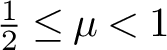 $\frac {1}{2} \leq \mu <1$, we deduce sufficient geometric conditions on control subsets to ensure the null-controllability of evolution equations enjoying regularizing effects in the symmetric Gelfand–Shilov space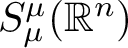 $S^{\mu }_{\mu }(\mathbb {R}^{n})$. These results apply in particular to derive the null-controllability in any positive time for evolution equations associated to certain classes of hypoelliptic non-self-adjoint quadratic operators, or to fractional harmonic oscillators.
A Laplace transform approach to direct and inverse problems for multi-compartment models
- Part of
-
- Journal:
- European Journal of Applied Mathematics / Volume 33 / Issue 6 / December 2022
- Published online by Cambridge University Press:
- 16 March 2022, pp. 1170-1184
-
- Article
- Export citation
Data-driven entropic spatially inhomogeneous evolutionary games
- Part of
-
- Journal:
- European Journal of Applied Mathematics / Volume 34 / Issue 1 / February 2023
- Published online by Cambridge University Press:
- 14 March 2022, pp. 106-159
-
- Article
-
- You have access
- HTML
- Export citation
PEM series 2 volume 65 issue 1 Cover and Back matter
-
- Journal:
- Proceedings of the Edinburgh Mathematical Society / Volume 65 / Issue 1 / February 2022
- Published online by Cambridge University Press:
- 14 March 2022, pp. b1-b2
-
- Article
-
- You have access
- Export citation
PEM series 2 volume 65 issue 1 Cover and Front matter
-
- Journal:
- Proceedings of the Edinburgh Mathematical Society / Volume 65 / Issue 1 / February 2022
- Published online by Cambridge University Press:
- 14 March 2022, pp. f1-f2
-
- Article
-
- You have access
- Export citation
QUASI-ISOMETRIC EMBEDDINGS INAPPROXIMABLE BY ANOSOV REPRESENTATIONS
- Part of
-
- Journal:
- Journal of the Institute of Mathematics of Jussieu / Volume 22 / Issue 5 / September 2023
- Published online by Cambridge University Press:
- 14 March 2022, pp. 2497-2514
- Print publication:
- September 2023
-
- Article
- Export citation
-
We construct examples of quasi-isometric embeddings of word hyperbolic groups into $\mathsf {SL}(d,\mathbb {R})$ for $d \geq 4$ which are not limits of Anosov representations into $\mathsf {SL}(d,\mathbb {R})$. As a consequence, we conclude that an analogue of the density theorem for $\mathsf {PSL}(2,\mathbb {C})$ does not hold for $\mathsf {SL}(d,\mathbb {R})$ when $d \geq 4$.


