Refine search
Actions for selected content:
26077 results in Abstract analysis
Integration of the modified double layer potential of the vector boundary element method for eddy current problems
- Part of
-
- Journal:
- European Journal of Applied Mathematics / Volume 34 / Issue 2 / April 2023
- Published online by Cambridge University Press:
- 16 June 2022, pp. 385-407
-
- Article
- Export citation
Existence of exponentially and superexponentially spatially localized breather solutions for nonlinear klein–gordon lattices in ℤd, d ≥ 1
- Part of
-
- Journal:
- Proceedings of the Edinburgh Mathematical Society / Volume 65 / Issue 2 / May 2022
- Published online by Cambridge University Press:
- 16 June 2022, pp. 480-499
-
- Article
- Export citation
-
We prove the existence of exponentially and superexponentially localized breather solutions for discrete nonlinear Klein–Gordon systems. Our approach considers $d$
 -dimensional infinite lattice models with general on-site potentials and interaction potentials being bounded by an arbitrary power law, as well as, systems with purely anharmonic forces, cases which are much less studied particularly in a higher-dimensional set-up. The existence problem is formulated in terms of a fixed-point equation considered in weighted sequence spaces, which is solved by means of Schauder's Fixed-Point Theorem. The proofs provide energy bounds for the solutions depending on the lattice parameters and its dimension under physically relevant non-resonance conditions.

Parametric approach to promote a divergence-free flow in the image-based motion estimation with application to bioirrigation
-
- Journal:
- European Journal of Applied Mathematics / Volume 34 / Issue 2 / April 2023
- Published online by Cambridge University Press:
- 15 June 2022, pp. 346-366
-
- Article
-
- You have access
- Open access
- HTML
- Export citation
Corrigendum: Liftings of Jordan and Super Jordan Planes
- Part of
-
- Journal:
- Proceedings of the Edinburgh Mathematical Society / Volume 65 / Issue 2 / May 2022
- Published online by Cambridge University Press:
- 14 June 2022, pp. 577-586
-
- Article
-
- You have access
- HTML
- Export citation
COMBINED COUNT OF REAL RATIONAL CURVES OF CANONICAL DEGREE 2 ON REAL DEL PEZZO SURFACES WITH $K^2=1$
- Part of
-
- Journal:
- Journal of the Institute of Mathematics of Jussieu / Volume 23 / Issue 1 / January 2024
- Published online by Cambridge University Press:
- 14 June 2022, pp. 123-148
- Print publication:
- January 2024
-
- Article
- Export citation
-
We propose two systems of “intrinsic” weights for counting such curves. In both cases the result acquires an exceptionally strong invariance property: it does not depend on the choice of a surface. One of our counts includes all divisor classes of canonical degree 2 and gives in total 30. The other one excludes the class $-2K$, but adds up the results of counting for a pair of real structures that differ by Bertini involution. This count gives 96.


BERNOULLI ACTIONS OF TYPE III $_0$ WITH PRESCRIBED ASSOCIATED FLOW
- Part of
-
- Journal:
- Journal of the Institute of Mathematics of Jussieu / Volume 23 / Issue 1 / January 2024
- Published online by Cambridge University Press:
- 14 June 2022, pp. 71-122
- Print publication:
- January 2024
-
- Article
-
- You have access
- Open access
- HTML
- Export citation
-
We prove that many, but not all, injective factors arise as crossed products by nonsingular Bernoulli actions of the group $\mathbb {Z}$. We obtain this result by proving a completely general result on the ergodicity, type and Krieger’s associated flow for Bernoulli shifts with arbitrary base spaces. We prove that the associated flow must satisfy a structural property of infinite divisibility. Conversely, we prove that all almost periodic flows, as well as many other ergodic flows, do arise as associated flow of a weakly mixing Bernoulli action of any infinite amenable group. As a byproduct, we prove that all injective factors with almost periodic flow of weights are infinite tensor products of $2 \times 2$ matrices. Finally, we construct Poisson suspension actions with prescribed associated flow for any locally compact second countable group that does not have property (T).


ON BOUNDEDNESS OF DIVISORS COMPUTING MINIMAL LOG DISCREPANCIES FOR SURFACES
- Part of
-
- Journal:
- Journal of the Institute of Mathematics of Jussieu / Volume 22 / Issue 6 / November 2023
- Published online by Cambridge University Press:
- 13 June 2022, pp. 2907-2930
- Print publication:
- November 2023
-
- Article
-
- You have access
- Open access
- HTML
- Export citation
-
Let $\Gamma $ be a finite set, and $X\ni x$ a fixed kawamata log terminal germ. For any lc germ $(X\ni x,B:=\sum _{i} b_iB_i)$, such that $b_i\in \Gamma $, Nakamura’s conjecture, which is equivalent to the ascending chain condition conjecture for minimal log discrepancies for fixed germs, predicts that there always exists a prime divisor E over $X\ni x$, such that $a(E,X,B)=\mathrm {mld}(X\ni x,B)$, and $a(E,X,0)$ is bounded from above. We extend Nakamura’s conjecture to the setting that $X\ni x$ is not necessarily fixed and $\Gamma $ satisfies the descending chain condition, and show it holds for surfaces. We also find some sufficient conditions for the boundedness of $a(E,X,0)$ for any such E.


Complete subgraphs in a multipartite graph
- Part of
-
- Journal:
- Combinatorics, Probability and Computing / Volume 31 / Issue 6 / November 2022
- Published online by Cambridge University Press:
- 13 June 2022, pp. 1092-1101
-
- Article
-
- You have access
- Open access
- HTML
- Export citation
-
In 1975 Bollobás, Erdős, and Szemerédi asked the following question: given positive integers $n, t, r$ with $2\le t\le r-1$, what is the largest minimum degree $\delta (G)$ among all $r$-partite graphs $G$ with parts of size $n$ and which do not contain a copy of $K_{t+1}$? The $r=t+1$ case has attracted a lot of attention and was fully resolved by Haxell and Szabó, and Szabó and Tardos in 2006. In this article, we investigate the $r\gt t+1$ case of the problem, which has remained dormant for over 40 years. We resolve the problem exactly in the case when $r \equiv -1 \pmod{t}$, and up to an additive constant for many other cases, including when $r \geq (3t-1)(t-1)$. Our approach utilizes a connection to the related problem of determining the maximum of the minimum degrees among the family of balanced $r$-partite $rn$-vertex graphs of chromatic number at most $t$.
$t$.


A note on the rational homological dimension of lattices in positive characteristic
- Part of
-
- Journal:
- Glasgow Mathematical Journal / Volume 65 / Issue 1 / January 2023
- Published online by Cambridge University Press:
- 10 June 2022, pp. 138-140
-
- Article
- Export citation
-
We show via $\ell^2$-homology that the rational homological dimension of a lattice in a product of simple simply connected Chevalley groups over global function fields is equal to the rational cohomological dimension and to the dimension of the associated Bruhat–Tits building.

Sum expressions for Kubota–Leopoldt $p$
 -adic $L$
 -functions
- Part of
-
- Journal:
- Proceedings of the Edinburgh Mathematical Society / Volume 65 / Issue 2 / May 2022
- Published online by Cambridge University Press:
- 10 June 2022, pp. 460-479
-
- Article
-
- You have access
- Open access
- HTML
- Export citation
-
When $p$
 is an odd prime, Delbourgo observed that any Kubota–Leopoldt $p$
 -adic $L$
 -function, when multiplied by an auxiliary Euler factor, can be written as an infinite sum. We shall establish such expressions without restriction on $p$
 , and without the Euler factor when the character is non-trivial, by computing the periods of appropriate measures. As an application, we will reprove the Ferrero–Greenberg formula for the derivative $L_p'(0,\chi )$
 . We will also discuss the convergence of sum expressions in terms of elementary $p$
 -adic analysis, as well as their relation to Stickelberger elements; such discussions in turn give alternative proofs of the validity of sum expressions.


Hypergraphs without non-trivial intersecting subgraphs
- Part of
-
- Journal:
- Combinatorics, Probability and Computing / Volume 31 / Issue 6 / November 2022
- Published online by Cambridge University Press:
- 09 June 2022, pp. 1076-1091
-
- Article
- Export citation
-
A hypergraph $\mathcal{F}$ is non-trivial intersecting if every pair of edges in it have a nonempty intersection, but no vertex is contained in all edges of $\mathcal{F}$. Mubayi and Verstraëte showed that for every $k \ge d+1 \ge 3$ and $n \ge (d+1)k/d$ every $k$-graph $\mathcal{H}$ on $n$ vertices without a non-trivial intersecting subgraph of size $d+1$ contains at most $\binom{n-1}{k-1}$ edges. They conjectured that the same conclusion holds for all $d \ge k \ge 4$ and sufficiently large $n$. We confirm their conjecture by proving a stronger statement.
They also conjectured that for $m \ge 4$ and sufficiently large $n$ the maximum size of a $3$-graph on $n$ vertices without a non-trivial intersecting subgraph of size $3m+1$ is achieved by certain Steiner triple systems. We give a construction with more edges showing that their conjecture is not true in general.


ACTIONS OF AUTOMORPHISM GROUPS OF FREE GROUPS ON SPACES OF JACOBI DIAGRAMS. II
- Part of
-
- Journal:
- Journal of the Institute of Mathematics of Jussieu / Volume 23 / Issue 1 / January 2024
- Published online by Cambridge University Press:
- 09 June 2022, pp. 1-69
- Print publication:
- January 2024
-
- Article
- Export citation
-
The automorphism group $\operatorname {Aut}(F_n)$ of the free group $F_n$ acts on a space $A_d(n)$ of Jacobi diagrams of degree d on n oriented arcs. We study the $\operatorname {Aut}(F_n)$-module structure of $A_d(n)$ by using two actions on the associated graded vector space of $A_d(n)$: an action of the general linear group $\operatorname {GL}(n,\mathbb {Z})$ and an action of the graded Lie algebra $\mathrm {gr}(\operatorname {IA}(n))$ of the IA-automorphism group $\operatorname {IA}(n)$ of $F_n$ associated with its lower central series. We extend the action of $\mathrm {gr}(\operatorname {IA}(n))$ to an action of the associated graded Lie algebra of the Andreadakis filtration of the endomorphism monoid of $F_n$. By using this action, we study the $\operatorname {Aut}(F_n)$-module structure of $A_d(n)$. We obtain an indecomposable decomposition of $A_d(n)$ as $\operatorname {Aut}(F_n)$-modules for $n\geq 2d$. Moreover, we obtain the radical filtration of $A_d(n)$ for $n\geq 2d$ and the socle of $A_3(n)$.


On the peel number and the leaf-height of Galton–Watson trees
- Part of
-
- Journal:
- Combinatorics, Probability and Computing / Volume 32 / Issue 1 / January 2023
- Published online by Cambridge University Press:
- 09 June 2022, pp. 68-90
-
- Article
- Export citation
-
We study several parameters of a random Bienaymé–Galton–Watson tree $T_n$ of size $n$ defined in terms of an offspring distribution $\xi$ with mean $1$ and nonzero finite variance $\sigma ^2$. Let $f(s)=\mathbb{E}\{s^\xi \}$ be the generating function of the random variable $\xi$. We show that the independence number is in probability asymptotic to $qn$, where $q$ is the unique solution to $q = f(1-q)$. One of the many algorithms for finding the largest independent set of nodes uses a notion of repeated peeling away of all leaves and their parents. The number of rounds of peeling is shown to be in probability asymptotic to $\log n/\log (1/f'(1-q))$. Finally, we study a related parameter which we call the leaf-height. Also sometimes called the protection number, this is the maximal shortest path length between any node and a leaf in its subtree. If $p_1 = \mathbb{P}\{\xi =1\}\gt 0$, then we show that the maximum leaf-height over all nodes in $T_n$ is in probability asymptotic to $\log n/\log (1/p_1)$. If $p_1 = 0$ and $\kappa$ is the first integer $i\gt 1$ with $\mathbb{P}\{\xi =i\}\gt 0$, then the leaf-height is in probability asymptotic to $\log _\kappa \log n$.


Lamplighter groups, median spaces and Hilbertian geometry
- Part of
-
- Journal:
- Proceedings of the Edinburgh Mathematical Society / Volume 65 / Issue 2 / May 2022
- Published online by Cambridge University Press:
- 09 June 2022, pp. 500-529
-
- Article
- Export citation
-
From any two median spaces $X$
 and $Y$
 , we construct a new median space $X \circledast Y$
 , referred to as the diadem product of $X$
 and $Y$
 , and we show that this construction is compatible with wreath products in the following sense: given two finitely generated groups $G,\,H$
 and two (equivariant) coarse embeddings into median spaces $X,\,Y$
 , there exist a(n equivariant) coarse embedding $G\wr H \to X \circledast Y$
 . The construction offers a unified point of view on various questions related to the Hilbertian geometry of wreath products of groups.


Boundary layer of Hsieh's equation with conservative nonlinearity
- Part of
-
- Journal:
- Proceedings of the Royal Society of Edinburgh. Section A: Mathematics / Volume 153 / Issue 4 / August 2023
- Published online by Cambridge University Press:
- 09 June 2022, pp. 1167-1197
- Print publication:
- August 2023
-
- Article
- Export citation
-
In this paper, we consider an initial-boundary value problem of Hsieh's equation with conservative nonlinearity. The global unique solvability in the framework of Sobolev is established. In particular, one of our main motivations is to investigate the boundary layer (BL) effect and the convergence rates as the diffusion parameter $\beta$
 goes zero. It is shown that the BL-thickness is of the order $O(\beta ^{\gamma })$
 with $0<\gamma <\frac {1}{2}$
 . We need to point out that, different from the previous work on nonconservative form of Hsieh's equations, the conservative nonlinearity $(\psi ^{\beta }\theta ^{\beta })_x$
 implies that new nonlinear term $\psi _x^{\beta }\theta ^{\beta }$
 needs to be handled. It is important that more regularities on the solution to the limit problem are required to obtain the convergence rates and BL-thickness. It is more difficult for initial-boundary problem due to the lack of boundary conditions (especially, higher-order derivatives) prevents us from applying the integration by part to derive the energy estimates directly. Thus it is more complicated than the case of nonconservative form. Consequently more subtle mathematical analysis needs to be introduced to overcome the difficulties.


Colouring graphs with forbidden bipartite subgraphs
- Part of
-
- Journal:
- Combinatorics, Probability and Computing / Volume 32 / Issue 1 / January 2023
- Published online by Cambridge University Press:
- 08 June 2022, pp. 45-67
-
- Article
-
- You have access
- Open access
- HTML
- Export citation
-
A conjecture of Alon, Krivelevich and Sudakov states that, for any graph $F$, there is a constant $c_F \gt 0$ such that if $G$ is an $F$-free graph of maximum degree $\Delta$, then $\chi\!(G) \leqslant c_F \Delta/ \log\!\Delta$. Alon, Krivelevich and Sudakov verified this conjecture for a class of graphs $F$ that includes all bipartite graphs. Moreover, it follows from recent work by Davies, Kang, Pirot and Sereni that if $G$ is $K_{t,t}$-free, then $\chi\!(G) \leqslant (t + o(1)) \Delta/ \log\!\Delta$ as $\Delta \to \infty$. We improve this bound to $(1+o(1)) \Delta/\log\!\Delta$, making the constant factor independent of $t$. We further extend our result to the DP-colouring setting (also known as correspondence colouring), introduced by Dvořák and Postle.


PRESCRIBED VIRTUAL HOMOLOGICAL TORSION OF 3-MANIFOLDS
-
- Journal:
- Journal of the Institute of Mathematics of Jussieu / Volume 22 / Issue 6 / November 2023
- Published online by Cambridge University Press:
- 08 June 2022, pp. 2931-2941
- Print publication:
- November 2023
-
- Article
- Export citation
-
Let M be an irreducible $3$-manifold M with empty or toroidal boundary which has at least one hyperbolic piece in its geometric decomposition, and let A be a finite abelian group. Generalizing work of Sun [20] and of Friedl–Herrmann [7], we prove that there exists a finite cover $M' \to M$ so that A is a direct factor in $H_1(M',{\mathbb Z})$.


A systematic analysis of the memory term in coarse-grained models: The case of the Markovian approximation
- Part of
-
- Journal:
- European Journal of Applied Mathematics / Volume 34 / Issue 2 / April 2023
- Published online by Cambridge University Press:
- 08 June 2022, pp. 326-345
-
- Article
-
- You have access
- Open access
- HTML
- Export citation
TEMPERED HOMOGENEOUS SPACES IV
- Part of
-
- Journal:
- Journal of the Institute of Mathematics of Jussieu / Volume 22 / Issue 6 / November 2023
- Published online by Cambridge University Press:
- 07 June 2022, pp. 2879-2906
- Print publication:
- November 2023
-
- Article
- Export citation
-
Let G be a complex semisimple Lie group and H a complex closed connected subgroup. Let
 and
and  be their Lie algebras. We prove that the regular representation of G in $L^2(G/H)$ is tempered if and only if the orthogonal of
  in
in  contains regular elements by showing simultaneously the equivalence to other striking conditions, such as
  has a solvable limit algebra.


Sandwiching biregular random graphs
- Part of
-
- Journal:
- Combinatorics, Probability and Computing / Volume 32 / Issue 1 / January 2023
- Published online by Cambridge University Press:
- 06 June 2022, pp. 1-44
-
- Article
-
- You have access
- Open access
- HTML
- Export citation
-
Let ${\mathbb{G}(n_1,n_2,m)}$ be a uniformly random m-edge subgraph of the complete bipartite graph ${K_{n_1,n_2}}$ with bipartition $(V_1, V_2)$, where $n_i = |V_i|$, $i=1,2$. Given a real number $p \in [0,1]$ such that $d_1 \,{:\!=}\, pn_2$ and $d_2 \,{:\!=}\, pn_1$ are integers, let $\mathbb{R}(n_1,n_2,p)$ be a random subgraph of ${K_{n_1,n_2}}$ with every vertex $v \in V_i$ of degree $d_i$, $i = 1, 2$. In this paper we determine sufficient conditions on $n_1,n_2,p$ and m under which one can embed ${\mathbb{G}(n_1,n_2,m)}$ into $\mathbb{R}(n_1,n_2,p)$ and vice versa with probability tending to 1. In particular, in the balanced case $n_1=n_2$, we show that if $p\gg\log n/n$ and $1 - p \gg \left(\log n/n \right)^{1/4}$, then for some $m\sim pn^2$, asymptotically almost surely one can embed ${\mathbb{G}(n_1,n_2,m)}$ into $\mathbb{R}(n_1,n_2,p)$, while for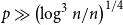 $p\gg\left(\log^{3} n/n\right)^{1/4}$ and $1-p\gg\log n/n$ the opposite embedding holds. As an extension, we confirm the Kim–Vu Sandwich Conjecture for degrees growing faster than $(n \log n)^{3/4}$.


