Refine search
Actions for selected content:
26076 results in Abstract analysis
The fibre of the degree 3 map, Anick spaces and the double suspension
- Part of
-
- Journal:
- Proceedings of the Edinburgh Mathematical Society / Volume 63 / Issue 3 / August 2020
- Published online by Cambridge University Press:
- 21 July 2020, pp. 830-843
-
- Article
- Export citation
-
Let S2n+1{p} denote the homotopy fibre of the degree p self map of S2n+1. For primes p ≥ 5, work by Selick shows that S2n+1{p} admits a non-trivial loop space decomposition if and only if n = 1 or p. Indecomposability in all but these dimensions was obtained by showing that a non-trivial decomposition of ΩS2n+1{p} implies the existence of a p-primary Kervaire invariant one element of order p in $\pi _{2n(p-1)-2}^S$. We prove the converse of this last implication and observe that the homotopy decomposition problem for ΩS2n+1{p} is equivalent to the strong p-primary Kervaire invariant problem for all odd primes. For p = 3, we use the 3-primary Kervaire invariant element θ3 to give a new decomposition of ΩS55{3} analogous to Selick's decomposition of ΩS2p+1{p} and as an application prove two new cases of a long-standing conjecture stating that the fibre of the double suspension $S^{2n-1} \longrightarrow \Omega ^2S^{2n+1}$ is homotopy equivalent to the double loop space of Anick's space.

Cohomology of fiber-bunched twisted cocycles over hyperbolic systems
- Part of
-
- Journal:
- Proceedings of the Edinburgh Mathematical Society / Volume 63 / Issue 3 / August 2020
- Published online by Cambridge University Press:
- 21 July 2020, pp. 844-860
-
- Article
- Export citation
τ-Tilting finite cluster-tilted algebras
- Part of
-
- Journal:
- Proceedings of the Edinburgh Mathematical Society / Volume 63 / Issue 4 / November 2020
- Published online by Cambridge University Press:
- 21 July 2020, pp. 950-955
-
- Article
- Export citation
On the Bieri–Neumann–Strebel–Renz invariants of residually free groups
- Part of
-
- Journal:
- Proceedings of the Edinburgh Mathematical Society / Volume 63 / Issue 3 / August 2020
- Published online by Cambridge University Press:
- 21 July 2020, pp. 807-829
-
- Article
- Export citation
On decay rates of the solutions of parabolic Cauchy problems
- Part of
-
- Journal:
- Proceedings of the Royal Society of Edinburgh. Section A: Mathematics / Volume 151 / Issue 3 / June 2021
- Published online by Cambridge University Press:
- 21 July 2020, pp. 1021-1039
- Print publication:
- June 2021
-
- Article
- Export citation
-
We consider the Cauchy problem for a general class of parabolic partial differential equations in the Euclidean space ℝN. We show that given a weighted Lp-space $L_w^p({\mathbb {R}}^N)$ with 1 ⩽ p < ∞ and a fast growing weight w, there is a Schauder basis $(e_n)_{n=1}^\infty$ in $L_w^p({\mathbb {R}}^N)$ with the following property: given an arbitrary positive integer m there exists nm > 0 such that, if the initial data f belongs to the closed linear span of en with n ⩾ nm, then the decay rate of the solution of the problem is at least t−m for large times t.
The result generalizes the recent study of the authors concerning the classical linear heat equation. We present variants of the result having different methods of proofs and also consider finite polynomial decay rates instead of unlimited m.


Hardy type inequalities on closed manifolds via Ricci curvature
- Part of
-
- Journal:
- Proceedings of the Royal Society of Edinburgh. Section A: Mathematics / Volume 151 / Issue 3 / June 2021
- Published online by Cambridge University Press:
- 21 July 2020, pp. 993-1020
- Print publication:
- June 2021
-
- Article
- Export citation
LAGRANGIAN FIBRATIONS OF HYPERKÄHLER FOURFOLDS
-
- Journal:
- Journal of the Institute of Mathematics of Jussieu / Volume 21 / Issue 3 / May 2022
- Published online by Cambridge University Press:
- 20 July 2020, pp. 921-932
- Print publication:
- May 2022
-
- Article
- Export citation
-
The base surface $B$ of a Lagrangian fibration
  of a projective, irreducible symplectic fourfold $X$ is shown to be isomorphic to $\mathbb{P}^{2}$.

 of a projective, irreducible symplectic fourfold

Isolas of multi-pulse solutions to lattice dynamical systems
- Part of
-
- Journal:
- Proceedings of the Royal Society of Edinburgh. Section A: Mathematics / Volume 151 / Issue 3 / June 2021
- Published online by Cambridge University Press:
- 20 July 2020, pp. 916-952
- Print publication:
- June 2021
-
- Article
- Export citation
Codimension growth for weak polynomial identities, and non-integrality of the PI exponent
- Part of
-
- Journal:
- Proceedings of the Edinburgh Mathematical Society / Volume 63 / Issue 4 / November 2020
- Published online by Cambridge University Press:
- 20 July 2020, pp. 929-949
-
- Article
- Export citation
Does indirectness of signal production reduce the explosion-supporting potential in chemotaxis–haptotaxis systems? Global classical solvability in a class of models for cancer invasion (and more)
- Part of
-
- Journal:
- European Journal of Applied Mathematics / Volume 32 / Issue 4 / August 2021
- Published online by Cambridge University Press:
- 17 July 2020, pp. 618-651
-
- Article
- Export citation
The Bellman Function Technique in Harmonic Analysis
-
- Published online:
- 16 July 2020
- Print publication:
- 06 August 2020
Asymptotics of near-cloaking
- Part of
-
- Journal:
- European Journal of Applied Mathematics / Volume 32 / Issue 6 / December 2021
- Published online by Cambridge University Press:
- 16 July 2020, pp. 1106-1126
-
- Article
- Export citation
A note on distinct distances
- Part of
-
- Journal:
- Combinatorics, Probability and Computing / Volume 29 / Issue 5 / September 2020
- Published online by Cambridge University Press:
- 16 July 2020, pp. 650-663
-
- Article
- Export citation
-
We show that, for a constant-degree algebraic curve γ in ℝD, every set of n points on γ spans at least Ω(n4/3) distinct distances, unless γ is an algebraic helix, in the sense of Charalambides [2]. This improves the earlier bound Ω(n5/4) of Charalambides [2].
We also show that, for every set P of n points that lie on a d-dimensional constant-degree algebraic variety V in ℝD, there exists a subset S ⊂ P of size at least Ω(n4/(9+12(d−1))), such that S spans $\left({\begin{array}{*{20}{c}} {|S|} \\ 2 \\\end{array}} \right)$ distinct distances. This improves the earlier bound of Ω(n1/(3d)) of Conlon, Fox, Gasarch, Harris, Ulrich and Zbarsky [4].
Both results are consequences of a common technical tool.

A multi-level procedure for enhancing accuracy of machine learning algorithms
- Part of
-
- Journal:
- European Journal of Applied Mathematics / Volume 32 / Issue 3 / June 2021
- Published online by Cambridge University Press:
- 14 July 2020, pp. 436-469
-
- Article
- Export citation
PRM volume 150 issue 4 Cover and Front matter
-
- Journal:
- Proceedings of the Royal Society of Edinburgh. Section A: Mathematics / Volume 150 / Issue 4 / August 2020
- Published online by Cambridge University Press:
- 13 July 2020, pp. f1-f2
- Print publication:
- August 2020
-
- Article
-
- You have access
- Export citation
PRM volume 150 issue 4 Cover and Back matter
-
- Journal:
- Proceedings of the Royal Society of Edinburgh. Section A: Mathematics / Volume 150 / Issue 4 / August 2020
- Published online by Cambridge University Press:
- 13 July 2020, pp. b1-b2
- Print publication:
- August 2020
-
- Article
-
- You have access
- Export citation
DUALIZING INVOLUTIONS ON THE METAPLECTIC GL(2) à la TUPAN
- Part of
-
- Journal:
- Glasgow Mathematical Journal / Volume 63 / Issue 2 / May 2021
- Published online by Cambridge University Press:
- 10 July 2020, pp. 426-437
-
- Article
-
- You have access
- Export citation
-
Let F be a non-Archimedean local field of characteristic zero. Let G = GL(2, F) and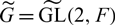 $3\widetildeG = \widetilde{GL}(2,F)$ be the metaplectic group. Let τ be the standard involution on G. A well-known theorem of Gelfand and Kazhdan says that the standard involution takes any irreducible admissible representation of G to its contragredient. In such a case, we say that τ is a dualizing involution. In this paper, we make some modifications and adapt a topological argument of Tupan to the metaplectic group $\widetildeG$ and give an elementary proof that any lift of the standard involution to $\widetildeG$; is also a dualizing involution.

SHIFTED COISOTROPIC CORRESPONDENCES
- Part of
-
- Journal:
- Journal of the Institute of Mathematics of Jussieu / Volume 21 / Issue 3 / May 2022
- Published online by Cambridge University Press:
- 03 July 2020, pp. 785-849
- Print publication:
- May 2022
-
- Article
- Export citation
-
We define (iterated) coisotropic correspondences between derived Poisson stacks, and construct symmetric monoidal higher categories of derived Poisson stacks, where the $i$-morphisms are given by $i$-fold coisotropic correspondences. Assuming an expected equivalence of different models of higher Morita categories, we prove that all derived Poisson stacks are fully dualizable and so determine framed extended TQFTs by the Cobordism Hypothesis. Along the way, we also prove that the higher Morita category of $E_{n}$-algebras with respect to coproducts is equivalent to the higher category of iterated cospans.


CYCLIC BRANCHED COVERINGS OF BRIESKORN SPHERES BOUNDING ACYCLIC 4-MANIFOLDS
- Part of
-
- Journal:
- Glasgow Mathematical Journal / Volume 63 / Issue 2 / May 2021
- Published online by Cambridge University Press:
- 03 July 2020, pp. 400-413
-
- Article
-
- You have access
- Export citation
CLOSED IDEALS AND LIE IDEALS OF MINIMAL TENSOR PRODUCT OF CERTAIN C*-ALGEBRAS
- Part of
-
- Journal:
- Glasgow Mathematical Journal / Volume 63 / Issue 2 / May 2021
- Published online by Cambridge University Press:
- 03 July 2020, pp. 414-425
-
- Article
-
- You have access
- Export citation
