Refine search
Actions for selected content:
26076 results in Abstract analysis
Corrigendum: Von Neumann algebras and extensions of inverse semigroups
- Part of
-
- Journal:
- Proceedings of the Edinburgh Mathematical Society / Volume 66 / Issue 3 / August 2023
- Published online by Cambridge University Press:
- 22 August 2023, pp. 919-922
-
- Article
-
- You have access
- HTML
- Export citation
Kaehler submanifolds of the real hyperbolic space
- Part of
-
- Journal:
- Proceedings of the Edinburgh Mathematical Society / Volume 66 / Issue 3 / August 2023
- Published online by Cambridge University Press:
- 22 August 2023, pp. 810-831
-
- Article
-
- You have access
- Open access
- HTML
- Export citation
-
The local classification of Kaehler submanifolds $M^{2n}$ of the hyperbolic space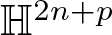 $\mathbb{H}^{2n+p}$ with low codimension $2\leq p\leq n-1$ under only intrinsic assumptions remains a wide open problem. The situation is quite different for submanifolds in the round sphere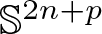 $\mathbb{S}^{2n+p}$, $2\leq p\leq n-1$, since Florit et al. [7] have shown that the codimension has to be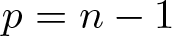 $p=n-1$ and then that any submanifold is just part of an extrinsic product of two-dimensional umbilical spheres in $\mathbb{S}^{3n-1}\subset\mathbb{R}^{3n}$. The main result of this paper is a version for Kaehler manifolds isometrically immersed into the hyperbolic ambient space of the result in [7] for spherical submanifolds. Besides, we generalize several results obtained by Dajczer and Vlachos [5].

The topology of compact rank-one ECS manifolds
- Part of
-
- Journal:
- Proceedings of the Edinburgh Mathematical Society / Volume 66 / Issue 3 / August 2023
- Published online by Cambridge University Press:
- 17 August 2023, pp. 789-809
-
- Article
-
- You have access
- Open access
- HTML
- Export citation
-
Pseudo-Riemannian manifolds with parallel Weyl tensor that are not conformally flat or locally symmetric, also known as essentially conformally symmetric (ECS) manifolds, have a natural local invariant, the rank, which equals 1 or 2, and is the rank of a certain distinguished null parallel distribution $\mathcal{D}$. All known examples of compact ECS manifolds are of rank one and have dimensions greater than 4. We prove that a compact rank-one ECS manifold, if not locally homogeneous, replaced when necessary by a twofold isometric covering, must be a bundle over the circle with leaves of $\mathcal{D}^\perp$ serving as the fibres. The same conclusion holds in the locally homogeneous case if one assumes that $\,\mathcal{D}^\perp$ has at least one compact leaf. We also show that in the pseudo-Riemannian universal covering space of any compact rank-one ECS manifold, the leaves of $\mathcal{D}^\perp$ are the factor manifolds of a global product decomposition.


Toeplitz determinants with a one-cut regular potential and Fisher–Hartwig singularities I. Equilibrium measure supported on the unit circle
- Part of
-
- Journal:
- Proceedings of the Royal Society of Edinburgh. Section A: Mathematics / Volume 154 / Issue 5 / October 2024
- Published online by Cambridge University Press:
- 15 August 2023, pp. 1431-1472
- Print publication:
- October 2024
-
- Article
-
- You have access
- Open access
- HTML
- Export citation
-
We consider Toeplitz determinants whose symbol has: (i) a one-cut regular potential $V$
 , (ii) Fisher–Hartwig singularities and (iii) a smooth function in the background. The potential $V$
 is associated with an equilibrium measure that is assumed to be supported on the whole unit circle. For constant potentials $V$
 , the equilibrium measure is the uniform measure on the unit circle and our formulas reduce to well-known results for Toeplitz determinants with Fisher–Hartwig singularities. For non-constant $V$
 , our results appear to be new even in the case of no Fisher–Hartwig singularities. As applications of our results, we derive various statistical properties of a determinantal point process which generalizes the circular unitary ensemble.


On the Jones polynomial modulo primes
- Part of
-
- Journal:
- Glasgow Mathematical Journal / Volume 65 / Issue 3 / September 2023
- Published online by Cambridge University Press:
- 15 August 2023, pp. 730-734
-
- Article
- Export citation
-
We derive an upper bound on the density of Jones polynomials of knots modulo a prime number $p$, within a sufficiently large degree range: $4/p^7$. As an application, we classify knot Jones polynomials modulo two of span up to eight.


Spreading dynamics of a diffusive epidemic model with free boundaries and two delays
- Part of
-
- Journal:
- European Journal of Applied Mathematics / Volume 34 / Issue 6 / December 2023
- Published online by Cambridge University Press:
- 11 August 2023, pp. 1133-1169
-
- Article
- Export citation
On classification of singular matrix difference equations of mixed order
- Part of
-
- Journal:
- Proceedings of the Royal Society of Edinburgh. Section A: Mathematics / Volume 154 / Issue 4 / August 2024
- Published online by Cambridge University Press:
- 11 August 2023, pp. 1235-1258
- Print publication:
- August 2024
-
- Article
- Export citation
Quasipolynomial-time algorithms for Gibbs point processes
- Part of
-
- Journal:
- Combinatorics, Probability and Computing / Volume 33 / Issue 1 / January 2024
- Published online by Cambridge University Press:
- 11 August 2023, pp. 1-15
-
- Article
-
- You have access
- Open access
- HTML
- Export citation
-
We demonstrate a quasipolynomial-time deterministic approximation algorithm for the partition function of a Gibbs point process interacting via a stable potential. This result holds for all activities $\lambda$ for which the partition function satisfies a zero-free assumption in a neighbourhood of the interval $[0,\lambda ]$. As a corollary, for all finiterange stable potentials, we obtain a quasipolynomial-time deterministic algorithm for all $\lambda \lt 1/(e^{B + 1} \hat C_\phi )$ where $\hat C_\phi$ is a temperedness parameter and $B$ is the stability constant of $\phi$. In the special case of a repulsive potential such as the hard-sphere gas we improve the range of activity by a factor of at least $e^2$ and obtain a quasipolynomial-time deterministic approximation algorithm for all $\lambda \lt e/\Delta _\phi$, where $\Delta _\phi$ is the potential-weighted connective constant of the potential $\phi$. Our algorithm approximates coefficients of the cluster expansion of the partition function and uses the interpolation method of Barvinok to extend this approximation throughout the zero-free region.


On the structure of lower bounded HNN extensions
- Part of
-
- Journal:
- Glasgow Mathematical Journal / Volume 65 / Issue 3 / September 2023
- Published online by Cambridge University Press:
- 10 August 2023, pp. 697-715
-
- Article
-
- You have access
- Open access
- HTML
- Export citation
-
This paper studies the structure and preservational properties of lower bounded HNN extensions of inverse semigroups, as introduced by Jajcayová. We show that if $S^* = [ S;\; U_1,U_2;\; \phi ]$ is a lower bounded HNN extension then the maximal subgroups of $S^*$ may be described using Bass-Serre theory, as the fundamental groups of certain graphs of groups defined from the $\mathcal{D}$-classes of $S$,
$S$,  $U_1$ and $U_2$. We then obtain a number of results concerning when inverse semigroup properties are preserved under the HNN extension construction. The properties considered are completely semisimpleness, having finite $\mathcal{R}$-classes, residual finiteness, being $E$-unitary, and $0$-
$0$- $E$-unitary. Examples are given, such as an HNN extension of a polycylic inverse monoid.


GMJ volume 65 issue 2 Cover and Back matter
-
- Journal:
- Glasgow Mathematical Journal / Volume 65 / Issue 2 / May 2023
- Published online by Cambridge University Press:
- 10 August 2023, pp. b1-b2
-
- Article
-
- You have access
- Export citation
GMJ volume 65 issue 2 Cover and Front matter
-
- Journal:
- Glasgow Mathematical Journal / Volume 65 / Issue 2 / May 2023
- Published online by Cambridge University Press:
- 10 August 2023, pp. f1-f2
-
- Article
-
- You have access
- Export citation
JMJ volume 22 issue 5 Cover and Back matter
-
- Journal:
- Journal of the Institute of Mathematics of Jussieu / Volume 22 / Issue 5 / September 2023
- Published online by Cambridge University Press:
- 09 August 2023, pp. b1-b2
- Print publication:
- September 2023
-
- Article
-
- You have access
- Export citation
JMJ volume 22 issue 5 Cover and Front matter
-
- Journal:
- Journal of the Institute of Mathematics of Jussieu / Volume 22 / Issue 5 / September 2023
- Published online by Cambridge University Press:
- 09 August 2023, pp. f1-f2
- Print publication:
- September 2023
-
- Article
-
- You have access
- Export citation
Exact formulae and Turán inequalities for Vafa–Witten invariants of $K3$ surfaces
- Part of
-
- Journal:
- Proceedings of the Edinburgh Mathematical Society / Volume 66 / Issue 3 / August 2023
- Published online by Cambridge University Press:
- 08 August 2023, pp. 845-861
-
- Article
- Export citation
-
We consider three different families of Vafa–Witten invariants of $K3$ surfaces. In each case, the partition function that encodes the Vafa–Witten invariants is given by combinations of twisted Dedekind η-functions. By utilizing known properties of these η-functions, we obtain exact formulae for each of the invariants and prove that they asymptotically satisfy all higher-order Turán inequalities.


Characterising small objects in the regime between the eddy current model and wave propagation
- Part of
-
- Journal:
- European Journal of Applied Mathematics / Volume 35 / Issue 2 / April 2024
- Published online by Cambridge University Press:
- 08 August 2023, pp. 294-317
-
- Article
-
- You have access
- Open access
- HTML
- Export citation
The effect of pore-scale contaminant distribution on the reactive decontamination of porous media
- Part of
-
- Journal:
- European Journal of Applied Mathematics / Volume 35 / Issue 2 / April 2024
- Published online by Cambridge University Press:
- 08 August 2023, pp. 318-358
-
- Article
-
- You have access
- Open access
- HTML
- Export citation
Every Salem number is a difference of two Pisot numbers
- Part of
-
- Journal:
- Proceedings of the Edinburgh Mathematical Society / Volume 66 / Issue 3 / August 2023
- Published online by Cambridge University Press:
- 08 August 2023, pp. 862-867
-
- Article
-
- You have access
- Open access
- HTML
- Export citation
-
In this note, we prove that every Salem number is expressible as a difference of two Pisot numbers. More precisely, we show that for each Salem number α of degree d, there are infinitely many positive integers n for which $\alpha^{2n-1}-\alpha^n+\alpha$ and $\alpha^{2n-1}-\alpha^n$ are both Pisot numbers of degree d and that the smallest such n is at most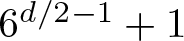 $6^{d/2-1}+1$. We also prove that every real positive algebraic number can be expressed as a quotient of two Pisot numbers. Earlier, Salem himself had proved that every Salem number can be written in this way.
On the density of bounded bases
- Part of
-
- Journal:
- Proceedings of the Edinburgh Mathematical Society / Volume 66 / Issue 3 / August 2023
- Published online by Cambridge University Press:
- 07 August 2023, pp. 832-844
-
- Article
- Export citation
-
For a nonempty set A of integers and an integer n, let $r_{A}(n)$ be the number of representations of n in the form $n=a+a'$, where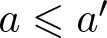 $a\leqslant a'$ and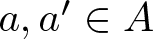 $a, a'\in A$, and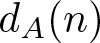 $d_{A}(n)$ be the number of representations of n in the form $n=a-a'$, where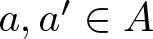 $a, a'\in A$. The binary support of a positive integer n is defined as the subset S(n) of nonnegative integers consisting of the exponents in the binary expansion of n, i.e., $n=\sum_{i\in S(n)} 2^i$, $S(-n)=-S(n)$ and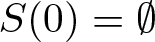 $S(0)=\emptyset$. For real number x, let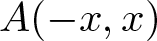 $A(-x,x)$ be the number of elements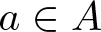 $a\in A$ with $-x\leqslant a\leqslant x$. The famous Erdős-Turán Conjecture states that if A is a set of positive integers such that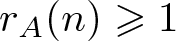 $r_A(n)\geqslant 1$ for all sufficiently large n, then $\limsup_{n\rightarrow\infty}r_A(n)=\infty$. In 2004, Nešetřil and Serra initially introduced the notation of “bounded” property and confirmed the Erdős-Turán conjecture for a class of bounded bases. They also proved that, there exists a set A of integers satisfying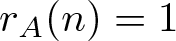 $r_A(n)=1$ for all integers n and $|S(x)\bigcup S(y)|\leqslant 4|S(x+y)|$ for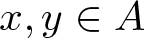 $x,y\in A$. On the other hand, Nathanson proved that there exists a set A of integers such that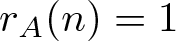 $r_A(n)=1$ for all integers n and $2\log x/\log 5+c_1\leqslant A(-x,x)\leqslant 2\log x/\log 3+c_2$ for all $x\geqslant 1$, where $c_1,c_2$ are absolute constants. In this paper, following these results, we prove that, there exists a set A of integers such that: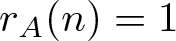 $r_A(n)=1$ for all integers n and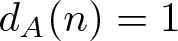 $d_A(n)=1$ for all positive integers n, $|S(x)\bigcup S(y)|\leqslant 4|S(x+y)|$ for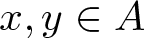 $x,y\in A$ and $A(-x,x) \gt (4/\log 5)\log\log x+c$ for all $x\geqslant 1$, where c is an absolute constant. Furthermore, we also construct a family of arbitrarily spare such sets A.


Reflexive homology
- Part of
-
- Journal:
- Proceedings of the Royal Society of Edinburgh. Section A: Mathematics / Volume 154 / Issue 5 / October 2024
- Published online by Cambridge University Press:
- 03 August 2023, pp. 1378-1405
- Print publication:
- October 2024
-
- Article
-
- You have access
- Open access
- HTML
- Export citation
-
Reflexive homology is the homology theory associated to the reflexive crossed simplicial group; one of the fundamental crossed simplicial groups. It is the most general way to extend Hochschild homology to detect an order-reversing involution. In this paper we study the relationship between reflexive homology and the $C_2$
 -equivariant homology of free loop spaces. We define reflexive homology in terms of functor homology. We give a bicomplex for computing reflexive homology together with some calculations, including the reflexive homology of a tensor algebra. We prove that the reflexive homology of a group algebra is isomorphic to the homology of the $C_2$
 -equivariant Borel construction on the free loop space of the classifying space. We give a direct sum decomposition of the reflexive homology of a group algebra indexed by conjugacy classes of group elements, where the summands are defined in terms of a reflexive analogue of group homology. We define a hyperhomology version of reflexive homology and use it to study the $C_2$
 -equivariant homology of certain free loop and free loop-suspension spaces. We show that reflexive homology satisfies Morita invariance. We prove that under nice conditions the involutive Hochschild homology studied by Braun and by Fernàndez-València and Giansiracusa coincides with reflexive homology.


Fixed point sets and the fundamental group I: semi-free actions on G-CW-complexes
-
- Journal:
- Proceedings of the Royal Society of Edinburgh. Section A: Mathematics / Volume 154 / Issue 6 / December 2024
- Published online by Cambridge University Press:
- 03 August 2023, pp. 1639-1660
- Print publication:
- December 2024
-
- Article
- Export citation
-
Smith theory says that the fixed point set of a semi-free action of a group $G$ on a contractible space is ${\mathbb {Z}}_p$-acyclic for any prime factor $p$ of the order of $G$. Jones proved the converse of Smith theory for the case $G$ is a cyclic group acting semi-freely on contractible, finite CW-complexes. We extend the theory to semi-free group actions on finite CW-complexes of given homotopy types, in various settings. In particular, the converse of Smith theory holds if and only if a certain $K$-theoretical obstruction vanishes. We also give some examples that show the geometrical effects of different types of $K$-theoretical obstructions.


