Refine search
Actions for selected content:
26076 results in Abstract analysis
On the exponential growth rates of lattice animals and interfaces
- Part of
-
- Journal:
- Combinatorics, Probability and Computing / Volume 32 / Issue 6 / November 2023
- Published online by Cambridge University Press:
- 31 July 2023, pp. 912-955
-
- Article
-
- You have access
- Open access
- HTML
- Export citation
-
We introduce a formula for translating any upper bound on the percolation threshold of a lattice $G$ into a lower bound on the exponential growth rate of lattice animals $a(G)$ and vice versa. We exploit this in both directions. We obtain the rigorous lower bound ${\dot{p}_c}({\mathbb{Z}}^3)\gt 0.2522$ for 3-dimensional site percolation. We also improve on the best known asymptotic bounds on $a({\mathbb{Z}}^d)$ as $d\to \infty$. Our formula remains valid if instead of lattice animals we enumerate certain subspecies called interfaces. Enumerating interfaces leads to functional duality formulas that are tightly connected to percolation and are not valid for lattice animals, as well as to strict inequalities for the percolation threshold.
Incidentally, we prove that the rate of the exponential decay of the cluster size distribution of Bernoulli percolation is a continuous function of $p\in (0,1)$.


Limiting empirical spectral distribution for the non-backtracking matrix of an Erdős-Rényi random graph
- Part of
-
- Journal:
- Combinatorics, Probability and Computing / Volume 32 / Issue 6 / November 2023
- Published online by Cambridge University Press:
- 31 July 2023, pp. 956-973
-
- Article
-
- You have access
- Open access
- HTML
- Export citation
-
In this note, we give a precise description of the limiting empirical spectral distribution for the non-backtracking matrices for an Erdős-Rényi graph $G(n,p)$ assuming $np/\log n$ tends to infinity. We show that derandomizing part of the non-backtracking random matrix simplifies the spectrum considerably, and then, we use Tao and Vu’s replacement principle and the Bauer-Fike theorem to show that the partly derandomized spectrum is, in fact, very close to the original spectrum.


Poincaré complex diagonals and the Bass trace conjecture
- Part of
-
- Journal:
- Proceedings of the Royal Society of Edinburgh. Section A: Mathematics / Volume 154 / Issue 6 / December 2024
- Published online by Cambridge University Press:
- 28 July 2023, pp. 1819-1840
- Print publication:
- December 2024
-
- Article
-
- You have access
- Open access
- HTML
- Export citation
-
For a finitely dominated Poincaré duality space $M$
 , we show how the first author's total obstruction $\mu _M$
 to the existence of a Poincaré embedding of the diagonal map $M \to M \times M$
 in [17] relates to the Reidemeister trace of the identity map of $M$
 . We then apply this relationship to show that $\mu _M$
 vanishes when suitable conditions on the fundamental group of $M$
 are satisfied.


Finite domination and Novikov homology over strongly $\mathbb {Z}^2$
 -graded rings
- Part of
-
- Journal:
- Proceedings of the Royal Society of Edinburgh. Section A: Mathematics / Volume 154 / Issue 6 / December 2024
- Published online by Cambridge University Press:
- 28 July 2023, pp. 1786-1818
- Print publication:
- December 2024
-
- Article
-
- You have access
- Open access
- HTML
- Export citation
-
Let $R$
 be a strongly $\mathbb {Z}^2$
 -graded ring, and let $C$
 be a bounded chain complex of finitely generated free $R$
 -modules. The complex $C$
 is $R_{(0,0)}$
 -finitely dominated, or of type $FP$
 over $R_{(0,0)}$
 , if it is chain homotopy equivalent to a bounded complex of finitely generated projective $R_{(0,0)}$
 -modules. We show that this happens if and only if $C$
 becomes acyclic after taking tensor product with a certain eight rings of formal power series, the graded analogues of classical Novikov rings. This extends results of Ranicki, Quinn and the first author on Laurent polynomial rings in one and two indeterminates.


Avoidance loci and tropicalizations of real bitangents to plane quartics
- Part of
-
- Journal:
- Proceedings of the Royal Society of Edinburgh. Section A: Mathematics / Volume 154 / Issue 4 / August 2024
- Published online by Cambridge University Press:
- 26 July 2023, pp. 1308-1312
- Print publication:
- August 2024
-
- Article
-
- You have access
- Open access
- HTML
- Export citation
A symmetry of silting quivers
- Part of
-
- Journal:
- Glasgow Mathematical Journal / Volume 65 / Issue 3 / September 2023
- Published online by Cambridge University Press:
- 26 July 2023, pp. 687-696
-
- Article
- Export citation
-
We investigate symmetry of the silting quiver of a given algebra which is induced by an anti-automorphism of the algebra. In particular, one shows that if there is a primitive idempotent fixed by the anti-automorphism, then the 2-silting quiver ( $=$ the support $\tau$-tilting quiver) has a bisection. Consequently, in that case, we obtain that the cardinality of the 2-silting quiver is an even number (if it is finite).


A presentation for the Eisenstein-Picard modular group in three complex dimensions
- Part of
-
- Journal:
- Glasgow Mathematical Journal / Volume 65 / Issue 3 / September 2023
- Published online by Cambridge University Press:
- 25 July 2023, pp. 625-654
-
- Article
- Export citation
Geometric aspects on Humbert-Edge curves of type 5, Kummer surfaces and hyperelliptic curves of genus 2
- Part of
-
- Journal:
- Glasgow Mathematical Journal / Volume 65 / Issue 3 / September 2023
- Published online by Cambridge University Press:
- 25 July 2023, pp. 612-624
-
- Article
-
- You have access
- Open access
- HTML
- Export citation
-
In this work, we study the Humbert-Edge curves of type 5, defined as a complete intersection of four diagonal quadrics in ${\mathbb{P}}^5$. We characterize them using Kummer surfaces, and using the geometry of these surfaces, we construct some vanishing thetanulls on such curves. In addition, we describe an argument to give an isomorphism between the moduli space of Humbert-Edge curves of type 5 and the moduli space of hyperelliptic curves of genus 2, and we show how this argument can be generalized to state an isomorphism between the moduli space of hyperelliptic curves of genus $g=\frac{n-1}{2}$ and the moduli space of Humbert-Edge curves of type $n\geq 5$ where $n$ is an odd number.


On the maximum number of edges in $k$-critical graphs
- Part of
-
- Journal:
- Combinatorics, Probability and Computing / Volume 32 / Issue 6 / November 2023
- Published online by Cambridge University Press:
- 24 July 2023, pp. 900-911
-
- Article
- Export citation
-
A graph is called $k$-critical if its chromatic number is $k$ but every proper subgraph has chromatic number less than $k$. An old and important problem in graph theory asks to determine the maximum number of edges in an $n$-vertex $k$-critical graph. This is widely open for every integer $k\geq 4$. Using a structural characterisation of Greenwell and Lovász and an extremal result of Simonovits, Stiebitz proved in 1987 that for $k\geq 4$ and sufficiently large $n$, this maximum number is less than the number of edges in the $n$-vertex balanced complete $(k-2)$-partite graph. In this paper, we obtain the first improvement in the above result in the past 35 years. Our proofs combine arguments from extremal graph theory as well as some structural analysis. A key lemma we use indicates a partial structure in dense $k$-critical graphs, which may be of independent interest.


Schatten class composition operators on the Hardy space
- Part of
-
- Journal:
- Proceedings of the Royal Society of Edinburgh. Section A: Mathematics / Volume 154 / Issue 5 / October 2024
- Published online by Cambridge University Press:
- 24 July 2023, pp. 1364-1377
- Print publication:
- October 2024
-
- Article
- Export citation
-
Suppose $2< p<\infty$
 and $\varphi$
 is a holomorphic self-map of the open unit disk $\mathbb {D}$
 . We show the following assertions:
(1) If $\varphi$
 has bounded valence and0.1\begin{equation} \int_{\mathbb{D}} \left(\frac{1-|z|^2}{1-|\varphi(z)|^2}\right)^{p/2}\frac{\mathrm{d} A(z)}{(1-|z|^2)^2}<\infty, \end{equation}then $C_{\varphi }$
 is in the Schatten $p$
 -class of the Hardy space $H^2$
 .
.(2) There exists a holomorphic self-map $\varphi$
 (which is, of course, not of bounded valence) such that the inequality (0.1) holds and $C_{\varphi }: H^2\to H^2$
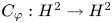 does not belong to the Schatten $p$
 -class.


PEM series 2 volume 66 issue 2 Cover and Back matter
-
- Journal:
- Proceedings of the Edinburgh Mathematical Society / Volume 66 / Issue 2 / May 2023
- Published online by Cambridge University Press:
- 21 July 2023, pp. b1-b2
-
- Article
-
- You have access
- Export citation
PEM series 2 volume 66 issue 2 Cover and Front matter
-
- Journal:
- Proceedings of the Edinburgh Mathematical Society / Volume 66 / Issue 2 / May 2023
- Published online by Cambridge University Press:
- 21 July 2023, pp. f1-f2
-
- Article
-
- You have access
- Export citation
The localisation theorem for the K-theory of stable ∞-categories
- Part of
-
- Journal:
- Proceedings of the Royal Society of Edinburgh. Section A: Mathematics / Volume 154 / Issue 6 / December 2024
- Published online by Cambridge University Press:
- 20 July 2023, pp. 1749-1785
- Print publication:
- December 2024
-
- Article
-
- You have access
- Open access
- HTML
- Export citation
-
We provide a fairly self-contained account of the localisation and cofinality theorems for the algebraic $\operatorname K$
 -theory of stable $\infty$
 -categories. It is based on a general formula for the evaluation of an additive functor on a Verdier quotient closely following work of Waldhausen. We also include a new proof of the additivity theorem of $\operatorname K$
 -theory, strongly inspired by Ranicki's algebraic Thom construction, a short proof of the universality theorem of Blumberg, Gepner and Tabuada, and a second proof of the cofinality theorem which is based on the universal property of $\operatorname K$
 -theory.


Polarised random $k$-SAT
- Part of
-
- Journal:
- Combinatorics, Probability and Computing / Volume 32 / Issue 6 / November 2023
- Published online by Cambridge University Press:
- 20 July 2023, pp. 885-899
-
- Article
-
- You have access
- Open access
- HTML
- Export citation
-
In this paper we study a variation of the random $k$-SAT problem, called polarised random $k$-SAT, which contains both the classical random $k$-SAT model and the random version of monotone $k$-SAT another well-known NP-complete version of SAT. In this model there is a polarisation parameter $p$, and in half of the clauses each variable occurs negated with probability $p$ and pure otherwise, while in the other half the probabilities are interchanged. For $p=1/2$ we get the classical random $k$-SAT model, and at the other extreme we have the fully polarised model where $p=0$, or 1. Here there are only two types of clauses: clauses where all $k$ variables occur pure, and clauses where all $k$ variables occur negated. That is, for $p=0$, and $p=1$, we get an instance of random monotone $k$-SAT.
We show that the threshold of satisfiability does not decrease as $p$ moves away from $\frac{1}{2}$ and thus that the satisfiability threshold for polarised random $k$-SAT with $p\neq \frac{1}{2}$ is an upper bound on the threshold for random $k$-SAT. Hence the satisfiability threshold for random monotone $k$-SAT is at least as large as for random $k$-SAT, and we conjecture that asymptotically, for a fixed $k$, the two thresholds coincide.


Equivalent criterion for the grand Riemann hypothesis associated with Maass cusp forms
- Part of
-
- Journal:
- Proceedings of the Royal Society of Edinburgh. Section A: Mathematics / Volume 154 / Issue 5 / October 2024
- Published online by Cambridge University Press:
- 19 July 2023, pp. 1348-1363
- Print publication:
- October 2024
-
- Article
- Export citation
-
In this article, we obtain transformation formulas analogous to the identity of Ramanujan, Hardy and Littlewood in the setting of primitive Maass cusp form over the congruence subgroup $\Gamma _0(N)$
 and also provide an equivalent criterion of the grand Riemann hypothesis for the $L$
 -function associated with the primitive Maass cusp form over $\Gamma _0(N)$
 .
.


Gradient-based parameter calibration of an anisotropic interaction model for pedestrian dynamics
- Part of
-
- Journal:
- European Journal of Applied Mathematics / Volume 35 / Issue 2 / April 2024
- Published online by Cambridge University Press:
- 18 July 2023, pp. 203-224
-
- Article
-
- You have access
- Open access
- HTML
- Export citation
A revisit to “On BMO and Carleson measures on Riemannian manifolds”
- Part of
-
- Journal:
- Proceedings of the Royal Society of Edinburgh. Section A: Mathematics / Volume 154 / Issue 4 / August 2024
- Published online by Cambridge University Press:
- 18 July 2023, pp. 1281-1307
- Print publication:
- August 2024
-
- Article
- Export citation
-
Let $\mathcal {M}$
 be an Ahlfors $n$
 -regular Riemannian manifold such that either the Ricci curvature is non-negative or the Ricci curvature is bounded from below together with a bound on the gradient of the heat kernel. In the paper [IMRN, 2022, no. 2, 1245-1269] of Brazke–Schikorra–Sire, the authors characterised the BMO function $u : \mathcal {M} \to \mathbb {R}$
 by a Carleson measure condition of its $\sigma$
 -harmonic extension $U:\mathcal {M}\times \mathbb {R}_+ \to \mathbb {R}$
 . This paper is concerned with the similar problem under a more general Dirichlet metric measure space setting, and the limiting behaviours of BMO & Carleson measure, where the heat kernel admits only the so-called diagonal upper estimate. More significantly, without the Ricci curvature condition, we relax the Ahlfors regularity to a doubling property, and remove the pointwise bound on the gradient of the heat kernel. Some similar results for the Lipschitz function are also given, and two open problems related to our main result are considered.


p-ADIC L-FUNCTIONS AND RATIONAL POINTS ON CM ELLIPTIC CURVES AT INERT PRIMES
-
- Journal:
- Journal of the Institute of Mathematics of Jussieu / Volume 23 / Issue 3 / May 2024
- Published online by Cambridge University Press:
- 17 July 2023, pp. 1417-1460
- Print publication:
- May 2024
-
- Article
-
- You have access
- Open access
- HTML
- Export citation
-
Let K be an imaginary quadratic field and $p\geq 5$ a rational prime inert in K. For a $\mathbb {Q}$-curve E with complex multiplication by $\mathcal {O}_K$ and good reduction at p, K. Rubin introduced a p-adic L-function $\mathscr {L}_{E}$ which interpolates special values of L-functions of E twisted by anticyclotomic characters of K. In this paper, we prove a formula which links certain values of $\mathscr {L}_{E}$ outside its defining range of interpolation with rational points on E. Arithmetic consequences include p-converse to the Gross–Zagier and Kolyvagin theorem for E.
A key tool of the proof is the recent resolution of Rubin’s conjecture on the structure of local units in the anticyclotomic ${\mathbb {Z}}_p$-extension $\Psi _\infty $ of the unramified quadratic extension of ${\mathbb {Q}}_p$. Along the way, we present a theory of local points over $\Psi _\infty $ of the Lubin–Tate formal group of height $2$ for the uniformizing parameter $-p$.
$-p$.


Infinite constant gap length trees in products of thick Cantor sets
-
- Journal:
- Proceedings of the Royal Society of Edinburgh. Section A: Mathematics / Volume 154 / Issue 5 / October 2024
- Published online by Cambridge University Press:
- 17 July 2023, pp. 1336-1347
- Print publication:
- October 2024
-
- Article
-
- You have access
- Open access
- HTML
- Export citation
Fixed Point Theory and Variational Principles in Metric Spaces
-
- Published online:
- 15 July 2023
- Print publication:
- 21 September 2023
