Refine search
Actions for selected content:
26076 results in Abstract analysis
References
-
- Book:
- Bayesian Filtering and Smoothing
- Published online:
- 01 June 2023
- Print publication:
- 15 June 2023, pp 379-392
-
- Chapter
- Export citation
6 - Bayesian Filtering Equations and Exact Solutions
-
- Book:
- Bayesian Filtering and Smoothing
- Published online:
- 01 June 2023
- Print publication:
- 15 June 2023, pp 91-107
-
- Chapter
- Export citation
Symbols and Abbreviations
-
- Book:
- Bayesian Filtering and Smoothing
- Published online:
- 01 June 2023
- Print publication:
- 15 June 2023, pp xv-xxx
-
- Chapter
- Export citation
13 - Extended Rauch–Tung–Striebel Smoothing
-
- Book:
- Bayesian Filtering and Smoothing
- Published online:
- 01 June 2023
- Print publication:
- 15 June 2023, pp 267-277
-
- Chapter
- Export citation
Index
-
- Book:
- Bayesian Filtering and Smoothing
- Published online:
- 01 June 2023
- Print publication:
- 15 June 2023, pp 401-406
-
- Chapter
- Export citation
Frontmatter
-
- Book:
- Bayesian Filtering and Smoothing
- Published online:
- 01 June 2023
- Print publication:
- 15 June 2023, pp i-iv
-
- Chapter
- Export citation
3 - Batch and Recursive Bayesian Estimation
-
- Book:
- Bayesian Filtering and Smoothing
- Published online:
- 01 June 2023
- Print publication:
- 15 June 2023, pp 27-43
-
- Chapter
- Export citation
List of Examples
-
- Book:
- Bayesian Filtering and Smoothing
- Published online:
- 01 June 2023
- Print publication:
- 15 June 2023, pp 393-396
-
- Chapter
- Export citation
16 - Parameter Estimation
-
- Book:
- Bayesian Filtering and Smoothing
- Published online:
- 01 June 2023
- Print publication:
- 15 June 2023, pp 319-348
-
- Chapter
- Export citation
8 - General Gaussian Filtering
-
- Book:
- Bayesian Filtering and Smoothing
- Published online:
- 01 June 2023
- Print publication:
- 15 June 2023, pp 131-167
-
- Chapter
- Export citation
A strongly convergent algorithm for solving multiple set split equality equilibrium and fixed point problems in Banach spaces
- Part of
-
- Journal:
- Proceedings of the Edinburgh Mathematical Society / Volume 66 / Issue 2 / May 2023
- Published online by Cambridge University Press:
- 15 June 2023, pp. 475-515
-
- Article
- Export citation
Schwarz lemma for real harmonic functions onto surfaces with non-negative Gaussian curvature
- Part of
-
- Journal:
- Proceedings of the Edinburgh Mathematical Society / Volume 66 / Issue 2 / May 2023
- Published online by Cambridge University Press:
- 15 June 2023, pp. 516-531
-
- Article
- Export citation
-
Assume that f is a real ρ-harmonic function of the unit disk $\mathbb{D}$ onto the interval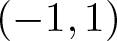 $(-1,1)$, where $\rho(u,v)=R(u)$ is a metric defined in the infinite strip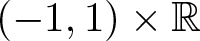 $(-1,1)\times \mathbb{R}$. Then we prove that $|\nabla f(z)|(1-|z|^2)\le \frac{4}{\pi}(1-f(z)^2)$ for all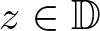 $z\in\mathbb{D}$, provided that ρ has a non-negative Gaussian curvature. This extends several results in the field and answers to a conjecture proposed by the first author in 2014. Such an inequality is not true for negatively curved metrics.

5 - Modeling with State Space Models
-
- Book:
- Bayesian Filtering and Smoothing
- Published online:
- 01 June 2023
- Print publication:
- 15 June 2023, pp 73-90
-
- Chapter
- Export citation
4 - Discretization of Continuous-Time Dynamic Models
-
- Book:
- Bayesian Filtering and Smoothing
- Published online:
- 01 June 2023
- Print publication:
- 15 June 2023, pp 44-72
-
- Chapter
- Export citation
15 - Particle Smoothing
-
- Book:
- Bayesian Filtering and Smoothing
- Published online:
- 01 June 2023
- Print publication:
- 15 June 2023, pp 308-318
-
- Chapter
- Export citation
9 - Gaussian Filtering by Enabling Approximations
-
- Book:
- Bayesian Filtering and Smoothing
- Published online:
- 01 June 2023
- Print publication:
- 15 June 2023, pp 168-203
-
- Chapter
- Export citation
Preface
-
- Book:
- Bayesian Filtering and Smoothing
- Published online:
- 01 June 2023
- Print publication:
- 15 June 2023, pp xi-xiv
-
- Chapter
- Export citation
11 - Particle Filtering
-
- Book:
- Bayesian Filtering and Smoothing
- Published online:
- 01 June 2023
- Print publication:
- 15 June 2023, pp 229-252
-
- Chapter
- Export citation
Interface behaviour of the slow diffusion equation with strong absorption: Intermediate-asymptotic properties
- Part of
-
- Journal:
- European Journal of Applied Mathematics / Volume 34 / Issue 5 / October 2023
- Published online by Cambridge University Press:
- 14 June 2023, pp. 1099-1132
-
- Article
-
- You have access
- Open access
- HTML
- Export citation
Effect of the location of a protection zone in a reaction–diffusion model
- Part of
-
- Journal:
- Proceedings of the Royal Society of Edinburgh. Section A: Mathematics / Volume 154 / Issue 4 / August 2024
- Published online by Cambridge University Press:
- 14 June 2023, pp. 1095-1117
- Print publication:
- August 2024
-
- Article
- Export citation
-
In this paper, we consider the dynamical behaviour of a reaction–diffusion model for a population residing in a one-dimensional habit, with emphasis on the effects of boundary conditions and protection zone. We assume that the population is subjected to a strong Allee effect in its natural domain but obeys a monostable nonlinear growth in the protection zone $[L_1,\, L_2]$
 with two constants satisfying $0\leq L_1< L_2$
 , and the general Robin condition is imposed on $x=0$
 (i.e. $u(t,\,0)=bu_x(t,\,0)$
 with $b\geq 0$
 ). We show the existence of two critical values $0< L_*\leq L^*$
 , and prove that a vanishing–transition–spreading trichotomy result holds when the length of protection zone is smaller than $L_*$
 ; a transition–spreading dichotomy result holds when the length of protection zone is between $L_*$
 and $L^*$
 ; only spreading happens when the length of protection zone is larger than $L^*$
 . Based on the properties of $L_*$
 , we obtain the precise strategies for an optimal protection zone: if $b$
 is large (i.e. $b\geq 1/\sqrt {-g'(0)}$
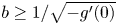 ), the protection zone should start from somewhere near $0$
 ; while if $b$
 is small (i.e. $b< 1/\sqrt {-g'(0)}$
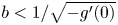 ), then the protection zone should start from somewhere away from $0$
 , and as far away from $0$
 as possible.


