Refine search
Actions for selected content:
26076 results in Abstract analysis
Democracy of quasi-greedy bases in $\boldsymbol p$
 -Banach spaces with applications to the efficiency of the Thresholding Greedy Algorithm in the Hardy spaces $\boldsymbol {H_{p}({\mathbb {D}}^{d})}$
- Part of
-
- Journal:
- Proceedings of the Royal Society of Edinburgh. Section A: Mathematics / Volume 154 / Issue 3 / June 2024
- Published online by Cambridge University Press:
- 24 May 2023, pp. 906-928
- Print publication:
- June 2024
-
- Article
-
- You have access
- Open access
- HTML
- Export citation
-
We use new methods, specific for non-locally convex quasi-Banach spaces, to investigate when the quasi-greedy bases of a $p$
 -Banach space for $0< p<1$
 are democratic. The novel techniques we obtain permit to show in particular that all quasi-greedy bases of the Hardy space $H_p({\mathbb {D}})$
 for $0< p<1$
 are democratic while, in contrast, no quasi-greedy basis of $H_p({\mathbb {D}}^d)$
 for $d\ge 2$
 is, solving thus a problem that was raised in [7]. Applications of our results to other spaces of interest both in functional analysis and approximation theory are also provided.


On one-dimensional local rings and Berger’s conjecture
- Part of
-
- Journal:
- Proceedings of the Edinburgh Mathematical Society / Volume 66 / Issue 2 / May 2023
- Published online by Cambridge University Press:
- 23 May 2023, pp. 437-452
-
- Article
- Export citation
-
Let k be a field of characteristic zero and let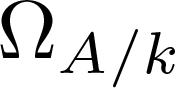 $\Omega_{A/k}$ be the universally finite differential module of a k-algebra A, which is the local ring of a closed point of an algebraic or algebroid curve over k. A notorious open problem, known as Berger’s Conjecture, predicts that A must be regular if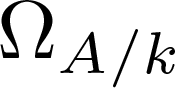 $\Omega_{A/k}$ is torsion-free. In this paper, assuming the hypotheses of the conjecture and observing that the module ${\rm Hom}_A(\Omega_{A/k}, \Omega_{A/k})$ is then isomorphic to an ideal of A, say $\mathfrak{h}$, we show that A is regular whenever the ring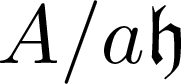 $A/a\mathfrak{h}$ is Gorenstein for some parameter a (and conversely). In addition, we provide various characterizations for the regularity of A in the context of the conjecture.

On Lebesgue points of entropy solutions to the eikonal equation
- Part of
-
- Journal:
- Proceedings of the Royal Society of Edinburgh. Section A: Mathematics / Volume 154 / Issue 4 / August 2024
- Published online by Cambridge University Press:
- 23 May 2023, pp. 1047-1059
- Print publication:
- August 2024
-
- Article
- Export citation
-
We consider entropy solutions to the eikonal equation $|\nabla u|=1$
 in two-space dimensions. These solutions are motivated by a class of variational problems and fail in general to have bounded variation. Nevertheless, they share several of their fine properties with BV functions: we show in particular that the set of non-Lebesgue points has at least one co-dimension.

Propagation of minima for nonlocal operators
- Part of
-
- Journal:
- Proceedings of the Royal Society of Edinburgh. Section A: Mathematics / Volume 154 / Issue 4 / August 2024
- Published online by Cambridge University Press:
- 23 May 2023, pp. 1033-1046
- Print publication:
- August 2024
-
- Article
-
- You have access
- Open access
- HTML
- Export citation
-
In this paper we state some sharp maximum principle, i.e. we characterize the geometry of the sets of minima for supersolutions of equations involving the $k$
 -th fractional truncated Laplacian or the $k$
 -th fractional eigenvalue which are fully nonlinear integral operators whose nonlocality is somehow $k$
 -dimensional.


 $n$-coupling mechanisms are sufficient to obtain exponential decay in strain gradient elasticity
- Part of
-
- Journal:
- European Journal of Applied Mathematics / Volume 34 / Issue 6 / December 2023
- Published online by Cambridge University Press:
- 22 May 2023, pp. 1288-1298
-
- Article
-
- You have access
- Open access
- HTML
- Export citation

INTRINSIC STABILIZER REDUCTION AND GENERALIZED DONALDSON–THOMAS INVARIANTS – ERRATUM
-
- Journal:
- Journal of the Institute of Mathematics of Jussieu / Volume 22 / Issue 4 / July 2023
- Published online by Cambridge University Press:
- 22 May 2023, p. 2027
- Print publication:
- July 2023
-
- Article
-
- You have access
- Open access
- HTML
- Export citation
Groundstates of the planar Schrödinger–Poisson system with potential well and lack of symmetry
- Part of
-
- Journal:
- Proceedings of the Royal Society of Edinburgh. Section A: Mathematics / Volume 154 / Issue 4 / August 2024
- Published online by Cambridge University Press:
- 22 May 2023, pp. 993-1023
- Print publication:
- August 2024
-
- Article
-
- You have access
- Open access
- HTML
- Export citation
Distribution and moments of the error term in the lattice point counting problem for three-dimensional Cygan–Korányi balls
- Part of
-
- Journal:
- Proceedings of the Royal Society of Edinburgh. Section A: Mathematics / Volume 154 / Issue 3 / June 2024
- Published online by Cambridge University Press:
- 19 May 2023, pp. 830-861
- Print publication:
- June 2024
-
- Article
-
- You have access
- Open access
- HTML
- Export citation
Second-kind symmetric periodic orbits for planar perturbed Kepler problems and applications
- Part of
-
- Journal:
- Proceedings of the Royal Society of Edinburgh. Section A: Mathematics / Volume 154 / Issue 3 / June 2024
- Published online by Cambridge University Press:
- 19 May 2023, pp. 961-992
- Print publication:
- June 2024
-
- Article
- Export citation
DISTRIBUTION OF FROBENIUS ELEMENTS IN FAMILIES OF GALOIS EXTENSIONS
-
- Journal:
- Journal of the Institute of Mathematics of Jussieu / Volume 23 / Issue 3 / May 2024
- Published online by Cambridge University Press:
- 19 May 2023, pp. 1169-1258
- Print publication:
- May 2024
-
- Article
-
- You have access
- HTML
- Export citation
-
Given a Galois extension $L/K$ of number fields, we describe fine distribution properties of Frobenius elements via invariants from representations of finite Galois groups and ramification theory. We exhibit explicit families of extensions in which we evaluate these invariants and deduce a detailed understanding and a precise description of the possible asymmetries. We establish a general bound on the generic fluctuations of the error term in the Chebotarev density theorem, which under GRH is sharper than the Murty–Murty–Saradha and Bellaïche refinements of the Lagarias–Odlyzko and Serre bounds, and which we believe is best possible (assuming simplicity, it is of the quality of Montgomery’s conjecture on primes in arithmetic progressions). Under GRH and a hypothesis on the multiplicities of zeros up to a certain height, we show that in certain families, these fluctuations are dominated by a constant lower order term. As an application of our ideas, we refine and generalize results of K. Murty and of Bellaïche, and we answer a question of Ng. In particular, in the case where $L/{\mathbb {Q}}$ is Galois and supersolvable, we prove a strong form of a conjecture of K. Murty on the unramified prime ideal of least norm in a given Frobenius set. The tools we use include the Rubinstein–Sarnak machinery based on limiting distributions and a blend of algebraic, analytic, representation theoretic, probabilistic and combinatorial techniques.


General kernel estimates of Schrödinger-type operators with unbounded diffusion terms
- Part of
-
- Journal:
- Proceedings of the Royal Society of Edinburgh. Section A: Mathematics / Volume 154 / Issue 3 / June 2024
- Published online by Cambridge University Press:
- 19 May 2023, pp. 929-960
- Print publication:
- June 2024
-
- Article
-
- You have access
- Open access
- HTML
- Export citation
-
We first prove that the realization $A_{\mathrm {min}}$
 of $A:={\operatorname {\mathrm {div}}}(Q\nabla )-V$
 in $L^2({\mathbb {R}}^d)$
 with unbounded coefficients generates a symmetric sub-Markovian and ultracontractive semigroup on $L^2({\mathbb {R}}^d)$
 which coincides on $L^2({\mathbb {R}}^d)\cap C_b({\mathbb {R}}^d)$
 with the minimal semigroup generated by a realization of $A$
 on $C_b({\mathbb {R}}^d)$
 . Moreover, using time-dependent Lyapunov functions, we prove pointwise upper bounds for the heat kernel of $A$
 and deduce some spectral properties of $A_{\min }$
 in the case of polynomially and exponentially growing diffusion and potential coefficients.


Estimates for the nonlinear viscoelastic damped wave equation on compact Lie groups
- Part of
-
- Journal:
- Proceedings of the Royal Society of Edinburgh. Section A: Mathematics / Volume 154 / Issue 3 / June 2024
- Published online by Cambridge University Press:
- 19 May 2023, pp. 810-829
- Print publication:
- June 2024
-
- Article
- Export citation
-
Let $G$
 be a compact Lie group. In this article, we investigate the Cauchy problem for a nonlinear wave equation with the viscoelastic damping on $G$
 . More precisely, we investigate some $L^2$
 -estimates for the solution to the homogeneous nonlinear viscoelastic damped wave equation on $G$
 utilizing the group Fourier transform on $G$
 . We also prove that there is no improvement of any decay rate for the norm $\|u(t,\,\cdot )\|_{L^2(G)}$
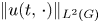 by further assuming the $L^1(G)$
 -regularity of initial data. Finally, using the noncommutative Fourier analysis on compact Lie groups, we prove a local in time existence result in the energy space $\mathcal {C}^1([0,\,T],\,H^1_{\mathcal {L}}(G)).$


Subspace coverings with multiplicities
- Part of
-
- Journal:
- Combinatorics, Probability and Computing / Volume 32 / Issue 5 / September 2023
- Published online by Cambridge University Press:
- 18 May 2023, pp. 782-795
-
- Article
-
- You have access
- Open access
- HTML
- Export citation
-
We study the problem of determining the minimum number $f(n,k,d)$ of affine subspaces of codimension $d$ that are required to cover all points of $\mathbb{F}_2^n\setminus \{\vec{0}\}$ at least $k$ times while covering the origin at most $k - 1$ times. The case $k=1$ is a classic result of Jamison, which was independently obtained by Brouwer and Schrijver for $d = 1$. The value of $f(n,1,1)$ also follows from a well-known theorem of Alon and Füredi about coverings of finite grids in affine spaces over arbitrary fields. Here we determine the value of this function exactly in various ranges of the parameters. In particular, we prove that for $k\geq 2^{n-d-1}$ we have $f(n,k,d)=2^d k-\left\lfloor{\frac{k}{2^{n-d}}}\right\rfloor$, while for $n \gt 2^{2^d k-k-d+1}$ we have $f(n,k,d)=n + 2^d k -d-2$, and obtain asymptotic results between these two ranges. While previous work in this direction has primarily employed the polynomial method, we prove our results through more direct combinatorial and probabilistic arguments, and also exploit a connection to coding theory.


A pair degree condition for Hamiltonian cycles in 3-uniform hypergraphs
- Part of
-
- Journal:
- Combinatorics, Probability and Computing / Volume 32 / Issue 5 / September 2023
- Published online by Cambridge University Press:
- 17 May 2023, pp. 762-781
-
- Article
-
- You have access
- Open access
- HTML
- Export citation
-
We prove a new sufficient pair degree condition for tight Hamiltonian cycles in $3$-uniform hypergraphs that (asymptotically) improves the best known pair degree condition due to Rödl, Ruciński, and Szemerédi. For graphs, Chvátal characterised all those sequences of integers for which every pointwise larger (or equal) degree sequence guarantees the existence of a Hamiltonian cycle. A step towards Chvátal’s theorem was taken by Pósa, who improved on Dirac’s tight minimum degree condition for Hamiltonian cycles by showing that a certain weaker condition on the degree sequence of a graph already yields a Hamiltonian cycle.
In this work, we take a similar step towards a full characterisation of all pair degree matrices that ensure the existence of tight Hamiltonian cycles in $3$-uniform hypergraphs by proving a $3$-uniform analogue of Pósa’s result. In particular, our result strengthens the asymptotic version of the result by Rödl, Ruciński, and Szemerédi.


On a class of nonlocal continuity equations on graphs
- Part of
-
- Journal:
- European Journal of Applied Mathematics / Volume 35 / Issue 1 / February 2024
- Published online by Cambridge University Press:
- 17 May 2023, pp. 109-126
-
- Article
-
- You have access
- Open access
- HTML
- Export citation
On two congruence conjectures of Z.-W. Sun involving Franel numbers
- Part of
-
- Journal:
- Proceedings of the Royal Society of Edinburgh. Section A: Mathematics / Volume 154 / Issue 3 / June 2024
- Published online by Cambridge University Press:
- 16 May 2023, pp. 887-905
- Print publication:
- June 2024
-
- Article
- Export citation
-
In this paper, we mainly prove the following conjectures of Z.-W. Sun (J. Number Theory 133 (2013), 2914–2928): let $p>2$
 be a prime. If $p=x^2+3y^2$
 with $x,y\in \mathbb {Z}$
 and $x\equiv 1\ ({\rm {mod}}\ 3)$
 , then\[ x\equiv\frac14\sum_{k=0}^{p-1}(3k+4)\frac{f_k}{2^k}\equiv\frac12\sum_{k=0}^{p-1}(3k+2)\frac{f_k}{({-}4)^k}\ ({\rm{mod}}\ p^2), \]and if $p\equiv 1\pmod 3$
 , then\[ \sum_{k=0}^{p-1}\frac{f_k}{2^k}\equiv\sum_{k=0}^{p-1}\frac{f_k}{({-}4)^k}\ ({\rm{mod}}\ p^3), \]where $f_n=\sum _{k=0}^n\binom {n}k^3$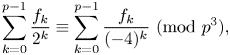
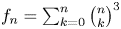 stands for the $n$
 th Franel number.


Cohomology in singular blocks of parabolic category $\mathcal{O}$
- Part of
-
- Journal:
- Glasgow Mathematical Journal / Volume 65 / Issue 3 / September 2023
- Published online by Cambridge University Press:
- 15 May 2023, pp. 555-568
-
- Article
- Export citation
-
We determine the dimensions of $\textrm{Ext}$-groups between simple modules and dual generalized Verma modules in singular blocks of parabolic versions of category $\mathcal{O}$ for complex semisimple Lie algebras and affine Kac-Moody algebras.


Universal geometric graphs
- Part of
-
- Journal:
- Combinatorics, Probability and Computing / Volume 32 / Issue 5 / September 2023
- Published online by Cambridge University Press:
- 15 May 2023, pp. 742-761
-
- Article
-
- You have access
- Open access
- HTML
- Export citation
-
We extend the notion of universal graphs to a geometric setting. A geometric graph is universal for a class $\mathcal H$ of planar graphs if it contains an embedding, that is, a crossing-free drawing, of every graph in $\mathcal H$. Our main result is that there exists a geometric graph with $n$ vertices and $O\!\left(n \log n\right)$ edges that is universal for $n$-vertex forests; this generalises a well-known result by Chung and Graham, which states that there exists an (abstract) graph with $n$ vertices and $O\!\left(n \log n\right)$ edges that contains every $n$-vertex forest as a subgraph. The upper bound of $O\!\left(n \log n\right)$ edges cannot be improved, even if more than $n$ vertices are allowed. We also prove that every $n$-vertex convex geometric graph that is universal for $n$-vertex outerplanar graphs has a near-quadratic number of edges, namely $\Omega _h(n^{2-1/h})$, for every positive integer $h$; this almost matches the trivial $O(n^2)$ upper bound given by the $n$-vertex complete convex geometric graph. Finally, we prove that there exists an $n$-vertex convex geometric graph with $n$ vertices and $O\!\left(n \log n\right)$ edges that is universal for $n$-vertex caterpillars.


Nonexistence of anti-symmetric solutions for fractional Hardy–Hénon system
- Part of
-
- Journal:
- Proceedings of the Royal Society of Edinburgh. Section A: Mathematics / Volume 154 / Issue 3 / June 2024
- Published online by Cambridge University Press:
- 15 May 2023, pp. 862-886
- Print publication:
- June 2024
-
- Article
- Export citation
-
We study anti-symmetric solutions about the hyperplane $\{x_n=0\}$
 for the following fractional Hardy–Hénon system:\[ \left\{\begin{array}{@{}ll} (-\Delta)^{s_1}u(x)=|x|^\alpha v^p(x), & x\in\mathbb{R}_+^n, \\ (-\Delta)^{s_2}v(x)=|x|^\beta u^q(x), & x\in\mathbb{R}_+^n, \\ u(x)\geq 0, & v(x)\geq 0,\ x\in\mathbb{R}_+^n, \end{array}\right. \]where $0< s_1,s_2<1$
 , $n>2\max \{s_1,s_2\}$
 . Nonexistence of anti-symmetric solutions are obtained in some appropriate domains of $(p,q)$
 under some corresponding assumptions of $\alpha,\beta$
 via the methods of moving spheres and moving planes. Particularly, for the case $s_1=s_2$
 , one of our results shows that one domain of $(p,q)$
 , where nonexistence of anti-symmetric solutions with appropriate decay conditions at infinity hold true, locates at above the fractional Sobolev's hyperbola under appropriate condition of $\alpha, \beta$
 .
.


On inscribed trapezoids and affinely 3-regular maps
- Part of
-
- Journal:
- Proceedings of the Royal Society of Edinburgh. Section A: Mathematics / Volume 154 / Issue 4 / August 2024
- Published online by Cambridge University Press:
- 12 May 2023, pp. 1024-1032
- Print publication:
- August 2024
-
- Article
- Export citation
-
We show that any embedding $\mathbb {R}^d \to \mathbb {R}^{2d+2^{\gamma (d)}-1}$
 inscribes a trapezoid or maps three points to a line, where $2^{\gamma (d)}$
 is the smallest power of $2$
 satisfying $2^{\gamma (d)} \geq \rho (d)$
 , and $\rho (d)$
 denotes the Hurwitz–Radon function. The proof is elementary and includes a novel application of nonsingular bilinear maps. As an application, we recover recent results on the nonexistence of affinely $3$
 -regular maps, for infinitely many dimensions $d$
 , without resorting to sophisticated algebraic techniques.


