Refine search
Actions for selected content:
26076 results in Abstract analysis
Minimal energy for geometrically nonlinear elastic inclusions in two dimensions
- Part of
-
- Journal:
- Proceedings of the Royal Society of Edinburgh. Section A: Mathematics / Volume 154 / Issue 3 / June 2024
- Published online by Cambridge University Press:
- 12 May 2023, pp. 769-792
- Print publication:
- June 2024
-
- Article
-
- You have access
- Open access
- HTML
- Export citation
Spreading dynamics of a discrete Nicholson's blowflies equation with distributed delay
- Part of
-
- Journal:
- Proceedings of the Royal Society of Edinburgh. Section A: Mathematics / Volume 154 / Issue 3 / June 2024
- Published online by Cambridge University Press:
- 12 May 2023, pp. 746-768
- Print publication:
- June 2024
-
- Article
- Export citation
Special Issue of EJAM: The Mathematics in Renewable Energy
- Part of
-
- Journal:
- European Journal of Applied Mathematics / Volume 34 / Issue 3 / June 2023
- Published online by Cambridge University Press:
- 08 May 2023, pp. 425-428
-
- Article
-
- You have access
- HTML
- Export citation
Extended symmetry analysis of remarkable (1+2)-dimensional Fokker–Planck equation
- Part of
-
- Journal:
- European Journal of Applied Mathematics / Volume 34 / Issue 5 / October 2023
- Published online by Cambridge University Press:
- 05 May 2023, pp. 1067-1098
-
- Article
- Export citation
Higher-order evolution inequalities involving convection and Hardy-Leray potential terms in a bounded domain
- Part of
-
- Journal:
- Proceedings of the Edinburgh Mathematical Society / Volume 66 / Issue 2 / May 2023
- Published online by Cambridge University Press:
- 05 May 2023, pp. 366-390
-
- Article
- Export citation
-
We consider a class of nonlinear higher-order evolution inequalities posed in $(0,\infty)\times B_1\backslash\{0\}$, subject to inhomogeneous Dirichlet-type boundary conditions, where B1 is the unit ball in $\mathbb{R}^N$. The considered class involves differential operators of the formwhere
 \begin{equation*}\mathcal{L}_{\mu_1,\mu_2}=-\Delta +\frac{\mu_1}{|x|^2}x\cdot \nabla +\frac{\mu_2}{|x|^2},\qquad x\in \mathbb{R}^N\backslash\{0\},\end{equation*}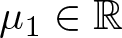 $\mu_1\in \mathbb{R}$ and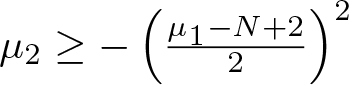 $\mu_2\geq -\left(\frac{\mu_1-N+2}{2}\right)^2$. Optimal criteria for the nonexistence of weak solutions are established. Our study yields naturally optimal nonexistence results for the corresponding class of elliptic inequalities. Notice that no restriction on the sign of solutions is imposed.

Maximal chordal subgraphs
- Part of
-
- Journal:
- Combinatorics, Probability and Computing / Volume 32 / Issue 5 / September 2023
- Published online by Cambridge University Press:
- 02 May 2023, pp. 724-741
-
- Article
-
- You have access
- Open access
- HTML
- Export citation
-
A chordal graph is a graph with no induced cycles of length at least $4$. Let $f(n,m)$ be the maximal integer such that every graph with $n$ vertices and $m$ edges has a chordal subgraph with at least $f(n,m)$ edges. In 1985 Erdős and Laskar posed the problem of estimating $f(n,m)$. In the late 1980s, Erdős, Gyárfás, Ordman and Zalcstein determined the value of $f(n,n^2/4+1)$ and made a conjecture on the value of $f(n,n^2/3+1)$. In this paper we prove this conjecture and answer the question of Erdős and Laskar, determining $f(n,m)$ asymptotically for all $m$ and exactly for $m \leq n^2/3+1$.


INTRINSIC STABILIZER REDUCTION AND GENERALIZED DONALDSON–THOMAS INVARIANTS
- Part of
-
- Journal:
- Journal of the Institute of Mathematics of Jussieu / Volume 22 / Issue 4 / July 2023
- Published online by Cambridge University Press:
- 02 May 2023, pp. 1987-2025
- Print publication:
- July 2023
-
- Article
-
- You have access
- Open access
- HTML
- Export citation
-
Let $\sigma $ be a stability condition on the bounded derived category $D^b({\mathop{\mathrm {Coh}}\nolimits } W)$ of a Calabi–Yau threefold W and $\mathcal {M}$ a moduli stack parametrizing $\sigma $-semistable objects of fixed topological type. We define generalized Donaldson–Thomas invariants which act as virtual counts of objects in $\mathcal {M}$, fully generalizing the approach introduced by Kiem, Li and the author in the case of semistable sheaves. We construct an associated proper Deligne–Mumford stack $\widetilde {\mathcal {M}}^{\mathbb {C}^{\ast }}$, called the $\mathbb {C}^{\ast }$-rigidified intrinsic stabilizer reduction of $\mathcal {M}$, with an induced semiperfect obstruction theory of virtual dimension zero, and define the generalized Donaldson–Thomas invariant via Kirwan blowups to be the degree of the associated virtual cycle $[\widetilde {\mathcal {M}}]^{\mathrm {vir}} \in A_0(\widetilde {\mathcal {M}})$. This stays invariant under deformations of the complex structure of W. Applications include Bridgeland stability, polynomial stability, Gieseker and slope stability.


A HECKE ACTION ON $G_1T$-MODULES
- Part of
-
- Journal:
- Journal of the Institute of Mathematics of Jussieu / Volume 23 / Issue 3 / May 2024
- Published online by Cambridge University Press:
- 28 April 2023, pp. 1125-1167
- Print publication:
- May 2024
-
- Article
-
- You have access
- Open access
- HTML
- Export citation
-
We construct an action of the affine Hecke category on the principal block $\mathrm {Rep}_0(G_1T)$ of $G_1T$-modules where G is a connected reductive group over an algebraically closed field of characteristic $p> 0$, T a maximal torus of G and $G_1$ the Frobenius kernel of G. To define it, we define a new category with a Hecke action which is equivalent to the combinatorial category defined by Andersen-Jantzen-Soergel.


On ρ-conjugate Hopf–Galois structures
- Part of
-
- Journal:
- Proceedings of the Edinburgh Mathematical Society / Volume 66 / Issue 1 / February 2023
- Published online by Cambridge University Press:
- 28 April 2023, pp. 288-304
-
- Article
-
- You have access
- Open access
- HTML
- Export citation
-
The Hopf–Galois structures admitted by a Galois extension of fields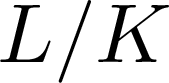 $ L/K $ with Galois group G correspond bijectively with certain subgroups of $ \mathrm{Perm}(G) $. We use a natural partition of the set of such subgroups to obtain a method for partitioning the set of corresponding Hopf–Galois structures, which we term ρ-conjugation. We study properties of this construction, with particular emphasis on the Hopf–Galois analogue of the Galois correspondence, the connection with skew left braces, and applications to questions of integral module structure in extensions of local or global fields. In particular, we show that the number of distinct ρ-conjugates of a given Hopf–Galois structure is determined by the corresponding skew left brace, and that if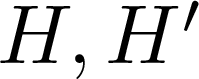 $ H, H^{\prime} $ are Hopf algebras giving ρ-conjugate Hopf–Galois structures on a Galois extension of local or global fields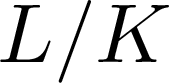 $ L/K $ then an ambiguous ideal $ \mathfrak{B} $ of L is free over its associated order in H if and only if it is free over its associated order in Hʹ. We exhibit a variety of examples arising from interactions with existing constructions in the literature.

Local regularity for nonlinear elliptic and parabolic equations with anisotropic weights
- Part of
-
- Journal:
- Proceedings of the Edinburgh Mathematical Society / Volume 66 / Issue 2 / May 2023
- Published online by Cambridge University Press:
- 28 April 2023, pp. 391-436
-
- Article
- Export citation
Gabber rigidity in hermitian K-theory
- Part of
-
- Journal:
- Proceedings of the Royal Society of Edinburgh. Section A: Mathematics / Volume 154 / Issue 6 / December 2024
- Published online by Cambridge University Press:
- 27 April 2023, pp. 1842-1847
- Print publication:
- December 2024
-
- Article
-
- You have access
- Open access
- HTML
- Export citation
Local and global existence and uniqueness of solution for abstract differential equations with state-dependent argument
- Part of
-
- Journal:
- Proceedings of the Edinburgh Mathematical Society / Volume 66 / Issue 2 / May 2023
- Published online by Cambridge University Press:
- 26 April 2023, pp. 305-345
-
- Article
- Export citation
Total mean curvature surfaces in the product space ${\mathbb{S}^{n}\times\mathbb{R}}$ and applications
- Part of
-
- Journal:
- Proceedings of the Edinburgh Mathematical Society / Volume 66 / Issue 2 / May 2023
- Published online by Cambridge University Press:
- 26 April 2023, pp. 346-365
-
- Article
- Export citation
-
The total mean curvature functional for submanifolds into the Riemannian product space $\mathbb{S}^n\times\mathbb{R}$ is considered and its first variational formula is presented. Later on, two second-order differential operators are defined and a nice integral inequality relating both of them is proved. Finally, we prove our main result: an integral inequality for closed stationary $\mathcal{H}$-surfaces in $\mathbb{S}^n\times\mathbb{R}$, characterizing the cases where the equality is attained.

Ramsey upper density of infinite graphs
- Part of
-
- Journal:
- Combinatorics, Probability and Computing / Volume 32 / Issue 5 / September 2023
- Published online by Cambridge University Press:
- 25 April 2023, pp. 703-723
-
- Article
- Export citation
-
For a fixed infinite graph $H$, we study the largest density of a monochromatic subgraph isomorphic to $H$ that can be found in every two-colouring of the edges of $K_{\mathbb{N}}$. This is called the Ramsey upper density of $H$ and was introduced by Erdős and Galvin in a restricted setting, and by DeBiasio and McKenney in general. Recently [4], the Ramsey upper density of the infinite path was determined. Here, we find the value of this density for all locally finite graphs $H$ up to a factor of 2, answering a question of DeBiasio and McKenney. We also find the exact density for a wide class of bipartite graphs, including all locally finite forests. Our approach relates this problem to the solution of an optimisation problem for continuous functions. We show that, under certain conditions, the density depends only on the chromatic number of $H$, the number of components of $H$ and the expansion ratio $|N(I)|/|I|$ of the independent sets of $H$.
$H$.


THE QUANTUM ISOMERIC SUPERCATEGORY
- Part of
-
- Journal:
- Journal of the Institute of Mathematics of Jussieu / Volume 23 / Issue 3 / May 2024
- Published online by Cambridge University Press:
- 25 April 2023, pp. 1077-1124
- Print publication:
- May 2024
-
- Article
-
- You have access
- Open access
- HTML
- Export citation
Problems and results on 1-cross-intersecting set pair systems
- Part of
-
- Journal:
- Combinatorics, Probability and Computing / Volume 32 / Issue 4 / July 2023
- Published online by Cambridge University Press:
- 24 April 2023, pp. 691-702
-
- Article
-
- You have access
- Open access
- HTML
- Export citation
-
The notion of cross-intersecting set pair system of size $m$,
$m$,  $ (\{A_i\}_{i=1}^m, \{B_i\}_{i=1}^m )$ with $A_i\cap B_i=\emptyset$ and $A_i\cap B_j\ne \emptyset$, was introduced by Bollobás and it became an important tool of extremal combinatorics. His classical result states that $m\le\binom{a+b}{a}$ if $|A_i|\le a$ and $|B_i|\le b$ for each $i$. Our central problem is to see how this bound changes with the additional condition $|A_i\cap B_j|=1$ for $i\ne j$. Such a system is called $1$-cross-intersecting. We show that these systems are related to perfect graphs, clique partitions of graphs, and finite geometries. We prove that their maximum size is
at least $5^{n/2}$ for $n$ even, $a=b=n$,
equal to $\bigl (\lfloor \frac{n}{2}\rfloor +1\bigr )\bigl (\lceil \frac{n}{2}\rceil +1\bigr )$ if $a=2$ and $b=n\ge 4$,
at most $|\cup _{i=1}^m A_i|$,
asymptotically $n^2$ if $\{A_i\}$ is a linear hypergraph ( $|A_i\cap A_j|\le 1$ for $i\ne j$),
asymptotically ${1\over 2}n^2$ if $\{A_i\}$ and $\{B_i\}$ are both linear hypergraphs.


Perfection for semigroups
- Part of
-
- Journal:
- Proceedings of the Edinburgh Mathematical Society / Volume 66 / Issue 1 / February 2023
- Published online by Cambridge University Press:
- 24 April 2023, pp. 259-287
-
- Article
-
- You have access
- Open access
- HTML
- Export citation
A Jordan–Hölder theorem for skew left braces and their applications to multipermutation solutions of the Yang–Baxter equation
- Part of
-
- Journal:
- Proceedings of the Royal Society of Edinburgh. Section A: Mathematics / Volume 154 / Issue 3 / June 2024
- Published online by Cambridge University Press:
- 24 April 2023, pp. 793-809
- Print publication:
- June 2024
-
- Article
-
- You have access
- Open access
- HTML
- Export citation
Clique-factors in graphs with sublinear $\boldsymbol\ell$-independence number
- Part of
-
- Journal:
- Combinatorics, Probability and Computing / Volume 32 / Issue 4 / July 2023
- Published online by Cambridge University Press:
- 24 April 2023, pp. 665-681
-
- Article
- Export citation
-
Given a graph $G$ and an integer $\ell \ge 2$, we denote by $\alpha _{\ell }(G)$ the maximum size of a $K_{\ell }$-free subset of vertices in $V(G)$. A recent question of Nenadov and Pehova asks for determining the best possible minimum degree conditions forcing clique-factors in $n$-vertex graphs $G$ with $\alpha _{\ell }(G) = o(n)$, which can be seen as a Ramsey–Turán variant of the celebrated Hajnal–Szemerédi theorem. In this paper we find the asymptotical sharp minimum degree threshold for $K_r$-factors in $n$-vertex graphs $G$ with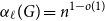 $\alpha _\ell (G)=n^{1-o(1)}$ for all $r\ge \ell \ge 2$.


Expected number of faces in a random embedding of any graph is at most linear
- Part of
-
- Journal:
- Combinatorics, Probability and Computing / Volume 32 / Issue 4 / July 2023
- Published online by Cambridge University Press:
- 24 April 2023, pp. 682-690
-
- Article
-
- You have access
- Open access
- HTML
- Export citation
-
A random two-cell embedding of a given graph $G$ is obtained by choosing a random local rotation around every vertex. We analyse the expected number of faces of such an embedding, which is equivalent to studying its average genus. In 1991, Stahl [5] proved that the expected number of faces in a random embedding of an arbitrary graph of order $n$ is at most $n\log (n)$. While there are many families of graphs whose expected number of faces is $\Theta (n)$, none are known where the expected number would be super-linear. This led the authors of [1] to conjecture that there is a linear upper bound. In this note we confirm their conjecture by proving that for any $n$-vertex multigraph, the expected number of faces in a random two-cell embedding is at most $2n\log (2\mu )$, where $\mu$ is the maximum edge-multiplicity. This bound is best possible up to a constant factor.


