Refine search
Actions for selected content:
26076 results in Abstract analysis
Rigidity of capillary surfaces in compact 3-manifolds with strictly convex boundary
- Part of
-
- Journal:
- Proceedings of the Edinburgh Mathematical Society / Volume 66 / Issue 1 / February 2023
- Published online by Cambridge University Press:
- 03 April 2023, pp. 231-240
-
- Article
- Export citation
-
In this paper, we obtain one sharp estimate for the length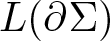 $L(\partial\Sigma)$ of the boundary $\partial\Sigma$ of a capillary minimal surface Σ2 in M3, where M is a compact three-manifolds with strictly convex boundary, assuming Σ has index one. The estimate is in term of the genus of Σ, the number of connected components of $\partial\Sigma$ and the constant contact angle θ. Making an extra assumption on the geometry of M along $\partial M$, we characterize the global geometry of M, which is saturated only by the Euclidean three-balls. For capillary stable CMC surfaces, we also obtain similar results.


KMS states on $C_c^{*}(\mathbb{N}^2)$
- Part of
-
- Journal:
- Glasgow Mathematical Journal / Volume 65 / Issue 3 / September 2023
- Published online by Cambridge University Press:
- 03 April 2023, pp. 501-528
-
- Article
- Export citation
-
Let $C_c^{*}(\mathbb{N}^{2})$ be the universal $C^{*}$-algebra generated by a semigroup of isometries $\{v_{(m,n)}\,:\, m,n \in \mathbb{N}\}$ whose range projections commute. We analyse the structure of KMS states on $C_{c}^{*}(\mathbb{N}^2)$ for the time evolution determined by a homomorphism $c\,:\,\mathbb{Z}^{2} \to \mathbb{R}$. In contrast to the reduced version $C_{red}^{*}(\mathbb{N}^{2})$, we show that the set of KMS states on $C_{c}^{*}(\mathbb{N}^{2})$ has a rich structure. In particular, we exhibit uncountably many extremal KMS states of type I, II and III.


A note on grid homology in lens spaces: $\mathbb{Z}$ coefficients and computations
-
- Journal:
- Glasgow Mathematical Journal / Volume 65 / Issue 2 / May 2023
- Published online by Cambridge University Press:
- 31 March 2023, pp. 457-479
-
- Article
-
- You have access
- Open access
- HTML
- Export citation
-
We present a combinatorial proof for the existence of the sign-refined grid homology in lens spaces and a self-contained proof that $\partial _{\mathbb{Z}}^2 = 0$. We also present a Sage programme that computes $\widehat{\mathrm{GH}} (L(p,q),K;\mathbb{Z})$ and provide empirical evidence supporting the absence of torsion in these groups.


A geometric interpretation of Ranicki duality
-
- Journal:
- Proceedings of the Royal Society of Edinburgh. Section A: Mathematics / Volume 154 / Issue 6 / December 2024
- Published online by Cambridge University Press:
- 31 March 2023, pp. 1681-1698
- Print publication:
- December 2024
-
- Article
-
- You have access
- Open access
- HTML
- Export citation
-
Consider a commutative ring $R$
 and a simplicial map, $X\mathop {\longrightarrow }\limits ^{\pi }K,$
 of finite simplicial complexes. The simplicial cochain complex of $X$
 with $R$
 coefficients, $\Delta ^*X,$
 then has the structure of an $(R,K)$
 chain complex, in the sense of Ranicki . Therefore it has a Ranicki-dual $(R,K)$
 chain complex, $T \Delta ^*X$
 . This (contravariant) duality functor $T:\mathcal {B} R_K\to \mathcal {B} R_K$
 was defined algebraically on the category of $(R,K)$
 chain complexes and $(R,K)$
 chain maps.
Our main theorem, 8.1, provides a natural $(R,K)$
 chain isomorphism:\[ T\Delta^*X\cong C(X_K) \]where $C(X_K)$
 is the cellular chain complex of a CW complex $X_K$
 . The complex $X_K$
 is a (nonsimplicial) subdivision of the complex $X$
 . The $(R,K)$
 structure on $C(X_K)$
 arises geometrically.


THE EISENSTEIN IDEAL OF WEIGHT k AND RANKS OF HECKE ALGEBRAS
- Part of
-
- Journal:
- Journal of the Institute of Mathematics of Jussieu / Volume 23 / Issue 2 / March 2024
- Published online by Cambridge University Press:
- 31 March 2023, pp. 983-1017
- Print publication:
- March 2024
-
- Article
- Export citation
-
Let p and $\ell $ be primes such that $p> 3$ and $p \mid \ell -1$ and k be an even integer. We use deformation theory of pseudo-representations to study the completion of the Hecke algebra acting on the space of cuspidal modular forms of weight k and level $\Gamma _0(\ell )$ at the maximal Eisenstein ideal containing p. We give a necessary and sufficient condition for the $\mathbb {Z}_p$-rank of this Hecke algebra to be greater than $1$ in terms of vanishing of the cup products of certain global Galois cohomology classes. We also recover some of the results proven by Wake and Wang-Erickson for $k=2$ using our methods. In addition, we prove some $R=\mathbb {T}$ theorems under certain hypotheses.


Decomposability of multiparameter car flows
- Part of
-
- Journal:
- Proceedings of the Edinburgh Mathematical Society / Volume 66 / Issue 1 / February 2023
- Published online by Cambridge University Press:
- 31 March 2023, pp. 1-22
-
- Article
- Export citation
-
Let P be a closed convex cone in $\mathbb{R}^d$ which is assumed to be spanning $\mathbb{R}^d$ and contains no line. In this article, we consider a family of CAR flows over P and study the decomposability of the associated product systems. We establish a necessary and sufficient condition for CAR flow to be decomposable. As a consequence, we show that there are uncountable many CAR flows which are cocycle conjugate to the corresponding CCR flows.


Synchronization of coupled map lattices
- Part of
-
- Journal:
- Proceedings of the Edinburgh Mathematical Society / Volume 66 / Issue 1 / February 2023
- Published online by Cambridge University Press:
- 30 March 2023, pp. 143-163
-
- Article
- Export citation
On the existence of baby skyrmions stabilized by vector mesons
- Part of
-
- Journal:
- Proceedings of the Edinburgh Mathematical Society / Volume 66 / Issue 1 / February 2023
- Published online by Cambridge University Press:
- 30 March 2023, pp. 100-116
-
- Article
- Export citation
Free rank of symmetry of products of Dold manifolds
- Part of
-
- Journal:
- Proceedings of the Edinburgh Mathematical Society / Volume 66 / Issue 1 / February 2023
- Published online by Cambridge University Press:
- 30 March 2023, pp. 117-132
-
- Article
- Export citation
-
Dold manifolds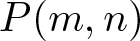 $P(m,n)$ are certain twisted complex projective space bundles over real projective spaces and serve as generators for the unoriented cobordism algebra of smooth manifolds. The paper investigates the structure of finite groups that act freely on products of Dold manifolds. It is proved that if a finite group G acts freely and $ \mathbb{Z}_2 $ cohomologically trivially on a finite CW-complex homotopy equivalent to ${\prod_{i=1}^{k} P(2m_i,n_i)}$, then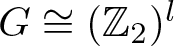 $G\cong (\mathbb{Z}_2)^l$ for some $l\leq k$ (see Theorem A for the exact bound). We also determine some bounds in the case when for each i, ni is even and mi is arbitrary. As a consequence, the free rank of symmetry of these manifolds is determined for cohomologically trivial actions.


PRM volume 153 issue 2 Cover and Front matter
-
- Journal:
- Proceedings of the Royal Society of Edinburgh. Section A: Mathematics / Volume 153 / Issue 2 / April 2023
- Published online by Cambridge University Press:
- 29 March 2023, pp. f1-f2
- Print publication:
- April 2023
-
- Article
-
- You have access
- Export citation
PRM volume 153 issue 2 Cover and Back matter
-
- Journal:
- Proceedings of the Royal Society of Edinburgh. Section A: Mathematics / Volume 153 / Issue 2 / April 2023
- Published online by Cambridge University Press:
- 29 March 2023, pp. b1-b2
- Print publication:
- April 2023
-
- Article
-
- You have access
- Export citation
On some products of finite groups
- Part of
-
- Journal:
- Proceedings of the Edinburgh Mathematical Society / Volume 66 / Issue 1 / February 2023
- Published online by Cambridge University Press:
- 28 March 2023, pp. 89-99
-
- Article
-
- You have access
- Open access
- HTML
- Export citation
-
A classical result of Baer states that a finite group G which is the product of two normal supersoluble subgroups is supersoluble if and only if Gʹ is nilpotent. In this article, we show that if G = AB is the product of supersoluble (respectively, w-supersoluble) subgroups A and B, A is normal in G and B permutes with every maximal subgroup of each Sylow subgroup of A, then G is supersoluble (respectively, w-supersoluble), provided that Gʹ is nilpotent. We also investigate products of subgroups defined above when $ A\cap B=1 $ and obtain more general results.
The exponential ordering for nonautonomous delay systems with applications to compartmental Nicholson systems
- Part of
-
- Journal:
- Proceedings of the Royal Society of Edinburgh. Section A: Mathematics / Volume 154 / Issue 2 / April 2024
- Published online by Cambridge University Press:
- 27 March 2023, pp. 568-599
- Print publication:
- April 2024
-
- Article
- Export citation
Vanishing limit for the three-dimensional incompressible Phan-Thien–Tanner system
- Part of
-
- Journal:
- Proceedings of the Royal Society of Edinburgh. Section A: Mathematics / Volume 154 / Issue 3 / June 2024
- Published online by Cambridge University Press:
- 27 March 2023, pp. 673-698
- Print publication:
- June 2024
-
- Article
- Export citation
-
This paper focuses on the vanishing limit problem for the three-dimensional incompressible Phan-Thien–Tanner (PTT) system, which is commonly used to describe the dynamic properties of polymeric fluids. Our purpose is to show the relation of the PTT system to the well-known Oldroyd-B system (with or without damping mechanism). The suitable a priori estimates and global existence of strong solutions are established for the PTT system with small initial data. Taking advantage of uniform energy and decay estimates for the PTT system with respect to time $t$
 and coefficients $a$
 and $b$
 , then allows us to justify in particular the vanishing limit for all time. More precisely, we prove that the solution $(u,\,\tau )$
 of PTT system with $0\leq b\leq Ca$
 converges globally in time to some limit $(\widetilde {u},\,\widetilde {\tau })$
 in a suitable Sobolev space when $a$
 and $b$
 go to zero simultaneously (or, only $b$
 goes to zero). We may check that $(\widetilde {u},\,\widetilde {\tau })$
 is indeed a global solution of the corresponding Oldroyd-B system. In addition, a rate of convergence involving explicit norm will be obtained. As a byproduct, similar results are also true for the local a priori estimates in large norm.


Involutivity of distributions at points of superdense tangency with respect to normal currents
- Part of
-
- Journal:
- Proceedings of the Royal Society of Edinburgh. Section A: Mathematics / Volume 154 / Issue 2 / April 2024
- Published online by Cambridge University Press:
- 24 March 2023, pp. 508-524
- Print publication:
- April 2024
-
- Article
-
- You have access
- Open access
- HTML
- Export citation
-
Let ${\mathcal {D}}$
 and $T$
 be, respectively, a $C^1$
 distribution of $k$
 -planes and a normal $k$
 -current on ${\mathbb {R}}^n$
 . Then ${\mathcal {D}}$
 has to be involutive at almost every superdensity point of the tangency set of $T$
 with respect to ${\mathcal {D}}$
 .
.


On macrosegregation in a binary alloy undergoing solidification shrinkage
- Part of
-
- Journal:
- European Journal of Applied Mathematics / Volume 35 / Issue 1 / February 2024
- Published online by Cambridge University Press:
- 23 March 2023, pp. 40-61
-
- Article
-
- You have access
- Open access
- HTML
- Export citation
Finite image homomorphisms of the braid group and its generalizations
- Part of
-
- Journal:
- Glasgow Mathematical Journal / Volume 65 / Issue 2 / May 2023
- Published online by Cambridge University Press:
- 23 March 2023, pp. 430-445
-
- Article
-
- You have access
- Open access
- HTML
- Export citation
A note on the differentiability of discrete Palmer's linearization
- Part of
-
- Journal:
- Proceedings of the Royal Society of Edinburgh. Section A: Mathematics / Volume 154 / Issue 2 / April 2024
- Published online by Cambridge University Press:
- 22 March 2023, pp. 600-628
- Print publication:
- April 2024
-
- Article
- Export citation
-
In the context of discrete nonautonomous dynamics, we prove that the homeomorphisms in the linearization theorem are $C^2$
 diffeomorphisms. In contrast to other related works, our result does not involve non-resonance conditions or spectral gaps. Our approach is based on the interlacing of the properties of nonautonomous hyperbolicity of the linear part, and boundedness and Lipschitzness of the nonlinearities. Moreover, we propose a functional approach to find conditions for regularity of arbitrary degree.

Dynamics of a delayed population patch model with the dispersion matrix incorporating population loss
- Part of
-
- Journal:
- European Journal of Applied Mathematics / Volume 34 / Issue 4 / August 2023
- Published online by Cambridge University Press:
- 21 March 2023, pp. 870-895
-
- Article
- Export citation
Partial Euler operators and the efficient inversion of Div
- Part of
-
- Journal:
- European Journal of Applied Mathematics / Volume 34 / Issue 5 / October 2023
- Published online by Cambridge University Press:
- 20 March 2023, pp. 1046-1066
-
- Article
-
- You have access
- Open access
- HTML
- Export citation
