Refine search
Actions for selected content:
26076 results in Abstract analysis
Breakdown of electroneutrality in polyelectrolyte gels
- Part of
-
- Journal:
- European Journal of Applied Mathematics / Volume 35 / Issue 3 / June 2024
- Published online by Cambridge University Press:
- 06 September 2023, pp. 359-381
-
- Article
-
- You have access
- Open access
- HTML
- Export citation
OPTIMAL GEVREY STABILITY OF HYDROSTATIC APPROXIMATION FOR THE NAVIER-STOKES EQUATIONS IN A THIN DOMAIN
- Part of
-
- Journal:
- Journal of the Institute of Mathematics of Jussieu / Volume 23 / Issue 4 / July 2024
- Published online by Cambridge University Press:
- 06 September 2023, pp. 1521-1566
- Print publication:
- July 2024
-
- Article
-
- You have access
- HTML
- Export citation
-
In this paper, we study the hydrostatic approximation for the Navier-Stokes system in a thin domain. When we have convex initial data with Gevrey regularity of optimal index $\frac {3}{2}$ in the x variable and Sobolev regularity in the y variable, we justify the limit from the anisotropic Navier-Stokes system to the hydrostatic Navier-Stokes/Prandtl system. Due to our method in the paper being independent of $\varepsilon $, by the same argument, we also obtain the well-posedness of the hydrostatic Navier-Stokes/Prandtl system in the optimal Gevrey space. Our results improve upon the Gevrey index of $\frac {9}{8}$ found in [15, 35].


Forcing generalised quasirandom graphs efficiently
- Part of
-
- Journal:
- Combinatorics, Probability and Computing / Volume 33 / Issue 1 / January 2024
- Published online by Cambridge University Press:
- 05 September 2023, pp. 16-31
-
- Article
-
- You have access
- Open access
- HTML
- Export citation
-
We study generalised quasirandom graphs whose vertex set consists of $q$ parts (of not necessarily the same sizes) with edges within each part and between each pair of parts distributed quasirandomly; such graphs correspond to the stochastic block model studied in statistics and network science. Lovász and Sós showed that the structure of such graphs is forced by homomorphism densities of graphs with at most $(10q)^q+q$ vertices; subsequently, Lovász refined the argument to show that graphs with $4(2q+3)^8$ vertices suffice. Our results imply that the structure of generalised quasirandom graphs with $q\ge 2$ parts is forced by homomorphism densities of graphs with at most $4q^2-q$ vertices, and, if vertices in distinct parts have distinct degrees, then $2q+1$ vertices suffice. The latter improves the bound of $8q-4$ due to Spencer.


Discrete heat equation with irregular thermal conductivity and tempered distributional data
- Part of
-
- Journal:
- Proceedings of the Royal Society of Edinburgh. Section A: Mathematics / Volume 155 / Issue 1 / February 2025
- Published online by Cambridge University Press:
- 04 September 2023, pp. 57-80
- Print publication:
- February 2025
-
- Article
-
- You have access
- Open access
- HTML
- Export citation
-
In this paper, we consider a semi-classical version of the nonhomogeneous heat equation with singular time-dependent coefficients on the lattice $\hbar \mathbb {Z}^n$
 . We establish the well-posedness of such Cauchy problems in the classical sense when regular coefficients are considered, and analyse how the notion of very weak solution adapts in such equations when distributional coefficients are regarded. We prove the well-posedness of both the classical and the very weak solution in the weighted spaces $\ell ^{2}_{s}(\hbar \mathbb {Z}^n)$
 , $s \in \mathbb {R}$
 , which is enough to prove the well-posedness in the space of tempered distributions $\mathcal {S}'(\hbar \mathbb {Z}^n)$
 . Notably, when $s=0$
 , we show that for $\hbar \rightarrow 0$
 , the classical (resp. very weak) solution of the heat equation in the Euclidean setting $\mathbb {R}^n$
 is recaptured by the classical (resp. very weak) solution of it in the semi-classical setting $\hbar \mathbb {Z}^n$
 .
.


Normalized positive solutions for Schrödinger equations with potentials in unbounded domains
- Part of
-
- Journal:
- Proceedings of the Royal Society of Edinburgh. Section A: Mathematics / Volume 154 / Issue 5 / October 2024
- Published online by Cambridge University Press:
- 04 September 2023, pp. 1518-1551
- Print publication:
- October 2024
-
- Article
- Export citation
-
The paper deals with the existence of positive solutions with prescribed $L^2$
 norm for the Schrödinger equation$$-\Delta u+\lambda u+V(x)u=|u|^{p-2}u,\quad u\in H^1_0(\Omega),\quad\int_\Omega u^2{\rm d}\,x=\rho^2,\quad\lambda\in\mathbb{R},$$where $\Omega =\mathbb {R}^N$
 or $\mathbb {R}^N\setminus \Omega$
 is a compact set, $\rho >0$
 , $V\ge 0$
 (also $V\equiv 0$
 is allowed), $p\in (2,2+\frac 4 N)$
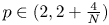 . The existence of a positive solution $\bar u$
 is proved when $V$
 verifies a suitable decay assumption (Dρ), or if $\|V\|_{L^q}$
 is small, for some $q\ge \frac N2$
 ($q>1$
 if $N=2$
 ). No smallness assumption on $V$
 is required if the decay assumption (Dρ) is fulfilled. There are no assumptions on the size of $\mathbb {R}^N\setminus \Omega$
 . The solution $\bar u$
 is a bound state and no ground state solution exists, up to the autonomous case $V\equiv 0$
 and $\Omega =\mathbb {R}^N$
 .
.


Combined effects in mixed local–nonlocal stationary problems
- Part of
-
- Journal:
- Proceedings of the Royal Society of Edinburgh. Section A: Mathematics / Volume 155 / Issue 1 / February 2025
- Published online by Cambridge University Press:
- 04 September 2023, pp. 10-56
- Print publication:
- February 2025
-
- Article
- Export citation
Perron’s capacity of random sets
- Part of
-
- Journal:
- Proceedings of the Edinburgh Mathematical Society / Volume 66 / Issue 4 / November 2023
- Published online by Cambridge University Press:
- 01 September 2023, pp. 960-970
-
- Article
- Export citation
-
We answer in a probabilistic setting two questions raised by Stokolos in a private communication. Precisely, given a sequence of random variables $\left\{X_k : k \geq 1\right\}$ uniformly distributed in $(0,1)$ and independent, we consider the following random sets of directionsand
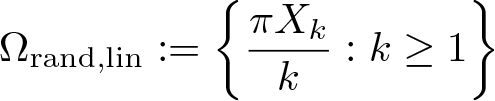 \begin{equation*}\Omega_{\text{rand},\text{lin}} := \left\{ \frac{\pi X_k}{k}: k \geq 1\right\}\end{equation*}
 \begin{equation*}\Omega_{\text{rand},\text{lac}} := \left\{\frac{\pi X_k}{2^k} : k\geq 1 \right\}.\end{equation*}
We prove that almost surely the directional maximal operators associated to those sets of directions are not bounded on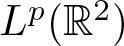 $L^p({\mathbb{R}}^2)$ for any $1 \lt p \lt \infty$.

A Chebyshev-type alternation theorem for best approximation by a sum of two algebras
- Part of
-
- Journal:
- Proceedings of the Edinburgh Mathematical Society / Volume 66 / Issue 4 / November 2023
- Published online by Cambridge University Press:
- 01 September 2023, pp. 971-978
-
- Article
- Export citation
-
Let X be a compact metric space, C(X) be the space of continuous real-valued functions on X and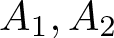 $A_{1},A_{2}$ be two closed subalgebras of C(X) containing constant functions. We consider the problem of approximation of a function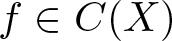 $f\in C(X)$ by elements from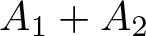 $A_{1}+A_{2}$. We prove a Chebyshev-type alternation theorem for a function $u_{0} \in A_{1}+A_{2}$ to be a best approximation to f.
Nonchaotic N-expansive homeomorphisms
- Part of
-
- Journal:
- Proceedings of the Royal Society of Edinburgh. Section A: Mathematics / Volume 155 / Issue 1 / February 2025
- Published online by Cambridge University Press:
- 31 August 2023, pp. 1-9
- Print publication:
- February 2025
-
- Article
- Export citation
-
In this paper, we give necessary conditions for an $N$
 -expansive homeomorphism of a compact metric space to be nonchaotic in the Li–Yorke sense. As application we give a partial answer to a conjecture in [2].

A nonconservative kinetic framework under the action of an external force field: Theoretical results with application inspired to ecology
- Part of
-
- Journal:
- European Journal of Applied Mathematics / Volume 34 / Issue 6 / December 2023
- Published online by Cambridge University Press:
- 31 August 2023, pp. 1170-1186
-
- Article
- Export citation
Sharp Sobolev regularity of restricted X-ray transforms
- Part of
-
- Journal:
- Proceedings of the Royal Society of Edinburgh. Section A: Mathematics / Volume 154 / Issue 5 / October 2024
- Published online by Cambridge University Press:
- 30 August 2023, pp. 1583-1603
- Print publication:
- October 2024
-
- Article
- Export citation
-
We study $L^p$
 -Sobolev regularity estimates for the restricted X-ray transforms generated by nondegenerate curves. Making use of the inductive strategy in the recent work by the authors, we establish the sharp $L^p$
 -regularity estimates for the restricted X-ray transforms in $\mathbb {R}^{d+1}$
 , $d\ge 3$
 . This extends the result due to Pramanik and Seeger in $\mathbb {R}^3$
 .
.


Rotating periodic solutions for p-Laplacian differential systems
- Part of
-
- Journal:
- Proceedings of the Royal Society of Edinburgh. Section A: Mathematics / Volume 154 / Issue 5 / October 2024
- Published online by Cambridge University Press:
- 30 August 2023, pp. 1604-1633
- Print publication:
- October 2024
-
- Article
- Export citation
Moser's theorem with frequency-preserving
- Part of
-
- Journal:
- Proceedings of the Royal Society of Edinburgh. Section A: Mathematics / Volume 154 / Issue 5 / October 2024
- Published online by Cambridge University Press:
- 29 August 2023, pp. 1473-1503
- Print publication:
- October 2024
-
- Article
- Export citation
-
This paper mainly concerns the KAM persistence of the mapping $\mathscr {F}:\mathbb {T}^{n}\times E\rightarrow \mathbb {T}^{n}\times \mathbb {R}^{n}$
 with intersection property, where $E\subset \mathbb {R}^{n}$
 is a connected closed bounded domain with interior points. By assuming that the frequency mapping satisfies certain topological degree condition and weak convexity condition, we prove some Moser-type results about the invariant torus of mapping $\mathscr {F}$
 with frequency-preserving under small perturbations. To our knowledge, this is the first approach to Moser's theorem with frequency-preserving. Moreover, given perturbed mappings over $\mathbb {T}^n$
 , it is shown that such persistence still holds when the frequency mapping and perturbations are only continuous about parameter beyond Lipschitz or even Hölder type. We also touch the parameter without dimension limitation problem under such settings.


Relative Dehn functions, hyperbolically embedded subgroups and combination theorems
- Part of
-
- Journal:
- Glasgow Mathematical Journal / Volume 66 / Issue 1 / January 2024
- Published online by Cambridge University Press:
- 25 August 2023, pp. 1-23
-
- Article
-
- You have access
- Open access
- HTML
- Export citation
-
Consider the following classes of pairs consisting of a group and a finite collection of subgroups:
• $ \mathcal{C}= \left \{ (G,\mathcal{H}) \mid \text{$\mathcal{H}$ is hyperbolically embedded in $G$} \right \}$
• $ \mathcal{D}= \left \{ (G,\mathcal{H}) \mid \text{the relative Dehn function of $(G,\mathcal{H})$ is well-defined} \right \} .$
Let $G$ be a group that splits as a finite graph of groups such that each vertex group $G_v$ is assigned a finite collection of subgroups $\mathcal{H}_v$, and each edge group $G_e$ is conjugate to a subgroup of some $H\in \mathcal{H}_v$ if $e$ is adjacent to $v$. Then there is a finite collection of subgroups $\mathcal{H}$ of $G$ such that
1. If each $(G_v, \mathcal{H}_v)$ is in $\mathcal C$, then $(G,\mathcal{H})$ is in $\mathcal C$.
2. If each $(G_v, \mathcal{H}_v)$ is in $\mathcal D$, then $(G,\mathcal{H})$ is in $\mathcal D$.
3. For any vertex $v$ and for any $g\in G_v$, the element $g$ is conjugate to an element in some $Q\in \mathcal{H}_v$ if and only if $g$ is conjugate to an element in some $H\in \mathcal{H}$.
That edge groups are not assumed to be finitely generated and that they do not necessarily belong to a peripheral collection of subgroups of an adjacent vertex are the main differences between this work and previous results in the literature. The method of proof provides lower and upper bounds of the relative Dehn functions in terms of the relative Dehn functions of the vertex groups. These bounds generalize and improve analogous results in the literature.


Synthetic versus distributional lower Ricci curvature bounds
- Part of
-
- Journal:
- Proceedings of the Royal Society of Edinburgh. Section A: Mathematics / Volume 154 / Issue 5 / October 2024
- Published online by Cambridge University Press:
- 23 August 2023, pp. 1406-1430
- Print publication:
- October 2024
-
- Article
-
- You have access
- Open access
- HTML
- Export citation
-
We compare two standard approaches to defining lower Ricci curvature bounds for Riemannian metrics of regularity below $C^2$
 . These are, on the one hand, the synthetic definition via weak displacement convexity of entropy functionals in the framework of optimal transport, and the distributional one based on non-negativity of the Ricci-tensor in the sense of Schwartz. It turns out that distributional bounds imply entropy bounds for metrics of class $C^1$
 and that the converse holds for $C^{1,1}$
 -metrics under an additional convergence condition on regularizations of the metric.


ODD RANK VECTOR BUNDLES IN ETA-PERIODIC MOTIVIC HOMOTOPY THEORY
- Part of
-
- Journal:
- Journal of the Institute of Mathematics of Jussieu / Volume 24 / Issue 5 / September 2025
- Published online by Cambridge University Press:
- 23 August 2023, pp. 1733-1764
- Print publication:
- September 2025
-
- Article
-
- You have access
- Open access
- HTML
- Export citation
-
We observe that, in the eta-periodic motivic stable homotopy category, odd rank vector bundles behave to some extent as if they had a nowhere vanishing section. We discuss some consequences concerning $\operatorname {\mathrm {SL}}^c$-orientations of motivic ring spectra and the étale classifying spaces of certain algebraic groups. In particular, we compute the classifying spaces of diagonalisable groups in the eta-periodic motivic stable homotopy category.

Remarks on countable subadditivity
- Part of
-
- Journal:
- Proceedings of the Royal Society of Edinburgh. Section A: Mathematics / Volume 154 / Issue 5 / October 2024
- Published online by Cambridge University Press:
- 23 August 2023, pp. 1504-1517
- Print publication:
- October 2024
-
- Article
- Export citation
Proper Ehresmann semigroups
- Part of
-
- Journal:
- Proceedings of the Edinburgh Mathematical Society / Volume 66 / Issue 3 / August 2023
- Published online by Cambridge University Press:
- 22 August 2023, pp. 758-788
-
- Article
- Export citation
New mock theta functions and formulas for basic hypergeometric series
- Part of
-
- Journal:
- Proceedings of the Edinburgh Mathematical Society / Volume 66 / Issue 3 / August 2023
- Published online by Cambridge University Press:
- 22 August 2023, pp. 868-896
-
- Article
- Export citation
The spectral eigenmatrix problems of planar self-affine measures with four digits
- Part of
-
- Journal:
- Proceedings of the Edinburgh Mathematical Society / Volume 66 / Issue 3 / August 2023
- Published online by Cambridge University Press:
- 22 August 2023, pp. 897-918
-
- Article
- Export citation
-
Given a Borel probability measure µ on $\mathbb{R}^n$ and a real matrix $R\in M_n(\mathbb{R})$. We call R a spectral eigenmatrix of the measure µ if there exists a countable set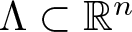 $\Lambda\subset \mathbb{R}^n$ such that the sets $E_\Lambda=\big\{{\rm e}^{2\pi i \langle\lambda,x\rangle}:\lambda\in \Lambda\big\}$ and $E_{R\Lambda}=\big\{{\rm e}^{2\pi i \langle R\lambda,x\rangle}:\lambda\in \Lambda\big\}$ are both orthonormal bases for the Hilbert space $L^2(\mu)$. In this paper, we study the structure of spectral eigenmatrix of the planar self-affine measure $\mu_{M,D}$ generated by an expanding integer matrix $M\in M_2(2\mathbb{Z})$ and the four-elements digit set $D = \{(0,0)^t,(1,0)^t,(0,1)^t,(-1,-1)^t\}$. Some sufficient and/or necessary conditions for R to be a spectral eigenmatrix of $\mu_{M,D}$ are given.


