Refine search
Actions for selected content:
26077 results in Abstract analysis
1 - Axioms of Probability Theory
- from Part I - Elements of Probability Theory
-
- Book:
- Principles of Statistical Analysis
- Published online:
- 22 July 2022
- Print publication:
- 25 August 2022, pp 3-18
-
- Chapter
-
- You have access
- Export citation
13 - Properties of Estimators and Tests
- from Part III - Elements of Statistical Inference
-
- Book:
- Principles of Statistical Analysis
- Published online:
- 22 July 2022
- Print publication:
- 25 August 2022, pp 181-191
-
- Chapter
- Export citation
20 - Multiple Testing
- from Part III - Elements of Statistical Inference
-
- Book:
- Principles of Statistical Analysis
- Published online:
- 22 July 2022
- Print publication:
- 25 August 2022, pp 309-328
-
- Chapter
- Export citation
Acknowledgements
-
- Book:
- Principles of Statistical Analysis
- Published online:
- 22 July 2022
- Print publication:
- 25 August 2022, pp xvii-xviii
-
- Chapter
- Export citation
22 - Foundational Issues
- from Part III - Elements of Statistical Inference
-
- Book:
- Principles of Statistical Analysis
- Published online:
- 22 July 2022
- Print publication:
- 25 August 2022, pp 356-370
-
- Chapter
- Export citation
Part III - Elements of Statistical Inference
-
- Book:
- Principles of Statistical Analysis
- Published online:
- 22 July 2022
- Print publication:
- 25 August 2022, pp 161-162
-
- Chapter
- Export citation
14 - One Proportion
- from Part III - Elements of Statistical Inference
-
- Book:
- Principles of Statistical Analysis
- Published online:
- 22 July 2022
- Print publication:
- 25 August 2022, pp 192-202
-
- Chapter
- Export citation
Frontmatter
-
- Book:
- Principles of Statistical Analysis
- Published online:
- 22 July 2022
- Print publication:
- 25 August 2022, pp viii-viii
-
- Chapter
- Export citation
16 - One Numerical Sample
- from Part III - Elements of Statistical Inference
-
- Book:
- Principles of Statistical Analysis
- Published online:
- 22 July 2022
- Print publication:
- 25 August 2022, pp 230-270
-
- Chapter
- Export citation
Preface
-
- Book:
- Principles of Statistical Analysis
- Published online:
- 22 July 2022
- Print publication:
- 25 August 2022, pp xiv-xvi
-
- Chapter
- Export citation
The affirmative answer to Singer's conjecture on the algebraic transfer of rank four
- Part of
-
- Journal:
- Proceedings of the Royal Society of Edinburgh. Section A: Mathematics / Volume 153 / Issue 5 / October 2023
- Published online by Cambridge University Press:
- 23 August 2022, pp. 1529-1542
- Print publication:
- October 2023
-
- Article
- Export citation
-
During the last decades, the structure of mod-2 cohomology of the Steenrod ring $\mathscr {A}$
 became a major subject in Algebraic topology. One of the most direct attempt in studying this cohomology by means of modular representations of the general linear groups was the surprising work [Math. Z. 202 (1989), 493–523] by William Singer, which introduced a homomorphism, the so-called algebraic transfer, mapping from the coinvariants of certain representation of the general linear group to mod-2 cohomology group of the ring $\mathscr A.$
 He conjectured that this transfer is a monomorphism. In this work, we prove Singer's conjecture for homological degree $4.$


On some nonlinear Schrödinger equations in ℝN
- Part of
-
- Journal:
- Proceedings of the Royal Society of Edinburgh. Section A: Mathematics / Volume 153 / Issue 5 / October 2023
- Published online by Cambridge University Press:
- 23 August 2022, pp. 1503-1528
- Print publication:
- October 2023
-
- Article
- Export citation
-
In this paper, we consider the following nonlinear Schrödinger equations with the critical Sobolev exponent and mixed nonlinearities:
\[\left\{\begin{aligned} & -\Delta u+\lambda u=t|u|^{q-2}u+|u|^{2^{*}-2}u\quad\text{in }\mathbb{R}^{N},\\ & u\in H^{1}(\mathbb{R}^{N}), \end{aligned}\right.\]where $N\geq 3$
 , $t>0$
 , $\lambda >0$
 and $2< q<2^{*}=\frac {2N}{N-2}$
 . Based on our recent study on the normalized solutions of the above equation in [J. Wei and Y. Wu, Normalized solutions for Schrodinger equations with critical Sobolev exponent and mixed nonlinearities, e-print arXiv:2102.04030[Math.AP].], we prove that
(1) the above equation has two positive radial solutions for $N=3$
 , $2< q<4$
 and $t>0$
 sufficiently large, which gives a rigorous proof of the numerical conjecture in [J. Dávila, M. del Pino and I. Guerra. Non-uniqueness of positive ground states of non-linear Schrödinger equations. Proc. Lond. Math. Soc. 106 (2013), 318–344.];
(2) there exists $t_q^{*}>0$
 for $2< q\leq 4$
 such that the above equation has ground-states for $t\geq t_q^{*}$
 in the case of $2< q<4$
 and for $t>t_4^{*}$
 in the case of $q=4$
 , while the above equation has no ground-states for $0< t< t_q^{*}$
 for all $2< q\leq 4$
 , which, together with the well-known results on ground-states of the above equation, almost completely solve the existence of ground-states, except for $N=3$
 , $q=4$
 and $t=t_4^{*}$
 .
.
 for $2< q<2+\frac {4}{N}$
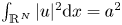
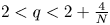 such that the above equation has no positive normalized solutions for $t>\overline {t}_{a,q}$
 with $\int _{\mathbb {R}^{N}}|u|^{2}{\rm d}x=a^{2}$
 , which, together with our recent study in [J. Wei and Y. Wu, Normalized solutions for Schrodinger equations with critical Sobolev exponent and mixed nonlinearities, e-print arXiv:2102.04030[Math.AP].], gives a completed answer to the open question proposed by Soave in [N. Soave. Normalized ground states for the NLS equation with combined nonlinearities: The Sobolev critical case. J. Funct. Anal. 279 (2020) 108610.]. Finally, as applications of our new argument, we also study the following Schrödinger equation with a partial confinement:\[\left\{ \begin{aligned} & -\Delta u+\lambda u+(x_1^{2}+x_2^{2})u=|u|^{p-2}u\quad\text{in }\mathbb{R}^{3},\\ & u\in H^{1}(\mathbb{R}^{3}),\quad \int_{\mathbb{R}^{3}}|u|^{2}{\rm d}x=r^{2}, \end{aligned}\right.\]where $x=(x_1,x_2,x_3)\in \mathbb {R}^{3}$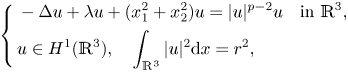
 , $\frac {10}{3}< p<6$
 , $r>0$
 is a constant and $(u, \lambda )$
 is a pair of unknowns with $\lambda$
 being a Lagrange multiplier. We prove that the above equation has a second positive solution, which is also a mountain-pass solution, for $r>0$
 sufficiently small. This gives a positive answer to the open question proposed by Bellazzini et al. in [J. Bellazzini, N. Boussaid, L. Jeanjean and N. Visciglia. Existence and Stability of Standing Waves for Supercritical NLS with a Partial Confinement. Commun. Math. Phys. 353 (2017), 229–251].


Harnack inequality for the nonlocal equations with general growth
- Part of
-
- Journal:
- Proceedings of the Royal Society of Edinburgh. Section A: Mathematics / Volume 153 / Issue 5 / October 2023
- Published online by Cambridge University Press:
- 23 August 2022, pp. 1479-1502
- Print publication:
- October 2023
-
- Article
- Export citation
-
We consider a class of generalized nonlocal $p$
 -Laplacian equations. We find some proper structural conditions to establish a version of nonlocal Harnack inequalities of weak solutions to such nonlocal problems by using the expansion of positivity and energy estimates.

On dense intermingling of exact overlaps and the open set condition
- Part of
-
- Journal:
- Proceedings of the Edinburgh Mathematical Society / Volume 65 / Issue 3 / August 2022
- Published online by Cambridge University Press:
- 22 August 2022, pp. 747-759
-
- Article
- Export citation
-
We prove that certain families of homogenous affine iterated function systems in $\mathbb {R}^{d}$
 have the property that the open set condition and the existence of exact overlaps both occur densely in the space of translation parameters. These examples demonstrate that in the theorems of Falconer and Jordan–Pollicott–Simon on the almost sure dimensions of self-affine sets and measures, the set of exceptional translation parameters can be a dense set. The proof combines results from the literature on self-affine tilings of $\mathbb {R}^{d}$
 with an adaptation of a classic argument of Erdős on the singularity of certain Bernoulli convolutions. This result encompasses a one-dimensional example due to Kenyon which arises as a special case.


COHOMOLOGICAL MACKEY 2-FUNCTORS
- Part of
-
- Journal:
- Journal of the Institute of Mathematics of Jussieu / Volume 23 / Issue 1 / January 2024
- Published online by Cambridge University Press:
- 18 August 2022, pp. 279-309
- Print publication:
- January 2024
-
- Article
- Export citation
On the Fatou theorem for ∂̄J-subsolutions in wedges
- Part of
-
- Journal:
- Proceedings of the Edinburgh Mathematical Society / Volume 65 / Issue 3 / August 2022
- Published online by Cambridge University Press:
- 17 August 2022, pp. 760-774
-
- Article
- Export citation
-
We prove a version of the Fatou theorem for bounded functions with a bounded $\overline \partial _J$
 part of the differential on wedge-type domains in an almost complex manifold.

Degree sequences of sufficiently dense random uniform hypergraphs
- Part of
-
- Journal:
- Combinatorics, Probability and Computing / Volume 32 / Issue 2 / March 2023
- Published online by Cambridge University Press:
- 15 August 2022, pp. 183-224
-
- Article
- Export citation
-
We find an asymptotic enumeration formula for the number of simple $r$-uniform hypergraphs with a given degree sequence, when the number of edges is sufficiently large. The formula is given in terms of the solution of a system of equations. We give sufficient conditions on the degree sequence which guarantee existence of a solution to this system. Furthermore, we solve the system and give an explicit asymptotic formula when the degree sequence is close to regular. This allows us to establish several properties of the degree sequence of a random $r$-uniform hypergraph with a given number of edges. More specifically, we compare the degree sequence of a random $r$-uniform hypergraph with a given number edges to certain models involving sequences of binomial or hypergeometric random variables conditioned on their sum.


On the dynamics of extensions of free-abelian times free groups endomorphisms to the completion
- Part of
-
- Journal:
- Proceedings of the Edinburgh Mathematical Society / Volume 65 / Issue 3 / August 2022
- Published online by Cambridge University Press:
- 12 August 2022, pp. 705-735
-
- Article
- Export citation
Strongly Jordan property and free actions of non-abelian free groups
- Part of
-
- Journal:
- Proceedings of the Edinburgh Mathematical Society / Volume 65 / Issue 3 / August 2022
- Published online by Cambridge University Press:
- 11 August 2022, pp. 736-746
-
- Article
- Export citation
-
Let $X$
 be a connected complex manifold and let $Z$
 be a compact complex subspace of $X$
 . Assume that ${\rm Aut}(Z)$
 is strongly Jordan. In this paper, we show that the automorphism group ${\rm Aut}(X,\, Z)$
 of all biholomorphisms of $X$
 preserving $Z$
 is strongly Jordan. A similar result has been proved by Meng et al. for a compact Kähler submanifold $Z$
 of $X$
 instead of a compact complex subspace $Z$
 of $X$
 . In addition, we also show some rigidity result for free actions of large groups on complex manifolds.


Polyhedral groups in $\textbf{G}_{\textbf{2}}(\mathbb C)$
- Part of
-
- Journal:
- Glasgow Mathematical Journal / Volume 65 / Issue S1 / May 2023
- Published online by Cambridge University Press:
- 11 August 2022, pp. S123-S128
-
- Article
-
- You have access
- Open access
- HTML
- Export citation
-
We classify embeddings of the finite groups $A_4$, $S_4$ and $A_5$ in the Lie group $G_2(\mathbb C)$ up to conjugation.


