Refine search
Actions for selected content:
26077 results in Abstract analysis
PRM volume 152 issue 5 Cover and Back matter
-
- Journal:
- Proceedings of the Royal Society of Edinburgh. Section A: Mathematics / Volume 152 / Issue 5 / October 2022
- Published online by Cambridge University Press:
- 23 September 2022, pp. b1-b2
- Print publication:
- October 2022
-
- Article
-
- You have access
- Export citation
A characterization of alternating links in thickened surfaces – CORRIGENDUM
-
- Journal:
- Proceedings of the Royal Society of Edinburgh. Section A: Mathematics / Volume 153 / Issue 4 / August 2023
- Published online by Cambridge University Press:
- 23 September 2022, p. 1424
- Print publication:
- August 2023
-
- Article
-
- You have access
- HTML
- Export citation
Irregular subgraphs
- Part of
-
- Journal:
- Combinatorics, Probability and Computing / Volume 32 / Issue 2 / March 2023
- Published online by Cambridge University Press:
- 23 September 2022, pp. 269-283
-
- Article
- Export citation
-
We suggest two related conjectures dealing with the existence of spanning irregular subgraphs of graphs. The first asserts that any $d$-regular graph on $n$ vertices contains a spanning subgraph in which the number of vertices of each degree between $0$ and $d$ deviates from $\frac{n}{d+1}$ by at most $2$. The second is that every graph on $n$ vertices with minimum degree $\delta$ contains a spanning subgraph in which the number of vertices of each degree does not exceed $\frac{n}{\delta +1}+2$. Both conjectures remain open, but we prove several asymptotic relaxations for graphs with a large number of vertices $n$. In particular we show that if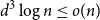 $d^3 \log n \leq o(n)$ then every $d$-regular graph with $n$ vertices contains a spanning subgraph in which the number of vertices of each degree between $0$ and $d$ is $(1+o(1))\frac{n}{d+1}$. We also prove that any graph with $n$ vertices and minimum degree $\delta$ contains a spanning subgraph in which no degree is repeated more than $(1+o(1))\frac{n}{\delta +1}+2$ times.


Multiscale linearization of nonautonomous systems
- Part of
-
- Journal:
- Proceedings of the Royal Society of Edinburgh. Section A: Mathematics / Volume 153 / Issue 5 / October 2023
- Published online by Cambridge University Press:
- 23 September 2022, pp. 1609-1629
- Print publication:
- October 2023
-
- Article
- Export citation
PRM volume 152 issue 5 Cover and Front matter
-
- Journal:
- Proceedings of the Royal Society of Edinburgh. Section A: Mathematics / Volume 152 / Issue 5 / October 2022
- Published online by Cambridge University Press:
- 23 September 2022, pp. f1-f2
- Print publication:
- October 2022
-
- Article
-
- You have access
- Export citation
The mod-p homology of the classifying spaces of certain gauge groups
- Part of
-
- Journal:
- Proceedings of the Royal Society of Edinburgh. Section A: Mathematics / Volume 153 / Issue 6 / December 2023
- Published online by Cambridge University Press:
- 19 September 2022, pp. 1805-1817
- Print publication:
- December 2023
-
- Article
- Export citation
-
Let $G$
 be a compact connected simple Lie group of type $(n_{1},\,\ldots,\,n_{l})$
 , where $n_{1}<\cdots < n_{l}$
 . Let $\mathcal {G}_k$
 be the gauge group of the principal $G$
 -bundle over $S^{4}$
 corresponding to $k\in \pi _3(G)\cong \mathbb {Z}$
 . We calculate the mod-$p$
 homology of the classifying space $B\mathcal {G}_k$
 provided that $n_{l}< p-1$
 .
.


On the optimization of the first weighted eigenvalue
- Part of
-
- Journal:
- Proceedings of the Royal Society of Edinburgh. Section A: Mathematics / Volume 153 / Issue 6 / December 2023
- Published online by Cambridge University Press:
- 12 September 2022, pp. 1777-1804
- Print publication:
- December 2023
-
- Article
- Export citation
-
For $N\geq 2$
 , a bounded smooth domain $\Omega$
 in $\mathbb {R}^{N}$
 , and $g_0,\, V_0 \in L^{1}_{loc}(\Omega )$
 , we study the optimization of the first eigenvalue for the following weighted eigenvalue problem:\[ -\Delta_p \phi + V |\phi|^{p-2}\phi = \lambda g |\phi|^{p-2}\phi \text{ in } \Omega, \quad \phi=0 \text{ on } \partial \Omega, \]where $g$
 and $V$
 vary over the rearrangement classes of $g_0$
 and $V_0$
 , respectively. We prove the existence of a minimizing pair $(\underline {g},\,\underline {V})$
 and a maximizing pair $(\overline {g},\,\overline {V})$
 for $g_0$
 and $V_0$
 lying in certain Lebesgue spaces. We obtain various qualitative properties such as polarization invariance, Steiner symmetry of the minimizers as well as the associated eigenfunctions for the case $p=2$
 . For annular domains, we prove that the minimizers and the corresponding eigenfunctions possess the foliated Schwarz symmetry.


Uniqueness of the Gibbs measure for the 4-state anti-ferromagnetic Potts model on the regular tree
- Part of
-
- Journal:
- Combinatorics, Probability and Computing / Volume 32 / Issue 1 / January 2023
- Published online by Cambridge University Press:
- 07 September 2022, pp. 158-182
-
- Article
-
- You have access
- Open access
- HTML
- Export citation
-
We show that the $4$-state anti-ferromagnetic Potts model with interaction parameter $w\in (0,1)$ on the infinite $(d+1)$-regular tree has a unique Gibbs measure if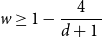 $w\geq 1-\dfrac{4}{d+1_{_{\;}}}$ for all $d\geq 4$. This is tight since it is known that there are multiple Gibbs measures when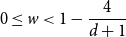 $0\leq w\lt 1-\dfrac{4}{d+1}$ and $d\geq 4$. We moreover give a new proof of the uniqueness of the Gibbs measure for the $3$-state Potts model on the $(d+1)$-regular tree for $w\geq 1-\dfrac{3}{d+1}$ when $d\geq 3$ and for $w\in (0,1)$ when $d=2$.


Nonrigidity of flat ribbons
- Part of
-
- Journal:
- Proceedings of the Royal Society of Edinburgh. Section A: Mathematics / Volume 153 / Issue 4 / August 2023
- Published online by Cambridge University Press:
- 06 September 2022, pp. 1297-1314
- Print publication:
- August 2023
-
- Article
-
- You have access
- Open access
- HTML
- Export citation
-
We study ribbons of vanishing Gaussian curvature, i.e. flat ribbons, constructed along a curve in $\mathbb {R}^{3}$
 . In particular, we first investigate to which extent the ruled structure determines a flat ribbon: in other words, we ask whether for a given curve $\gamma$
 and ruling angle (angle between the ruling line and the curve's tangent) there exists a well-defined flat ribbon. It turns out that the answer is positive only up to an initial condition, expressed by a choice of normal vector at a point. We then study the set of infinitely narrow flat ribbons along a fixed curve $\gamma$
 in terms of energy. By extending a well-known formula for the bending energy of the rectifying developable, introduced in the literature by Sadowsky in 1930, we obtain an upper bound for the difference between the bending energies of two solutions of the initial value problem. We finally draw further conclusions under some additional assumptions on the ruling angle and the curve $\gamma$
 .
.


Coisotropic Ekeland–Hofer capacities
- Part of
-
- Journal:
- Proceedings of the Royal Society of Edinburgh. Section A: Mathematics / Volume 153 / Issue 5 / October 2023
- Published online by Cambridge University Press:
- 05 September 2022, pp. 1564-1608
- Print publication:
- October 2023
-
- Article
- Export citation
-
For subsets in the standard symplectic space $(\mathbb {R}^{2n},\omega _0)$
 whose closures are intersecting with coisotropic subspace $\mathbb {R}^{n,k}$
 we construct relative versions of the Ekeland–Hofer capacities of the subsets with respect to $\mathbb {R}^{n,k}$
 , establish representation formulas for such capacities of bounded convex domains intersecting with $\mathbb {R}^{n,k}$
 . We also prove a product formula and a fact that the value of this capacity on a hypersurface $\mathcal {S}$
 of restricted contact type containing the origin is equal to the action of a generalized leafwise chord on $\mathcal {S}$
 .
.


Transportation on spheres via an entropy formula
- Part of
-
- Journal:
- Proceedings of the Royal Society of Edinburgh. Section A: Mathematics / Volume 153 / Issue 5 / October 2023
- Published online by Cambridge University Press:
- 05 September 2022, pp. 1467-1478
- Print publication:
- October 2023
-
- Article
-
- You have access
- Open access
- HTML
- Export citation
-
The paper proves transportation inequalities for probability measures on spheres for the Wasserstein metrics with respect to cost functions that are powers of the geodesic distance. Let $\mu$
 be a probability measure on the sphere ${\bf S}^n$
 of the form $d\mu =e^{-U(x)}{\rm d}x$
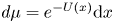 where ${\rm d}x$
 is the rotation invariant probability measure, and $(n-1)I+{\hbox {Hess}}\,U\geq {\kappa _U}I$
 , where $\kappa _U>0$
 . Then any probability measure $\nu$
 of finite relative entropy with respect to $\mu$
 satisfies ${\hbox {Ent}}(\nu \mid \mu ) \geq (\kappa _U/2)W_2(\nu,\, \mu )^2$
 . The proof uses an explicit formula for the relative entropy which is also valid on connected and compact $C^\infty$
 smooth Riemannian manifolds without boundary. A variation of this entropy formula gives the Lichnérowicz integral.


A note on monotonicity and Bochner formulas in Carnot groups
- Part of
-
- Journal:
- Proceedings of the Royal Society of Edinburgh. Section A: Mathematics / Volume 153 / Issue 5 / October 2023
- Published online by Cambridge University Press:
- 05 September 2022, pp. 1543-1563
- Print publication:
- October 2023
-
- Article
-
- You have access
- Open access
- HTML
- Export citation
-
In this note, we prove two monotonicity formulas for solutions of $\Delta _H f = c$
 and $\Delta _H f - \partial _t f = c$
 in Carnot groups. Such formulas involve the right-invariant carré du champ of a function and they are false for the left-invariant one. The main results, theorems 1.1 and 1.2, display a resemblance with two deep monotonicity formulas respectively due to Alt–Caffarelli–Friedman for the standard Laplacian, and to Caffarelli for the heat equation. In connection with this aspect we ask the question whether an ‘almost monotonicity’ formula be possible. In the last section, we discuss the failure of the nondecreasing monotonicity of an Almgren type functional.

VARIANTS OF A MULTIPLIER THEOREM OF KISLYAKOV
- Part of
-
- Journal:
- Journal of the Institute of Mathematics of Jussieu / Volume 23 / Issue 1 / January 2024
- Published online by Cambridge University Press:
- 01 September 2022, pp. 347-377
- Print publication:
- January 2024
-
- Article
- Export citation
-
We prove stronger variants of a multiplier theorem of Kislyakov. The key ingredients are based on ideas of Kislyakov and the Kahane–Salem–Zygmund inequality. As a by-product, we show various multiplier theorems for spaces of trigonometric polynomials on the n-dimensional torus $\mathbb {T}^n$ or Boolean cubes $\{-1,1\}^N$. Our more abstract approach based on local Banach space theory has the advantage that it allows to consider more general compact abelian groups instead of only the multidimensional torus. As an application, we show that various recent $\ell _1$-multiplier theorems for trigonometric polynomials in several variables or ordinary Dirichlet series may be proved without the Kahane–Salem–Zygmund inequality.


JMJ volume 21 issue 5 Cover and Back matter
-
- Journal:
- Journal of the Institute of Mathematics of Jussieu / Volume 21 / Issue 5 / September 2022
- Published online by Cambridge University Press:
- 02 September 2022, pp. b1-b2
- Print publication:
- September 2022
-
- Article
-
- You have access
- Export citation
JMJ volume 21 issue 5 Cover and Front matter
-
- Journal:
- Journal of the Institute of Mathematics of Jussieu / Volume 21 / Issue 5 / September 2022
- Published online by Cambridge University Press:
- 02 September 2022, pp. f1-f2
- Print publication:
- September 2022
-
- Article
-
- You have access
- Export citation
A DERIVED LAGRANGIAN FIBRATION ON THE DERIVED CRITICAL LOCUS
- Part of
-
- Journal:
- Journal of the Institute of Mathematics of Jussieu / Volume 23 / Issue 1 / January 2024
- Published online by Cambridge University Press:
- 31 August 2022, pp. 311-345
- Print publication:
- January 2024
-
- Article
- Export citation
-
We study the symplectic geometry of derived intersections of Lagrangian morphisms. In particular, we show that for a functional $f : X \rightarrow \mathbb {A}_{k}^{1}$, the derived critical locus has a natural Lagrangian fibration $\textbf {Crit}(f) \rightarrow X$. In the case where f is nondegenerate and the strict critical locus is smooth, we show that the Lagrangian fibration on the derived critical locus is determined by the Hessian quadratic form.

Truncated versions of three identities of Euler and Gauss
- Part of
-
- Journal:
- Proceedings of the Edinburgh Mathematical Society / Volume 65 / Issue 3 / August 2022
- Published online by Cambridge University Press:
- 30 August 2022, pp. 775-798
-
- Article
- Export citation
Part I - Elements of Probability Theory
-
- Book:
- Principles of Statistical Analysis
- Published online:
- 22 July 2022
- Print publication:
- 25 August 2022, pp 1-2
-
- Chapter
- Export citation
21 - Regression Analysis
- from Part III - Elements of Statistical Inference
-
- Book:
- Principles of Statistical Analysis
- Published online:
- 22 July 2022
- Print publication:
- 25 August 2022, pp 329-355
-
- Chapter
- Export citation
3 - Distributions on the Real Line
- from Part I - Elements of Probability Theory
-
- Book:
- Principles of Statistical Analysis
- Published online:
- 22 July 2022
- Print publication:
- 25 August 2022, pp 34-40
-
- Chapter
- Export citation
