Refine search
Actions for selected content:
26077 results in Abstract analysis
7 - Classical and Fractional Inequalities of Rellich Type
-
- Book:
- Fractional Sobolev Spaces and Inequalities
- Published online:
- 06 October 2022
- Print publication:
- 13 October 2022, pp 121-142
-
- Chapter
- Export citation
Basic Notation
-
- Book:
- Fractional Sobolev Spaces and Inequalities
- Published online:
- 06 October 2022
- Print publication:
- 13 October 2022, pp x-x
-
- Chapter
- Export citation
Symbol Index
-
- Book:
- Fractional Sobolev Spaces and Inequalities
- Published online:
- 06 October 2022
- Print publication:
- 13 October 2022, pp 152-152
-
- Chapter
- Export citation
Fractional powers of higher-order vector operators on bounded and unbounded domains
- Part of
-
- Journal:
- Proceedings of the Edinburgh Mathematical Society / Volume 65 / Issue 4 / November 2022
- Published online by Cambridge University Press:
- 13 October 2022, pp. 912-937
-
- Article
-
- You have access
- Open access
- HTML
- Export citation
-
Using the $H^{\infty }$
 -functional calculus for quaternionic operators, we show how to generate the fractional powers of some densely defined differential quaternionic operators of order $m\geq 1$
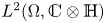
 , acting on the right linear quaternionic Hilbert space $L^{2}(\Omega,\mathbb {C}\otimes \mathbb {H})$
 . The operators that we consider are of the type\begin{align*} T=i^{m-1}\left(a_1(x) e_1\partial_{x_1}^{m}+a_2(x) e_2\partial_{x_2}^{m}+a_3(x) e_3\partial_{x_3}^{m}\right), \quad x=(x_1,\, x_2,\, x_3)\in \overline{\Omega}, \end{align*}where $\overline {\Omega }$
 is the closure of either a bounded domain $\Omega$
 with $C^{1}$
 boundary, or an unbounded domain $\Omega$
 in $\mathbb {R}^{3}$
 with a sufficiently regular boundary, which satisfy the so-called property $(R)$
 (see Definition 1.3), $e_1,\, e_2,\, e_3\in \mathbb {H}$
 which are pairwise anticommuting imaginary units, $a_1,\,a_2,\, a_3: \overline {\Omega } \subset \mathbb {R}^{3}\to \mathbb {R}$
 are the coefficients of $T$
 . In particular, it will be given sufficient conditions on the coefficients of $T$
 in order to generate the fractional powers of $T$
 , denoted by $P_{\alpha }(T)$
 for $\alpha \in (0,1)$
 , when the components of $T$
 , i.e. the operators $T_l:=a_l\partial _{x_l}^{m}$
 , do not commute among themselves. This kind of result is to be understood in the more general setting of the fractional diffusion problems. The method used to construct the fractional power of a quaternionic linear operator is a generalization of the method developed by Balakrishnan.


Toward a classification of the supercharacter theories of Cp × Cp
- Part of
-
- Journal:
- Proceedings of the Edinburgh Mathematical Society / Volume 65 / Issue 4 / November 2022
- Published online by Cambridge University Press:
- 12 October 2022, pp. 990-1010
-
- Article
-
- You have access
- Open access
- HTML
- Export citation
-
In this paper, we study the supercharacter theories of elementary abelian $p$
 -groups of order $p^{2}$
 . We show that the supercharacter theories that arise from the direct product construction and the $\ast$
 -product construction can be obtained from automorphisms. We also prove that any supercharacter theory of an elementary abelian $p$
 -group of order $p^{2}$
 that has a non-identity superclass of size $1$
 or a non-principal linear supercharacter must come from either a $\ast$
 -product or a direct product. Although we are unable to prove results for general primes, we do compute all of the supercharacter theories when $p = 2,\, 3,\, 5$
 , and based on these computations along with particular computations for larger primes, we make several conjectures for a general prime $p$
 .
.


Modelling, simulation and optimisation of parabolic trough power plants
- Part of
-
- Journal:
- European Journal of Applied Mathematics / Volume 34 / Issue 3 / June 2023
- Published online by Cambridge University Press:
- 11 October 2022, pp. 592-615
-
- Article
-
- You have access
- Open access
- HTML
- Export citation
Friedlander-Keller ray expansions in electromagnetism: Monochromatic radiation from arbitrary surfaces in three dimensions
- Part of
-
- Journal:
- European Journal of Applied Mathematics / Volume 34 / Issue 6 / December 2023
- Published online by Cambridge University Press:
- 10 October 2022, pp. 1187-1208
-
- Article
-
- You have access
- Open access
- HTML
- Export citation
A correspondence between inverse subsemigroups, open wide subgroupoids and cartan intermediate C*-subalgebras
- Part of
-
- Journal:
- Proceedings of the Edinburgh Mathematical Society / Volume 65 / Issue 3 / August 2022
- Published online by Cambridge University Press:
- 07 October 2022, pp. 861-879
-
- Article
- Export citation
Fractional Sobolev Spaces and Inequalities
-
- Published online:
- 06 October 2022
- Print publication:
- 13 October 2022
Some analytical properties of the matrix related to q-coloured Delannoy numbers
- Part of
-
- Journal:
- Proceedings of the Edinburgh Mathematical Society / Volume 65 / Issue 3 / August 2022
- Published online by Cambridge University Press:
- 06 October 2022, pp. 847-860
-
- Article
- Export citation
-
The $q$
 -coloured Delannoy numbers $D_{n,k}(q)$
 count the number of lattice paths from $(0,\,0)$
 to $(n,\,k)$
 using steps $(0,\,1)$
 , $(1,\,0)$
 and $(1,\,1)$
 , among which the $(1,\,1)$
 steps are coloured with $q$
 colours. The focus of this paper is to study some analytical properties of the polynomial matrix $D(q)=[d_{n,k}(q)]_{n,k\geq 0}=[D_{n-k,k}(q)]_{n,k\geq 0}$
 , such as the strong $q$
 -log-concavity of polynomial sequences located in a ray or a transversal line of $D(q)$
 and the $q$
 -total positivity of $D(q)$
 . We show that the zeros of all row sums $R_n(q)=\sum \nolimits _{k=0}^{n}d_{n,k}(q)$
 are in $(-\infty,\, -1)$
 and are dense in the corresponding semi-closed interval. We also prove that the zeros of all antidiagonal sums $A_n(q)=\sum \nolimits _{k=0}^{\lfloor n/2 \rfloor }d_{n-k,k}(q)$
 are in the interval $(-\infty,\, -1]$
 and are dense there.


On a class of Hilbert-type inequalities in the whole plane involving some classical kernel functions
- Part of
-
- Journal:
- Proceedings of the Edinburgh Mathematical Society / Volume 65 / Issue 3 / August 2022
- Published online by Cambridge University Press:
- 06 October 2022, pp. 833-846
-
- Article
- Export citation
Polynomials over structured grids
- Part of
-
- Journal:
- Combinatorics, Probability and Computing / Volume 32 / Issue 2 / March 2023
- Published online by Cambridge University Press:
- 04 October 2022, pp. 284-298
-
- Article
- Export citation
Sparse recovery properties of discrete random matrices
- Part of
-
- Journal:
- Combinatorics, Probability and Computing / Volume 32 / Issue 2 / March 2023
- Published online by Cambridge University Press:
- 04 October 2022, pp. 316-325
-
- Article
-
- You have access
- Open access
- HTML
- Export citation
-
Motivated by problems from compressed sensing, we determine the threshold behaviour of a random $n\times d \pm 1$ matrix $M_{n,d}$ with respect to the property ‘every $s$ columns are linearly independent’. In particular, we show that for every $0\lt \delta \lt 1$ and $s=(1-\delta )n$, if $d\leq n^{1+1/2(1-\delta )-o(1)}$ then with high probability every $s$ columns of $M_{n,d}$ are linearly independent, and if $d\geq n^{1+1/2(1-\delta )+o(1)}$ then with high probability there are some $s$ linearly dependent columns.


Improved bound for improper colourings of graphs with no odd clique minor
- Part of
-
- Journal:
- Combinatorics, Probability and Computing / Volume 32 / Issue 2 / March 2023
- Published online by Cambridge University Press:
- 30 September 2022, pp. 326-333
-
- Article
-
- You have access
- Open access
- HTML
- Export citation
-
Strengthening Hadwiger’s conjecture, Gerards and Seymour conjectured in 1995 that every graph with no odd $K_t$-minor is properly $(t-1)$-colourable. This is known as the Odd Hadwiger’s conjecture. We prove a relaxation of the above conjecture, namely we show that every graph with no odd $K_t$-minor admits a vertex $(2t-2)$-colouring such that all monochromatic components have size at most $\lceil \frac{1}{2}(t-2) \rceil$. The bound on the number of colours is optimal up to a factor of $2$, improves previous bounds for the same problem by Kawarabayashi (2008, Combin. Probab. Comput. 17 815–821), Kang and Oum (2019, Combin. Probab. Comput. 28 740–754), Liu and Wood (2021, arXiv preprint, arXiv:1905.09495), and strengthens a result by van den Heuvel and Wood (2018, J. Lond. Math. Soc. 98 129–148), who showed that the above conclusion holds under the more restrictive assumption that the graph is $K_t$-minor-free. In addition, the bound on the component-size in our result is much smaller than those of previous results, in which the dependency on $t$ was given by a function arising from the graph minor structure theorem of Robertson and Seymour. Our short proof combines the method by van den Heuvel and Wood for $K_t$-minor-free graphs with some additional ideas, which make the extension to odd $K_t$-minor-free graphs possible.


PONTRYAGIN DUALITY FOR VARIETIES OVER p-ADIC FIELDS
- Part of
-
- Journal:
- Journal of the Institute of Mathematics of Jussieu / Volume 23 / Issue 1 / January 2024
- Published online by Cambridge University Press:
- 28 September 2022, pp. 425-462
- Print publication:
- January 2024
-
- Article
- Export citation
Local well-posedness and global analyticity for solutions of a generalized 0-equation
- Part of
-
- Journal:
- Proceedings of the Royal Society of Edinburgh. Section A: Mathematics / Volume 153 / Issue 5 / October 2023
- Published online by Cambridge University Press:
- 27 September 2022, pp. 1630-1650
- Print publication:
- October 2023
-
- Article
-
- You have access
- Open access
- HTML
- Export citation
-
In this work we study the Cauchy problem in Gevrey spaces for a generalized class of equations that contains the case $b=0$
 of the $b$
 -equation. For the generalized equation, we prove that it is locally well-posed for initial data in Gevrey spaces. Moreover, as we move to global well-posedness, we show that for a particular choice of the parameter in the equation the local solution is global analytic in both time and spatial variables.


Examples of multiparameter CCR flows with non-trivial index
- Part of
-
- Journal:
- Proceedings of the Edinburgh Mathematical Society / Volume 65 / Issue 3 / August 2022
- Published online by Cambridge University Press:
- 27 September 2022, pp. 799-832
-
- Article
- Export citation
-
In this paper, we construct uncountably many examples of multiparameter CCR flows, which are not pullbacks of $1$
 -parameter CCR flows, with any given index. Moreover, the constructed CCR flows are type I in the sense that the associated product system is the smallest subsystem containing its units.

Towards the 0-statement of the Kohayakawa-Kreuter conjecture
- Part of
-
- Journal:
- Combinatorics, Probability and Computing / Volume 32 / Issue 2 / March 2023
- Published online by Cambridge University Press:
- 27 September 2022, pp. 225-268
-
- Article
-
- You have access
- Open access
- HTML
- Export citation
-
In this paper, we study asymmetric Ramsey properties of the random graph $G_{n,p}$. Let $r \in \mathbb{N}$ and $H_1, \ldots, H_r$ be graphs. We write $G_{n,p} \to (H_1, \ldots, H_r)$ to denote the property that whenever we colour the edges of $G_{n,p}$ with colours from the set $[r] \,{:\!=}\, \{1, \ldots, r\}$ there exists $i \in [r]$ and a copy of $H_i$ in $G_{n,p}$ monochromatic in colour $i$. There has been much interest in determining the asymptotic threshold function for this property. In several papers, Rödl and Ruciński determined a threshold function for the general symmetric case; that is, when $H_1 = \cdots = H_r$. A conjecture of Kohayakawa and Kreuter from 1997, if true, would fully resolve the asymmetric problem. Recently, the $1$-statement of this conjecture was confirmed by Mousset, Nenadov and Samotij.
Building on work of Marciniszyn, Skokan, Spöhel and Steger from 2009, we reduce the $0$-statement of Kohayakawa and Kreuter’s conjecture to a certain deterministic subproblem. To demonstrate the potential of this approach, we show this subproblem can be resolved for almost all pairs of regular graphs. This therefore resolves the $0$-statement for all such pairs of graphs.


Projective invariants of images
- Part of
-
- Journal:
- European Journal of Applied Mathematics / Volume 34 / Issue 5 / October 2023
- Published online by Cambridge University Press:
- 26 September 2022, pp. 936-946
-
- Article
-
- You have access
- Open access
- HTML
- Export citation
-
The method of equivariant moving frames is employed to construct and completely classify the differential invariants for the action of the projective group on functions defined on the two-dimensional projective plane. While there are four independent differential invariants of order $\leq 3$, it is proved that the algebra of differential invariants is generated by just two of them through invariant differentiation. The projective differential invariants are, in particular, of importance in image processing applications.

THE STABLE LIMIT DAHA AND THE DOUBLE DYCK PATH ALGEBRA
- Part of
-
- Journal:
- Journal of the Institute of Mathematics of Jussieu / Volume 23 / Issue 1 / January 2024
- Published online by Cambridge University Press:
- 26 September 2022, pp. 379-424
- Print publication:
- January 2024
-
- Article
-
- You have access
- Open access
- HTML
- Export citation
