Refine search
Actions for selected content:
26077 results in Abstract analysis
Fourier multipliers for Hardy spaces on graded Lie groups
- Part of
-
- Journal:
- Proceedings of the Royal Society of Edinburgh. Section A: Mathematics / Volume 153 / Issue 5 / October 2023
- Published online by Cambridge University Press:
- 02 November 2022, pp. 1729-1750
- Print publication:
- October 2023
-
- Article
- Export citation
-
In this paper, we investigate the $H^{p}(G) \rightarrow L^{p}(G)$
 , $0< p \leq 1$
 , boundedness of multiplier operators defined via group Fourier transform on a graded Lie group $G$
 , where $H^{p}(G)$
 is the Hardy space on $G$
 . Our main result extends those obtained in [Colloq. Math. 165 (2021), 1–30], where the $L^{1}(G)\rightarrow L^{1,\infty }(G)$
 and $L^{p}(G) \rightarrow L^{p}(G)$
 , $1< p <\infty$
 , boundedness of such Fourier multiplier operators were proved.


JMJ volume 21 issue 6 Cover and Back matter
-
- Journal:
- Journal of the Institute of Mathematics of Jussieu / Volume 21 / Issue 6 / November 2022
- Published online by Cambridge University Press:
- 29 November 2022, pp. b1-b2
- Print publication:
- November 2022
-
- Article
-
- You have access
- Export citation
JMJ volume 21 issue 6 Cover and Front matter
-
- Journal:
- Journal of the Institute of Mathematics of Jussieu / Volume 21 / Issue 6 / November 2022
- Published online by Cambridge University Press:
- 29 November 2022, pp. f1-f2
- Print publication:
- November 2022
-
- Article
-
- You have access
- Export citation
Hardy–Littlewood–Sobolev inequality and existence of the extremal functions with extended kernel
- Part of
-
- Journal:
- Proceedings of the Royal Society of Edinburgh. Section A: Mathematics / Volume 153 / Issue 5 / October 2023
- Published online by Cambridge University Press:
- 31 October 2022, pp. 1683-1705
- Print publication:
- October 2023
-
- Article
- Export citation
-
In this paper, we consider the following Hardy–Littlewood–Sobolev inequality with extended kernel(0.1)
\begin{equation} \int_{\mathbb{R}_+^{n}}\int_{\partial\mathbb{R}^{n}_+} \frac{x_n^{\beta}}{|x-y|^{n-\alpha}}f(y)g(x) {\rm d}y{\rm d}x\leq C_{n,\alpha,\beta,p}\|f\|_{L^{p}(\partial\mathbb{R}_+^{n})} \|g\|_{L^{q'}(\mathbb{R}_+^{n})}, \end{equation}for any nonnegative functions $f\in L^{p}(\partial \mathbb {R}_+^{n})$
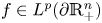 , $g\in L^{q'}(\mathbb {R}_+^{n})$
 and $p,\,\ q'\in (1,\,\infty )$
 , $\beta \geq 0$
 , $\alpha +\beta >1$
 such that $\frac {n-1}{n}\frac {1}{p}+\frac {1}{q'}-\frac {\alpha +\beta -1}{n}=1$
 .
.We prove the existence of all extremal functions for (0.1). We show that if $f$
 and $g$
 are extremal functions for (0.1) then both of $f$
 and $g$
 are radially decreasing. Moreover, we apply the regularity lifting method to obtain the smoothness of extremal functions. Finally, we derive the sufficient and necessary condition of the existence of any nonnegative nontrivial solutions for the Euler–Lagrange equations by using Pohozaev identity.


Null, recursively starlike-equivalent decompositions shrink
- Part of
-
- Journal:
- Glasgow Mathematical Journal / Volume 65 / Issue 2 / May 2023
- Published online by Cambridge University Press:
- 28 October 2022, pp. 328-336
-
- Article
- Export citation
-
A subset E of a metric space X is said to be starlike-equivalent if it has a neighbourhood which is mapped homeomorphically into $\mathbb{R}^n$ for some n, sending E to a starlike set. A subset $E\subset X$ is said to be recursively starlike-equivalent if it can be expressed as a finite nested union of closed subsets $\{E_i\}_{i=0}^{N+1}$ such that $E_{i}/E_{i+1}\subset X/E_{i+1}$ is starlike-equivalent for each i and $E_{N+1}$ is a point. A decomposition $\mathcal{D}$ of a metric space X is said to be recursively starlike-equivalent, if there exists $N\geq 0$ such that each element of $\mathcal{D}$ is recursively starlike-equivalent of filtration length N. We prove that any null, recursively starlike-equivalent decomposition $\mathcal{D}$ of a compact metric space X shrinks, that is, the quotient map $X\to X/\mathcal{D}$ is the limit of a sequence of homeomorphisms. This is a strong generalisation of results of Denman–Starbird and Freedman and is applicable to the proof of Freedman’s celebrated disc embedding theorem. The latter leads to a multitude of foundational results for topological 4-manifolds, including the four-dimensional Poincaré conjecture.


1 - Introduction
-
- Book:
- Large Deviations for Markov Chains
- Published online:
- 03 August 2022
- Print publication:
- 27 October 2022, pp 1-13
-
- Chapter
- Export citation
7 - Upper Bounds III: Sufficient Conditions
-
- Book:
- Large Deviations for Markov Chains
- Published online:
- 03 August 2022
- Print publication:
- 27 October 2022, pp 94-116
-
- Chapter
- Export citation
Appendix B - Irreducible Kernels, Small Sets, and Petite Sets
-
- Book:
- Large Deviations for Markov Chains
- Published online:
- 03 August 2022
- Print publication:
- 27 October 2022, pp 200-211
-
- Chapter
- Export citation
8 - The Large Deviation Principle for Empirical Measures
-
- Book:
- Large Deviations for Markov Chains
- Published online:
- 03 August 2022
- Print publication:
- 27 October 2022, pp 117-133
-
- Chapter
- Export citation
Appendix E - On Varadhan’s Theorem
-
- Book:
- Large Deviations for Markov Chains
- Published online:
- 03 August 2022
- Print publication:
- 27 October 2022, pp 223-226
-
- Chapter
- Export citation
Appendix A - The Ergodic Theorem for Empirical Measures and Vector-Valued Functionals of a Markov Chain
-
- Book:
- Large Deviations for Markov Chains
- Published online:
- 03 August 2022
- Print publication:
- 27 October 2022, pp 197-199
-
- Chapter
- Export citation
Appendix F - The Duality Theorem for Convex Functions
-
- Book:
- Large Deviations for Markov Chains
- Published online:
- 03 August 2022
- Print publication:
- 27 October 2022, pp 227-229
-
- Chapter
- Export citation
References
-
- Book:
- Large Deviations for Markov Chains
- Published online:
- 03 August 2022
- Print publication:
- 27 October 2022, pp 244-246
-
- Chapter
- Export citation
Contents
-
- Book:
- Large Deviations for Markov Chains
- Published online:
- 03 August 2022
- Print publication:
- 27 October 2022, pp vii-x
-
- Chapter
- Export citation
4 - Identification and Reconciliation of Rate Functions
-
- Book:
- Large Deviations for Markov Chains
- Published online:
- 03 August 2022
- Print publication:
- 27 October 2022, pp 47-67
-
- Chapter
- Export citation
Author Index
-
- Book:
- Large Deviations for Markov Chains
- Published online:
- 03 August 2022
- Print publication:
- 27 October 2022, pp 247-247
-
- Chapter
- Export citation
Appendix K - On Gâteaux Differentiability
-
- Book:
- Large Deviations for Markov Chains
- Published online:
- 03 August 2022
- Print publication:
- 27 October 2022, pp 240-243
-
- Chapter
- Export citation
9 - The Case When S Is Countable and P Is Matrix Irreducible
-
- Book:
- Large Deviations for Markov Chains
- Published online:
- 03 August 2022
- Print publication:
- 27 October 2022, pp 134-142
-
- Chapter
- Export citation
3 - Upper Bounds I
-
- Book:
- Large Deviations for Markov Chains
- Published online:
- 03 August 2022
- Print publication:
- 27 October 2022, pp 36-46
-
- Chapter
- Export citation
Appendix I - A Monotone Class Theorem
-
- Book:
- Large Deviations for Markov Chains
- Published online:
- 03 August 2022
- Print publication:
- 27 October 2022, pp 233-235
-
- Chapter
- Export citation
