Refine listing
Actions for selected content:
74 results in 14Axx
The integral Hodge conjecture for two-dimensional Calabi–Yau categories
- Part of
-
- Journal:
- Compositio Mathematica / Volume 158 / Issue 2 / February 2022
- Published online by Cambridge University Press:
- 12 April 2022, pp. 287-333
- Print publication:
- February 2022
-
- Article
-
- You have access
- Open access
- HTML
- Export citation
Rank 3 quadratic generators of Veronese embeddings
- Part of
-
- Journal:
- Compositio Mathematica / Volume 157 / Issue 9 / September 2021
- Published online by Cambridge University Press:
- 02 August 2021, pp. 2001-2025
- Print publication:
- September 2021
-
- Article
- Export citation
-
Let $L$ be a very ample line bundle on a projective scheme $X$ defined over an algebraically closed field $\Bbbk$ with ${\rm char}\,\Bbbk \neq 2$. We say that $(X,L)$ satisfies property $\mathsf {QR}(k)$ if the homogeneous ideal of the linearly normal embedding $X \subset {\mathbb {P}} H^{0} (X,L)$ can be generated by quadrics of rank less than or equal to $k$. Many classical varieties, such as Segre–Veronese embeddings, rational normal scrolls and curves of high degree, satisfy property $\mathsf {QR}(4)$. In this paper, we first prove that if ${\rm char}\,\Bbbk \neq 3$ then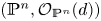 $({\mathbb {P}}^{n} , \mathcal {O}_{{\mathbb {P}}^{n}} (d))$ satisfies property $\mathsf {QR}(3)$ for all $n \geqslant 1$ and $d \geqslant 2$. We also investigate the asymptotic behavior of property $\mathsf {QR}(3)$ for any projective scheme. Specifically, we prove that (i) if $X \subset {\mathbb {P}} H^{0} (X,L)$ is $m$-regular then $(X,L^{d} )$ satisfies property $\mathsf {QR}(3)$ for all $d \geqslant m$, and (ii) if $A$ is an ample line bundle on $X$ then $(X,A^{d} )$ satisfies property $\mathsf {QR}(3)$ for all sufficiently large even numbers $d$. These results provide affirmative evidence for the expectation that property $\mathsf {QR}(3)$ holds for all sufficiently ample line bundles on $X$, as in the cases of Green and Lazarsfeld's condition $\mathrm {N}_p$ and the Eisenbud–Koh–Stillman determininantal presentation in Eisenbud et al. [Determinantal equations for curves of high degree, Amer. J. Math. 110 (1988), 513–539]. Finally, when ${\rm char}\,\Bbbk = 3$ we prove that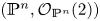 $({\mathbb {P}}^{n} , \mathcal {O}_{{\mathbb {P}}^{n}} (2))$ fails to satisfy property $\mathsf {QR}(3)$ for all $n \geqslant 3$.


STEENROD OPERATIONS ON THE DE RHAM COHOMOLOGY OF ALGEBRAIC STACKS
- Part of
-
- Journal:
- Journal of the Institute of Mathematics of Jussieu / Volume 22 / Issue 2 / March 2023
- Published online by Cambridge University Press:
- 04 May 2021, pp. 493-540
- Print publication:
- March 2023
-
- Article
- Export citation
-
Building upon work of Epstein, May and Drury, we define and investigate the mod p Steenrod operations on the de Rham cohomology of smooth algebraic stacks over a field of characteristic $p>0$. We then compute the action of the operations on the de Rham cohomology of classifying stacks for finite groups, connected reductive groups for which p is not a torsion prime and (special) orthogonal groups when $p=2$.


Perverse Leray filtration and specialisation with applications to the Hitchin morphism
- Part of
-
- Journal:
- Mathematical Proceedings of the Cambridge Philosophical Society / Volume 172 / Issue 2 / March 2022
- Published online by Cambridge University Press:
- 20 April 2021, pp. 443-487
- Print publication:
- March 2022
-
- Article
- Export citation
Corrigendum: A curve selection lemma in spaces of arcs and the image of the Nash map
- Part of
-
- Journal:
- Compositio Mathematica / Volume 157 / Issue 3 / March 2021
- Published online by Cambridge University Press:
- 19 March 2021, pp. 641-648
- Print publication:
- March 2021
-
- Article
-
- You have access
- HTML
- Export citation
KUMMER COVERINGS AND SPECIALISATION
- Part of
-
- Journal:
- Journal of the Institute of Mathematics of Jussieu / Volume 21 / Issue 3 / May 2022
- Published online by Cambridge University Press:
- 01 March 2021, pp. 1029-1065
- Print publication:
- May 2022
-
- Article
- Export citation
Maps from Feigin and Odesskii's elliptic algebras to twisted homogeneous coordinate rings
- Part of
-
- Journal:
- Forum of Mathematics, Sigma / Volume 9 / 2021
- Published online by Cambridge University Press:
- 11 January 2021, e4
-
- Article
-
- You have access
- Open access
- Export citation
-
The elliptic algebras in the title are connected graded $\mathbb {C}$-algebras, denoted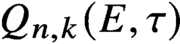 $Q_{n,k}(E,\tau )$, depending on a pair of relatively prime integers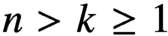 $n>k\ge 1$, an elliptic curve E and a point $\tau \in E$. This paper examines a canonical homomorphism from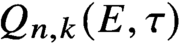 $Q_{n,k}(E,\tau )$ to the twisted homogeneous coordinate ring $B(X_{n/k},\sigma ',\mathcal {L}^{\prime }_{n/k})$ on the characteristic variety $X_{n/k}$ for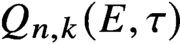 $Q_{n,k}(E,\tau )$. When $X_{n/k}$ is isomorphic to $E^g$ or the symmetric power $S^gE$, we show that the homomorphism $Q_{n,k}(E,\tau ) \to B(X_{n/k},\sigma ',\mathcal {L}^{\prime }_{n/k})$ is surjective, the relations for $B(X_{n/k},\sigma ',\mathcal {L}^{\prime }_{n/k})$ are generated in degrees $\le 3$ and the noncommutative scheme $\mathrm {Proj}_{nc}(Q_{n,k}(E,\tau ))$ has a closed subvariety that is isomorphic to $E^g$ or $S^gE$, respectively. When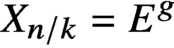 $X_{n/k}=E^g$ and $\tau =0$, the results about $B(X_{n/k},\sigma ',\mathcal {L}^{\prime }_{n/k})$ show that the morphism $\Phi _{|\mathcal {L}_{n/k}|}:E^g \to \mathbb {P}^{n-1}$ embeds $E^g$ as a projectively normal subvariety that is a scheme-theoretic intersection of quadric and cubic hypersurfaces.


Higher preprojective algebras, Koszul algebras, and superpotentials
- Part of
-
- Journal:
- Compositio Mathematica / Volume 156 / Issue 12 / December 2020
- Published online by Cambridge University Press:
- 01 February 2021, pp. 2588-2627
- Print publication:
- December 2020
-
- Article
- Export citation
-
In this article we study higher preprojective algebras, showing that various known results for ordinary preprojective algebras generalize to the higher setting. We first show that the quiver of the higher preprojective algebra is obtained by adding arrows to the quiver of the original algebra, and these arrows can be read off from the last term of the bimodule resolution of the original algebra. In the Koszul case, we are able to obtain the new relations of the higher preprojective algebra by differentiating a superpotential and we show that when our original algebra is $d$-hereditary, all the relations come from the superpotential. We then construct projective resolutions of all simple modules for the higher preprojective algebra of a $d$-hereditary algebra. This allows us to recover various known homological properties of the higher preprojective algebras and to obtain a large class of almost Koszul dual pairs of algebras. We also show that when our original algebra is Koszul there is a natural map from the quadratic dual of the higher preprojective algebra to a graded trivial extension algebra.


The construction problem for Hodge numbers modulo an integer in positive characteristic
- Part of
-
- Journal:
- Forum of Mathematics, Sigma / Volume 8 / 2020
- Published online by Cambridge University Press:
- 09 November 2020, e45
-
- Article
-
- You have access
- Open access
- Export citation
-
Let k be an algebraically closed field of positive characteristic. For any integer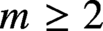 $m\ge 2$, we show that the Hodge numbers of a smooth projective k-variety can take on any combination of values modulo m, subject only to Serre duality. In particular, there are no non-trivial polynomial relations between the Hodge numbers.
DERIVED NON-ARCHIMEDEAN ANALYTIC HILBERT SPACE
- Part of
-
- Journal:
- Journal of the Institute of Mathematics of Jussieu / Volume 21 / Issue 1 / January 2022
- Published online by Cambridge University Press:
- 26 August 2020, pp. 335-366
- Print publication:
- January 2022
-
- Article
- Export citation
-
In this short paper, we combine the representability theorem introduced in [Porta and Yu, Representability theorem in derived analytic geometry, preprint, 2017, arXiv:1704.01683; Porta and Yu, Derived Hom spaces in rigid analytic geometry, preprint, 2018, arXiv:1801.07730] with the theory of derived formal models introduced in [António, $p$-adic derived formal geometry and derived Raynaud localization theorem, preprint, 2018, arXiv:1805.03302] to prove the existence representability of the derived Hilbert space $\mathbf{R}\text{Hilb}(X)$ for a separated $k$-analytic space $X$. Such representability results rely on a localization theorem stating that if $\mathfrak{X}$ is a quasi-compact and quasi-separated formal scheme, then the $\infty$-category $\text{Coh}^{-}(\mathfrak{X}^{\text{rig}})$ of almost perfect complexes over the generic fiber can be realized as a Verdier quotient of the $\infty$-category $\text{Coh}^{-}(\mathfrak{X})$. Along the way, we prove several results concerning the $\infty$-categories of formal models for almost perfect modules on derived $k$-analytic spaces.


SHIFTED COISOTROPIC CORRESPONDENCES
- Part of
-
- Journal:
- Journal of the Institute of Mathematics of Jussieu / Volume 21 / Issue 3 / May 2022
- Published online by Cambridge University Press:
- 03 July 2020, pp. 785-849
- Print publication:
- May 2022
-
- Article
- Export citation
-
We define (iterated) coisotropic correspondences between derived Poisson stacks, and construct symmetric monoidal higher categories of derived Poisson stacks, where the $i$-morphisms are given by $i$-fold coisotropic correspondences. Assuming an expected equivalence of different models of higher Morita categories, we prove that all derived Poisson stacks are fully dualizable and so determine framed extended TQFTs by the Cobordism Hypothesis. Along the way, we also prove that the higher Morita category of $E_{n}$-algebras with respect to coproducts is equivalent to the higher category of iterated cospans.


A Complete Classification of 3-dimensional Quadratic AS-regular Algebras of Type EC
- Part of
-
- Journal:
- Canadian Mathematical Bulletin / Volume 64 / Issue 1 / March 2021
- Published online by Cambridge University Press:
- 27 April 2020, pp. 123-141
- Print publication:
- March 2021
-
- Article
-
- You have access
- Export citation
-
Classification of AS-regular algebras is one of the main interests in noncommutative algebraic geometry. We say that a $3$-dimensional quadratic AS-regular algebra is of Type EC if its point scheme is an elliptic curve in $\mathbb {P}^{2}$. In this paper, we give a complete list of geometric pairs and a complete list of twisted superpotentials corresponding to such algebras. As an application, we show that there are only two exceptions up to isomorphism among all $3$-dimensional quadratic AS-regular algebras that cannot be written as a twist of a Calabi–Yau AS-regular algebra by a graded algebra automorphism.


A MODULI STACK OF TROPICAL CURVES
- Part of
-
- Journal:
- Forum of Mathematics, Sigma / Volume 8 / 2020
- Published online by Cambridge University Press:
- 24 April 2020, e23
-
- Article
-
- You have access
- Open access
- Export citation
On Homogeneous Polynomials Determined by their Partial Derivatives
- Part of
-
- Journal:
- Canadian Mathematical Bulletin / Volume 63 / Issue 2 / June 2020
- Published online by Cambridge University Press:
- 06 December 2019, pp. 358-365
- Print publication:
- June 2020
-
- Article
-
- You have access
- Export citation
-
We prove that a generic homogeneous polynomial of degree $d$ is determined, up to a nonzero constant multiplicative factor, by the vector space spanned by its partial derivatives of order $k$ for $k\leqslant \frac{d}{2}-1$.


A BETTER COMPARISON OF $\operatorname{cdh}$- AND $l\operatorname{dh}$-COHOMOLOGIES
- Part of
-
- Journal:
- Nagoya Mathematical Journal / Volume 236 / December 2019
- Published online by Cambridge University Press:
- 13 September 2019, pp. 183-213
-
- Article
-
- You have access
- HTML
- Export citation
-
In order to work with non-Nagata rings which are Nagata “up-to-completely-decomposed-universal-homeomorphism,” specifically finite rank Hensel valuation rings, we introduce the notions of pseudo-integral closure, pseudo-normalization, and pseudo-Hensel valuation ring. We use this notion to give a shorter and more direct proof that $H_{\operatorname{cdh}}^{n}(X,F_{\operatorname{cdh}})=H_{l\operatorname{dh}}^{n}(X,F_{l\operatorname{dh}})$ for homotopy sheaves $F$ of modules over the $\mathbb{Z}_{(l)}$-linear motivic Eilenberg–Maclane spectrum. This comparison is an alternative to the first half of the author’s volume Astérisque 391 whose main theorem is a cdh-descent result for Voevodsky motives. The motivating new insight is really accepting that Voevodsky’s motivic cohomology (with $\mathbb{Z}[\frac{1}{p}]$-coefficients) is invariant not just for nilpotent thickenings, but for all universal homeomorphisms.


NC-smooth algebroid thickenings for families of vector bundles and quiver representations
- Part of
-
- Journal:
- Compositio Mathematica / Volume 155 / Issue 4 / April 2019
- Published online by Cambridge University Press:
- 18 March 2019, pp. 681-710
- Print publication:
- April 2019
-
- Article
- Export citation
A Representation Theoretic Study of Non-Commutative Symmetric Algebras
- Part of
-
- Journal:
- Proceedings of the Edinburgh Mathematical Society / Volume 62 / Issue 3 / August 2019
- Published online by Cambridge University Press:
- 14 February 2019, pp. 875-887
-
- Article
- Export citation
CATEGORICAL PROOF OF HOLOMORPHIC ATIYAH–BOTT FORMULA
- Part of
-
- Journal:
- Journal of the Institute of Mathematics of Jussieu / Volume 19 / Issue 5 / September 2020
- Published online by Cambridge University Press:
- 20 December 2018, pp. 1739-1763
- Print publication:
- September 2020
-
- Article
- Export citation
-
Given a $2$-commutative diagram
in a symmetric monoidal $(\infty ,2)$-category $\mathscr{E}$ where $X,Y\in \mathscr{E}$ are dualizable objects and $\unicode[STIX]{x1D711}$ admits a right adjoint we construct a natural morphism $\mathsf{Tr}_{\mathscr{E}}(F_{X})\xrightarrow[{}]{~~~~~}\mathsf{Tr}_{\mathscr{E}}(F_{Y})$between the traces of $F_{X}$ and $F_{Y}$, respectively. We then apply this formalism to the case when $\mathscr{E}$ is the $(\infty ,2)$-category of $k$-linear presentable categories which in combination of various calculations in the setting of derived algebraic geometry gives a categorical proof of the classical Atiyah–Bott formula (also known as the Holomorphic Lefschetz fixed point formula).


On Knörrer Periodicity for Quadric Hypersurfaces in Skew Projective Spaces
- Part of
-
- Journal:
- Canadian Mathematical Bulletin / Volume 62 / Issue 4 / December 2019
- Published online by Cambridge University Press:
- 03 December 2018, pp. 896-911
- Print publication:
- December 2019
-
- Article
-
- You have access
- Export citation
-
We study the structure of the stable category $\text{}\underline{\mathsf{CM}}^{\mathbb{Z}}(S/(f))$ of graded maximal Cohen–Macaulay module over $S/(f)$ where $S$ is a graded ( $\pm 1$)-skew polynomial algebra in $n$ variables of degree 1, and $f=x_{1}^{2}+\cdots +x_{n}^{2}$. If $S$ is commutative, then the structure of $\text{}\underline{\mathsf{CM}}^{\mathbb{Z}}(S/(f))$ is well known by Knörrer’s periodicity theorem. In this paper, we prove that if $n\leqslant 5$, then the structure of $\text{}\underline{\mathsf{CM}}^{\mathbb{Z}}(S/(f))$ is determined by the number of irreducible components of the point scheme of $S$ which are isomorphic to $\mathbb{P}^{1}$.


THE GEOMETRY OF BLUEPRINTS PART II: TITS–WEYL MODELS OF ALGEBRAIC GROUPS
- Part of
-
- Journal:
- Forum of Mathematics, Sigma / Volume 6 / 2018
- Published online by Cambridge University Press:
- 23 October 2018, e20
-
- Article
-
- You have access
- Open access
- Export citation
-
This paper is dedicated to a problem raised by Jacquet Tits in 1956: the Weyl group of a Chevalley group should find an interpretation as a group over what is nowadays called $\mathbb{F}_{1}$, the field with one element. Based on Part I of The geometry of blueprints, we introduce the class of Tits morphisms between blue schemes. The resulting Tits category $\text{Sch}_{{\mathcal{T}}}$ comes together with a base extension to (semiring) schemes and the so-called Weyl extension to sets. We prove for ${\mathcal{G}}$ in a wide class of Chevalley groups—which includes the special and general linear groups, symplectic and special orthogonal groups, and all types of adjoint groups—that a linear representation of ${\mathcal{G}}$ defines a model $G$ in $\text{Sch}_{{\mathcal{T}}}$ whose Weyl extension is the Weyl group $W$ of ${\mathcal{G}}$. We call such models Tits–Weyl models. The potential of Tits–Weyl models lies in (a) their intrinsic definition that is given by a linear representation; (b) the (yet to be formulated) unified approach towards thick and thin geometries; and (c) the extension of a Chevalley group to a functor on blueprints, which makes it, in particular, possible to consider Chevalley groups over semirings. This opens applications to idempotent analysis and tropical geometry.


