Refine listing
Actions for selected content:
1091 results in 05Cxx
A non-increasing tree growth process for recursive trees and applications
- Part of
-
- Journal:
- Combinatorics, Probability and Computing / Volume 30 / Issue 1 / January 2021
- Published online by Cambridge University Press:
- 19 October 2020, pp. 79-104
-
- Article
- Export citation
-
We introduce a non-increasing tree growth process $((T_n,{\sigma}_n),\, n\ge 1)$, where Tn is a rooted labelled tree on n vertices and σn is a permutation of the vertex labels. The construction of (Tn, σn) from (Tn−1, σn−1) involves rewiring a random (possibly empty) subset of edges in Tn−1 towards the newly added vertex; as a consequence Tn−1 ⊄ Tn with positive probability. The key feature of the process is that the shape of Tn has the same law as that of a random recursive tree, while the degree distribution of any given vertex is not monotone in the process.
We present two applications. First, while couplings between Kingman’s coalescent and random recursive trees were known for any fixed n, this new process provides a non-standard coupling of all finite Kingman’s coalescents. Second, we use the new process and the Chen–Stein method to extend the well-understood properties of degree distribution of random recursive trees to extremal-range cases. Namely, we obtain convergence rates on the number of vertices with degree at least $c\ln n$, c ∈ (1, 2), in trees with n vertices. Further avenues of research are discussed.

Independent dominating sets in graphs of girth five
- Part of
-
- Journal:
- Combinatorics, Probability and Computing / Volume 30 / Issue 3 / May 2021
- Published online by Cambridge University Press:
- 15 October 2020, pp. 344-359
-
- Article
- Export citation
-
Let $\gamma(G)$ and
  $${\gamma _ \circ }(G)$$ denote the sizes of a smallest dominating set and smallest independent dominating set in a graph G, respectively. One of the first results in probabilistic combinatorics is that if G is an n-vertex graph of minimum degree at least d, then
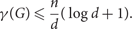 $$\begin{equation}\gamma(G) \leq \frac{n}{d}(\log d + 1).\end{equation}$$
In this paper the main result is that if G is any n-vertex d-regular graph of girth at least five, then
for some constant c independent of d. This result is sharp in the sense that as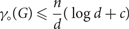 $$\begin{equation}\gamma_(G) \leq \frac{n}{d}(\log d + c)\end{equation}$$ $d \rightarrow \infty$, almost all d-regular n-vertex graphs G of girth at least five have
 $$\begin{equation}\gamma_(G) \sim \frac{n}{d}\log d.\end{equation}$$
Furthermore, if G is a disjoint union of ${n}/{(2d)}$ complete bipartite graphs $K_{d,d}$, then ${\gamma_\circ}(G) = \frac{n}{2}$. We also prove that there are n-vertex graphs G of minimum degree d and whose maximum degree grows not much faster than d log d such that ${\gamma_\circ}(G) \sim {n}/{2}$ as $d \rightarrow \infty$. Therefore both the girth and regularity conditions are required for the main result.


The virtually generating graph of a profinite group
- Part of
-
- Journal:
- Canadian Mathematical Bulletin / Volume 64 / Issue 4 / December 2021
- Published online by Cambridge University Press:
- 15 October 2020, pp. 808-819
- Print publication:
- December 2021
-
- Article
- Export citation
-
We consider the graph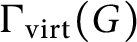 $\Gamma _{\text {virt}}(G)$ whose vertices are the elements of a finitely generated profinite group G and where two vertices x and y are adjacent if and only if they topologically generate an open subgroup of G. We investigate the connectivity of the graph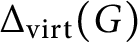 $\Delta _{\text {virt}}(G)$ obtained from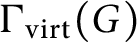 $\Gamma _{\text {virt}}(G)$ by removing its isolated vertices. In particular, we prove that for every positive integer t, there exists a finitely generated prosoluble group G with the property that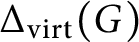 $\Delta _{\operatorname {\mathrm {virt}}}(G)$ has precisely t connected components. Moreover, we study the graph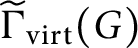 $\widetilde \Gamma _{\operatorname {\mathrm {virt}}}(G)$, whose vertices are again the elements of G and where two vertices are adjacent if and only if there exists a minimal generating set of G containing them. In this case, we prove that the subgraph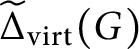 $\widetilde \Delta _{\operatorname {\mathrm {virt}}}(G)$ obtained removing the isolated vertices is connected and has diameter at most 3.
Covering and tiling hypergraphs with tight cycles
- Part of
-
- Journal:
- Combinatorics, Probability and Computing / Volume 30 / Issue 2 / March 2021
- Published online by Cambridge University Press:
- 13 October 2020, pp. 288-329
-
- Article
- Export citation
-
A k-uniform tight cycle $C_s^k$ is a hypergraph on s > k vertices with a cyclic ordering such that every k consecutive vertices under this ordering form an edge. The pair (k, s) is admissible if gcd (k, s) = 1 or k / gcd (k,s) is even. We prove that if $s \ge 2{k^2}$ and H is a k-uniform hypergraph with minimum codegree at least (1/2 + o(1))|V(H)|, then every vertex is covered by a copy of $C_s^k$. The bound is asymptotically sharp if (k, s) is admissible. Our main tool allows us to arbitrarily rearrange the order in which a tight path wraps around a complete k-partite k-uniform hypergraph, which may be of independent interest.
For hypergraphs F and H, a perfect F-tiling in H is a spanning collection of vertex-disjoint copies of F. For $k \ge 3$, there are currently only a handful of known F-tiling results when F is k-uniform but not k-partite. If s ≢ 0 mod k, then $C_s^k$ is not k-partite. Here we prove an F-tiling result for a family of non-k-partite k-uniform hypergraphs F. Namely, for $s \ge 5{k^2}$, every k-uniform hypergraph H with minimum codegree at least (1/2 + 1/(2s) + o(1))|V(H)| has a perfect $C_s^k$-tiling. Moreover, the bound is asymptotically sharp if k is even and (k, s) is admissible.


Tight Hamilton cycles in cherry-quasirandom 3-uniform hypergraphs
- Part of
-
- Journal:
- Combinatorics, Probability and Computing / Volume 30 / Issue 3 / May 2021
- Published online by Cambridge University Press:
- 12 October 2020, pp. 412-443
-
- Article
-
- You have access
- Open access
- Export citation
-
We employ the absorbing-path method in order to prove two results regarding the emergence of tight Hamilton cycles in the so-called two-path or cherry-quasirandom 3-graphs.
Our first result asserts that for any fixed real α > 0, cherry-quasirandom 3-graphs of sufficiently large order n having minimum 2-degree at least α(n – 2) have a tight Hamilton cycle.
Our second result concerns the minimum 1-degree sufficient for such 3-graphs to have a tight Hamilton cycle. Roughly speaking, we prove that for every d, α > 0 satisfying d + α > 1, any sufficiently large n-vertex such 3-graph H of density d and minimum 1-degree at least $\alpha \left({\matrix{{n - 1} \cr 2 \cr } } \right)$ has a tight Hamilton cycle.

Sharp bounds for decomposing graphs into edges and triangles
- Part of
-
- Journal:
- Combinatorics, Probability and Computing / Volume 30 / Issue 2 / March 2021
- Published online by Cambridge University Press:
- 12 October 2020, pp. 271-287
-
- Article
-
- You have access
- Open access
- Export citation
-
For a real constant α, let $\pi _3^\alpha (G)$ be the minimum of twice the number of K2’s plus α times the number of K3’s over all edge decompositions of G into copies of K2 and K3, where Kr denotes the complete graph on r vertices. Let $\pi _3^\alpha (n)$ be the maximum of $\pi _3^\alpha (G)$ over all graphs G with n vertices.
The extremal function $\pi _3^3(n)$ was first studied by Győri and Tuza (Studia Sci. Math. Hungar. 22 (1987) 315–320). In recent progress on this problem, Král’, Lidický, Martins and Pehova (Combin. Probab. Comput. 28 (2019) 465–472) proved via flag algebras that $\pi _3^3(n) \le (1/2 + o(1)){n^2}$. We extend their result by determining the exact value of $\pi _3^\alpha (n)$ and the set of extremal graphs for all α and sufficiently large n. In particular, we show for α = 3 that Kn and the complete bipartite graph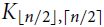 ${K_{\lfloor n/2 \rfloor,\lceil n/2 \rceil }}$ are the only possible extremal examples for large n.


CLASSES OF BARREN EXTENSIONS
- Part of
-
- Journal:
- The Journal of Symbolic Logic / Volume 86 / Issue 1 / March 2021
- Published online by Cambridge University Press:
- 05 October 2020, pp. 178-209
- Print publication:
- March 2021
-
- Article
- Export citation
-
Henle, Mathias, and Woodin proved in [21] that, provided that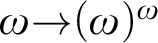 ${\omega }{\rightarrow }({\omega })^{{\omega }}$ holds in a model M of ZF, then forcing with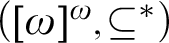 $([{\omega }]^{{\omega }},{\subseteq }^*)$ over M adds no new sets of ordinals, thus earning the name a “barren” extension. Moreover, under an additional assumption, they proved that this generic extension preserves all strong partition cardinals. This forcing thus produces a model $M[\mathcal {U}]$, where $\mathcal {U}$ is a Ramsey ultrafilter, with many properties of the original model M. This begged the question of how important the Ramseyness of $\mathcal {U}$ is for these results. In this paper, we show that several classes of $\sigma $-closed forcings which generate non-Ramsey ultrafilters have the same properties. Such ultrafilters include Milliken–Taylor ultrafilters, a class of rapid p-points of Laflamme, k-arrow p-points of Baumgartner and Taylor, and extensions to a class of ultrafilters constructed by Dobrinen, Mijares, and Trujillo. Furthermore, the class of Boolean algebras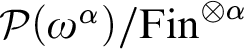 $\mathcal {P}({\omega }^{{\alpha }})/{\mathrm {Fin}}^{\otimes {\alpha }}$, $2\le {\alpha }<{\omega }_1$, forcing non-p-points also produce barren extensions.


CONNECTIVITY PROPERTIES OF MCKAY QUIVERS
- Part of
-
- Journal:
- Bulletin of the Australian Mathematical Society / Volume 103 / Issue 2 / April 2021
- Published online by Cambridge University Press:
- 02 October 2020, pp. 182-194
- Print publication:
- April 2021
-
- Article
-
- You have access
- Export citation
Small trees in supercritical random forests
- Part of
-
- Journal:
- Canadian Mathematical Bulletin / Volume 64 / Issue 3 / September 2021
- Published online by Cambridge University Press:
- 29 September 2020, pp. 605-623
- Print publication:
- September 2021
-
- Article
- Export citation
Eigenvalues and triangles in graphs
- Part of
-
- Journal:
- Combinatorics, Probability and Computing / Volume 30 / Issue 2 / March 2021
- Published online by Cambridge University Press:
- 28 September 2020, pp. 258-270
-
- Article
- Export citation
-
Bollobás and Nikiforov (J. Combin. Theory Ser. B. 97 (2007) 859–865) conjectured the following. If G is a Kr+1-free graph on at least r+1 vertices and m edges, then ${\rm{\lambda }}_1^2(G) + {\rm{\lambda }}_2^2(G) \le (r - 1)/r \cdot 2m$, where λ1 (G)and λ2 (G) are the largest and the second largest eigenvalues of the adjacency matrix A(G), respectively. In this paper we confirm the conjecture in the case r=2, by using tools from doubly stochastic matrix theory, and also characterize all families of extremal graphs. Motivated by classic theorems due to Erdös and Nosal respectively, we prove that every non-bipartite graph of order and size contains a triangle if one of the following is true: (i) ${{\rm{\lambda }}_1}(G) \ge \sqrt {m - 1} $ and $G \ne {C_5} \cup (n - 5){K_1}$, and (ii) ${{\rm{\lambda }}_1}(G) \ge {{\rm{\lambda }}_1}(S({K_{[(n - 1)/2],[(n - 1)/2]}}))$ and $G \ne S({K_{[(n - 1)/2],[(n - 1)/2]}})$, where $S({K_{[(n - 1)/2],[(n - 1)/2]}})$ is obtained from ${K_{[(n - 1)/2],[(n - 1)/2]}}$ by subdividing an edge. Both conditions are best possible. We conclude this paper with some open problems.
Finding tight Hamilton cycles in random hypergraphs faster
- Part of
-
- Journal:
- Combinatorics, Probability and Computing / Volume 30 / Issue 2 / March 2021
- Published online by Cambridge University Press:
- 23 September 2020, pp. 239-257
-
- Article
- Export citation
-
In an r-uniform hypergraph on n vertices, a tight Hamilton cycle consists of n edges such that there exists a cyclic ordering of the vertices where the edges correspond to consecutive segments of r vertices. We provide a first deterministic polynomial-time algorithm, which finds a.a.s. tight Hamilton cycles in random r-uniform hypergraphs with edge probability at least C log3 n/n.
Our result partially answers a question of Dudek and Frieze, who proved that tight Hamilton cycles exist already for p = ω(1/n) for r = 3 and p = (e + o(1))/n for $r \ge 4$ using a second moment argument. Moreover our algorithm is superior to previous results of Allen, Böttcher, Kohayakawa and Person, and Nenadov and Škorić, in various ways: the algorithm of Allen et al. is a randomized polynomial-time algorithm working for edge probabilities $p \ge {n^{ - 1 + \varepsilon}}$, while the algorithm of Nenadov and Škorić is a randomized quasipolynomial-time algorithm working for edge probabilities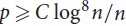 $p \ge C\mathop {\log }\nolimits^8 n/n$.


Action convergence of operators and graphs
- Part of
-
- Journal:
- Canadian Journal of Mathematics / Volume 74 / Issue 1 / February 2022
- Published online by Cambridge University Press:
- 17 September 2020, pp. 72-121
- Print publication:
- February 2022
-
- Article
-
- You have access
- Open access
- Export citation
-
We present a new approach to graph limit theory that unifies and generalizes the two most well-developed directions, namely dense graph limits (even the more general $L^p$ limits) and Benjamini–Schramm limits (even in the stronger local-global setting). We illustrate by examples that this new framework provides a rich limit theory with natural limit objects for graphs of intermediate density. Moreover, it provides a limit theory for bounded operators (called P-operators) of the form $L^\infty (\Omega )\to L^1(\Omega )$ for probability spaces $\Omega $. We introduce a metric to compare P-operators (for example, finite matrices) even if they act on different spaces. We prove a compactness result, which implies that, in appropriate norms, limits of uniformly bounded P-operators can again be represented by P-operators. We show that limits of operators, representing graphs, are self-adjoint, positivity-preserving P-operators called graphops. Graphons, $L^p$ graphons, and graphings (known from graph limit theory) are special examples of graphops. We describe a new point of view on random matrix theory using our operator limit framework.


Maker–Breaker percolation games I: crossing grids
- Part of
-
- Journal:
- Combinatorics, Probability and Computing / Volume 30 / Issue 2 / March 2021
- Published online by Cambridge University Press:
- 15 September 2020, pp. 200-227
-
- Article
-
- You have access
- Open access
- Export citation
Triangle-degrees in graphs and tetrahedron coverings in 3-graphs
- Part of
-
- Journal:
- Combinatorics, Probability and Computing / Volume 30 / Issue 2 / March 2021
- Published online by Cambridge University Press:
- 09 September 2020, pp. 175-199
-
- Article
-
- You have access
- Open access
- Export citation
-
We investigate a covering problem in 3-uniform hypergraphs (3-graphs): Given a 3-graph F, what is c1(n, F), the least integer d such that if G is an n-vertex 3-graph with minimum vertex-degree $\delta_1(G)>d$ then every vertex of G is contained in a copy of F in G?
We asymptotically determine c1(n, F) when F is the generalized triangle $K_4^{(3)-}$, and we give close to optimal bounds in the case where F is the tetrahedron $K_4^{(3)}$ (the complete 3-graph on 4 vertices).
This latter problem turns out to be a special instance of the following problem for graphs: Given an n-vertex graph G with $m> n^2/4$ edges, what is the largest t such that some vertex in G must be contained in t triangles? We give upper bound constructions for this problem that we conjecture are asymptotically tight. We prove our conjecture for tripartite graphs, and use flag algebra computations to give some evidence of its truth in the general case.


Hamiltonian Berge cycles in random hypergraphs
- Part of
-
- Journal:
- Combinatorics, Probability and Computing / Volume 30 / Issue 2 / March 2021
- Published online by Cambridge University Press:
- 08 September 2020, pp. 228-238
-
- Article
- Export citation
-
In this note we study the emergence of Hamiltonian Berge cycles in random r-uniform hypergraphs. For $r\geq 3$ we prove an optimal stopping time result that if edges are sequentially added to an initially empty r-graph, then as soon as the minimum degree is at least 2, the hypergraph with high probability has such a cycle. In particular, this determines the threshold probability for Berge Hamiltonicity of the Erdős–Rényi random r-graph, and we also show that the 2-out random r-graph with high probability has such a cycle. We obtain similar results for weak Berge cycles as well, thus resolving a conjecture of Poole.

Trees grown under young-age preferential attachment
- Part of
-
- Journal:
- Journal of Applied Probability / Volume 57 / Issue 3 / September 2020
- Published online by Cambridge University Press:
- 04 September 2020, pp. 911-927
- Print publication:
- September 2020
-
- Article
-
- You have access
- HTML
- Export citation
Improved queue-size scaling for input-queued switches via graph factorization
- Part of
-
- Journal:
- Advances in Applied Probability / Volume 52 / Issue 3 / September 2020
- Published online by Cambridge University Press:
- 24 September 2020, pp. 798-824
- Print publication:
- September 2020
-
- Article
- Export citation
-
This paper studies the scaling of the expected total queue size in an $n\times n$ input-queued switch, as a function of both the load $\rho$ and the system scale n. We provide a new class of scheduling policies under which the expected total queue size scales as $O\big( n(1-\rho)^{-4/3} \log \big(\!\max\big\{\frac{1}{1-\rho}, n\big\}\big)\big)$, over all n and $\rho<1$, when the arrival rates are uniform. This improves on the best previously known scalings in two regimes: $O\big(n^{1.5}(1-\rho)^{-1} \log \frac{1}{1-\rho}\big)$ when $\Omega\big(n^{-1.5}\big) \le 1-\rho \le O\big(n^{-1}\big)$ and $O\big(\frac{n\log n}{(1-\rho)^2}\big)$ when $1-\rho \geq \Omega(n^{-1})$. A key ingredient in our method is a tight characterization of the largest k-factor of a random bipartite multigraph, which may be of independent interest.


Flooding and diameter in general weighted random graphs
- Part of
-
- Journal:
- Journal of Applied Probability / Volume 57 / Issue 3 / September 2020
- Published online by Cambridge University Press:
- 04 September 2020, pp. 956-980
- Print publication:
- September 2020
-
- Article
- Export citation
Dirac’s theorem for random regular graphs
- Part of
-
- Journal:
- Combinatorics, Probability and Computing / Volume 30 / Issue 1 / January 2021
- Published online by Cambridge University Press:
- 28 August 2020, pp. 17-36
-
- Article
- Export citation
-
We prove a ‘resilience’ version of Dirac’s theorem in the setting of random regular graphs. More precisely, we show that whenever d is sufficiently large compared to $\epsilon > 0$, a.a.s. the following holds. Let $G'$ be any subgraph of the random n-vertex d-regular graph $G_{n,d}$ with minimum degree at least
  $$(1/2 + \epsilon )d$$. Then $G'$ is Hamiltonian.
This proves a conjecture of Ben-Shimon, Krivelevich and Sudakov. Our result is best possible: firstly the condition that d is large cannot be omitted, and secondly the minimum degree bound cannot be improved.


Monochromatic cycle partitions in random graphs
- Part of
-
- Journal:
- Combinatorics, Probability and Computing / Volume 30 / Issue 1 / January 2021
- Published online by Cambridge University Press:
- 14 August 2020, pp. 136-152
-
- Article
-
- You have access
- Open access
- Export citation
-
Erdős, Gyárfás and Pyber showed that every r-edge-coloured complete graph Kn can be covered by 25 r2 log r vertex-disjoint monochromatic cycles (independent of n). Here we extend their result to the setting of binomial random graphs. That is, we show that if $p= p(n) = \Omega(n^{-1/(2r)})$, then with high probability any r-edge-coloured G(n, p) can be covered by at most 1000r4 log r vertex-disjoint monochromatic cycles. This answers a question of Korándi, Mousset, Nenadov, Škorić and Sudakov.
