Refine listing
Actions for selected content:
1074 results in 05Cxx
On the structure of Dense graphs with bounded clique number
- Part of
-
- Journal:
- Combinatorics, Probability and Computing / Volume 29 / Issue 5 / September 2020
- Published online by Cambridge University Press:
- 05 June 2020, pp. 641-649
-
- Article
- Export citation
Randomized near-neighbor graphs, giant components and applications in data science
- Part of
-
- Journal:
- Journal of Applied Probability / Volume 57 / Issue 2 / June 2020
- Published online by Cambridge University Press:
- 16 July 2020, pp. 458-476
- Print publication:
- June 2020
-
- Article
- Export citation
-
If we pick n random points uniformly in $[0,1]^d$ and connect each point to its $c_d \log{n}$ nearest neighbors, where $d\ge 2$ is the dimension and $c_d$ is a constant depending on the dimension, then it is well known that the graph is connected with high probability. We prove that it suffices to connect every point to $ c_{d,1} \log{\log{n}}$ points chosen randomly among its $ c_{d,2} \log{n}$ nearest neighbors to ensure a giant component of size $n - o(n)$ with high probability. This construction yields a much sparser random graph with $\sim n \log\log{n}$ instead of $\sim n \log{n}$ edges that has comparable connectivity properties. This result has non-trivial implications for problems in data science where an affinity matrix is constructed: instead of connecting each point to its k nearest neighbors, one can often pick $k'\ll k$ random points out of the k nearest neighbors and only connect to those without sacrificing quality of results. This approach can simplify and accelerate computation; we illustrate this with experimental results in spectral clustering of large-scale datasets.


Asymptotic results on Hoppe trees and their variations
- Part of
-
- Journal:
- Journal of Applied Probability / Volume 57 / Issue 2 / June 2020
- Published online by Cambridge University Press:
- 16 July 2020, pp. 441-457
- Print publication:
- June 2020
-
- Article
- Export citation
-
A uniform recursive tree on n vertices is a random tree where each possible $(n-1)!$ labelled recursive rooted tree is selected with equal probability. We introduce and study weighted trees, a non-uniform recursive tree model departing from the recently introduced Hoppe trees. This class generalizes both uniform recursive trees and Hoppe trees, providing diversity among the nodes and making the model more flexible for applications. We analyse the number of leaves, the height, the depth, the number of branches, and the size of the largest branch in these weighted trees.

Speed and concentration of the covering time for structured coupon collectors
- Part of
-
- Journal:
- Advances in Applied Probability / Volume 52 / Issue 2 / June 2020
- Published online by Cambridge University Press:
- 15 July 2020, pp. 433-462
- Print publication:
- June 2020
-
- Article
- Export citation
-
Let V be an n-set, and let X be a random variable taking values in the power-set of V. Suppose we are given a sequence of random coupons $X_1, X_2, \ldots $, where the $X_i$ are independent random variables with distribution given by X. The covering time T is the smallest integer $t\geq 0$ such that $\bigcup_{i=1}^t X_i=V$. The distribution of T is important in many applications in combinatorial probability, and has been extensively studied. However the literature has focused almost exclusively on the case where X is assumed to be symmetric and/or uniform in some way.
In this paper we study the covering time for much more general random variables X; we give general criteria for T being sharply concentrated around its mean, precise tools to estimate that mean, as well as examples where T fails to be concentrated and when structural properties in the distribution of X allow for a very different behaviour of T relative to the symmetric/uniform case.


Graph limits of random unlabelled k-trees
- Part of
-
- Journal:
- Combinatorics, Probability and Computing / Volume 29 / Issue 5 / September 2020
- Published online by Cambridge University Press:
- 18 May 2020, pp. 722-746
-
- Article
-
- You have access
- Open access
- Export citation
Finding independent transversals efficiently
- Part of
-
- Journal:
- Combinatorics, Probability and Computing / Volume 29 / Issue 5 / September 2020
- Published online by Cambridge University Press:
- 14 May 2020, pp. 780-806
-
- Article
- Export citation
-
We give an efficient algorithm that, given a graph G and a partition V1,…,Vm of its vertex set, finds either an independent transversal (an independent set {v1,…,vm} in G such that ${v_i} \in {V_i}$ for each i), or a subset ${\cal B}$ of vertex classes such that the subgraph of G induced by $\bigcup\nolimits_{\cal B}$ has a small dominating set. A non-algorithmic proof of this result has been known for a number of years and has been used to solve many other problems. Thus we are able to give algorithmic versions of many of these applications, a few of which we describe explicitly here.


THE EXACT MINIMUM NUMBER OF TRIANGLES IN GRAPHS WITH GIVEN ORDER AND SIZE
- Part of
-
- Journal:
- Forum of Mathematics, Pi / Volume 8 / 2020
- Published online by Cambridge University Press:
- 20 April 2020, e8
-
- Article
-
- You have access
- Open access
- Export citation
-
What is the minimum number of triangles in a graph of given order and size? Motivated by earlier results of Mantel and Turán, Rademacher solved the first nontrivial case of this problem in 1941. The problem was revived by Erdős in 1955; it is now known as the Erdős–Rademacher problem. After attracting much attention, it was solved asymptotically in a major breakthrough by Razborov in 2008. In this paper, we provide an exact solution for all large graphs whose edge density is bounded away from $1$, which in this range confirms a conjecture of Lovász and Simonovits from 1975. Furthermore, we give a description of the extremal graphs.

All finite transitive graphs admit a self-adjoint free semigroupoid algebra
- Part of
-
- Journal:
- Proceedings of the Royal Society of Edinburgh. Section A: Mathematics / Volume 151 / Issue 1 / February 2021
- Published online by Cambridge University Press:
- 30 March 2020, pp. 391-406
- Print publication:
- February 2021
-
- Article
- Export citation
-
In this paper we show that every non-cycle finite transitive directed graph has a Cuntz–Krieger family whose WOT-closed algebra is $B(\mathcal {H})$. This is accomplished through a new construction that reduces this problem to in-degree 2-regular graphs, which is then treated by applying the periodic Road Colouring Theorem of Béal and Perrin. As a consequence we show that finite disjoint unions of finite transitive directed graphs are exactly those finite graphs which admit self-adjoint free semigroupoid algebras.

Estimating parameters associated with monotone properties
- Part of
-
- Journal:
- Combinatorics, Probability and Computing / Volume 29 / Issue 4 / July 2020
- Published online by Cambridge University Press:
- 24 March 2020, pp. 616-632
-
- Article
- Export citation
-
There has been substantial interest in estimating the value of a graph parameter, i.e. of a real-valued function defined on the set of finite graphs, by querying a randomly sampled substructure whose size is independent of the size of the input. Graph parameters that may be successfully estimated in this way are said to be testable or estimable, and the sample complexity qz = qz(ε) of an estimable parameter z is the size of a random sample of a graph G required to ensure that the value of z(G) may be estimated within an error of ε with probability at least 2/3. In this paper, for any fixed monotone graph property $\mathcal{P}= \text{Forb}\!(\mathcal{F}),$ we study the sample complexity of estimating a bounded graph parameter z that, for an input graph G, counts the number of spanning subgraphs of G that satisfy $\mathcal{P}$. To improve upon previous upper bounds on the sample complexity, we show that the vertex set of any graph that satisfies a monotone property $\mathcal{P}$ may be partitioned equitably into a constant number of classes in such a way that the cluster graph induced by the partition is not far from satisfying a natural weighted graph generalization of $\mathcal{P}$. Properties for which this holds are said to be recoverable, and the study of recoverable properties may be of independent interest.

ENUMERATION OF MEANDERS AND MASUR–VEECH VOLUMES
- Part of
-
- Journal:
- Forum of Mathematics, Pi / Volume 8 / 2020
- Published online by Cambridge University Press:
- 23 March 2020, e4
-
- Article
-
- You have access
- Open access
- Export citation
-
A meander is a topological configuration of a line and a simple closed curve in the plane (or a pair of simple closed curves on the 2-sphere) intersecting transversally. Meanders can be traced back to H. Poincaré and naturally appear in various areas of mathematics, theoretical physics and computational biology (in particular, they provide a model of polymer folding). Enumeration of meanders is an important open problem. The number of meanders with $2N$ crossings grows exponentially when $N$ grows, but the long-standing problem on the precise asymptotics is still out of reach.
We show that the situation becomes more tractable if one additionally fixes the topological type (or the total number of minimal arcs) of a meander. Then we are able to derive simple asymptotic formulas for the numbers of meanders as $N$ tends to infinity. We also compute the asymptotic probability of getting a simple closed curve on a sphere by identifying the endpoints of two arc systems (one on each of the two hemispheres) along the common equator.
The new tools we bring to bear are based on interpretation of meanders as square-tiled surfaces with one horizontal and one vertical cylinder. The proofs combine recent results on Masur–Veech volumes of moduli spaces of meromorphic quadratic differentials in genus zero with our new observation that horizontal and vertical separatrix diagrams of integer quadratic differentials are asymptotically uncorrelated. The additional combinatorial constraints we impose in this article yield explicit polynomial asymptotics.


Directed preferential attachment models: Limiting degree distributions and their tails
- Part of
-
- Journal:
- Journal of Applied Probability / Volume 57 / Issue 1 / March 2020
- Published online by Cambridge University Press:
- 04 May 2020, pp. 122-136
- Print publication:
- March 2020
-
- Article
- Export citation
An invariance principle and a large deviation principle for the biased random walk on ${\mathbb{Z}}^{\lowercase{\textbf{\textit{d}}}}$
- Part of
-
- Journal:
- Journal of Applied Probability / Volume 57 / Issue 1 / March 2020
- Published online by Cambridge University Press:
- 04 May 2020, pp. 295-313
- Print publication:
- March 2020
-
- Article
- Export citation
-
We establish an invariance principle and a large deviation principle for a biased random walk ${\text{RW}}_\lambda$ with $\lambda\in [0,1)$ on $\mathbb{Z}^d$. The scaling limit in the invariance principle is not a d-dimensional Brownian motion. For the large deviation principle, its rate function is different from that of a drifted random walk, as may be expected, though the reflected biased random walk evolves like the drifted random walk in the interior of the first quadrant and almost surely visits coordinate planes finitely many times.


The existence of a giant cluster for percolation on large Crump–Mode–Jagers trees
- Part of
-
- Journal:
- Advances in Applied Probability / Volume 52 / Issue 1 / March 2020
- Published online by Cambridge University Press:
- 29 April 2020, pp. 266-290
- Print publication:
- March 2020
-
- Article
- Export citation
-
In this paper we consider random trees associated with the genealogy of Crump–Mode–Jagers processes and perform Bernoulli bond-percolation whose parameter depends on the size of the tree. Our purpose is to show the existence of a giant percolation cluster for appropriate regimes as the size grows. We stress that the family trees of Crump–Mode–Jagers processes include random recursive trees, preferential attachment trees, binary search trees for which this question has been answered by Bertoin [7], as well as (more general) m-ary search trees, fragmentation trees, and median-of-( $2\ell+1$) binary search trees, to name a few, where to our knowledge percolation has not yet been studied.

A preferential attachment process approaching the Rado graph
- Part of
-
- Journal:
- Proceedings of the Edinburgh Mathematical Society / Volume 63 / Issue 2 / May 2020
- Published online by Cambridge University Press:
- 27 February 2020, pp. 443-455
-
- Article
- Export citation
Percolation on an infinitely generated group
- Part of
-
- Journal:
- Combinatorics, Probability and Computing / Volume 29 / Issue 4 / July 2020
- Published online by Cambridge University Press:
- 20 February 2020, pp. 587-615
-
- Article
- Export citation
Turán numbers of theta graphs
- Part of
-
- Journal:
- Combinatorics, Probability and Computing / Volume 29 / Issue 4 / July 2020
- Published online by Cambridge University Press:
- 13 February 2020, pp. 495-507
-
- Article
- Export citation
-
The theta graph ${\Theta _{\ell ,t}}$ consists of two vertices joined by t vertex-disjoint paths, each of length $\ell $. For fixed odd $\ell $ and large t, we show that the largest graph not containing ${\Theta _{\ell ,t}}$ has at most ${c_\ell }{t^{1 - 1/\ell }}{n^{1 + 1/\ell }}$ edges and that this is tight apart from the value of ${c_\ell }$.


On subgraphs of C2k-free graphs and a problem of Kühn and Osthus
- Part of
-
- Journal:
- Combinatorics, Probability and Computing / Volume 29 / Issue 3 / May 2020
- Published online by Cambridge University Press:
- 04 February 2020, pp. 436-454
-
- Article
- Export citation
-
Let c denote the largest constant such that every C6-free graph G contains a bipartite and C4-free subgraph having a fraction c of edges of G. Győri, Kensell and Tompkins showed that 3/8 ⩽ c ⩽ 2/5. We prove that c = 38. More generally, we show that for any ε > 0, and any integer k ⩾ 2, there is a C2k-free graph $G'$ which does not contain a bipartite subgraph of girth greater than 2k with more than a fraction of the edges of
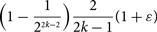 $$\Bigl(1-\frac{1}{2^{2k-2}}\Bigr)\frac{2}{2k-1}(1+\varepsilon)$$ $G'$. There also exists a C2k-free graph $G''$ which does not contain a bipartite and C4-free subgraph with more than a fraction of the edges of
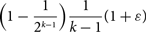 $$\Bigl(1-\frac{1}{2^{k-1}}\Bigr)\frac{1}{k-1}(1+\varepsilon)$$ $G''$.
One of our proofs uses the following statement, which we prove using probabilistic ideas, generalizing a theorem of Erdős. For any ε > 0, and any integers a, b, k ⩾ 2, there exists an a-uniform hypergraph H of girth greater than k which does not contain any b-colourable subhypergraph with more than a fraction
of the hyperedges of H. We also prove further generalizations of this theorem.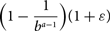 $$\Bigl(1-\frac{1}{b^{a-1}}\Bigr)(1+\varepsilon)$$
In addition, we give a new and very short proof of a result of Kühn and Osthus, which states that every bipartite C2k-free graph G contains a C4-free subgraph with at least a fraction 1/(k−1) of the edges of G. We also answer a question of Kühn and Osthus about C2k-free graphs obtained by pasting together C2l’s (with k >l ⩾ 3).


A note on the Brown–Erdős–Sós conjecture in groups
- Part of
-
- Journal:
- Combinatorics, Probability and Computing / Volume 29 / Issue 4 / July 2020
- Published online by Cambridge University Press:
- 03 February 2020, pp. 633-640
-
- Article
- Export citation
-
We show that a dense subset of a sufficiently large group multiplication table contains either a large part of the addition table of the integers modulo some k, or the entire multiplication table of a certain large abelian group, as a subgrid. As a consequence, we show that triples systems coming from a finite group contain configurations with t triples spanning $ O(\sqrt t )$ vertices, which is the best possible up to the implied constant. We confirm that for all t we can find a collection of t triples spanning at most t + 3 vertices, resolving the Brown–Erdős–Sós conjecture in this context. The proof applies well-known arithmetic results including the multidimensional versions of Szemerédi’s theorem and the density Hales–Jewett theorem.
This result was discovered simultaneously and independently by Nenadov, Sudakov and Tyomkyn [5], and a weaker result avoiding the arithmetic machinery was obtained independently by Wong [11].

Two-graphs and the Embedded Topology of Smooth Quartics and its Bitangent Lines
- Part of
-
- Journal:
- Canadian Mathematical Bulletin / Volume 63 / Issue 4 / December 2020
- Published online by Cambridge University Press:
- 24 January 2020, pp. 802-812
- Print publication:
- December 2020
-
- Article
-
- You have access
- Export citation
A NEW COARSELY RIGID CLASS OF BANACH SPACES
- Part of
-
- Journal:
- Journal of the Institute of Mathematics of Jussieu / Volume 20 / Issue 5 / September 2021
- Published online by Cambridge University Press:
- 13 January 2020, pp. 1729-1747
- Print publication:
- September 2021
-
- Article
- Export citation
-
We prove that the class of reflexive asymptotic- $c_{0}$ Banach spaces is coarsely rigid, meaning that if a Banach space $X$ coarsely embeds into a reflexive asymptotic- $c_{0}$ space $Y$, then $X$ is also reflexive and asymptotic- $c_{0}$. In order to achieve this result, we provide a purely metric characterization of this class of Banach spaces. This metric characterization takes the form of a concentration inequality for Lipschitz maps on the Hamming graphs, which is rigid under coarse embeddings. Using an example of a quasi-reflexive asymptotic- $c_{0}$ space, we show that this concentration inequality is not equivalent to the non-equi-coarse embeddability of the Hamming graphs.


