Refine listing
Actions for selected content:
1090 results in 05Cxx
Instantons and Bar-Natan homology
- Part of
-
- Journal:
- Compositio Mathematica / Volume 157 / Issue 3 / March 2021
- Published online by Cambridge University Press:
- 22 March 2021, pp. 484-528
- Print publication:
- March 2021
-
- Article
- Export citation
-
A spectral sequence is established whose $E_{2}$ page is Bar-Natan's variant of Khovanov homology and which abuts to a deformation of instanton homology for knots and links. This spectral sequence arises as a specialization of a spectral sequence whose $E_{2}$ page is a characteristic-2 version of $F_{5}$ homology in Khovanov's classification.


Simple peeling of planar maps with application to site percolation
- Part of
-
- Journal:
- Canadian Journal of Mathematics / Volume 74 / Issue 4 / August 2022
- Published online by Cambridge University Press:
- 26 February 2021, pp. 907-941
- Print publication:
- August 2022
-
- Article
- Export citation
Scale-free percolation in continuous space: quenched degree and clustering coefficient
- Part of
-
- Journal:
- Journal of Applied Probability / Volume 58 / Issue 1 / March 2021
- Published online by Cambridge University Press:
- 25 February 2021, pp. 106-127
- Print publication:
- March 2021
-
- Article
- Export citation
-
Spatial random graphs capture several important properties of real-world networks. We prove quenched results for the continuous-space version of scale-free percolation introduced in [14]. This is an undirected inhomogeneous random graph whose vertices are given by a Poisson point process in $\mathbb{R}^d$. Each vertex is equipped with a random weight, and the probability that two vertices are connected by an edge depends on their weights and on their distance. Under suitable conditions on the parameters of the model, we show that, for almost all realizations of the point process, the degree distributions of all the nodes of the graph follow a power law with the same tail at infinity. We also show that the averaged clustering coefficient of the graph is self-averaging. In particular, it is almost surely equal to the annealed clustering coefficient of one point, which is a strictly positive quantity.

CUTOFF AT THE ENTROPIC TIME FOR RANDOM WALKS ON COVERED EXPANDER GRAPHS
- Part of
-
- Journal:
- Journal of the Institute of Mathematics of Jussieu / Volume 21 / Issue 5 / September 2022
- Published online by Cambridge University Press:
- 09 February 2021, pp. 1571-1616
- Print publication:
- September 2022
-
- Article
- Export citation
-
It is a fact simple to establish that the mixing time of the simple random walk on a d-regular graph $G_n$ with n vertices is asymptotically bounded from below by $\frac {d }{d-2 } \frac {\log n}{\log (d-1)}$. Such a bound is obtained by comparing the walk on $G_n$ to the walk on d-regular tree $\mathcal{T}_d$. If one can map another transitive graph $\mathcal{G} $ onto $G_n$, then we can improve the strategy by using a comparison with the random walk on $\mathcal{G} $ (instead of that of $\mathcal{T} _d$), and we obtain a lower bound of the form $\frac {1}{\mathfrak{h} }\log n$, where $\mathfrak{h} $ is the entropy rate associated with $\mathcal{G} $. We call this the entropic lower bound.
It was recently proved that in the case $\mathcal{G} =\mathcal{T} _d$, this entropic lower bound (in that case $\frac {d }{d-2 } \frac {\log n}{\log (d-1)}$) is sharp when graphs have minimal spectral radius and thus that in that case the random walk exhibits cutoff at the entropic time. In this article, we provide a generalisation of the result by providing a sufficient condition on the spectra of the random walks on $G_n$ under which the random walk exhibits cutoff at the entropic time. It applies notably to anisotropic random walks on random d-regular graphs and to random walks on random n-lifts of a base graph (including nonreversible walks).


AN ANALOGUE OF HUPPERT’S CONJECTURE FOR CHARACTER CODEGREES
- Part of
-
- Journal:
- Bulletin of the Australian Mathematical Society / Volume 104 / Issue 2 / October 2021
- Published online by Cambridge University Press:
- 08 February 2021, pp. 278-286
- Print publication:
- October 2021
-
- Article
- Export citation
-
Let G be a finite group, let ${\mathrm{Irr}}(G)$ be the set of all irreducible complex characters of G and let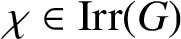 $\chi \in {\mathrm{Irr}}(G)$. Define the codegrees, ${\mathrm{cod}}(\chi ) = |G: {\mathrm{ker}}\chi |/\chi (1)$ and ${\mathrm{cod}}(G) = \{{\mathrm{cod}}(\chi ) \mid \chi \in {\mathrm{Irr}}(G)\} $. We show that the simple group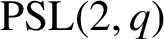 ${\mathrm{PSL}}(2,q)$, for a prime power $q>3$, is uniquely determined by the set of its codegrees.

RECURSIVE AXIOMATISATIONS FROM SEPARATION PROPERTIES
- Part of
-
- Journal:
- The Journal of Symbolic Logic / Volume 86 / Issue 3 / September 2021
- Published online by Cambridge University Press:
- 03 February 2021, pp. 1228-1258
- Print publication:
- September 2021
-
- Article
- Export citation
CORES OVER RAMSEY STRUCTURES
- Part of
-
- Journal:
- The Journal of Symbolic Logic / Volume 86 / Issue 1 / March 2021
- Published online by Cambridge University Press:
- 01 February 2021, pp. 352-361
- Print publication:
- March 2021
-
- Article
- Export citation
-
We prove that if an $\omega $-categorical structure has an $\omega $-categorical homogeneous Ramsey expansion, then so does its model-complete core.


THE OPEN AND CLOPEN RAMSEY THEOREMS IN THE WEIHRAUCH LATTICE
- Part of
-
- Journal:
- The Journal of Symbolic Logic / Volume 86 / Issue 1 / March 2021
- Published online by Cambridge University Press:
- 01 February 2021, pp. 316-351
- Print publication:
- March 2021
-
- Article
- Export citation
-
We investigate the uniform computational content of the open and clopen Ramsey theorems in the Weihrauch lattice. While they are known to be equivalent to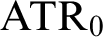 $\mathrm {ATR_0}$ from the point of view of reverse mathematics, there is not a canonical way to phrase them as multivalued functions. We identify eight different multivalued functions (five corresponding to the open Ramsey theorem and three corresponding to the clopen Ramsey theorem) and study their degree from the point of view of Weihrauch, strong Weihrauch, and arithmetic Weihrauch reducibility. In particular one of our functions turns out to be strictly stronger than any previously studied multivalued functions arising from statements around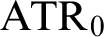 $\mathrm {ATR}_0$.
On the Erdős–Sós conjecture for trees with bounded degree
- Part of
-
- Journal:
- Combinatorics, Probability and Computing / Volume 30 / Issue 5 / September 2021
- Published online by Cambridge University Press:
- 01 February 2021, pp. 741-761
-
- Article
- Export citation
Moves on k-graphs preserving Morita equivalence
- Part of
-
- Journal:
- Canadian Journal of Mathematics / Volume 74 / Issue 3 / June 2022
- Published online by Cambridge University Press:
- 28 January 2021, pp. 655-685
- Print publication:
- June 2022
-
- Article
-
- You have access
- Open access
- HTML
- Export citation
-
We initiate the program of extending to higher-rank graphs (k-graphs) the geometric classification of directed graph $C^*$-algebras, as completed in Eilers et al. (2016, Preprint). To be precise, we identify four “moves,” or modifications, one can perform on a k-graph $\Lambda $, which leave invariant the Morita equivalence class of its $C^*$-algebra $C^*(\Lambda )$. These moves—in-splitting, delay, sink deletion, and reduction—are inspired by the moves for directed graphs described by Sørensen (Ergodic Th. Dyn. Syst. 33(2013), 1199–1220) and Bates and Pask (Ergodic Th. Dyn. Syst. 24(2004), 367–382). Because of this, our perspective on k-graphs focuses on the underlying directed graph. We consequently include two new results, Theorem 2.3 and Lemma 2.9, about the relationship between a k-graph and its underlying directed graph.


Optimal group testing
- Part of
-
- Journal:
- Combinatorics, Probability and Computing / Volume 30 / Issue 6 / November 2021
- Published online by Cambridge University Press:
- 28 January 2021, pp. 811-848
-
- Article
- Export citation
A counterexample to the Bollobás–Riordan conjectures on sparse graph limits
- Part of
-
- Journal:
- Combinatorics, Probability and Computing / Volume 30 / Issue 5 / September 2021
- Published online by Cambridge University Press:
- 27 January 2021, pp. 796-799
-
- Article
- Export citation
Full rainbow matchings in graphs and hypergraphs
- Part of
-
- Journal:
- Combinatorics, Probability and Computing / Volume 30 / Issue 5 / September 2021
- Published online by Cambridge University Press:
- 20 January 2021, pp. 762-780
-
- Article
- Export citation
-
Let G be a simple graph that is properly edge-coloured with m colours and let
 \[\mathcal{M} = \{ {M_1},...,{M_m}\} \] be the set of m matchings induced by the colours in G. Suppose that
  \[m \leqslant n - {n^c}\], where
  \[c > 9/10\], and every matching in
  \[\mathcal{M}\] has size n. Then G contains a full rainbow matching, i.e. a matching that contains exactly one edge from Mi for each
  \[1 \leqslant i \leqslant m\]. This answers an open problem of Pokrovskiy and gives an affirmative answer to a generalization of a special case of a conjecture of Aharoni and Berger. Related results are also found for multigraphs with edges of bounded multiplicity, and for hypergraphs.
Finally, we provide counterexamples to several conjectures on full rainbow matchings made by Aharoni and Berger.


NEW CONSTRUCTIONS OF SELF-COMPLEMENTARY CAYLEY GRAPHS
- Part of
-
- Journal:
- Journal of the Australian Mathematical Society / Volume 111 / Issue 3 / December 2021
- Published online by Cambridge University Press:
- 12 January 2021, pp. 372-385
-
- Article
- Export citation
CLASSIFICATION OF TETRAVALENT $\textbf{2}$-TRANSITIVE NONNORMAL CAYLEY GRAPHS OF FINITE SIMPLE GROUPS
- Part of
-
- Journal:
- Bulletin of the Australian Mathematical Society / Volume 104 / Issue 2 / October 2021
- Published online by Cambridge University Press:
- 11 January 2021, pp. 263-271
- Print publication:
- October 2021
-
- Article
- Export citation
-
A graph $\Gamma $ is called $(G, s)$-arc-transitive if $G \le \text{Aut} (\Gamma )$ is transitive on the set of vertices of $\Gamma $ and the set of s-arcs of $\Gamma $, where for an integer $s \ge 1$ an s-arc of $\Gamma $ is a sequence of $s+1$ vertices $(v_0,v_1,\ldots ,v_s)$ of $\Gamma $ such that $v_{i-1}$ and $v_i$ are adjacent for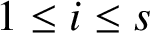 $1 \le i \le s$ and $v_{i-1}\ne v_{i+1}$ for $1 \le i \le s-1$. A graph $\Gamma $ is called 2-transitive if it is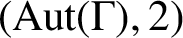 $(\text{Aut} (\Gamma ), 2)$-arc-transitive but not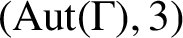 $(\text{Aut} (\Gamma ), 3)$-arc-transitive. A Cayley graph $\Gamma $ of a group G is called normal if G is normal in $\text{Aut} (\Gamma )$ and nonnormal otherwise. Fang et al. [‘On edge transitive Cayley graphs of valency four’, European J. Combin. 25 (2004), 1103–1116] proved that if $\Gamma $ is a tetravalent 2-transitive Cayley graph of a finite simple group G, then either $\Gamma $ is normal or G is one of the groups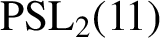 $\text{PSL}_2(11)$, ${\rm M} _{11}$, $\text{M} _{23}$ and $A_{11}$. However, it was unknown whether $\Gamma $ is normal when G is one of these four groups. We answer this question by proving that among these four groups only $\text{M} _{11}$ produces connected tetravalent 2-transitive nonnormal Cayley graphs. We prove further that there are exactly two such graphs which are nonisomorphic and both are determined in the paper. As a consequence, the automorphism group of any connected tetravalent 2-transitive Cayley graph of any finite simple group is determined.


THE DIAMETER AND RADIUS OF RADIALLY MAXIMAL GRAPHS
- Part of
-
- Journal:
- Bulletin of the Australian Mathematical Society / Volume 104 / Issue 2 / October 2021
- Published online by Cambridge University Press:
- 11 January 2021, pp. 196-202
- Print publication:
- October 2021
-
- Article
- Export citation
-
A graph is called radially maximal if it is not complete and the addition of any new edge decreases its radius. Harary and Thomassen [‘Anticritical graphs’, Math. Proc. Cambridge Philos. Soc. 79(1) (1976), 11–18] proved that the radius r and diameter d of any radially maximal graph satisfy $r\le d\le 2r-2.$ Dutton et al. [‘Changing and unchanging of the radius of a graph’, Linear Algebra Appl. 217 (1995), 67–82] rediscovered this result with a different proof and conjectured that the converse is true, that is, if r and d are positive integers satisfying $r\le d\le 2r-2,$ then there exists a radially maximal graph with radius r and diameter $d.$ We prove this conjecture and a little more.

The length of an s-increasing sequence of r-tuples
- Part of
-
- Journal:
- Combinatorics, Probability and Computing / Volume 30 / Issue 5 / September 2021
- Published online by Cambridge University Press:
- 08 January 2021, pp. 686-721
-
- Article
- Export citation
Plongements polyédraux tendus et nombre chromatique relatif des surfaces à bord
- Part of
-
- Journal:
- Canadian Mathematical Bulletin / Volume 64 / Issue 4 / December 2021
- Published online by Cambridge University Press:
- 28 December 2020, pp. 1001-1013
- Print publication:
- December 2021
-
- Article
- Export citation
-
Le nombre chromatique relatif $c_0(S)$ d’une surface compacte S à bord est défini comme la borne supérieure des nombres chromatiques des graphes plongés dans S avec tous leurs sommets sur $\partial S$. Cet invariant topologique a été introduit pour l’étude de la multiplicité de la première valeur propre de Steklov sur S. Dans cet article, on montre que $c_0(S)$ est aussi pertinent pour l’étude des plongements polyédraux tendus de S en établissant deux résultats. Le premier est que s’il existe un plongement polyédral tendu de S dans $\mathbb {R}^n$ qui n’est pas contenu dans un hyperplan, alors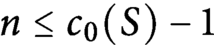 $n\leq c_0(S)-1$. Le second est que cette inégalité est optimale pour les surfaces de petit genre.


Proof of a conjecture of Galvin
- Part of
-
- Journal:
- Forum of Mathematics, Pi / Volume 8 / 2020
- Published online by Cambridge University Press:
- 21 December 2020, e15
-
- Article
-
- You have access
- Open access
- Export citation
Cycle partitions of regular graphs
- Part of
-
- Journal:
- Combinatorics, Probability and Computing / Volume 30 / Issue 4 / July 2021
- Published online by Cambridge University Press:
- 18 December 2020, pp. 526-549
-
- Article
- Export citation
-
Magnant and Martin conjectured that the vertex set of any d-regular graph G on n vertices can be partitioned into $n / (d+1)$ paths (there exists a simple construction showing that this bound would be best possible). We prove this conjecture when $d = \Omega(n)$, improving a result of Han, who showed that in this range almost all vertices of G can be covered by $n / (d+1) + 1$ vertex-disjoint paths. In fact our proof gives a partition of V(G) into cycles. We also show that, if $d = \Omega(n)$ and G is bipartite, then V(G) can be partitioned into n/(2d) paths (this bound is tight for bipartite graphs).


