Refine search
Actions for selected content:
238141 results in Physics and Astronomy
The Curated ATCA Census of High-Mass Clumps (CACHMC) Legacy Survey
-
- Journal:
- Publications of the Astronomical Society of Australia / Volume 41 / 2024
- Published online by Cambridge University Press:
- 24 October 2024, e079
-
- Article
-
- You have access
- Open access
- HTML
- Export citation
-
In order to study the structure and temperature distribution within high-mass star-forming clumps, we employed the Australia Telescope Compact Array to image the $\mathrm{NH}_3$ (J,K) = (1,1) through (6,6) and the (2,1) inversion transitions, the $\mathrm{H}_2\mathrm{O}$ $6_{16}$- $5_{23}$ maser line at 22.23508 GHz, several $\mathrm{CH}_3\mathrm{OH}$ lines and hydrogen and helium recombination lines. In addition, 22- and 24-GHz radio continuum emission was also imaged.
The $\mathrm{NH}_3$ lines probe the optical depth and gas temperature of compact structures within the clumps. The $\mathrm{H}_2\mathrm{O}$ maser pinpoints the location of shocked gas associated with star formation. The recombination lines and the continuum emission trace the ionised gas associated with hot OB stars. The paper describes the data and presents sample images and spectra towards select clumps. The technique for estimating gas temperature from $\mathrm{NH}_3$ line ratios is described. The data show widespread hyperfine intensity anomalies in the $\mathrm{NH}_3$ (1,1) images, an indicator of non-LTE $\mathrm{NH}_3$ excitation. We also identify several new $\mathrm{NH}_3$ (3,3) masers associated with shocked gas. Towards AGAL328.809+00.632, the $\mathrm{H}_2\mathrm{O}$ $6_{16}$- $5_{23}$ line, normally seen as a maser, is instead seen as a thermally excited absorption feature against a strong background continuum. The data products are described in detail.


Transition to elasto-capillary thinning dynamics in viscoelastic jets
-
- Journal:
- Journal of Fluid Mechanics / Volume 998 / 10 November 2024
- Published online by Cambridge University Press:
- 24 October 2024, A4
-
- Article
-
- You have access
- Open access
- HTML
- Export citation
The SAMI galaxy survey: fossil group centrals are no more likely to be slow rotators
-
- Journal:
- Publications of the Astronomical Society of Australia / Volume 41 / 2024
- Published online by Cambridge University Press:
- 23 October 2024, e100
-
- Article
-
- You have access
- Open access
- HTML
- Export citation
-
Simulations suggest that slow rotating galaxies are the result of galaxy-galaxy mergers that have a tendency to randomise stellar orbits. The exact pathway for slow rotator formation, however, is still unclear. Our aim is to see whether there is a relationship between fossil groups - whose central galaxies are thought to have undergone more major merging than other central galaxies – and the stellar kinematic properties of those central galaxies. We classify all galaxy groups in the GAMA redshift survey whose central galaxies were observed with SAMI as: (i) fossil groups, (ii) mass gap groups (fossil-like groups), and (iii) groups that are not dynamically evolved (NDEGs, i.e. controls). We compare the following properties of centrals across the three different group types: spin ( $\lambda_{Re}$), the fraction of slow rotators ( $f_{SR}$), and age. We also repeat our analysis on data from the EAGLE and Magneticum hydrodynamical cosmological simulations. In SAMI, we find that the spin parameter, slow rotator fraction, and age are broadly consistent across our three group types, i.e. the fossil groups, mass gap groups and NDEGs. We do find a weak indication that $f_{SR}$ is slightly lower for fossil group centrals as compared to NDEG centrals. In contrast, in EAGLE and Magneticum, fossil and mass gap group centrals typically have a significantly lower $\lambda_{Re}$ than NDEG centrals. Our results for SAMI suggest that the types of mergers that form fossil groups are not the types of mergers that form slow rotators. Merger count may be less important for slow rotator formation than specific merger conditions, such as the gas content of progenitors. When and where the merging occurs are also suspected to play an important role in slow rotator formation, and these conditions may differ for fossil group formation.


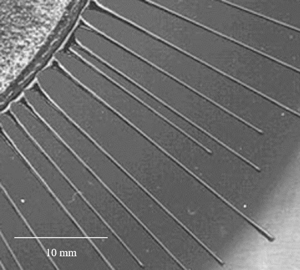
Melt-front instabilities during the combustion of a spinning polymer disk
-
- Journal:
- Journal of Fluid Mechanics / Volume 997 / 25 October 2024
- Published online by Cambridge University Press:
- 23 October 2024, A66
-
- Article
- Export citation

Gravity-driven flow of liquid bridges between vertical fibres
-
- Journal:
- Journal of Fluid Mechanics / Volume 997 / 25 October 2024
- Published online by Cambridge University Press:
- 23 October 2024, A74
-
- Article
-
- You have access
- Open access
- HTML
- Export citation

Mechanism of instability in non-uniform dusty channel flow
-
- Journal:
- Journal of Fluid Mechanics / Volume 997 / 25 October 2024
- Published online by Cambridge University Press:
- 23 October 2024, A77
-
- Article
- Export citation

Evolution of linear internal waves over large bottom topography in three-layer stratified fluids
-
- Journal:
- Journal of Fluid Mechanics / Volume 997 / 25 October 2024
- Published online by Cambridge University Press:
- 23 October 2024, A73
-
- Article
- Export citation

Direct numerical simulation of turbulent, generalized Couette–Poiseuille flow
-
- Journal:
- Journal of Fluid Mechanics / Volume 997 / 25 October 2024
- Published online by Cambridge University Press:
- 23 October 2024, A76
-
- Article
- Export citation
-
We present direct numerical simulation (DNS) and modelling of incompressible, turbulent, generalized Couette–Poiseuille flow. A particular example is specified by spherical coordinates $(Re,\theta,\phi )$, where $Re = 6000$ is a global Reynolds number, $\phi$ denotes the angle between the moving plate, velocity-difference vector and the volume-flow vector and $\tan \theta$ specifies the ratio of the mean volume-flow speed to the plate speed. The limits $\phi \to 0^\circ$ and $\phi \to 90^\circ$ give alignment and orthogonality, respectively, while $\theta \to 0^\circ,\ \theta \to 90^\circ$ correspond respectively to pure Couette flow in the $x$ direction and pure Poiseuille flow at angle $\phi$ to the $x$ axis. Competition between the Couette-flow shear and the forced volume flow produces a mean-velocity profile with directional twist between the confining walls. Resultant mean-speed profiles relative to each wall generally show a log-like region. An empirical flow model is constructed based on component log and log-wake velocity profiles relative to the two walls. This gives predictions of four independent components of shear stress and also mean-velocity profiles as functions of $(Re,\theta,\phi )$. The model captures DNS results including the mean-flow twist. Premultiplied energy spectra are obtained for symmetric flows with $\phi =90^\circ$. With increasing $\theta$, the energy peak gradually moves in the direction of increasing $k_x$ and decreasing $k_z$. Rotation of the energy spectrum produced by the faster moving velocity near the wall is also observed. Rapid weakening of a spike maxima in the Couette-type flow regime indicates attenuation of large-scale roll structures, which is also shown in the $Q$-criterion visualization of a three-dimensional time-averaged flow.


Spectro-polarimetric study to constrain accretion-ejection properties of MCG-5-23-16 using IXPE and NuSTAR observations
-
- Journal:
- Publications of the Astronomical Society of Australia / Volume 41 / 2024
- Published online by Cambridge University Press:
- 22 October 2024, e072
-
- Article
- Export citation
-
We conducted a study on the X-ray polarisation properties of MCG-5-23-16 by analysing long-term monitoring data from NuSTAR jointly with IXPE observations made in May and November 2022. The re-analysis of IXPE data gives model-dependent polarisation degree, PD (%) = $1.08\pm0.66$ in the energy band 2–8 keV, which agrees with previous studies within error bars. The model-independent analysis of PD poses an upper limit of $\leq3.8$ ( $1\sigma$ level) for the same energy band. The observed upper limit of PD, along with broadband spectral analysis (2–79 keV) using an accretion-ejection based model, allowed us to derive the corona geometry (i.e. radius and height) and the accretion disc inclination ( $\sim33^\circ$). Additional NuSTAR observations were also analysed to gain insights into the accretion flow properties of the source and to estimate the expected polarisation during those epochs with PD $\sim 4.3\%$. The radius and height of the corona varies between $28.2\pm3.1 - 39.8\pm4.6$ r $_s$ and $14.3\pm1.7-21.4\pm1.9$ r $_s$ respectively, with a mass outflow rate from the corona measuring $0.14\pm0.03-0.2\pm0.03$ Eddington rate ( $\dot m_{\mathrm{Edd}}$). The estimated PD values were nearly constant up to a certain radial distance and height of the corona and then decreased for increasing corona geometry. The spectral analysis further provided an estimate for the mass of the central black hole $\sim2\times 10^7$ M $_\odot$ and the velocity of the outflowing gas $\sim0.16-0.19c$. A comparative broadband spectral study using reflection-based models estimates the disc inclination between $\sim 31^\circ\pm8^\circ-45^\circ\pm7^\circ$, and yields an expected PD of 3.4–6.0%. We also found a weak reflection fraction and a less ionised distant reflecting medium. The expected PD measured using accretion-ejection and reflection models is less compared to the expected PD measured for a given disc inclination of $45^\circ$. Our modelling of the disc-corona-outflows and polarisation connection can be extended and validated with data from the recently launched XPoSat, India’s first X-ray Polarimeter Satellite, offering potential applications to other sources.


The angular correlation function as measured by the GLEAM-X survey
-
- Journal:
- Publications of the Astronomical Society of Australia / Volume 41 / 2024
- Published online by Cambridge University Press:
- 22 October 2024, e070
-
- Article
-
- You have access
- Open access
- HTML
- Export citation
-
The angular correlation is a method for measuring the distribution of structure in the Universe, through the statistical properties of the angular distribution of galaxies on the sky. We measure the angular correlation of galaxies from the second data release of the GaLactic and Extragalactic All-sky Murchison Widefield Array eXtended survey (GLEAM-X) survey, a low-frequency radio survey covering declinations below $+30^\circ$. We find an angular distribution consistent with the $\Lambda$CDM cosmological model assuming the best fitting cosmological parameters from Planck Collaboration et al. (2020, A&A, 641, A6). We fit a bias function to the discrete tracers of the underlying matter distribution, finding a bias that evolves with redshift in either a linear or exponential fashion to be a better fit to the data than a constant bias. We perform a covariance analysis to obtain an estimation of the properties of the errors, by analytic, jackknife, and sample variance means. Our results are consistent with previous studies on the topic, and also the predictions of the $\Lambda$CDM cosmological model.


Success and failure of the spreading law for large drops of dense granular suspensions
-
- Journal:
- Journal of Fluid Mechanics / Volume 997 / 25 October 2024
- Published online by Cambridge University Press:
- 22 October 2024, A64
-
- Article
-
- You have access
- Open access
- HTML
- Export citation
-
The spreading of large viscous drops of density-matched suspensions of non-Brownian spheres on a smooth solid surface is investigated experimentally at the global drop scale. The focus is on dense suspensions with a solid volume fraction equal to or greater than $40\,\%$, and for drops larger than the capillary length, i.e. for which the spreading is governed by the balance of gravitational and viscous forces. Our findings indicate that all liquids exhibit a power-law behaviour typical of gravity-driven dynamics, albeit with an effective suspension viscosity that is smaller than the bulk value. When the height of the drop is of the order of the particle size, the power law breaks down as the particles freeze while the contact line continues to advance.


A critical state μ(I)-rheology model for cohesive granular flows
-
- Journal:
- Journal of Fluid Mechanics / Volume 997 / 25 October 2024
- Published online by Cambridge University Press:
- 22 October 2024, A67
-
- Article
-
- You have access
- Open access
- HTML
- Export citation
-
The dynamic behaviour of granular media can be observed widely in nature and in many industrial processes. Yet, the modelling of such media remains challenging as they may act with solid-like and fluid-like properties depending on the rate of the flow and can display a varying apparent friction, cohesion and compressibility. Over the last two decades, the $\mu (I)$-rheology has become well established for modelling granular liquids in a fluid mechanics framework where the apparent friction $\mu$ depends on the inertial number $I$. In the geo-mechanics community, modelling the deformation of granular solids typically relies on concepts from critical state soil mechanics. Along the lines of recent attempts to combine critical state and the $\mu (I)$-rheology, we develop a continuum model based on modified cam-clay in an elastoplastic framework which recovers the $\mu (I)$-rheology under flow. This model permits a treatment of plastic compressibility in systems with or without cohesion, where the cohesion is assumed to be the result of persistent inter-granular attractive forces. Implemented in a two- and three-dimensional material point method, it allows for the trivial treatment of the free surface. The proposed model approximately reproduces analytical solutions of steady-state cohesionless flow and is further compared with previous cohesive and cohesionless experiments. In particular, satisfactory agreements with several experiments of granular collapse are demonstrated, albeit with shear bands which can affect the smoothness of the surface. Finally, the model is able to qualitatively reproduce the multiple steady-state solutions of granular flow recently observed in experiments of flow over obstacles.


Gain in efficiency of jet receptivity to acoustic disturbances with increasing nozzle-lip thickness
-
- Journal:
- Journal of Fluid Mechanics / Volume 997 / 25 October 2024
- Published online by Cambridge University Press:
- 22 October 2024, A71
-
- Article
-
- You have access
- Open access
- HTML
- Export citation
-
The gain in efficiency of the receptivity of jets to acoustic disturbances as the nozzle lip is thicker is investigated using numerical simulations. For that, axisymmetric acoustic pulses are introduced in jets with Blasius laminar boundary-layer profiles at Mach numbers $M=0.4$, 0.6, 0.9 and 1.3 for nozzle-lip thicknesses between 1 % and 93 % of the nozzle radius. They are located on the jet axis or outside the jet with incidence angles $\varphi$ between $5^{\circ }$ and $90^{\circ }$ with respect to the downstream direction. Instability waves develop in the jet shear layer after the acoustic disturbances hit the nozzle. In all cases except for $\varphi \geq 75^{\circ }$, their amplitudes and hence the efficiency of the jet receptivity to the disturbances increase with the nozzle-lip thickness. The gains in efficiency are greater for a pulse inside the jet, generating upstream-travelling pressure waves resembling guided jet waves, than for a pulse outside the jet, producing free-stream sound waves. In the second case, the gains are significant for $\varphi =5^{\circ }$ and decrease with the incidence angle, especially for $\varphi >30^{\circ }$. Moreover, the gains are stronger for a higher Mach number, and roughly double between $M=0.4$ and $1.3$, thus reaching, for a pulse inside the jet, values close to 6 between the thinnest and thickest lips. Finally, according to additional simulations for $M=0.9$, the gains in receptivity efficiency do not change appreciably when different azimuthal mode numbers of the acoustic disturbances, widths of the pulse and shapes of the boundary-layer profile are considered.


The influence of static versus dynamic pressure distribution strategies for modelling nonlinear waves generated by ships
-
- Journal:
- Journal of Fluid Mechanics / Volume 997 / 25 October 2024
- Published online by Cambridge University Press:
- 22 October 2024, A70
-
- Article
-
- You have access
- Open access
- HTML
- Export citation
-
A moving static pressure distribution is commonly used to simulate a travelling ship. However, the ship movement changes the fluid velocity around the hull, inducing pressures on the hull surface that are no longer equal to the static pressure. Therefore, we introduce a dynamic pressure correction strategy, which can accurately simulate the impact of the ship movement on the hull-surface pressure and preserve the desired hull shape under both stationary and transient conditions. The strategy is applied to a high-order spectral model and used to investigate ship-induced waves and wave resistance over a both flat and variable topography. We explore various parameters in our study, including the average water depth to ship draft ratio ( $h_0/d$), the channel width to ship width ratio ( $W/B$), the Froude number ( $Fr_0=U/\sqrt {gh_0}$) and variations in bathymetric slope. Compared with experiments on a flat bottom, the numerical results with dynamic correction show better accuracy in the simulation of ship-induced waves and wave resistance than those obtained using a static pressure distribution. The correlation coefficient for wake waves between the numerical and experimental results is improved by approximately 0.25 with the dynamic correction strategy. The amplitude and wavelength of ship-induced mini-tsunamis over a variable topography are found to be reduced when employing a dynamic correction compared with a static pressure distribution, and this effect becomes more pronounced with higher Froude number. The static pressure approach is shown to allow large deformations of the desired hull shape and changes in ship volume which are responsible for the different wave patterns from the two approaches.


Effects of asymmetric rough boundaries on turbulent Rayleigh–Bénard convection
-
- Journal:
- Journal of Fluid Mechanics / Volume 997 / 25 October 2024
- Published online by Cambridge University Press:
- 22 October 2024, A72
-
- Article
- Export citation
-
We report on an experimental study of turbulent Rayleigh–Bénard convection with asymmetric top and bottom plates. The plates are covered with pyramid-shaped roughness elements whose aspect ratios are $\lambda =1$ or $\lambda =4$. In the low-Rayleigh-number regime ( $Ra<1.9\times 10^9$), the heat transport efficiencies in the asymmetric cells, characterized by the Nusselt number, are smaller than those measured in a symmetric $\lambda = 1$ cell and are greater than those for a symmetric $\lambda = 4$ cell, whereas in the high-Rayleigh-number regime ( $Ra>1.9\times 10^9$), the Nusselt numbers of the asymmetric cells are, in turn, greater than those for the symmetric cell with $\lambda = 1$ and smaller than those for the symmetric cell with $\lambda = 4$. In addition, the heat transports of individual plates are studied based on the temperature drops across both halves of the cell. In the low- $Ra$ regime, the $\lambda =1$ plate shows higher heat transfer than the $\lambda =4$ plate, while for the high- $Ra$ regime, the $\lambda =4$ plate shows a higher heat transport ability. In both regimes, the individual Nusselt number of the plate with lower heat transfer is insensitive to the topology of the other plate. Besides, it is found that the symmetry of the centre temperature distribution is robust to the symmetry breaking of boundary topographies. For the $Ra$ range explored, a weak temperature inversion is observed in the bulk of asymmetric rough cells. Finally, we remark that the temperature fluctuation at the cell centre and the Reynolds number associated with the large-scale circulation show universal power laws in terms of the flux Rayleigh number as $\sigma _{T_{c}}\sim Ra_F^{0.68}$ and $Re_{LSC}\sim Ra_F^{0.36}$, respectively.


The GLEAMing of the first supermassive black holes: III. Radio sources with ultra-faint host galaxies
-
- Journal:
- Publications of the Astronomical Society of Australia / Volume 41 / 2024
- Published online by Cambridge University Press:
- 22 October 2024, e071
-
- Article
-
- You have access
- Open access
- HTML
- Export citation
-
We present deep near-infrared $K_\textrm{s}$-band imaging for 35 of the 53 sources from the high-redshift ( $z \gt 2$) radio galaxy candidate sample defined in Broderick et al. (2022, PASA, 39, e061). These images were obtained using the High-Acuity Widefield K-band Imager (HAWK-I) on the Very Large Telescope. Host galaxies are detected for 27 of the sources, with $K_\textrm{s} \approx 21.6$–23.0 mag (2 $^{\prime\prime}$ diameter apertures; AB). The remaining eight targets are not detected to a median $3\unicode{x03C3}$ depth of $K_\textrm{s} \approx 23.3$ mag (2 $^{\prime\prime}$ diameter apertures). We examine the radio and near-infrared flux densities of the 35 sources, comparing them to the known $z \gt 3$ powerful radio galaxies with 500-MHz radio luminosities $L_{500\,\textrm{MHz}} \gt 10^{27}$ W Hz $^{-1}$. By plotting 150-MHz flux density versus $K_\textrm{s}$-band flux density, we find that, similar to the sources from the literature, these new targets have large radio to near-infrared flux density ratios, but extending the distribution to fainter flux densities. Five of the eight HAWK-I deep non-detections have a median $3\unicode{x03C3}$ lower limit of $K_\textrm{s} \gtrsim 23.8$ mag (1 $.\!^{\prime\prime}$5 diameter apertures); these five targets, along with a further source from Broderick et al. (2022, PASA, 39, e061) with a deep non-detection ( $K_\textrm{s} \gtrsim 23.7$ mag; $3\unicode{x03C3}$; 2 $^{\prime\prime}$ diameter aperture) in the Southern H-ATLAS Regions $K_\textrm{s}$-band Survey, are considered candidates to be ultra-high-redshift ( $z \gt 5$) radio galaxies. The extreme radio to near-infrared flux density ratios ( $\gt 10^5$) for these six sources are comparable to TN J0924 $-$2201, GLEAM J0856 $+$0223 and TGSS J1530 $+$1049, the three known powerful radio galaxies at $z \gt 5$. For a selection of galaxy templates with different stellar masses, we show that $z \gtrsim 4.2$ is a plausible scenario for our ultra-high-redshift candidates if the stellar mass $M_\textrm{*} \gtrsim 10^{10.5}$ M $_\odot$. In general, the 35 targets studied have properties consistent with the previously known class of infrared-faint radio sources. We also discuss the prospects for finding more UHzRG candidates from wide and deep near-infrared surveys.


Three-dimensional eigensolutions of the unsteady compressible boundary-region equations
-
- Journal:
- Journal of Fluid Mechanics / Volume 997 / 25 October 2024
- Published online by Cambridge University Press:
- 22 October 2024, A4
-
- Article
-
- You have access
- Open access
- HTML
- Export citation

Effect of shoaling length on rogue wave occurrence
-
- Journal:
- Journal of Fluid Mechanics / Volume 997 / 25 October 2024
- Published online by Cambridge University Press:
- 22 October 2024, A69
-
- Article
-
- You have access
- Open access
- HTML
- Export citation

Darcy's law survival from no-slip to perfect-slip flow in porous media
-
- Journal:
- Journal of Fluid Mechanics / Volume 997 / 25 October 2024
- Published online by Cambridge University Press:
- 22 October 2024, A65
-
- Article
-
- You have access
- Open access
- HTML
- Export citation
-
A macroscopic model for perfect-slip flow in porous media is derived in this work, starting from the pore-scale flow problem and making use of an upscaling technique based on the adjoint method and Green's formula. It is shown that the averaged momentum equation has a Darcy form in which the permeability tensor, $\boldsymbol{\mathsf{K}}_{ps}$, is obtained from an associated adjoint (closure) problem that is to be solved on a (periodic) unit cell representative of the structure. Similarly to the classical permeability tensor, $\boldsymbol{\mathsf{K}}$, in the no-slip regime, $\boldsymbol{\mathsf{K}}_{ps}$ is intrinsic to the porous medium under consideration and is shown to be symmetric and positive. Integral relationships between $\boldsymbol{\mathsf{K}}_{ps}$, the partial-slip flow permeability tensor, $\boldsymbol{\mathsf{K}}_{s}$, and $\boldsymbol{\mathsf{K}}$ are derived. Numerical simulations carried out on two-dimensional model porous structures, together with an approximate analytical solution and an empirical correlation for a particular configuration, confirm the validity of the macroscopic model and the relationship between $\boldsymbol{\mathsf{K}}_{ps}$ and $\boldsymbol{\mathsf{K}}$.


The development and applications of multidimensional biomolecular spectroscopy illustrated by photosynthetic light harvesting
-
- Journal:
- Quarterly Reviews of Biophysics / Volume 57 / 2024
- Published online by Cambridge University Press:
- 22 October 2024, e11
-
- Article
-
- You have access
- Open access
- HTML
- Export citation
