Refine search
Actions for selected content:
238141 results in Physics and Astronomy
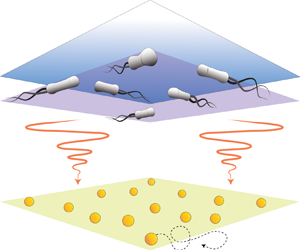
Floating active carpets drive transport and aggregation in aquatic ecosystems
-
- Journal:
- Journal of Fluid Mechanics / Volume 995 / 25 September 2024
- Published online by Cambridge University Press:
- 23 September 2024, A16
-
- Article
-
- You have access
- Open access
- HTML
- Export citation

Triglobal resolvent-analysis-based control of separated flows around low-aspect-ratio wings
-
- Journal:
- Journal of Fluid Mechanics / Volume 995 / 25 September 2024
- Published online by Cambridge University Press:
- 20 September 2024, A13
-
- Article
-
- You have access
- Open access
- HTML
- Export citation
-
We perform direct numerical simulations of actively controlled laminar separated wakes around low-aspect-ratio wings with two primary goals: (i) reducing the size of the separation bubble and (ii) attenuating the wing tip vortex. Instead of preventing separation, we modify the three-dimensional (3-D) dynamics to exploit wake vortices for aerodynamic enhancements. A direct wake modification is considered using optimal harmonic forcing modes from triglobal resolvent analysis. For this study, we consider wings at angles of attack of $14^\circ$ and $22^\circ$, taper ratios $0.27$ and $1$, and leading edge sweep angles of $0^\circ$ and $30^\circ$, at a mean-chord-based Reynolds number of $600$. The wakes behind these wings exhibit 3-D reversed-flow bubble and large-scale vortical structures. For tapered swept wings, the diversity of wake vortices increases substantially, posing a challenge for flow control. To achieve the first control objective for an untapered unswept wing, root-based actuation at the shedding frequency is introduced to reduce the reversed-flow bubble size by taking advantage of the wake vortices to significantly enhance the aerodynamic performance of the wing. For both untapered and tapered swept wings, root-based actuation modifies the stalled flow, reduces the reversed-flow region and enhances aerodynamic performance by increasing the root contribution to lift. For the goal of controlling the tip vortex, we demonstrate the effectiveness of actuation with high-frequency perturbations near the tip. This study shows how insights from resolvent analysis for unsteady actuation can enable global modification of 3-D separated wakes and achieve improved aerodynamics of wings.


Linear stability analysis of generalized Couette–Poiseuille flow: the neutral surface and critical properties
-
- Journal:
- Journal of Fluid Mechanics / Volume 995 / 25 September 2024
- Published online by Cambridge University Press:
- 20 September 2024, R3
-
- Article
- Export citation
-
We discuss the modal, linear stability analysis of generalized Couette–Poiseuille (GCP) flow between two parallel plates moving with relative speed in the presence of an applied pressure gradient vector inclined at an angle $0\leqslant \phi \leqslant 90^\circ$ to the plate relative velocity vector. All possible GCP flows can be described by a global Reynolds number $Re$,
$Re$,  $\phi$ and an angle $0\leqslant \theta \leqslant 90^\circ$, where $\cos \theta$ is a measure of the relative weighting of Couette flow to the composite GCP flow. This provides a novel and uncommon group of generally three-dimensional base velocity fields with wall-normal twist, for which Squire's theorem does not generally apply, requiring study of oblique perturbations with wavenumbers $(\alpha,\beta )$. With $(\theta,\phi )$ fixed, the neutral surface $f(\theta,\phi ;Re,\alpha,\beta )=0$ in $(Re, \alpha,\beta )$ space is discussed. A mapping from GCP to plane Couette–Poiseuille flow stability is found that suggests a scaling relation $Re^*\alpha /k = H(\theta ^*)$ that collapses all critical parameters, where ${Re}^*= Re\,({\alpha _1}/{\alpha })\,({\sin \theta }/{\sin {\theta }^*})$ and $\tan \theta ^*=({\alpha _{1}}/\alpha )\tan \theta$, with $\alpha _1=\alpha \cos \phi +\beta \sin \phi$. This analysis does not, however, directly reveal global critical properties for GCP flow. The global $Re_{cr}(\theta,\phi )$ shows continuous variation, while $\alpha _{cr}(\theta,\phi )$ and $\beta _{cr}(\theta,\phi )$ show complex behaviour, including discontinuities owing to jumping of critical states across neighbouring local valleys (in $Re$) or lobes of the neutral surface. The discontinuity behaviour exists for all low $\phi$. For $\phi \gtrsim 21^\circ$, variations of $\alpha _{cr}(\theta )$ and $\beta _{cr}(\theta )$ are generally smooth and monotonic.


The dusty aftermath of a rapid nova: V5579 Sgr
-
- Journal:
- Publications of the Astronomical Society of Australia / Volume 41 / 2024
- Published online by Cambridge University Press:
- 20 September 2024, e051
-
- Article
- Export citation
-
V5579 Sgr was a fast nova discovered in 2008 April 18.784 UT. We present the optical spectroscopic observations of the nova observed from the Castanet Tolosan, SMARTS, and CTIO observatories spanning over 2008 April 23 to 2015 May 11. The spectra are dominated by hydrogen Balmer, Fe II, and O I lines with P-Cygni profiles in the early phase, typical of an Fe II class nova. The spectra show He I and He II lines along with forbidden lines from N, Ar, S, and O in the nebular phase. The nova showed a pronounced dust formation episode that began about 20 days after the outburst. The dust temperature and mass were estimated using the WISE data from spectral energy distribution (SED) fits. The PAH-like features are also seen in the nova ejecta in the mid-infrared Gemini spectra taken 522 d after the discovery. Analysis of the light curve indicates values of $t_2$ and $t_3$ about 9 and 13 days, respectively, placing the nova in the category of fast nova. The best-fit cloudy model of the early decline phase JHK spectra obtained on 2008 May 3 and the nebular optical spectrum obtained on 2011 June 2 shows a hot white dwarf source with $T_{BB}$ $\sim$ 2.6 $\times$ 10 $^5$ K having a luminosity of 9.8 $\times$ 10 $^{36}$ ergs s $^{-1}$. Our abundance analysis shows that the ejecta is significantly enhanced relative to solar, O/H = 32.2, C/H = 15.5, and N/H = 40.0 in the early decline phase and O/H = 5.8, He/H = 1.5, and N/H = 22.0 in the nebular phase.


Stellarator equilibrium axis-expansion to all orders in distance from the axis for arbitrary plasma beta
-
- Journal:
- Journal of Plasma Physics / Volume 90 / Issue 4 / August 2024
- Published online by Cambridge University Press:
- 20 September 2024, 905900407
-
- Article
-
- You have access
- Open access
- HTML
- Export citation

Entrainment in variable-density jets
-
- Journal:
- Journal of Fluid Mechanics / Volume 995 / 25 September 2024
- Published online by Cambridge University Press:
- 20 September 2024, A11
-
- Article
- Export citation
-
The entrainment of ambient fluid into a variable-density jet is typically quantified using an entrainment coefficient $\alpha$. Here, we investigate the dependence of $\alpha$ on the ratio of the jet's density $\rho _m$ and that of the ambient fluid $\rho _0$. Current parametrisations of $\alpha$ rely on a scaling inferred from early laboratory experiments (Ricou & Spalding, J. Fluid Mech., vol. 11, 1961, pp. 21–32). We demonstrate analytically that the experiments preclude definitive conclusions regarding the dependence of $\alpha$ on $\rho _m / \rho _0$ and that the underlying physical processes therefore warrant closer attention. To investigate the physics behind the dependence of entrainment on the density ratio we use a Favre-averaged entrainment decomposition. The decomposition is applied to data from large-eddy simulations of jets characterised by density ratios $\rho _m / \rho _0$ spanning over two orders of magnitude that have been verified against experimental data. Changes in the shape of the velocity profile are a significant contributor to entrainment in the near field due to the breakdown of the potential core, and persist over larger streamwise distances in heavy releases than in light releases. Therefore, to focus exclusively on the effects of density ratio, we study the region where the shape changes have become small but the density ratio is still significant. We show that the dimensionless turbulent kinetic energy production and mean kinetic energy flux depend strongly on the density ratio, both for our large-eddy simulation data and for recent experiments. Despite this, the entrainment coefficient is practically constant in this region and has value $\alpha \approx 0.07$ for all simulations.


Heat-transfer effects in compressible turbulent boundary layers – a regime diagram
-
- Journal:
- Journal of Fluid Mechanics / Volume 995 / 25 September 2024
- Published online by Cambridge University Press:
- 20 September 2024, A14
-
- Article
-
- You have access
- Open access
- HTML
- Export citation
-
As shown by Wenzel et al. (J. Fluid Mech., vol. 930, 2022, A1), the Eckert number $Ec$ defined using the difference between recovery temperature $\bar{T}_r$ and wall temperature $\bar{T}_w$ can be understood as a meaningful quantity to compare heat-transfer effects inside compressible turbulent boundary layers (for a calorically perfect gas), no matter whether these are caused by different Mach-number or wall-temperature conditions. While the named study deduced this comparative behaviour of $Ec$ from an integral perspective in a strict sense, Cogo et al. (J. Fluid Mech., vol. 974, 2023, A10) performed a systematic parameter study based on the previous findings to look at wall-normal profiles. They have shown that the diabatic parameter $\varTheta$, being equivalent to $Ec$, is capable of categorizing heat-transfer effects for cases at different Mach numbers, even to some extent for some of the wall-normal profiles. Building on this progress, the present paper provides a comprehensive classification of both existing and newly computed super- and hypersonic direct numerical simulation data at various wall temperature conditions into heated cases, adiabatic cases or weakly/moderately/strongly/quasi-incompressibly cooled cases. Hereby, the classification is largely based on the wall-normal position of the temperature peak occurring in cooled boundary-layer cases, which is one of the determining factors for the topological characteristics of diabatic boundary-layer profiles. Integrating high-enthalpy data into the analysis allowed us to confirm the reliability of the proposed classification also in more complex scenarios, where the calorically perfect gas assumption no longer applies and additional heat-transfer mechanisms come into play. While the Eckert number is shown to well characterize heat-transfer effects on most important temperature-related quantities for a wide range of Mach numbers and $\bar {T}_w/\bar {T}_r$ conditions, also the local Reynolds number $Re_{\tau }$ is shown to notably affect the strength of heat-transfer effects. Since both $Ec$ and $Re_{\tau }$ can be determined in advance – or estimated to a reasonable extent – a key advantage of the classification scheme is to allow for an effective a priori estimation of the extent to which heat-transfer effects are to be expected for a given compressible turbulent boundary-layer configuration.


Instability dynamics of viscous fingering interaction on dual displacement fronts
-
- Journal:
- Journal of Fluid Mechanics / Volume 995 / 25 September 2024
- Published online by Cambridge University Press:
- 20 September 2024, A5
-
- Article
-
- You have access
- Open access
- HTML
- Export citation

Revisiting Brenner's method for Stokes resistance of a deformed sphere
-
- Journal:
- Journal of Fluid Mechanics / Volume 994 / 10 September 2024
- Published online by Cambridge University Press:
- 20 September 2024, A17
-
- Article
-
- You have access
- Open access
- HTML
- Export citation
Effect of the magnetic field strength on the argon plasma characteristics of a helicon plasma source with a two-turn flat-loop antenna
- Part of
-
- Journal:
- Journal of Plasma Physics / Volume 90 / Issue 4 / August 2024
- Published online by Cambridge University Press:
- 20 September 2024, 975900401
-
- Article
- Export citation
-
New plasma applications in advanced fields, such as fundamental nuclear fusion research, require high-density, large-diameter plasma with a strong and non-uniform magnetic field. A helicon plasma (HP) source using a flat-type antenna is expected to be one of the promising methods for such applications. In this study, we developed an HP source with a two-turn flat-loop antenna connected to a 30 kW radio frequency power supply in the Compact Test Plasma device. In the argon plasma generation experiment with various magnetic fields, HP generation was observed for the first time in this device. The electron density was calculated from the dispersion relation with the magnetic field strength at 45 cm from the antenna surface, assuming a fundamental radial mode and an azimuthal mode of $m=0$
 . The electron density expected from the experimental result was approximately in the same range as the calculation result by a factor of 2.3 to 3.5. In addition, the magnetic field strength and shape around the antenna are important factors in the plasma properties. This plasma source has been installed in the pilot GAMMA PDX-SC, which is under development for nuclear plasma research, and it contributes to the study of the HP generation process.

A numerical study of gravity-driven instability in strongly coupled dusty plasma. Part 3. Homo-interaction between a pair of rising/falling bubbles/droplets
-
- Journal:
- Journal of Plasma Physics / Volume 90 / Issue 4 / August 2024
- Published online by Cambridge University Press:
- 20 September 2024, 905900408
-
- Article
- Export citation

Effect of degassing on bubble populations in air-entraining free-surface turbulent flows
-
- Journal:
- Journal of Fluid Mechanics / Volume 995 / 25 September 2024
- Published online by Cambridge University Press:
- 20 September 2024, A12
-
- Article
- Export citation
-
We investigate air-entraining flows where degassing, rather than fragmentation, plays a significant role. Of interest is the power-law slope $\beta$ of the bulk bubble size distribution $N(a)$ during the air-generating period, when the total volume of bubbles is increasing. We study a canonical air-entraining flow created by strong underlying free-surface turbulence. We perform analysis using the population balance equation (PBE) and computations using direct numerical simulations (DNS) with bubble tracking. We quantify the importance of degassing by the ratio of degassing flux ( $Q_D$) to entrainment flux ( $Q_I$), $\mathcal {D}=Q_D/Q_I$, and the ratio of degassing rate ( $\varLambda (a)$) to fragmentation rate ( $\varOmega (a)$) for a bubble of radius $a$,
$a$,  $\varLambda (a)/\varOmega (a)$. For a broad range of large Froude numbers ${{Fr}}=U/\sqrt {L g}$, DNS give $\mathcal {D}=\operatorname {O}(1)$ (independent of ${{Fr}}$), showing that degassing is relevant, and $\varLambda (a) \gg \varOmega (a)$, showing that the bubble population is degassing-dominated. In contrast to fragmentation-dominated populations, such as those due to wave breaking, where $\beta =-10/3$, degassing-dominated populations have qualitatively different $N(a)$ during air entrainment. Analysis using the PBE shows that degassing-dominated $\beta$ is a function of $\varLambda (a)$, which has a turbulence-driven regime ( $a< a_\varLambda$) and a buoyancy-driven regime ( $a>a_\varLambda$). Here, $a_\varLambda$ is the bubble radius where terminal buoyant rise velocity equals $u_{rms}$. Consequently, $N(a)$ exhibits a split power with $\beta (a< a_\varLambda )=-4.\bar {3}$ and $\beta (a>a_\varLambda )=-5.8\bar {3}$ for moderate bubble Reynolds numbers ${{Re}}_b$. For large ${{Re}}_b$, $\beta (a>a_\varLambda )=-4.8\bar {3}$. The DNS strongly confirm these findings for moderate ${{Re}}_b$. By identifying and describing degassing-dominated bubble populations, this work contributes to the understanding and interpretation of broad types of air-entraining problems where degassing plays a relevant role.


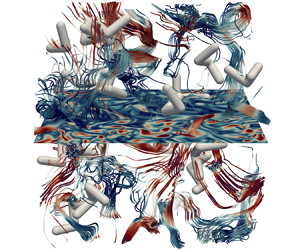
Particle chirality does not matter in the large-scale features of strong turbulence
-
- Journal:
- Journal of Fluid Mechanics / Volume 995 / 25 September 2024
- Published online by Cambridge University Press:
- 20 September 2024, A10
-
- Article
-
- You have access
- Open access
- HTML
- Export citation
Increasing the detectability of long-period and nulling pulsars in next-generation pulsar surveys
-
- Journal:
- Publications of the Astronomical Society of Australia / Volume 41 / 2024
- Published online by Cambridge University Press:
- 19 September 2024, e046
-
- Article
-
- You have access
- Open access
- HTML
- Export citation
-
Recent discoveries of multiple long-period pulsars (periods ${\sim}10\,$s or larger) are starting to challenge the conventional notion that coherent radio emission cannot be produced by objects that are below the many theorised death lines. Many of the past pulsar surveys and software have been prone to selection effects that restricted their sensitivities towards long-period and sporadically emitting objects. Pulsar surveys using new-generation low-frequency facilities are starting to employ longer dwell times, which makes them significantly more sensitive in detecting long-period or nulling pulsars. There have also been software advancements to aid more sensitive searches towards long-period objects. Furthermore, recent discoveries suggest that nulling may be a key aspect of the long-period pulsar population. We simulate both long-period and nulling pulsar signals, using the Southern-sky MWA Rapid Two-meter (SMART) survey data as reference and explore the detection efficacy of popular search methods such as the fast Fourier transform (FFT), fast-folding algorithm (FFA) and single pulse search (SPS). For FFT-based search and SPS, we make use of the PRESTO implementation, and for FFA we use RIPTIDE. We find RIPTIDE’s FFA to be more sensitive; however, it is also the slowest algorithm. PRESTO’s FFT, although faster than others, also shows some unexpected inaccuracies in detection properties. SPS is highly sensitive to long-period and nulling signals, but only for pulses with high intrinsic signal-to-noise ratios. We use these findings to inform current and future pulsar surveys that aim to uncover a large population of long-period or nulling objects and comment on how to make optimal use of these methods in unison.


Parametric oscillations of the sessile drop
-
- Journal:
- Journal of Fluid Mechanics / Volume 995 / 25 September 2024
- Published online by Cambridge University Press:
- 19 September 2024, A3
-
- Article
-
- You have access
- Open access
- HTML
- Export citation
-
Waves are formed on the surface of a sessile drop driven through substrate vibrations oriented at a slanting angle from the normal. A mathematical model is derived, which leads to an infinite system of coupled Mathieu equations governing the wave dynamics that are solved using Floquet theory. The spatial structure of the waves is described by the mode number pair $[\ell,m]$, where $\ell$ and $m$ are the polar and azimuthal mode numbers, respectively. Limiting cases corresponding to horizontal and vertical vibrations are discussed with predictions agreeing well with prior literature. We focus our results on three drop motions – (1) harmonic $[1,1]$ rocking mode, (2) harmonic $[2,0]$ pumping mode, and (3) subharmonic rocking $[1,1]$ mode – as they depend upon the slanting angle, static contact angle, and contact-line conditions, which we assume to be either pinned or freely moving with fixed contact angle. New theoretical predictions are tested through experiments over a range of parameters, showing good agreement.


Self-similarity and the direct (enstrophy) cascade in forced two-dimensional fluid turbulence
-
- Journal:
- Journal of Fluid Mechanics / Volume 995 / 25 September 2024
- Published online by Cambridge University Press:
- 19 September 2024, A4
-
- Article
-
- You have access
- Open access
- HTML
- Export citation
-
In the absence of large-scale coherent structures, a widely used statistical theory of two-dimensional turbulence developed by Kraichnan, Leith, and Batchelor (KLB) predicts a power-law scaling for the energy, $E(k)\propto k^\alpha$ with an integral exponent $\alpha ={-3}$, in the inertial range associated with the direct cascade. A power-law scaling is also observed in the presence of coherent structures, but the scaling exponent becomes fractal and often differs substantially from the value predicted by the KLB theory. Here we present a dynamical theory that sheds new light on the relationship between the spatial and temporal structure of the large-scale flow and the scaling of small-scale structures representing filamentary vorticity. Specifically, we find hyperbolic regions of the large-scale flow to play a key role in the flux of enstrophy between scales. Small-scale vorticity in these regions can be described by dynamically self-similar solutions of the Euler equation, which explains the power-law scaling. Furthermore, we find that correlations between different hyperbolic regions are responsible for the emergence of fractal scaling exponents.


Instabilities and particle-induced patterns in co-rotating suspension Taylor–Couette flow
-
- Journal:
- Journal of Fluid Mechanics / Volume 995 / 25 September 2024
- Published online by Cambridge University Press:
- 19 September 2024, R4
-
- Article
- Export citation
-
The first experimental results on pattern transitions in the co-rotation regime (i.e. the rotation ratio $\varOmega = \omega _o/\omega _i > 0$, where $\omega _i$ and $\omega _o$ are the angular speeds of the inner and outer cylinders, respectively) of the Taylor–Couette flow (TCF) are reported for a neutrally buoyant suspension of non-colloidal particles, up to a particle volume fraction of $\phi = 0.3$. While the stationary Taylor vortex flow (TVF) is the primary bifurcating state in dilute suspensions ( $\phi \leq ~0.05$), the non-axisymmetric oscillatory states, such as the spiral vortex flow (SVF) and the ribbon (RIB), appear as primary bifurcations with increasing particle loading, with an overall de-stabilization of the primary bifurcating states (TVF/SVF/RIB) being found with increasing $\phi$ for all $\varOmega \geq ~0$. At small co-rotations ( $\varOmega \sim 0$), the particles play the dual role of stabilization ( $\phi < 0.1$) and destabilization ( $\phi \geq ~0.1$) on the secondary/tertiary oscillatory states. The distinctive features of the ‘particle-induced’ spiral vortices are identified and contrasted with those of the ‘fluid-induced’ spirals that operate in the counter-rotation regime.


Multi-band optical variability on diverse timescales of blazar 1E 1458.8+2249
-
- Journal:
- Publications of the Astronomical Society of Australia / Volume 41 / 2024
- Published online by Cambridge University Press:
- 19 September 2024, e052
-
- Article
- Export citation
-
This study presents an analysis of the optical variability of the blazar 1E 1458.8+2249 on diverse timescales using multi-band observations, including observations in the optical BVRI bands carried out with the T60 and T100 telescopes from 2020 to 2023 and ZTF gri data from 2018 to 2023. On seven nights, we searched for intraday variability using the power-enhanced F-test and the nested ANOVA test, but no significant variability was found. The long-term light curve shows a variability behaviour in the optical BVRI bands with amplitudes of $\sim$100% and in the gri bands with amplitudes of $\sim$120%, including short-term variability of up to $\sim$1.1 mag. Correlation analysis revealed a strong correlation between the optical multi-band emissions without any time lag. From 62 nightly spectral energy distributions, we obtained spectral indices between 0.826 and 1.360, with an average of $1.128\pm0.063$. The relationships of both spectral indices and colour with respect to brightness indicate a mild BWB trend throughout the observation period, both intraday and long-term. We also performed a periodicity search using the weighted wavelet Z-transform and Lomb–Scargle methods. A recurrent optical emission pattern with a quasi-periodicity of $\sim$340 days is detected in the combined V- and R-band light curves. The observational results indicate that the blazar 1E 1458.8+2249 has a complex variability, while emphasising the need for future observations to unravel its underlying mechanisms.


Swirling electrolyte. Part 2. Secondary circulation and its stability
-
- Journal:
- Journal of Fluid Mechanics / Volume 995 / 25 September 2024
- Published online by Cambridge University Press:
- 19 September 2024, A8
-
- Article
-
- You have access
- Open access
- HTML
- Export citation
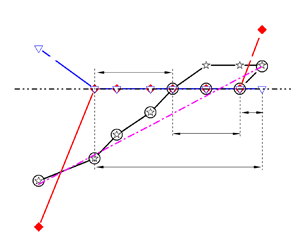
Fluid–acoustic–structure resonance mechanism of a plane cascade via a low-speed wind tunnel test
-
- Journal:
- Journal of Fluid Mechanics / Volume 995 / 25 September 2024
- Published online by Cambridge University Press:
- 19 September 2024, A7
-
- Article
-
- You have access
- Open access
- HTML
- Export citation
