Refine search
Actions for selected content:
238152 results in Physics and Astronomy
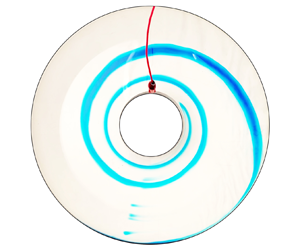
Magneto-Stokes flow in a shallow free-surface annulus
-
- Journal:
- Journal of Fluid Mechanics / Volume 996 / 10 October 2024
- Published online by Cambridge University Press:
- 01 October 2024, A33
-
- Article
-
- You have access
- Open access
- HTML
- Export citation
SkyMapper Southern Survey: Data release 4
-
- Journal:
- Publications of the Astronomical Society of Australia / Volume 41 / 2024
- Published online by Cambridge University Press:
- 01 October 2024, e061
-
- Article
-
- You have access
- Open access
- HTML
- Export citation
-
We present the fourth data release (DR4) of the SkyMapper Southern Survey (SMSS), the last major step in our hemispheric survey with six optical filters: u, v, g, r, i, z. SMSS DR4 covers 26 000 deg $^{2}$ from over 400 000 images acquired by the 1.3 m SkyMapper telescope between 2014-03 and 2021-09. The 6-band sky coverage extends from the South Celestial Pole to $\delta=+16^{\circ}$, with some images reaching $\delta\sim +28^{\circ}$. In contrast to previous DRs, we include all good-quality images from the facility taken during that time span, not only those explicitly taken for the public Survey. From the image dataset, we produce a catalogue of over 15 billion detections made from $\sim$700 million unique astrophysical objects. The typical 10 $\sigma$ depths for each field range between 18.5 and 20.5 mag, depending on the filter, but certain sky regions include longer exposures that reach as deep as 22 mag in some filters. As with previous SMSS catalogues, we have cross-matched with a host of other imaging and spectroscopic datasets to facilitate additional science outcomes. SMSS DR4 is now available to the worldwide astronomical community.


Threshold transient growth as a criterion for turbulent mean profiles
-
- Journal:
- Journal of Fluid Mechanics / Volume 996 / 10 October 2024
- Published online by Cambridge University Press:
- 01 October 2024, A32
-
- Article
-
- You have access
- Open access
- HTML
- Export citation
-
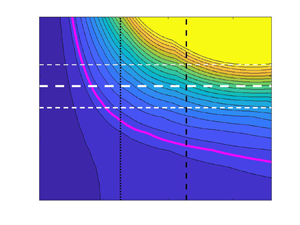
Lozano-Duran et al. (J. Fluid Mech., vol. 914, 2021, p. A8) have recently identified the ability of streamwise-averaged turbulent streak fields ${\mathcal {U}}(y,z,t)\hat {\boldsymbol {x}}$ in minimal channels to produce short-term transient growth as the key linear mechanism needed to sustain turbulence at $Re_{\tau }=180$. Here, in an attempt to extend this result to larger domains and higher $Re_{\tau }$, we model this streak transient growth as a two-stage linear process by first selecting the dominant streak structure expected to emerge over the eddy turnover time on the turbulent mean profile $U(y)\hat {\boldsymbol {x}}$, and then examining the secondary growth on this (frozen) streak field ${\mathcal {U}}(y,z)\hat {\boldsymbol {x}}$. Choosing the mean streak amplitude and eddy turnover time consistent with simulations captures the growth thresholds found by Lozano-Duran et al. (2021) for sustained turbulence. In a larger domain at $Re_{\tau }=180$, the most energetic near-wall streaks observed in simulations are close to the predicted optimal streaks. This most energetic streak spacing, approaches the optimal streak at $Re_{\tau }=550$ where the secondary growth possible on each also comes together. A key prediction from the model is that the threshold transient growth required to sustain turbulence decreases with increasing $Re_{\tau }$. More fundamentally, the work of Lozano-Duran et al. (2021) and our results suggest a subtle but significant revision of Malkus's (J. Fluid Mech., vol. 1, 1956, pp. 521–539) classic hypothesis concerning realisable turbulent mean profiles. The key property for a realisable turbulent mean profile could be the ability to generate sufficient short-term transient growth rather than dependence on its (long-term) linear stability characteristics, which was Malkus's original idea.


Drawing of fibres composed of shear-thinning or shear-thickening fluid with internal holes
-
- Journal:
- Journal of Fluid Mechanics / Volume 996 / 10 October 2024
- Published online by Cambridge University Press:
- 01 October 2024, A36
-
- Article
-
- You have access
- Open access
- HTML
- Export citation
-
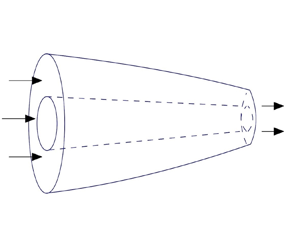
We explore the drawing of a shear-thinning or shear-thickening thread with an axisymmetric hole that evolves due to axial drawing, inertia and surface tension effects. The stress is assumed to be proportional to the shear rate raised to the $n$th power. The presence of non-Newtonian rheology and surface tension forces acting on the hole introduces radial pressure gradients that make the derivation of long-wavelength equations significantly more challenging than either a Newtonian thread with a hole or shear-thinning and shear-thickening threads without a hole. In the case of weak surface tension, we determine the steady-state profiles. Our results show that for negligible inertia the hole size at the exit becomes smaller as $n$ is decreased (i.e. strong shear-thinning effects) above a critical draw ratio, but surprisingly the opposite is true below this critical draw ratio. We determine an accurate estimate of the critical draw ratio and also discuss how inertia affects this process. We further show that the dynamics of hole closure is dominated by a different limit, and we determine the asymptotic forms of the hole closure process for shear-thinning and shear-thickening fluids with inertia. A linear instability analysis is conducted to predict the onset of draw resonance. We show that increased shear thinning, surface tension and inlet hole size all act to destabilise the flow. We also show that increasing shear-thinning effects reduce the critical Reynolds number required for unconditional stability. Our study provides valuable insights into the drawing process and its dependence on the physical effects.


Asymmetric instability of flow-induced vibration for elastically mounted cube at moderate Reynolds numbers
-
- Journal:
- Journal of Fluid Mechanics / Volume 996 / 10 October 2024
- Published online by Cambridge University Press:
- 01 October 2024, A34
-
- Article
-
- You have access
- Open access
- HTML
- Export citation
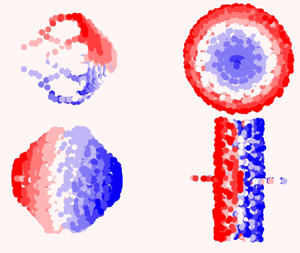
Actuation manifold from snapshot data
-
- Journal:
- Journal of Fluid Mechanics / Volume 996 / 10 October 2024
- Published online by Cambridge University Press:
- 30 September 2024, A26
-
- Article
-
- You have access
- Open access
- HTML
- Export citation
-
We propose a data-driven methodology to learn a low-dimensional manifold of controlled flows. The starting point is resolving snapshot flow data for a representative ensemble of actuations. Key enablers for the actuation manifold are isometric mapping as encoder, and a combination of a neural network and a $k$-nearest-neighbour interpolation as decoder. This methodology is tested for the fluidic pinball, a cluster of three parallel cylinders perpendicular to the oncoming uniform flow. The centres of these cylinders are the vertices of an equilateral triangle pointing upstream. The flow is manipulated by constant rotation of the cylinders, i.e. described by three actuation parameters. The Reynolds number based on a cylinder diameter is chosen to be $30$. The unforced flow yields statistically symmetric periodic shedding represented by a one-dimensional limit cycle. The proposed methodology yields a five-dimensional manifold describing a wide range of dynamics with small representation error. Interestingly, the manifold coordinates automatically unveil physically meaningful parameters. Two of them describe the downstream periodic vortex shedding. The other three describe the near-field actuation, i.e. the strength of boat-tailing, the Magnus effect and forward stagnation point. The manifold is shown to be a key enabler for control-oriented flow estimation.


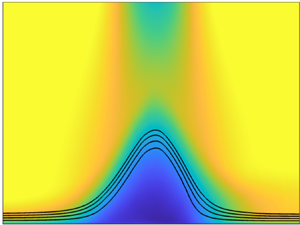
A generalized wall-pressure spectral model for non-equilibrium boundary layers
-
- Journal:
- Journal of Fluid Mechanics / Volume 996 / 10 October 2024
- Published online by Cambridge University Press:
- 30 September 2024, A27
-
- Article
-
- You have access
- Open access
- HTML
- Export citation
-
This study uses high-fidelity simulations (direct numerical simulation or large-eddy simulation) and experimental datasets to analyse the effect of non-equilibrium streamwise mean pressure gradients (adverse or favourable), including attached and separated flows, on the statistics of boundary-layer wall-pressure fluctuations. The datasets collected span a wide range of Reynolds numbers ( $Re_\theta$ from 300 to 23 400) and pressure gradients (Clauser parameter from $-0.5$ to 200). The datasets are used to identify an optimal set of variables to scale the wall-pressure spectrum: edge velocity, boundary layer thickness and the peak magnitude of Reynolds shear stress. Using the present datasets, existing semi-empirical models of the wall-pressure spectrum are shown unable to capture effects of strong, non-equilibrium adverse pressure gradients, due to inappropriate scaling of the wall pressure using the wall shear stress, calibration with limited types of flows and dependency on model parameters based on the friction velocity, which reduces to zero at the detachment point. To address these shortcomings, a generalized wall-pressure spectral model is developed with parameters that characterize the extent of the logarithmic layer and the strength of the wake. Derived from the local mean streamwise velocity profile, these two parameters inherently carry the effect of the Reynolds number, as well as those of the non-equilibrium pressure gradient and its history. Comparison with existing models shows that the proposed model behaves well and is more accurate in strong-pressure-gradient flows and in separated-flow regions.


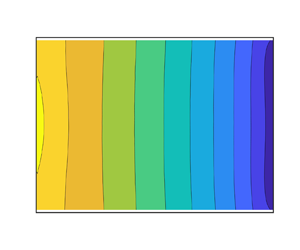
Scale dependence and non-isochoric effects on the thermohydrodynamics of rarefied Poiseuille flow
-
- Journal:
- Journal of Fluid Mechanics / Volume 996 / 10 October 2024
- Published online by Cambridge University Press:
- 30 September 2024, A30
-
- Article
- Export citation
-
The plane Poiseuille flow of a rarefied gas in a finite length channel, driven by an axial pressure gradient, is analysed numerically to probe (i) the role of ‘dilatation’ ( $\varDelta ={\boldsymbol \nabla }\boldsymbol {\cdot }{\boldsymbol u}\neq 0$) on its thermohydrodynamics as well as to clarify (ii) the possible equivalence with its well-studied ‘dilatation-free’ or ‘isochoric’ ( ${\rm D}\rho /{\rm D}t=0$) counterpart driven by a constant acceleration. Focussing on the mass flow rate ${\mathcal {M}}({Kn})$, which is an invariant quantity for both pressure-driven and acceleration-driven Poiseuille flows, it is shown that while ${\mathcal {M}}\sim \log {{Kn}}$ at ${Kn}\gg 1$ in the acceleration-driven case, the mass flow saturates to a constant value ${\mathcal {M}}\sim {{Kn}}^0$ at ${Kn}\gg 1$ in the pressure-driven case due to the finite length ( $L_x<\infty$) of the channel. The latter result agrees with prior theory and recent experiments, and holds irrespective of the magnitude of the axial pressure gradient ( $G_p$). The pressure-dilatation cooling ( $\varPhi _p=-p\varDelta <0$) is shown to be responsible for the absence of the bimodal shape of the temperature profile in the pressure-driven Poiseuille flow. The dilatation-driven reduction of the shear viscosity and the odd signs of two normal stress differences ( ${\mathcal {N}}_1$ and ${\mathcal {N}}_2$) in the pressure-driven flow in comparison with those in its acceleration-driven counterpart are explained from the Burnett-order constitutive relations for the stress tensor. While both ${\mathcal {N}}_1$ and ${\mathcal {N}}_2$ appear at the Burnett order $O({{Kn}}^2)$ in the acceleration-driven flow, the leading term in ${\mathcal N}_1$ scales as $(\mu/p)\varDelta$ due to the non-zero dilatation in the pressure-driven Poiseuille flow which confirms that the two flows are not equivalent even at the Navier–Stokes–Fourier order $O({{Kn}})$. The heat-flow rate ( ${{\mathcal {Q}}_q}_x=\int q_x(x,y) \,{{\rm d} y}$) of the tangential heat flux is found to be negative (i.e. directed against the axial pressure gradient), in contrast to its positive asymptotic value (at ${Kn}\gg 1$) in the acceleration-driven flow. Similar to the scale-dependence of the mass flow rate, ${{\mathcal {Q}}_q}_x({{Kn}}, L_x)$ is found to saturate to a constant value at ${Kn}\gg 1$ in finite length channels. The double-well shape of the $q_x(y)$-profile in the near-continuum limit agrees well with predictions from a generalized Fourier law. On the whole, the dilatation-driven signatures (such as the pressure-dilatation work and the ‘normal’ shear-rate differences) are shown to be the progenitor for the observed differences between the two flows with regard to (i) the hydrodynamic fields, (ii) the rheology and (iii) the flow-induced heat transfer.


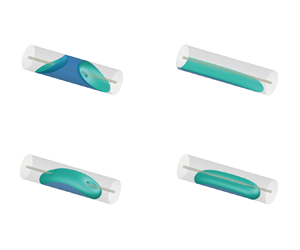
Multistability of a long droplet in a capillary tube under transverse body force
-
- Journal:
- Journal of Fluid Mechanics / Volume 996 / 10 October 2024
- Published online by Cambridge University Press:
- 30 September 2024, A28
-
- Article
- Export citation
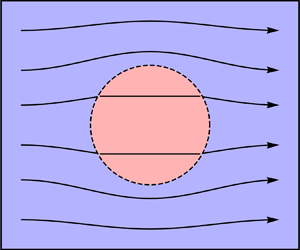
Flow manipulation of a nematic liquid crystal in a Hele-Shaw cell with an electrically controlled viscous obstruction
-
- Journal:
- Journal of Fluid Mechanics / Volume 996 / 10 October 2024
- Published online by Cambridge University Press:
- 30 September 2024, R1
-
- Article
-
- You have access
- Open access
- HTML
- Export citation
First detection of X-ray pulsations and spectrum of the high Galactic latitude pulsar PSR J0837–2454 and direct Urca cooling implications
-
- Journal:
- Publications of the Astronomical Society of Australia / Volume 41 / 2024
- Published online by Cambridge University Press:
- 30 September 2024, e066
-
- Article
-
- You have access
- Open access
- HTML
- Export citation
-
PSR J0837 $-$2454 is a young 629 ms radio pulsar whose uncertain distance has important implications. A large distance would place the pulsar far out of the Galactic plane and suggest it is the result of a runaway star, while a short distance would mean the pulsar is extraordinarily cold. Here we present further radio observations and the first deep X-ray observation of PSR J0837 $-$2454. Data from the Parkes Murriyang telescope show flux variations over short and long timescales and also yield an updated timing model, while the position and proper motion (and, less strongly, parallax) of the pulsar are constrained by a number of low-significance detections with the Very Long Baseline Array. XMM-Newton data enable detection of X-ray pulsations for the first time from this pulsar and yield a spectrum that is thermal and blackbody-like, with a cool blackbody temperature $\approx$ $70\ \mbox{eV}$ or atmosphere temperature $\approx$ $50\ \mbox{eV}$, as well as a small hotspot. The spectrum also indicates the pulsar is at a small distance of $\lesssim$ $1\ \mbox{kpc}$, which is compatible with the marginal VLBA parallax constraint that favours a distance of $\gtrsim$330 pc. The low implied luminosity ( $\sim7.6\times10^{31}\mbox{erg\, s}^{-1}$ at 0.9 kpc) suggests PSR J0837 $-$2454 has a mass high enough that fast neutrino emission from direct Urca reactions operates in this young star and points to a nuclear equation of state that allows for direct Urca reactions at the highest densities present in neutron star cores.


Self-consistent effects in the ponderomotive acceleration of electron beams
-
- Journal:
- Journal of Plasma Physics / Volume 90 / Issue 4 / August 2024
- Published online by Cambridge University Press:
- 30 September 2024, 905900413
-
- Article
- Export citation
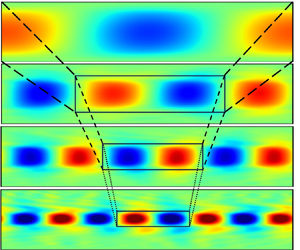
Nested travelling wave structures in elastoinertial turbulence
-
- Journal:
- Journal of Fluid Mechanics / Volume 993 / 25 August 2024
- Published online by Cambridge University Press:
- 30 September 2024, A8
-
- Article
-
- You have access
- Open access
- HTML
- Export citation
-
Elastoinertial turbulence (EIT) is a chaotic flow resulting from the interplay between inertia and viscoelasticity in wall-bounded shear flows. Understanding EIT is important because it is thought to set a limit on the effectiveness of turbulent drag reduction in polymer solutions. Here, we analyse simulations of two-dimensional EIT in channel flow using spectral proper orthogonal decomposition (SPOD), discovering a family of travelling wave structures that capture the sheetlike stress fluctuations that characterise EIT. The frequency-dependence of the leading SPOD mode contains distinct peaks and the mode structures corresponding to these peaks exhibit well-defined travelling structures. The structure of the dominant travelling mode exhibits shift–reflect symmetry similar to the viscoelasticity-modified Tollmien–Schlichting (TS) wave, where the velocity fluctuation in the travelling mode is characterised by large-scale regular structures spanning the channel and the polymer stress field is characterised by thin, inclined sheets of high polymer stress localised at the critical layers near the channel walls. The travelling structures corresponding to the higher-frequency modes have a very similar structure, but are nested in a region roughly bounded by the critical layer positions of the next-lower-frequency mode. A simple theory based on the idea that the critical layers of mode $\kappa$ form the ‘walls’ for the structure of mode $\kappa +1$ yields quantitative agreement with the observed wave speeds and critical layer positions, indicating self-similarity between the structures. The physical idea behind this theory is that the sheetlike localised stress fluctuations in the critical layer prevent velocity fluctuations from penetrating them.



Fluctuation-driven dynamics of liquid nano-threads with external hydrodynamic perturbations
-
- Journal:
- Journal of Fluid Mechanics / Volume 996 / 10 October 2024
- Published online by Cambridge University Press:
- 30 September 2024, A29
-
- Article
- Export citation
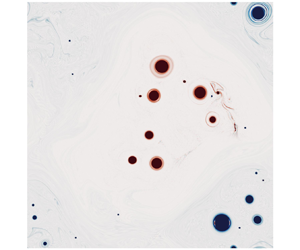
Multiple states of two-dimensional turbulence above topography
-
- Journal:
- Journal of Fluid Mechanics / Volume 994 / 10 September 2024
- Published online by Cambridge University Press:
- 30 September 2024, R2
-
- Article
-
- You have access
- Open access
- HTML
- Export citation
-
The recent work of Siegelman & Young (Proc. Natl Acad. Sci. USA, vol. 120, issue 44, 2023, e2308018120) revealed two extreme states reached by the evolution of unforced and weakly damped two-dimensional turbulence above random rough topography, separated by a critical kinetic energy $E_\#$. The low- and high-energy solutions correspond to topographically locked and roaming vortices, surrounded by non-uniform and homogeneous background potential vorticity (PV), respectively. However, we found that these phenomena are restricted to the particular intermediate length scale where the energy was initially injected into the system. Through simulations initialized by injecting the energy at larger and smaller length scales, we found that the long-term state of topographic turbulence is also dependent on the initial length scale and thus the initial enstrophy. If the initial length scale is comparable to the domain size, the long-term flow field resembles the minimum-enstrophy state proposed by Bretherton & Haidvogel (J. Fluid Mech., vol. 78, issue 1, 1976, pp. 129–154), with very few topographically locked vortices; the long-term enstrophy is quite close to the minimum value, especially when the energy is no larger than $E_\#$. As the initial length scale becomes smaller, more vortices nucleate and become more mobile; the long-term enstrophy increasingly deviates from the minimum value. Simultaneously, the background PV tends to homogenization, even if the energy is below $E_\#$. These results complement the phenomenology of topographic turbulence documented by Siegelman & Young, by showing that the minimum-enstrophy and background PV homogenization states can be adequately approached by large- and small-scale initial fields, respectively, with relatively arbitrary energy.


Why business adoption of quantum and AI technology must be ethical
-
- Journal:
- Research Directions: Quantum Technologies / Volume 2 / 2024
- Published online by Cambridge University Press:
- 30 September 2024, e4
-
- Article
-
- You have access
- Open access
- HTML
- Export citation
The multiple nature of CC Com: One of the ultra-short orbital period late-type contact binary systems
-
- Journal:
- Publications of the Astronomical Society of Australia / Volume 41 / 2024
- Published online by Cambridge University Press:
- 27 September 2024, e065
-
- Article
-
- You have access
- Open access
- HTML
- Export citation
-
The study of very short-period contact binaries provides an important laboratory in which the most important and problematic astrophysical processes of stellar evolution take place. Short-period contact systems, such as CC Com, are particularly important for binary evolution. Close binary systems, especially those with multiple system members, have significant period variations, angular momentum loss mechanisms predominance, and pre-merger stellar evolution, making them valuable astrophysical laboratories. In this study, observations of CC Com, previously reported as a binary system, and new observations from the TÜBİTAK National Observatory (TUG) and the space-based telescope TESS have revealed that there is a third object with a period of about eight years and a fourth object with a period of about a century orbiting the binary system. From simultaneous analysis of all available light curves and radial velocities, the sensitive orbital and physical parameters of the system components are derived. The orbital parameters of the components are P $_\mathrm{A}=0.2206868 \pm 0.0000002$ days, P $_\mathrm{B}=7.9\pm0.1$ yr, P $_\mathrm{C}=98\pm5$ yr, $e_3$ = 0.06, $e_4$ = 0.44 and the physical parameters as M $_\mathrm{A1}=0.712\pm0.009$ M $_{\odot}$, M $_\mathrm{ A2}=0.372\pm0.005$ M $_{\odot}$, $m_{B;i^{\prime}=90^\circ}=0.074$ M $_{\odot}$, $m_{C;i^{\prime}=90^\circ}=0.18$ M $_{\odot}$, R $_\mathrm{A1}=0.693\pm0.006$ R $_{\odot}$, R $_\mathrm{A2}=0.514\pm0.005$ R $_{\odot}$, L $_\mathrm{A1}$ = 0.103 L $_\odot$, L $_\mathrm{A2}$ = 0.081 L $_\odot$. Finally, the evolutionary status of the multiple system CC Com and its component stars is discussed.


Predicting the non-thermal pressure in galaxy clusters
-
- Journal:
- Publications of the Astronomical Society of Australia / Volume 41 / 2024
- Published online by Cambridge University Press:
- 27 September 2024, e064
-
- Article
-
- You have access
- Open access
- HTML
- Export citation
-
We investigate the relationship between a galaxy cluster’s hydrostatic equilibrium state, the entropy profile, K, of the intracluster gas, and the system’s non-thermal pressure (NTP), within an analytic model of cluster structures. When NTP is neglected from the cluster’s hydrostatic state, we find that the gas’ logarithmic entropy slope, $k\equiv \mathrm{d}\ln K/\mathrm{d}\ln r$, converges at large halocentric radius, r, to a value that is systematically higher than the value $k\simeq1.1$ that is found in observations and simulations. By applying a constraint on these ‘pristine equilibrium’ slopes, $k_\mathrm{eq}$, we are able to predict the required NTP that must be introduced into the hydrostatic state of the cluster. We solve for the fraction, $\mathcal{F}\equiv p_\mathrm{nt}/p$, of NTP, $p_\mathrm{nt}$, to total pressure, p, of the cluster, and we find $\mathcal{F}(r)$ to be an increasing function of halocentric radius, r, that can be parameterised by its value in the cluster’s core, $\mathcal{F}_0$, with this prediction able to be fit to the functional form proposed in numerical simulations. The minimum NTP fraction, as the solution with zero NTP in the core, $\mathcal{F}_0=0$, we find to be in excellent agreement with the mean NTP predicted in non-radiative simulations, beyond halocentric radii of $r\gtrsim0.7r_{500}$, and in tension with observational constraints derived at similar radii. For this minimum NTP profile, we predict $\mathcal{F}\simeq0.20$ at $r_{500}$, and $\mathcal{F}\simeq0.34$ at $2r_{500}$; this amount of NTP leads to a hydrostatic bias of $b\simeq0.12$ in the cluster mass $M_{500}$ when measured within $r_{500}$. Our results suggest that the NTP of galaxy clusters contributes a significant amount to their hydrostatic state near the virial radius and must be accounted for when estimating the cluster’s halo mass using hydrostatic equilibrium approaches.


Collisional damping of wave modes in ion–electron plasmas
-
- Journal:
- Journal of Plasma Physics / Volume 90 / Issue 4 / August 2024
- Published online by Cambridge University Press:
- 26 September 2024, 905900410
-
- Article
-
- You have access
- Open access
- HTML
- Export citation
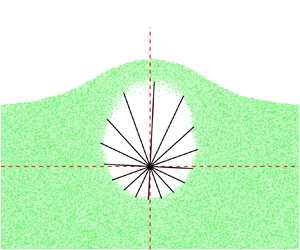
Closed equation model for cavity evolution in granular media
-
- Journal:
- Journal of Fluid Mechanics / Volume 996 / 10 October 2024
- Published online by Cambridge University Press:
- 26 September 2024, A15
-
- Article
- Export citation
-
Cavity evolution in granular media is crucial in explosion-driven gas–particle flows, particularly in many engineering applications. In this study, a theoretical model was first proposed to describe the cavity evolution in granular media by extending the classical Rayleigh–Plesset model. A closed equation set comprising the radius, pressure and gas leak-off velocity equations was built by considering the gas expansion and non-Darcy gas-penetration effects. Both centrally symmetric and non-centrally symmetric cases of gas injection into granular media were investigated. Especially for modelling the non-symmetric scenario, the radius and gas leak-off velocity equations were proposed in each radial direction with angle $\theta$, and then the pressure equation was built up based on the integral gas leak-off along the cavity outline. Through non-dimensionalizing the theoretical equations, four key dimensionless numbers $\varPi_1,\ \varPi_4$ were obtained to characterize the response time of cavity expansion and the intensity of non-Darcy effects for both cases. This allowed us to determine a scaling law of effective cavity radius $R_{eff}^*=\sqrt {2\varPi _2/(7{\rm \pi} )}t^{*1/2}$ and the critical time $t_{cr}^*=\sqrt {12.5/\varPi _1}$ for two-dimensional cavity evolution. Additionally, the necessity of incorporating non-Darcy effects was ascertained under conditions of $\varPi _4>400$. The findings demonstrate that the proposed theoretical equations effectively predict the cavity evolution results under various operational conditions ( $0.7<\varPi _1<7\times 10^2, 3<\varPi _4<1.1\times 10^3$), as validated by refined Euler–Lagrange numerical simulations.


