Refine search
Actions for selected content:
238152 results in Physics and Astronomy

Large-scale circulation reversals explained by pendulum correspondence
-
- Journal:
- Journal of Fluid Mechanics / Volume 993 / 25 August 2024
- Published online by Cambridge University Press:
- 13 September 2024, A3
-
- Article
-
- You have access
- Open access
- HTML
- Export citation
-
We introduce a low-order dynamical system to describe thermal convection in an annular domain. The model derives systematically from a Fourier–Laurent truncation of the governing Navier–Stokes Boussinesq equations and accounts for spatial dependence of the flow and temperature fields. Comparison with fully resolved direct numerical simulations (DNS) shows that the model captures parameter bifurcations and reversals of the large-scale circulation (LSC), including states of (i) steady circulating flow, (ii) chaotic LSC reversals and (iii) periodic LSC reversals. Casting the system in terms of the fluid's angular momentum and centre of mass (CoM) reveals equivalence to a damped pendulum with forcing that raises the CoM above the fulcrum. This formulation offers a transparent mechanism for LSC reversals, namely the inertial overshoot of a forced pendulum, and it yields an explicit formula for the frequency $f^*$ of regular LSC reversals in the high-Rayleigh-number (Ra) limit. This formula is shown to be in excellent agreement with DNS and produces the scaling law $f^* \sim {Ra}^{0.5}$.


Decay rate of homogeneous isotropic turbulence laden with finite-size particles
-
- Journal:
- Journal of Fluid Mechanics / Volume 993 / 25 August 2024
- Published online by Cambridge University Press:
- 13 September 2024, A15
-
- Article
- Export citation
-
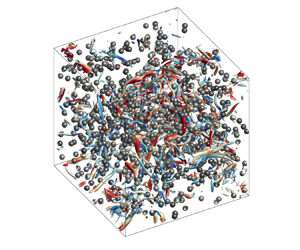
This study conducts particle-resolved direct numerical simulations to analyse how finite-size spherical particles affect the decay rate of turbulent kinetic energy in non-sustained homogeneous isotropic turbulence. The decaying particle-laden homogeneous isotropic turbulence is generated with two set-ups, i.e. (1) releasing particles into a single-phase decaying homogeneous isotropic turbulence and (2) switching off the driving force of a sustained particle-laden homogeneous isotropic turbulence. With both set-ups, the decay of turbulent kinetic energy follows a power-law when the flow is fully relaxed, similar to their single-phase counterparts. The dependence of the power-law decay exponent $n$ on the particle-to-fluid density ratio, particle size and volume fraction is also investigated, and a predictive model is developed. We find that the presence of heavier particles slows down the long-time power-law decay exponent.

Multiple stable postures of a falling object in fluids
-
- Journal:
- Journal of Fluid Mechanics / Volume 993 / 25 August 2024
- Published online by Cambridge University Press:
- 13 September 2024, A17
-
- Article
- Export citation
Net spanwise flow induced by symmetry-breaking streamwise homogeneous surfaces
-
- Journal:
- Journal of Fluid Mechanics / Volume 993 / 25 August 2024
- Published online by Cambridge University Press:
- 13 September 2024, A12
-
- Article
-
- You have access
- Open access
- HTML
- Export citation
Undulatory swimming in suspensions and networks of flexible filaments
-
- Journal:
- Journal of Fluid Mechanics / Volume 993 / 25 August 2024
- Published online by Cambridge University Press:
- 13 September 2024, A10
-
- Article
-
- You have access
- Open access
- HTML
- Export citation
Heat transport in liquid metal convection from onset to turbulence: the effect of small aspect ratio
-
- Journal:
- Journal of Fluid Mechanics / Volume 993 / 25 August 2024
- Published online by Cambridge University Press:
- 13 September 2024, R3
-
- Article
-
- You have access
- Open access
- HTML
- Export citation
-
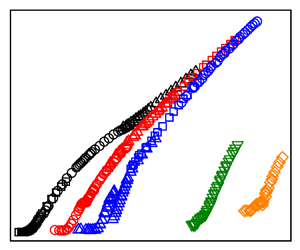
We present a systematic study on the effects of small aspect ratios $\varGamma$ on heat transport in liquid metal convection with a Prandtl number of $Pr=0.029$. The study covers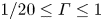 $1/20\le \varGamma \le 1$ experimentally and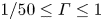 $1/50\le \varGamma \le 1$ numerically, and a Rayleigh number $Ra$ range of $4\times 10^3 \le Ra \le 7\times 10^{9}$. It is found experimentally that the local effective heat transport scaling exponent $\gamma$ changes with both $Ra$ and $\varGamma$, attaining a $\varGamma$-dependent maximum value before transition-to-turbulence and approaches $\gamma =0.25$ in the turbulence state as $Ra$ increases. Just above the onset of convection, Shishkina (Phys. Rev. Fluids, vol 6, 2021, 090502) derived a length scale $\ell =H/(1+1.49\varGamma ^{-2})^{1/3}$. Our numerical study shows $Ra_{\ell }$, i.e. $Ra$ based on $\ell$, serves as a proper control parameter for heat transport above the onset with $Nu-1=0.018(1+0.34/\varGamma ^2)(Ra/Ra_{c,\varGamma }-1)$. Here $Ra_{c,\varGamma }$ represents the $\varGamma$-dependent critical $Ra$ for the onset of convection and $Nu$ is the Nusselt number. In the turbulent state, for a general scaling law of $Nu-1\sim Ra^\alpha$, we propose a length scale $\ell = H/(1+1.49\varGamma ^{-2})^{1/[3(1-\alpha )]}$. In the case of turbulent liquid metal convection with $\alpha =1/4$, our measurement shows that the heat transport will become weakly dependent on $\varGamma$ with $Ra_{\ell }\equiv Ra/(1+1.49\varGamma ^{-2})^{4/3} \ge 7\times 10^5$. Finally, once the flow becomes time-dependent, the growth rate of $Nu$ with $Ra$ declines compared with the linear growth rate in the convection state. A hysteresis is observed in a $\varGamma =1/3$ cell when the flow becomes time-dependent. Measurements of the large-scale circulation suggest the hysteresis is caused by the system switching from a single-roll-mode to a double-roll-mode in an oscillation state.


Predictive near-wall modelling for turbulent boundary layers with arbitrary pressure gradients
-
- Journal:
- Journal of Fluid Mechanics / Volume 993 / 25 August 2024
- Published online by Cambridge University Press:
- 13 September 2024, A1
-
- Article
-
- You have access
- Open access
- HTML
- Export citation
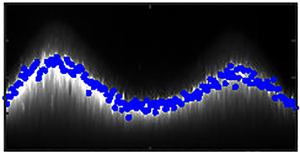
Particle motion in a bed under a rigid plate, submerged and oscillated over its surface, and bed morphologies induced by flexible plates
-
- Journal:
- Journal of Fluid Mechanics / Volume 993 / 25 August 2024
- Published online by Cambridge University Press:
- 13 September 2024, A16
-
- Article
- Export citation
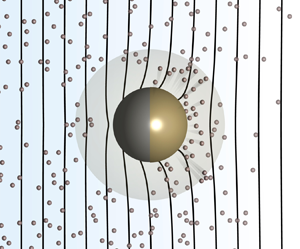
Unified mobility expressions for externally driven and self-phoretic propulsion of particles
-
- Journal:
- Journal of Fluid Mechanics / Volume 994 / 10 September 2024
- Published online by Cambridge University Press:
- 13 September 2024, A2
-
- Article
-
- You have access
- Open access
- HTML
- Export citation
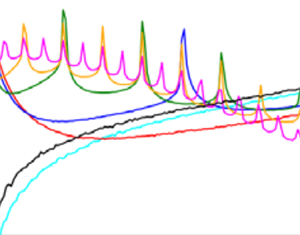
Less is more: modelling polymers in turbulent flows
-
- Journal:
- Journal of Fluid Mechanics / Volume 994 / 10 September 2024
- Published online by Cambridge University Press:
- 13 September 2024, F1
-
- Article
-
- You have access
- Open access
- HTML
- Export citation
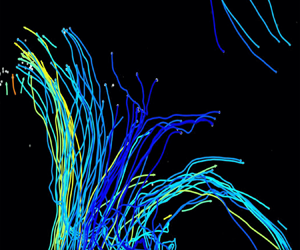
Relative dispersion in free-surface turbulence
-
- Journal:
- Journal of Fluid Mechanics / Volume 993 / 25 August 2024
- Published online by Cambridge University Press:
- 13 September 2024, R2
-
- Article
-
- You have access
- HTML
- Export citation
The instability of non-monotonic drag laws
-
- Journal:
- Journal of Fluid Mechanics / Volume 993 / 25 August 2024
- Published online by Cambridge University Press:
- 13 September 2024, A13
-
- Article
- Export citation
Data-driven transient lift attenuation for extreme vortex gust–airfoil interactions
-
- Journal:
- Journal of Fluid Mechanics / Volume 992 / 10 August 2024
- Published online by Cambridge University Press:
- 10 September 2024, A17
-
- Article
-
- You have access
- Open access
- HTML
- Export citation
The effect of Reynolds number on the separated flow over a low-aspect-ratio wing
-
- Journal:
- Journal of Fluid Mechanics / Volume 992 / 10 August 2024
- Published online by Cambridge University Press:
- 10 September 2024, R2
-
- Article
-
- You have access
- Open access
- HTML
- Export citation
-
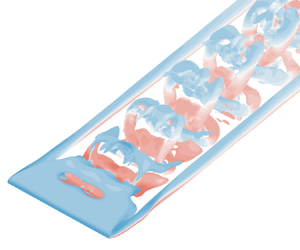
At high incidence, low-aspect-ratio wings present a unique set of aerodynamic characteristics, including flow separation, vortex shedding and unsteady force production. Furthermore, low-aspect-ratio wings exhibit a highly impactful tip vortex, which introduces strong spanwise gradients into an already complex flow. In this work, we explore the interaction between leading-edge flow separation and a strong, persistent tip vortex over a Reynolds number range of $600 \leq Re \leq 10{\,}000$. In performing this study, we aim to bridge the insight gained from existing low-Reynolds-number studies of separated flow on finite wings ( $Re \approx 10^2$) and turbulent flows at higher Reynolds numbers ( $Re \approx 10^4$). Our study suggests two primary effects of the Reynolds number. First, we observe a break from periodicity, along with a dramatic increase in the intensity and concentration of small-scale eddies, as we shift from $Re = 600$ to $Re = 2500$. Second, we observe that many of our flow diagnostics, including the time-averaged aerodynamic force, exhibit reduced sensitivity to Reynolds number beyond $Re = 2500$, an observation attributed to the stabilising impact of the wing tip vortex. This latter point illustrates the manner by which the tip vortex drives flow over low-aspect-ratio wings, and provides insight into how our existing understanding of this flow field may be adjusted for higher-Reynolds-number applications.


Numerical analysis of X-ray multilayer Fresnel zone plates with high aspect ratios
-
- Journal:
- Laser and Particle Beams / Volume 42 / 2024
- Published online by Cambridge University Press:
- 03 September 2024, e3
-
- Article
-
- You have access
- Open access
- HTML
- Export citation
Solution-based biophysical characterization of conformation change in structure-switching aptamers
-
- Journal:
- Quarterly Reviews of Biophysics / Volume 57 / 2024
- Published online by Cambridge University Press:
- 03 September 2024, e9
-
- Article
-
- You have access
- Open access
- HTML
- Export citation
PSP volume 177 issue 2 Cover and Front matter
-
- Journal:
- Mathematical Proceedings of the Cambridge Philosophical Society / Volume 177 / Issue 2 / September 2024
- Published online by Cambridge University Press:
- 05 December 2024, pp. f1-f2
- Print publication:
- September 2024
-
- Article
-
- You have access
- Export citation
A study on the relationships between factors contributing to fishing vessel collision accidents and hull damage severity in South Korea
-
- Journal:
- The Journal of Navigation / Volume 77 / Issue 5-6 / September 2024
- Published online by Cambridge University Press:
- 23 May 2025, pp. 624-644
- Print publication:
- September 2024
-
- Article
- Export citation
Augmented reality projection errors in maritime navigation
-
- Journal:
- The Journal of Navigation / Volume 77 / Issue 5-6 / September 2024
- Published online by Cambridge University Press:
- 27 June 2025, pp. 736-755
- Print publication:
- September 2024
-
- Article
- Export citation
An approach to establishing evaluation criteria for unmanned surface vessel manoeuvres during COLREGs encounters
-
- Journal:
- The Journal of Navigation / Volume 77 / Issue 5-6 / September 2024
- Published online by Cambridge University Press:
- 23 May 2025, pp. 645-657
- Print publication:
- September 2024
-
- Article
-
- You have access
- Open access
- HTML
- Export citation
