We partner with a secure submission system to handle manuscript submissions.
Please note:
You will need an account for the submission system, which is separate to your Cambridge Core account. For login and submission support, please visit the
submission and support pages.
Please review this journal's author instructions, particularly the
preparing your materials
page, before submitting your manuscript.
Click Proceed to submission system to continue to our partner's website.
To save this undefined to your undefined account, please select one or more formats and confirm that you agree to abide by our usage policies. If this is the first time you used this feature, you will be asked to authorise Cambridge Core to connect with your undefined account.
Find out more about saving content to .
To send this article to your Kindle, first ensure no-reply@cambridge.org is added to your Approved Personal Document E-mail List under your Personal Document Settings on the Manage Your Content and Devices page of your Amazon account. Then enter the ‘name’ part of your Kindle email address below. Find out more about sending to your Kindle.
Find out more about saving to your Kindle.
Note you can select to save to either the @free.kindle.com or @kindle.com variations. ‘@free.kindle.com’ emails are free but can only be saved to your device when it is connected to wi-fi. ‘@kindle.com’ emails can be delivered even when you are not connected to wi-fi, but note that service fees apply.
A new project aims to understand the early prehistoric use of animals and plants along the ancient Silk Road through archaeological fieldwork in southern Kyrgyzstan's high Alay Valley.
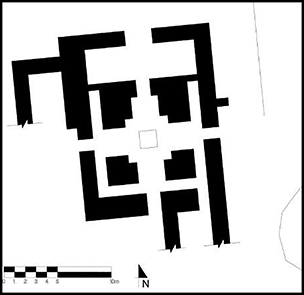
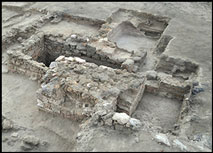
Excavations at the Pre-Pottery Neolithic B ritual site of Naḥal Roded 110 in the Southern Negev, Israel, have revealed evidence—unique to this region—for on-site flint knapping and abundant raptor remains.
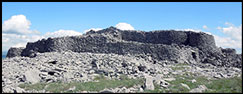
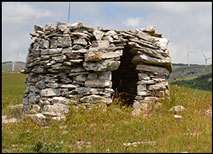
In 2017, archaeological survey recorded more than 160 Late Bronze–Iron Age cyclopean fortification complexes in the historical Javakheti region, Georgia. The author relates different types of cyclopean complexes mentioned in Urartian written sources to the sites found in Javakheti.
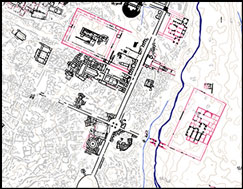
This article presents a new and accurate map of Gerasa/Jerash, an important site located in modern northern Jordan, which displays urban development spread across more than two millennia.
In 2013, archaeological survey at the Bam World Heritage site of the eastern part of Kerman Province in Iran discovered the remains of a previously undocumented Sassanid fire temple.
This project studies the early Roman non-wheel-thrown Aquitania-Tarraconensis-type (AQTA) pottery from the Bay of Biscay region. The ‘ollae’-type AQTA ceramics display clear evidence of specialised production, consumption and interregional exchange by both terrestrial and maritime routes throughout the region.
The ruins of Berenike Trogodytika have long attracted travellers searching for the remains of the famous Graeco-Roman port on the Red Sea. It was not until 2012, however, that the Berenike Project team were able to identify the location and size of the legendary Berenike of the Ptolemies.
The ArqueoBarbaria archaeological project aims to characterise the economic strategies and environmental context of Formentera's first human settlers at two Bronze Age sites (Cap de Barbaria II and cave 127) using an interdisciplinary approach.
Two ophidian sculptured stones have been recovered from Mesolithic stratigraphic units at the site of Kamyana Mohyla 1 in southern Ukraine. Microscopic examination revealed traces of shaping and intentional ornamentation on the stones when compared to experimentally worked sandstones of similar quality. The finds broaden the distribution of movable rock art objects in the European Mesolithic.
This article presents the results of the first excavations at Maliwan and Maliwan, the earliest port-settlements from southern Myanmar in the Isthmus of Kra, showing their involvement in extensive networks as far as the West and China during the last centuries BC.
The ‘Molise Survey Project’ aims, through systematic survey, to document evidence for the prehistoric occupation and exploitation of the Apennine Mountains. Here, we present some of the first results of the archaeological surveys, with a focus on the evidence from the Middle Palaeolithic to the Bronze Age.
This article focuses on the Middle Palaeolithic of a region of south India, highlighting diverse stratigraphic contexts and lithic reduction sequences suggestive of high mobility and planning in raw material usage.
Excavation at Pauli Stincus in Sardinia has revealed an ancient plough soil, with associated evidence of intensive prehistoric agricultural activities.
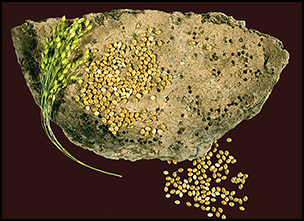
A programme of radiocarbon dating aims to correlate the onset of millet cultivation in northern Germany with cultural and technological changes during the Bronze Age.
New data from Strashnaya Cave have revealed previously unknown complexity in hominin occupation of the Altai Mountains, including the first regional evidence for the presence of anatomically modern humans.
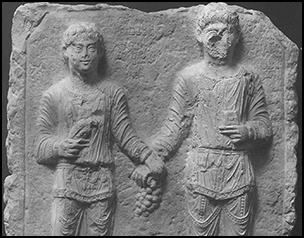
Since 2012, the ‘Palmyra Portrait Project’ has collected, studied and digitised over 3700 limestone funerary portraits from Palmyra dating to the first three centuries AD. This represents the largest collection of funerary representations from one place in the classical world.
A response to the recent debate piece in Antiquity by González-Ruibal et al., examining the role of epistemic popularism in critical heritage studies and public archaeology.
New excavations at the Jebel Moya cemetery in Sudan reveal extensive evidence for Meroitic-era occupation, providing valuable data on contemporaneous diet, migration, exchange and population composition in sub-Saharan Africa.
Rescue excavations in Bethlehem undertaken by the Sapienza University of Rome and the Palestinian Ministry of Tourism and Antiquities—Department of Archaeology and Cultural Heritage—have revealed four Bronze Age necropolises. These newly discovered sites illuminate the development of pre-Classical Bethlehem.