We partner with a secure submission system to handle manuscript submissions.
Please note:
You will need an account for the submission system, which is separate to your Cambridge Core account. For login and submission support, please visit the
submission and support pages.
Please review this journal's author instructions, particularly the
preparing your materials
page, before submitting your manuscript.
Click Proceed to submission system to continue to our partner's website.
To save this undefined to your undefined account, please select one or more formats and confirm that you agree to abide by our usage policies. If this is the first time you used this feature, you will be asked to authorise Cambridge Core to connect with your undefined account.
Find out more about saving content to .
To send this article to your Kindle, first ensure no-reply@cambridge.org is added to your Approved Personal Document E-mail List under your Personal Document Settings on the Manage Your Content and Devices page of your Amazon account. Then enter the ‘name’ part of your Kindle email address below. Find out more about sending to your Kindle.
Find out more about saving to your Kindle.
Note you can select to save to either the @free.kindle.com or @kindle.com variations. ‘@free.kindle.com’ emails are free but can only be saved to your device when it is connected to wi-fi. ‘@kindle.com’ emails can be delivered even when you are not connected to wi-fi, but note that service fees apply.
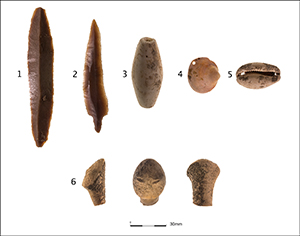
The discovery of eight biface lithic artefacts at Kashiwabara in Japan demonstrates the use of lithic reduction strategies, and suggests that mobile hunter-gatherers on the Japanese Islands were caching artefacts during the Incipient period of Jomon (c. 15–11 500 cal BP). This has parallels with hunter-gatherer behaviour in North America, and indicates that caching strategies may not have been unique to Palaeoindians.
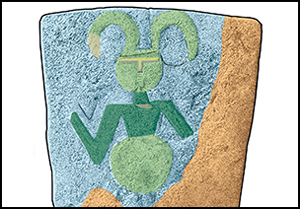
While hunting scenes are well attested in Indian rock art, only two depictions of butchering are known from sites in India, and are very rare globally. Here, the authors present the discovery of a rare depiction of deer butchering, found at Maser in the Raisen District of Madhya Pradesh, India.
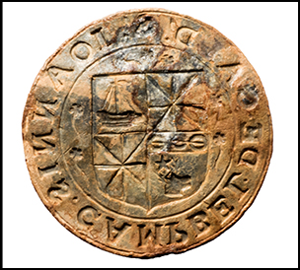
The great feud between the clans Campbell and MacDonald in the early seventeenth century AD was part of a power struggle for control of Islay, the seat of the Lord of the Isles, and encompassed wider political, economic and religious change in the region and beyond from the sixteenth century. The discovery of a seal matrix found during excavations at Dunyvaig Castle reveals the personal story of Sir John Campbell of Cawdor (1576–1642) in these broader political events.
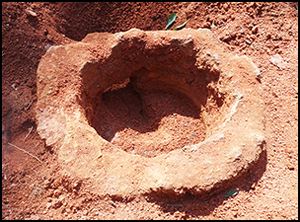
The ‘Qin & Han Iron Smelting Site Investigation Project’ aims to illuminate the early use and production of iron during the Qin and Han Dynasties in south and south-west China. Here, the authors report on attempts to discover the origins of iron objects from the Lingnan region.
The ‘Monumental Myopia’ project uses multiscalar remote-sensing techniques to identify potential prehistoric nomadic settlements in the Siberian landscape. Eschewing the monumental burial mounds, the project aims to explore the everyday life of pastoral societies in the first millennium BC.
Excavations at Shichengzi, the probable location of ancient Shule, have revealed diverse burial practices suggesting a population with varied cultural backgrounds. Together with archaeobotanical evidence, this indicates a community of agro-pastoralists and Han Dynasty migrants using diverse cropping patterns to attain self-sufficiency. The project raises interesting questions about the impact of migrations on the identities of inhabitants.
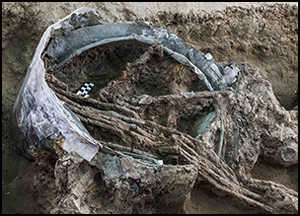
At Corinaldo, near the Adriatic coast in northern Marche, the discovery and excavation of a high-status tomb dating to the seventh century BC has illuminated wide-ranging aspects of Piceni Culture in this part of central Italy, while also highlighting the growing symbiosis between academic research and development-led archaeology in heritage conservation and planning processes throughout Italy.
The Vaigat Iceberg-Microbial Oil Degradation and Archaeological Heritage Investigation (VIMOA) project records the results of archaeological survey of five sites in Greenland that are threatened by extreme weather conditions related to climate change. The project demonstrates the advantages of collaboration between archaeologists and natural scientists, and provides a repository of data to help preserve the archaeological record.
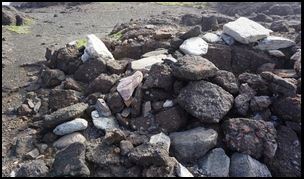
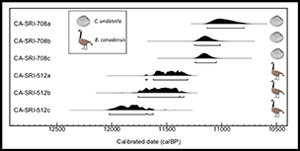
Human use of estuarine shellfish and other coastal marsh resources began on California's Santa Rosa Island at least 11 800–11 100 years ago. Productive estuaries in California and elsewhere in the Americas were present by the Late Pleistocene, providing shellfish, waterfowl, fish and seaweeds that attracted some of the First Americans.
The Marivan region of western Iran is not well understood, hence the Marivan Plain Archaeological Project aims to gain new insights into the region's occupation history and cultural interaction with Mesopotamia.
Recent archaeological survey in south-western Cappadocia reveals Middle Chalcolithic expansion into the highlands, where there is no known evidence of earlier permanent settlement.
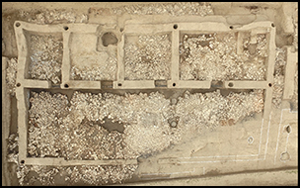
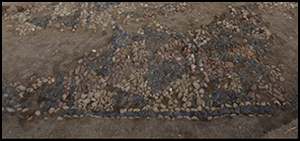
Excavations undertaken at Uşaklı Höyük in Turkey during 2018 revealed a mosaic stone floor associated with a large building of Hittite date. This unique discovery raises new questions about the origin of mosaic flooring in Near Eastern public architecture of this period.
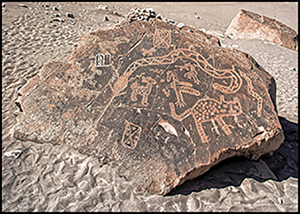
Detailed documentation of thousands of petroglyphs and recent excavations conducted at the site of Toro Muerto in Peru reveal new information about the symbolic spatial organisation and ritual functions of the largest pre-Columbian rock art complex.
The Batn el-Hagar in Sudan has traditionally been characterised as sparsely occupied during the Middle Kingdom Period, with most activity limited to the Egyptian fortresses along the Second Cataract. A new survey programme undertaken by the Uronarti Regional Archaeological Project offers evidence for a more richly occupied landscape.
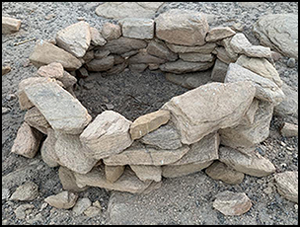
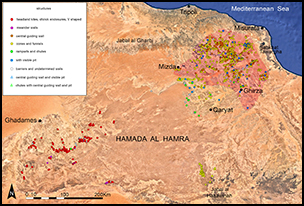
Recent archaeological survey has revealed large numbers of stone structures, known as desert kites, in north-western Libya. The numbers of these structures and their evident adaptation over time demonstrate a longevity of use and a high degree of specialisation and cooperation among the people who built them.
The small, Middle Pre-Pottery Neolithic B site (tenth millennium cal BP) of Nahal Yarmuth 38 in central Israel consists of a unique series of rectilinear structures with plastered floors, beneath which multiple interments were found. The nature of the finds combined with existing knowledge of burial customs of this period make Nahal Yarmuth 38 an ideal site for investigating designated burial sites in the Middle Pre-Pottery Neolithic B.
This article presents data obtained in the first geophysical survey undertaken in the Decapolis city of Gerasa (Jerash) in northern modern Jordan, and reflects on the value of openly sharing data in the academic community.
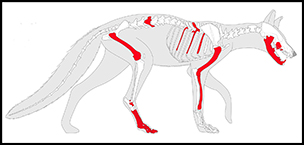
The recent discovery of a Late/Final Pre-Pottery Neolithic B burial of an adult and two children associated with fox bones at the site of Motza, Israel, demonstrates the broader socio-cultural perspective, and possibly continued animistic world views, of Neolithic foragers at the onset of the agricultural revolution.
This project aims to reconstruct the settlement patterns and palaeoenvironment of the Sąspów Valley in the Polish Jura by combining unpublished archaeological fieldwork with results of recent excavations at 13 cave sites.