To save content items to your account,
please confirm that you agree to abide by our usage policies.
If this is the first time you use this feature, you will be asked to authorise Cambridge Core to connect with your account.
Find out more about saving content to .
To save content items to your Kindle, first ensure no-reply@cambridge.org
is added to your Approved Personal Document E-mail List under your Personal Document Settings
on the Manage Your Content and Devices page of your Amazon account. Then enter the ‘name’ part
of your Kindle email address below.
Find out more about saving to your Kindle.
Note you can select to save to either the @free.kindle.com or @kindle.com variations.
‘@free.kindle.com’ emails are free but can only be saved to your device when it is connected to wi-fi.
‘@kindle.com’ emails can be delivered even when you are not connected to wi-fi, but note that service fees apply.
The stakeholder perspective is an alternative way of understanding how companies and people create value and trade with each other. Freeman, Harrison and Zyglidopoulos discuss the foundation concepts and implementation of stakeholder management as well as the advantages this approach provides to firms and their managers. They present a number of tools that managers can use to implement stakeholder thinking, better understand stakeholders and create value with and for them. The Element concludes by discussing how managers can create stakeholder oriented control systems and by examining some of the important stakeholder-related issues that are worthy of future scholarly and managerial attention.
The indigenous psychologies (IPs) stress the importance of research being grounded in the conditions and culture of the researcher's own society due to the dominance of Western culture in mainstream psychology. The nature and challenges of the IPs are discussed from the perspectives of science studies and anthropology of knowledge (the study of human understanding in its social context). The Element describes general social conditions for the development of science and the IPs globally, and their development and form in some specific countries. Next, some more specific issues relating to the IPs are discussed. These issues include the nature of the IPs, scientific standards, type of culture concept favored, views on the philosophy of science, understanding of mainstream psychology, generalization of findings, and the IPs' isolation and independence. Finally, conclusions are drawn, for example with respect to the future of the IPs.
Migration and nativism are explosive issues in Europe and North America. Less well-known is the tumult that soaring migration is creating in the politics of developing countries. The key difference between anti-migrant politics in developed and developing countries is that domestic migration - not international migration - is the likely focus of nativist politics in poorer countries. Nativists take up the cause of sub-national groups, vilifying other regions and groups within the country as sources of migration. Since the 1970s, the majority of less-developed countries have adopted policies that aim to limit internal migration. This Element marshals evidence from around the world to explore the colliding trends of internal migration and nativism. Subnational migration is associated with a boom in nativist politics. Pro-native public policy and anti-migrant riots are both more likely when internal migration surges. Political decentralization strengthens subnational politicians' incentives and ability to define and cater to nativists.
This Element argues that after twenty years of democratization, Indonesia has performed admirably. This is especially so when the country's accomplishments are placed in comparative perspective. However, as we analytically focus more closely to inspect Indonesia's political regime, political economy, and how identity-based mobilizations have emerged, it is clear that Indonesia still has many challenges to overcome, some so pressing that they could potentially erode or reverse many of the democratic gains the country has achieved since its former authoritarian ruler, Soeharto, was forced to resign in 1998.
Ritualized violence is by definition not haphazard or random, but seemingly intentional and often ceremonial. It has a long history in religious practice, as attested in texts and artifacts from the earliest civilizations. It is equally evident in the behaviors of some contemporary religious activists and within initiatory practices ongoing in many regions of the world. Given its longevity and cultural expanse, ritualized violence presumably exerts a pull deeply into the sociology, psychology, anthropology, theology, perhaps even ontology of its practitioners, but this is not transparent. This short volume will sketch the subject of ritualized violence, that is, it will summarize some established theories about ritual and about violence, and will ponder a handful of striking instantiations of their link.
In Open Source Jihad, Per-Erik Nilsson provides a unique overview of the academic research and political legislation concerning 'Islamic terrorism' in Europe. He scrutinises in detail how the concepts 'terrorism', 'radicalisation', and 'counter-terrorism' have developed as academic objects of study and political objects of governance. In the Element, Nilsson brings to the fore systemic problems of the field of terrorism studies as well as the various anti-terrorist apparatuses developed by EU member states. Open Source Jihad should be required reading for anyone interested in current European political and social events.
This Element is a critical overview of the manner in which the concept of miracle is understood and discussed in contemporary analytic philosophy of religion. In its most basic sense, a miracle is an unusual, unexpected, observable event brought about by direct divine intervention. The focus of this study is on the key conceptual, epistemological, and theological issues that this definition of the miraculous continues to raise. As this topic is of existential as well as theoretical interest to many, there is no reason to believe the concept of miracle won't continue to be of ongoing interest to philosophers.
This Element reviews the first 120 years of organization theory, examining its development from the sociology of organizations and management theory. It is initially organized around two streams of thought. The first is found in political economy and the sociology of organizations, with an emphasis on understanding the new organizations that arose in the late nineteenth and early twentieth centuries. The second derives from practitioner–scholars, whose aim was to provide theories and approaches to managing these new organizations. The Element then shows how each of the streams of understanding and managing came together to produce organization theory. In doing this, it also describes how the institutional frameworks in academic associations, academic centres and journals came out of these approaches and how they strengthened the development of organization theory.
This Element describes child sexual abuse and the formal organizations in which it can occur, reviews extant perspectives on child abuse, and explains how an organization theory approach can advance understanding of this phenomenon. It then elaborates the main paths through which organizational structures can influence child sexual abuse in organizations and analyze how these structures operate through these paths to impact the perpetration, detection, and response to abuse. The analysis is illustrated throughout with reports of child sexual abuse published in a variety of sources. The Element concludes with a brief discussion of the policy implications of this analysis.
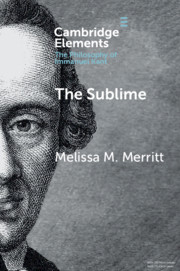
This Element considers Kant's account of the sublime in the context of his predecessors both in the Anglophone and German rationalist traditions. Since Kant says with evident endorsement that 'we call sublime that which is absolutely great' (Critique of the Power of Judgment, 5:248) and nothing in nature can in fact be absolutely great (it can only figure as such, in certain presentations), Kant concludes that strictly speaking what is sublime can only be the human calling (Bestimmung) to perfect our rational capacity according to the standard of virtue that is thought through the moral law. The Element takes account of the difference between respect and admiration as the two main varieties of sublime feeling, and concludes by considering the role of Stoicism in Kant's account of the sublime, particularly through the channel of Seneca.
Since 1990, polarization hindered changing environmental policy statutorily. Yet, in mid-2016 the Lautenberg Act regulating toxics - chemicals employed in commerce - was passed, winning business and environmental support. What might explain this? Has the Trump administration undercut the law's effects? Does the Act's passage portend more progressive actions? We show that the Act was a function of the status quo changing due to regulatory efforts abroad and in the United States, and from outside pressures on business. These influences impacted implementation, with the Trump administration not targeting toxics regulation analogous to other programs. Further, the processes we observe for toxics may not be unique.
How did Christ's death overcome the estrangement and condemnation of sinners before a holy God, so as to reconcile them to Him? A great variety of theories of the atonement have been offered over the centuries to make sense of the fact that Christ by his death has provided the means of reconciliation with God: ransom theories, satisfaction theories, moral influence theories, penal substitution theories, and so on. Competing theories need to be assessed by (i) their accord with biblical data and (ii) their philosophical coherence.
This Element reviews the state of the question regarding theories of cultic violence. It introduces definitions and vocabulary and presents relevant historical examples of religious violence. It then discusses the 1960s and 1970s, the period immediately before the Jonestown tragedy. Considerations of the post-Jonestown (1978), and then post-Waco (1993) literature follow. After 9/11 (2001), some of the themes identified in previous decades reappear. The Element concludes by examining the current problem of repression and harassment directed at religious believers. Legal discrimination by governments, as well as persecution of religious minorities by non-state actors, has challenged earlier fears about cultic violence.
This Element shapes the discussion about corporate governance and boards of directors. The arena for boards and corporate governance is not static. In Boards, Governance and Value Creation (Cambridge, 2007) Morten Huse accumulated knowledge about boards with a focus on behavioural perspectives. The present contribution reflects on what has been happening during recent years. It contributes to the literature around sustainable value creation in business and society. This Element brings an update of the content of the 2007 book, and thus provides a resource for students - as well as for reflective practitioners.
This Element is an elementary introduction to atheism and agnosticism. It begins with a careful characterisation of atheism and agnosticism, distinguishing them from many other things with which they are often conflated. After a brief discussion of the theoretical framework within which atheism and agnosticism are properly evaluated, it then turns to the sketching of cases for atheism and agnosticism. In both cases, the aim is not conviction, but rather advancement of understanding: the point of the cases is to make it intelligible why some take themselves to have compelling reason to adopt atheism or agnosticism.
Recent years have witnessed significant research efforts in flexible organic and amorphous-metal-oxide analogue electronics, in view of its formidable potential for applications such as smart sensor systems. This Element provides a comprehensive overview of this growing research area. After discussing the properties of organic and amorphous-metal-oxide technologies relevant to analogue circuits, this Element focuses on their application to two key circuit blocks: amplifiers and analogue-to-digital converters. The Element thus provides a fresh look at the evolution and immediate opportunities of the field, and identifies the remaining challenges for these technologies to become the platform of choice for flexible analogue electronics.
The scientific study of 'wellbeing' involves both objective and subjective variables. While objective wellbeing can be simply measured as tangible aspects of the living environment, measuring subjective wellbeing involves quantifying self-reported feelings. Although reliable and valid measures can be achieved, in a cross-cultural context differences in language and culture present formidable challenges to measurement comparability. This Element begins by describing the behaviour of subjective wellbeing in single cultures, using the theory of homeostasis. Robert A. Cummins then discusses cross-cultural differences in subjective wellbeing, with a focus on measurement invariance as a means of ensuring the validity of comparative results. Cummins proposes that the major barrier to creating such comparability of measurement is a pervasive response bias that differs between cultures. He concludes that current instruments are inadequate to provide valid cross-cultural measures of subjective wellbeing, and that suitable measures may be created as short forms of current scales.
Canonical theories of political economy struggle to explain patterns of distribution in authoritarian regimes. In this Element, Albertus, Fenner, and Slater challenge existing models and introduce an alternative, supply-side, and state-centered theory of 'coercive distribution'. Authoritarian regimes proactively deploy distributive policies as advantageous strategies to consolidate their monopoly on power. These policies contribute to authoritarian durability by undercutting rival elites and enmeshing the masses in lasting relations of coercive dependence. The authors illustrate the patterns, timing, and breadth of coercive distribution with global and Latin American quantitative evidence and with a series of historical case studies from regimes in Latin America, Asia, and the Middle East. By recognizing distribution's coercive dimensions, they account for empirical patterns of distribution that do not fit with quasi-democratic understandings of distribution as quid pro quo exchange. Under authoritarian conditions, distribution is less an alternative to coercion than one of its most effective expressions.
This Element on cost-benefit analysis provides a summary of recent theoretical and empirical developments and summarizes state-of-the-art stated-preference and revealed-preference valuation methods. The Element discusses how to assess small (or marginal) as well as large (or non-marginal) projects that have a significant impact on prices and/or other economic variables. It also discusses distortions like taxes, market power, and sticky prices. In addition, risk/uncertainty is considered. A novel feature is the elaboration on flexible evaluation rules for reasonably small projects. Conventional point-estimates of projects should be used with care, because they typically give biased results.
This Element is a study of how the power of imagination is, according to Kant, supposed to contribute to cognition. It is meant to be an immanent and a reconstructive endeavor, relying solely on Kant's own resources when he tries to determine what material, faculties, and operations are necessary for cognition of objects. The main discourse is divided into two sections. The first deals with Kant's views concerning the power of imagination as outlined in the A- and B- edition of the Critique of Pure Reason. The second focuses on the power of imagination in the first part of the Critique of Judgment.