To save content items to your account,
please confirm that you agree to abide by our usage policies.
If this is the first time you use this feature, you will be asked to authorise Cambridge Core to connect with your account.
Find out more about saving content to .
To save content items to your Kindle, first ensure no-reply@cambridge.org
is added to your Approved Personal Document E-mail List under your Personal Document Settings
on the Manage Your Content and Devices page of your Amazon account. Then enter the ‘name’ part
of your Kindle email address below.
Find out more about saving to your Kindle.
Note you can select to save to either the @free.kindle.com or @kindle.com variations.
‘@free.kindle.com’ emails are free but can only be saved to your device when it is connected to wi-fi.
‘@kindle.com’ emails can be delivered even when you are not connected to wi-fi, but note that service fees apply.
Data-driven neural word embeddings (NWEs), grounded in distributional semantics, can capture various ranges of linguistic regularities, which can be further enriched by incorporating structured knowledge resources. This work proposes a novel post-processing approach for injecting semantic relationships into the vector space of both static and contextualized NWEs. Current solutions to retrofitting (RF) word embeddings often oversimplify the integration of semantic knowledge, neglecting the nuanced differences between relationships, which may result in suboptimal performance. Instead of applying multi-thresholding to distance boundaries in metric learning, we compute taxonomic similarity to dynamically adjust these boundaries during the semantic specialization of word embeddings. Benchmark evaluations on both static and contextualized word embeddings demonstrate that our dynamic-fitting (DF) approach produces SOTA correlation results of 0.78 and 0.76 on SimLex-999 and SimVerb-3500, respectively, highlighting the effectiveness of incorporating multiple semantic relationships in refining vector semantics. Our approach also outperforms existing RF methods in both supervised and unsupervised semantic relationships recognition tasks. It achieves top accuracy scores for hypernymy detection on the BLESS, WBLESS, and BIBLESS datasets (0.97, 0.89, and 0.83, respectively) and an F1 score of over 0.60 on four types of semantic relationship classification in the shared Subtask-2 of CogALex-V, surpassing all participant systems. In the analogy reasoning task of the Bigger Analogy Test Set, our approach outperforms existing RF methods on inferring relational similarity. These consistent improvements across various lexical semantics tasks suggest that our DF approach can effectively integrate distributional semantics with symbolic knowledge resources, thereby enhancing the representation capacity of word embeddings in downstream applications.
Despite worldwide uptake, there has been little published evaluation of actually delivering the World Health Organization (WHO) Mental Health Gap Action Programme (mhGAP) in typical low- and middle-income countries (LMICs). This paper aims to evaluate the impact of a pilot study in which mhGAP guidelines for mental health sensitisation of community leaders were implemented in 1-day training events across 25 urban and rural health facilities (n = 1004 community leaders) in Uganda. A multiple choice mental health questionnaire was used to assess the community leaders’ mental health knowledge before and after completing the training. Training was evaluated across multiple sites and qualitative feedback comments were used to identify key themes on the impact of the training. The sensitisation training was found to be affordable, accessible and effective, and could be replicated in other LMICs and settings with local adaptations.
The Taylor–Melcher leaky dielectric (LD) model is often used to study the physics of electrosprays operating in the cone-jet mode. Despite its success, there are electrospraying conditions in which the ion concentration fields must be retained, which requires an electrokinetic model. This article reproduces cone-jets with two electrokinetic formulations: the standard Poisson–Nernst–Planck (PNP) equations, and a modified electrokinetic (MEK) model that accounts for overscreening and overcrowding of electrolytes, which is important in fluids with high electrical conductivities such as ionic liquids (Kilic et al. 2007 Phys. Rev.E vol. 75, no. 2, 021502, 021503; Bazant et al. 2011 Phys. Rev.Lett. vol. 106, no. 4, 46102). In the case of liquids with low electrical conductivities, it is observed that the LD and PNP models agree under certain limiting conditions, but they are less restrictive than previously proposed (Baygents & Saville 1990 AIP Conf. Proc. vol. 197, 7–17; Schnitzer & Yariv 2015 Fluid Mech. vol. 773, 1–33); the effects of dissimilar ion diffusivities are also investigated. In the case of liquids with high electrical conductivities, in particular ionic liquids, overscreening and overcrowding effects are important, resulting in significant differences between the solutions of the PNP, MEK and LD models. In particular, the electrokinetic models yield increased dissipation and self-heating, leading to higher temperature variations and currents, in agreement with measurements. Furthermore, the MEK formulation describes the ion concentration fields with higher fidelity than the PNP equations.
Mental ill-health has a major impact on young people, with pain often co-occurring. We estimated the prevalence and impact of pain in young people with mental ill-health.
Methods
Longitudinal data (baseline and three-month follow-up) of 1,107 Australian young people (aged 12–25 years) attending one of five youth mental health services. Multi-level linear mixed models estimated associations between pain characteristics (frequency, intensity, and limitations) and outcomes with false discovery rate (FDR) adjustment. Pain characteristics were baseline-centered to estimate if the baseline score (between-participant effect) and/or change from baseline (within-participant effect) was associated with outcomes.
Results
At baseline, 16% reported serious pain more than 3 days, 51% reported at least moderate pain, and 25% reported pain-related activity limitations in the last week. Between participants, higher serious pain frequency was associated with greater anxiety symptoms (β[95%CI]: 0.90 [0.45, 1.35], FDR-p=0.001), higher pain intensity was associated with greater symptoms of depression (1.50 [0.71, 2.28], FDR-p=0.001), anxiety (1.22 [0.56, 1.89], FDR-p=0.002), and suicidal ideation (3.47 [0.98, 5.96], FDR-p=0.020), and higher pain limitations were associated with greater depressive symptoms (1.13 [0.63, 1.63], FDR-p<0.001). Within participants, increases in pain intensity were associated with increases in tobacco use risk (1.09 [0.48, 1.70], FDR-p=0.002), and increases in pain limitations were associated with increases in depressive symptoms (0.99 [0.54, 1.43], FDR-p<0.001) and decreases in social and occupational functioning (−1.08 [−1.78, −0.38], FDR-p=0.009).
Conclusions
One-in-two young people seeking support for mental ill-health report pain. Youth mental health services should consider integrating pain management.
This study investigates the applicability of generative artificial intelligence (AI) in early-stage architectural design by evaluating the daylight performance of AI-generated sustainable housing plans across five distinct climate zones. A three-phase methodology was implemented: (1) Plan generation using text-to-image diffusion models (ChatGPT, Copilot, and LookX); (2) digital reconstruction in AutoCAD; and (3) daylight simulation via Velux Daylight Visualizer. Climate-adaptive prompts were formulated to guide the AI tools in producing context-specific floor plans with passive strategies. Out of 31 initial plans, eight valid outputs (five from ChatGPT and three from Copilot) were reconstructed in AutoCAD and simulated. Quantitative simulations were conducted on equinox and solstice dates, and average illuminance values were analyzed for key interior spaces (living room, kitchen, and bedroom). ChatGPT-generated plans demonstrated higher spatial clarity and more balanced daylight performance, whereas Copilot outputs varied significantly, and LookX was excluded due to insufficient architectural legibility. Results revealed that none of the models consistently integrated solar orientation or seasonal lighting considerations, indicating a gap between generative representation and environmental logic. The research contributes a replicable workflow that bridges generative AI and performance-based evaluation, offering critical insight into the current limitations and future potential of AI-assisted architectural design. The findings underscore the need for next-generation AI systems capable of semantic, spatial, and climatic reasoning to support environmentally responsive design practices.
Comprising the largest group of health care professionals, nurses play a great role and assume many responsibilities during disaster periods, when the public needs health care services the most. The aim of this study was to reveal the experiences of nurses assigned to the disaster area during relief efforts after the February 6, 2023 earthquakes in Türkiye.
Methods
This qualitative and descriptive study used the maximum variation sampling method, one of the purposive sampling methods, and was completed with 20 nurses. Data were analyzed using inductive content analysis.
Results
Four main themes emerged from the experiences of the nurses who provided health care services in the disaster area: experiences related to pre-mission processes, experiences during the mission, post-mission experiences, and recommendations for disaster preparedness.
Conclusions
Nurses’ experiences and suggestions revealed in this study may inform future disaster preparedness and disaster management plans, and this study’s results point to the need for the development of professional nursing skills in disaster management.
Ear arteriovenous malformation is a complex problem with a lack of data and a clear consensus on its management. This paper aims to develop an algorithm for protocol-based ear arteriovenous malformation management.
Method
All patients underwent pre-operative discussions at a multi-disciplinary team meeting to plan excision and pre-operative embolisation.
Results
Nineteen patients were included in this study. Following excision, 26.3 per cent of cases had flap cover, 10.5 per cent needed a skin graft, 15.3 per cent had total amputation of the ear, and the rest underwent excision of the arteriovenous malformation with or without cartilage excision and primary closure. Recurrence was observed in 10.5 per cent of cases.
Conclusion
Surgical excision is the treatment of choice for ear arteriovenous malformations. Cartilage should be preserved whenever possible. The wound cover should be either a primary closure or a flap cover. A protocol-based guide facilitates decision-making of this complex problem.
Following the French example, the Meloni government has introduced the phrase ‘sovranità alimentare’ (sovereignty in food) into the title of the ministry of agriculture, and makes clear that it is engaging in a very determined effort to defend and promote the cultural heritage of Italian cuisine on all fronts, at home and abroad. But the origins of this impulse go back to the 1980s and the arrival of the McDonald’s hamburger chain, which gave birth to the Slow Food movement, now a global phenomenon. All this conceals several paradoxes: Italian cuisine has always been open to hybridised versions invented elsewhere (especially in America); production in key sectors, including wine, depends on large numbers of immigrant workers at a time when the government is trying to discourage immigration; and the ‘sovereignty in food’ concept unwittingly unites the government and some of its most radical opponents. But the very basis of this concept is challenged by the hyper-protectionist trade policy of the Trump administration.
This article examines the Philippines’ engagement with international law and institutions under Duterte’s populist presidency. While populism is often associated with hostility toward multilateralism, this case study reveals a more nuanced dynamic. The article argues that state engagement under populist administrations is more complex than assumed, and populist rhetoric does not uniformly dictate international behaviour. Using a novel conceptual framework and empirical data, it analyzes the Philippines’ multilateral interactions in human rights, trade, and health. Duterte’s government displayed ritualistic engagement with the United Nations Human Rights Council (UNHRC), constructive engagement with the World Trade Organization (WTO) and World Health Organization (WHO), and destructive disengagement from the International Criminal Court (ICC). Key themes include the divergence between rhetoric and action, instrumental use of institutions for domestic priorities, and the critical filtering role of domestic institutions. These findings offer broader insights as to how populist states balance domestic imperatives with international commitments, offering broader insights into the interplay between populism, foreign policy, and multilateralism.
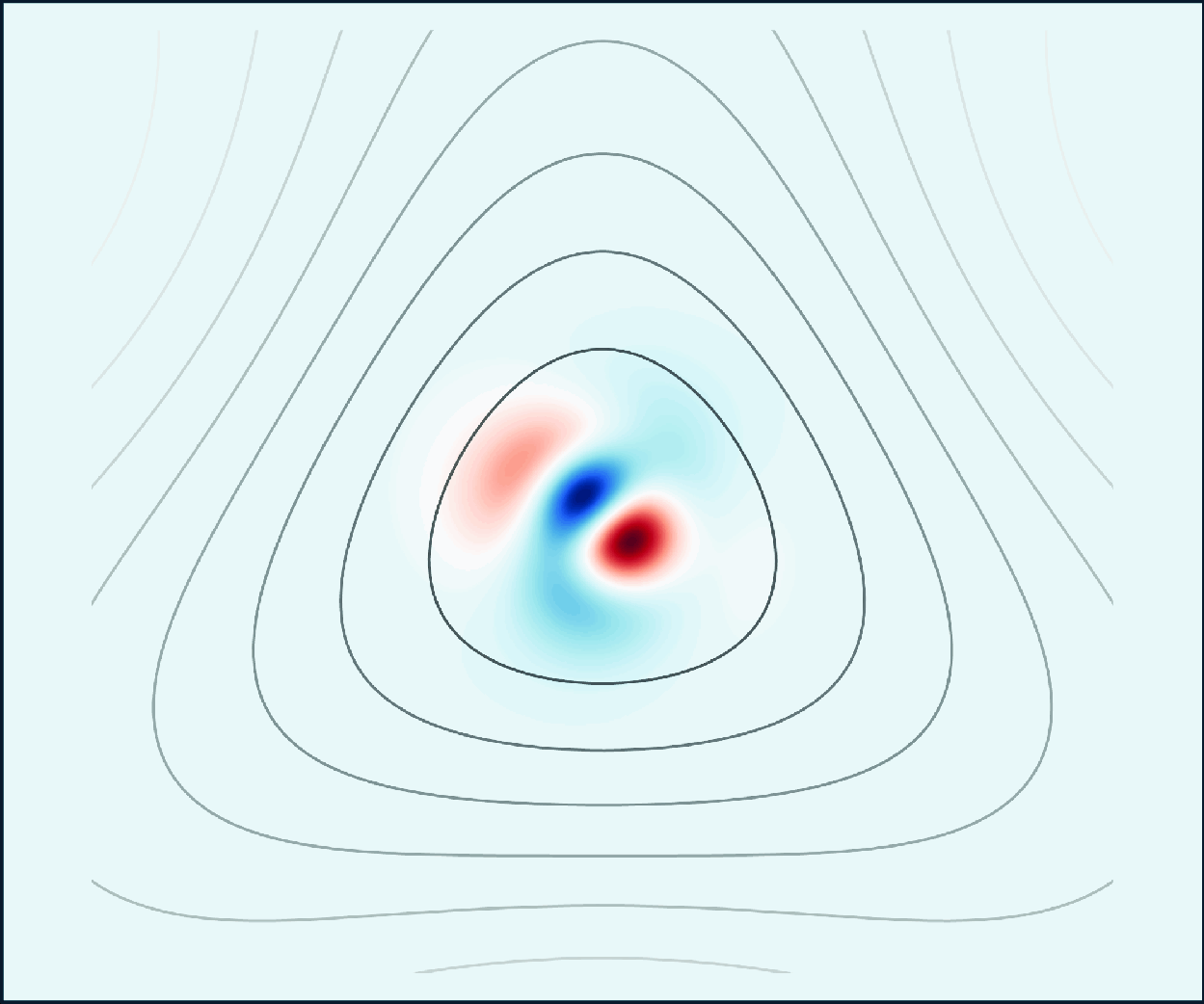
In this study, we demonstrate, for the first time, the existence of a short-wave instability in a Lamb–Oseen vortex subjected to a triangular strain field generated by three satellite vortices, which we term the triangular instability. We identify this instability by numerically integrating the linearised Navier–Stokes equations around a quasi-steady base flow to capture the most unstable mode and validate it by comparing results with theoretical predictions. We evaluate this instability by calculating the growth rates associated with the parametric resonant coupling of two Kelvin waves with the triangular strain field in the limit of small strain rate and large Reynolds number. Our analysis reveals that resonance occurs only for combinations of the azimuthal wavenumbers $m = 1$ and $m = - 2$ (or their symmetric counterparts with opposite signs). We observe several unstable modes with positive growth rates for a moderate viscous Reynolds number $10^4$ and straining parameter value $\epsilon = 0.008$, defined as the cube of the ratio of the core size to the distance from the satellite vortices. The most unstable mode, dominant at typically high Reynolds numbers, has $k \approx 5.18/a$ and $\omega \approx - 0.312\Omega$ (where $a$ and $\Omega$ denote the core size and central angular velocity). It exhibits negligible critical layer damping and remains the most unstable mode over a wide range of ${Re}$ and $\epsilon$. At lower Reynolds numbers, another mode with $k \approx 1.76/a$ and $\omega \approx - 0.407\Omega$, despite significant critical layer damping, becomes the most unstable.
Collaboration is both a process and an outcome. Collaboration is based on the idea that interactions between participants with a common goal, working together as partnerships and sharing resources, can solve complex or “wicked” problems that are not possible to solve in isolation. Collaboration may be simple, occurring between individuals, or more complex interorganizational arrangements across sectors, with the life cycle and size of the collaboration determined by the issue at hand. HTA collaborations may involve a wide range of stakeholders, including HTA agencies at the national, regional, or global level, academia, government (including regulatory authorities), industry, clinicians, providers, and patient organizations. Regardless of the number or type of participants, collaborations need a shared understanding of the common goal, an agreement on aims, and a commitment to shared solutions.
Industry and agency members of the Health Technology Assessment International (HTAi) Asia Policy Forum (APF) met in Seoul, South Korea, in November 2024 for open discussions on how to facilitate and improve the collaborative process between all stakeholders in the health system, including government, HTA agencies, industry, academia, clinicians, as well as patients. Over the three days, these discussions identified some of the risks and obstacles to collaboration in the region, how to develop and use collaboration better, as well as articulating the value and benefits of collaboration both in the region and globally.
This study provides a comprehensive analysis of the impact of helideck surface conditions on the safe operation of helicopter landing and take-off platforms on offshore drilling vessels. Over time, the deterioration of helideck surface coatings necessitates periodic friction coefficient testing every two years in compliance with international standards. Surface coatings that fail to meet the required thresholds are replaced, and the performance of the renewed surface is reassessed using the Helideck Micro GripTester (HMGT), in accordance with U.K. Safety Regulation Group CAP 437 (2023) standards for offshore helicopter landing areas. The findings indicate that the renewed helideck surface coatings lead to a significant increase in the coefficient of friction, thereby enhancing the stability of helicopters upon landing and while on deck. Independent sample t-test and correlation analyses confirmed statistically significant differences between the old and new surface conditions, demonstrating the positive impact of surface improvements on coefficient of friction and, therefore, operational safety. Furthermore, machine learning techniques were employed to model and analyse the non-linear relationships between surface conditions and flow number. The model results demonstrate that variations in helideck surface coatings directly influence helicopter performance and operational safety. These findings underscore the critical importance of regular resurfacing and friction testing in ensuring the safety and reliability of offshore helicopter operations.
Cholesteatoma is a pathological growth of squamous epithelium in the middle ear and mastoid. Pre-operative high-resolution computed tomography is commonly performed to guide the surgical approach and evaluate disease extent. The purpose of this review is to demonstrate the level of correlation between high-resolution computed tomography and intra-operative findings during cholesteatoma surgery.
Method
Medline, Embase and Cochrane databases were searched in December 2024 for studies comparing high-resolution computed tomography and intra-operative findings of adult patients diagnosed with cholesteatoma.
Results
Out of 2514 abstracts identified, 15 were included. The correlation between pre-operative high-resolution computed tomography and intra-operative findings was strongest for the identification of erosion of the malleus (k = 0.77), followed by the lateral semicircular canal and tegmen tympani (k = 0.69). The weakest correlation was found for facial nerve dehiscence (k = 0.55).
Conclusion
High-resolution computed tomography is useful for providing a roadmap for surgery. It offers a strong correlation for intra-operative detection of malleus, incus, lateral semicircular canal and tegmen tympani involvement.
We present a versatile framework that employs Physics-Informed Neural Networks (PINNs) to discover the entropic contribution that leads to the constitutive equation for the extra-stress in rheological models of dilute polymer solutions. In this framework the training of the neural network is guided by an evolution equation for the conformation tensor, which is GENERIC-compliant. We compare two training methodologies for the data-driven PINN constitutive models: one trained on data from the analytical solution of the Oldroyd-B (OB) model under steady-state rheometric flows (PINN-rheometric), and another trained on in silico data generated from computational fluid dynamics (CFD) simulations of complex flow around a cylinder that use the OB model (PINN-complex). The capacity of the PINN models to provide good predictions is evaluated by comparison with CFD simulations using the underlying OB model as a reference. Both models are capable of predicting flow behaviour in transient and complex conditions; however, the PINN-complex model, trained on a broader range of mixed-flow data, outperforms the PINN-rheometric model in complex flow scenarios. The geometry agnostic character of our methodology allows us to apply the learned PINN models to flows with topologies different from those used for training.
Dyckia ibiramensis is an endemic species from southern Brazil, known for its ability to adapt to extreme environmental variations. This study reports the development of species-specific microsatellite markers and the assembly and annotation of the plastid genome of D. ibiramensis, aiming to generate new genomic resources useful for studies on the conservation and evolution of this endangered species. A total of 33,112 microsatellite loci were identified, of which 10 were selected and validated for genotyping 30 individuals from natural populations, showing high genetic variability. These 10 microsatellite markers were very informative for the evaluation of genetic variability. These microsatellite markers evidenced moderate to high genetic diversity at the individual level, low population differentiation, and the capacity of the species to recover population size from ancient genetic bottlenecks. The assembled plastid genome revealed conserved structures and the occurrence of features at the gene level, likely related to stress response to environmental conditions. This study expands the understanding of the genetics of D. ibiramensis, highlighting the importance of genomic strategies for the conservation of endangered species. In situ and ex situ conservation strategies should be used to avoid the extinction of this endemic southern Brazilian genetic resource in nature.
This article reflects on my experience recovering and organising two judicial archives in Uganda — the High Court and Mengo Court archives — which had long been neglected due to bureaucratic disinterest and legal hierarchies inherited from the colonial period. Together, these archives contained over 150,000 uncatalogued case files documenting how ordinary Ugandans used both native and colonial British courts to contest injustice and claim rights. Their exclusion from formal archives was not incidental; it reflected a legal order that considered British colonial statutes, appellate decisions and English-language records as authoritative expression of law, while dismissing native court records, as informal without precedential value and unworthy of preservation. Drawing on critical scholarship and my own archival experience, I argue that the archive of law should not be seen merely as a collection of sources or as sites of power and knowledge, but as a space where legal authority and legitimacy are produced, preserved, and erased. The recovery of these records not only unearthed a neglected legal history shaped by ordinary people but also challenges dominant narratives of legal authority in Africa. This work also exposed the omissions in the archival collections, the influence of colonial memory, and the importance of vernacular legal records for both historical research and contemporary legal practice.
This study examines how university curriculum reforms that increase course selection flexibility influence entrepreneurial outcomes. Departing from traditional emphasis on educational attainment, we explore how institutional changes in education shape entrepreneurial tendencies among alumni. Leveraging a reform that removed constraints on course selection at a major university, we find that increased educational choice significantly fosters entrepreneurship. Our analysis reveals partial support for the moderating effects of individual, family, and spatial factors: the positive impact of these reforms is contingent on the type of electives and courses taken, with stronger effects observed among alumni with entrepreneurial parents, those born in urban areas, and those from higher socioeconomic backgrounds. These groups leverage specific course patterns to align their educational choices with entrepreneurial aspirations, enhancing their likelihood of pursuing entrepreneurial ventures. However, these findings also underscore the potential for educational reforms to exacerbate inequalities, disproportionately benefiting those with preexisting advantages. By integrating insights on institutional changes, course-taking patterns, and individual moderators, this study advances understanding of the interplay between education and entrepreneurship, offering implications for designing more equitable educational policies.
Viscous fingering is a hydrodynamic instability typically occurring when a less viscous fluid displaces a more viscous one and which deforms the interface between the two fluids into finger-shaped intrusions. For miscible fluids, the fingering pattern is usually followed visually by adding a passive dye into one of the two fluids. The reverse displacement of a less viscous fluid by a more viscous one is classically stable, featuring a planar interface. Here, we show experimentally that in some cases, the dye can actively modify the viscosity of a polymer solution and trigger fingering in the reverse displacement. This dye-induced destabilisation is shown to be due to double-diffusive effects triggering a non-monotonic viscosity profile with a maximum because the dye diffuses faster than the polymer.