To save content items to your account,
please confirm that you agree to abide by our usage policies.
If this is the first time you use this feature, you will be asked to authorise Cambridge Core to connect with your account.
Find out more about saving content to .
To save content items to your Kindle, first ensure no-reply@cambridge.org
is added to your Approved Personal Document E-mail List under your Personal Document Settings
on the Manage Your Content and Devices page of your Amazon account. Then enter the ‘name’ part
of your Kindle email address below.
Find out more about saving to your Kindle.
Note you can select to save to either the @free.kindle.com or @kindle.com variations.
‘@free.kindle.com’ emails are free but can only be saved to your device when it is connected to wi-fi.
‘@kindle.com’ emails can be delivered even when you are not connected to wi-fi, but note that service fees apply.
Political polarization is a systemic-level and multifaceted process that severs cross-cutting ties and shifts perceptions of politics to a zero-sum game. When it turns pernicious, political actors and supporters view opponents as an existential threat and the capacity of democratic institutions to process political conflict breaks down. The article identifies four common fault lines of polarization globally – who belongs, democracy, inequality and social contract. It argues that while Latin American countries experience, to varying degrees, all four of the fault lines, it is the deep-seated, persistent social hierarchies oriented around class, race, and place that stand out relative to other countries. Reaching consensus on reforms that may renew or reformulate agreements on the terms of the social contract, boundaries of community membership, and redressing social inequality is a tall task. Yet the region’s sustained consensus on the democratic rules of the game can provide the mechanisms for addressing this task if new majority coalitions can be formed.
This article offers an analysis of the changes in mass-level ideological polarization in Latin America. It provides a cross-national, region-wide assessment of polarization dynamics using survey data on left-right ideological identities. A novel indicator for measuring ideological polarization at the individual level is proposed, which is more compatible with theoretical conceptualizations of ideological polarization than other existing indicators. The indicator is applied to data from the AmericasBarometer surveys to measure degrees and changes in mass-level ideological polarization in 19 Latin American countries between 2006 and 2019. The study reveals a substantial process of mass-level ideological restructuring, accompanied by a region-wide increase in ideological polarization in Latin America taking place during the second decade of the twenty-first century. We also find that ideological polarization, albeit varying in intensity from country to country, is clearly present at the mass level in the majority of countries in the region.
The aim of this study is to investigate whether 25-hydroxyvitamin D (25(OH)D) is associated with periodontitis and tooth loss in older adults. A total of 2346 adults underwent a detailed dental examination as part of the health assessment of a national population study – The Irish Longitudinal Study of Ageing. 25(OH)D analysis was performed on frozen non-fasting total plasma using LC-MS. The analysis included both multiple logistic regression and multinominal logistic regression to investigate associations between 25(OH)D concentration, periodontitis and tooth loss, adjusting for a range of potential confounders. Results of the analysis found the mean age of participants was 65·3 years (sd 8·2) and 55·3 % of the group were female. Based on the quintile of 25(OH)D concentration, participants in the lowest v. highest quintile had an OR of 1·57 (95 % CI 1·16, 2·13; P < 0·01) of having periodontitis in the fully adjusted model. For tooth loss, participants in the lowest v. highest quintile of 25(OH)D had a RRR of 1·55 (95 % CI 1·12, 2·13; P < 0·01) to have 1–19 teeth and a RRR of 1·96 (95 % CI 1·20, 3·21; P < 0·01) to be edentulous, relative to those with ≥ 20 teeth in the fully adjusted models. These findings demonstrate that in this cross-sectional study of older men and women from Ireland, 25(OH)D concentration was associated with both periodontitis and tooth loss, independent of other risk factors.
The UK population is living longer; therefore, promoting healthy ageing via positive nutrition could have widespread public health implications. Moreover, dietary fibre intake is associated with health benefits; however, intake is below UK recommendations (30 g/d). Utilising national dietary survey data can provide up-to-date information on a large representative cohort of UK older adults, so that tailored solutions can be developed in the future. This study used cross-sectional data from the National Diet and Nutrition Survey (years 2008–2009 to 2018–2019) for older adults’ (n 1863; 65–96 years) dietary fibre intake (three-to-four-day food diaries), top ten dietary fibre-rich foods, associated factors (demographics, dietary/lifestyle habits) and various health outcomes (anthropometric, blood and urine). Mean dietary fibre intake was 18·3 g/d (range: 2·9–55·1 g/d); therefore, below the UK dietary recommendations, with compliance at 5·7 %. In addition, there were five significant associations (P < 0·05) related to lower dietary fibre intake such as increasing age group, without own natural teeth, impaired chewing ability, lower education leaving age and poor general health. Older adults’ key foods containing dietary fibre were mainly based on convenience such as baked beans, bread and potatoes. Positively, higher dietary fibre consumption was significantly associated (P = 0·007) with reduced diastolic blood pressure. In summary, the benefits of dietary fibre consumption were identified in terms of health outcomes and oral health were key modulators of intake. Future work should focus on a life course approach and the role of food reformulation to help increase dietary fibre intake.
The primary aim of this study was to examine the association between snack nutritional quality, overall diet quality and adiposity among Australian adolescents. The secondary aim was to assess the distribution of discretionary foods (i.e. energy-dense and nutrient-poor foods and beverages) and intakes from the five food groups at different levels of snack nutritional quality. Dietary data collected from nationally representative adolescents (12–18 years old) during a 24-h dietary recall in the National Nutrition and Physical Activity Survey were analysed (n 784). Snacks were defined based on participant-identified eating occasions. Snack nutritional quality was assessed using the Nutrient Profiling Scoring Criterion (NPSC), whereas diet quality was evaluated using the Dietary Guideline Index for Children and Adolescents. Adiposity was assessed through BMI Z-score waist circumference and waist:height ratio (WHtR). Higher nutritional quality of snacks, as assessed by the NPSC, has been associated with higher diet quality among both boys and girls (P < 0·001). However, there is no association between snacks nutritional quality with BMI Z-score, waist circumference and WHtR. Among both boys and girls, the consumption of fruits, vegetables and legumes/beans at snacks increased with improvement in snack nutritional quality. Conversely, the consumption of discretionary foods at snack decreased with improvement in snack nutritional quality. In conclusion, improved snack quality was associated with better diet quality in adolescents. However, there was no association between snack nutritional quality and adiposity. Future, snack nutrition quality indices should consider optimum snack characteristics related with adiposity and diet quality.
The contribution of dietary saturated fatty acids (SFA) to cardiovascular disease (CVD) and mortality remains debated after decades of research. Few previous studies had repeated dietary assessments and power to assess mortality. Evidence for individual SFA is limited. In this large population-based cohort study, we investigated associations between intake of total and individual SFA and risk of total and CVD mortality. Adult residents (mean 41·1 years at baseline) in three Norwegian counties were invited to repeated health screenings between 1974 and 1988 (> 80 % attendance). We calculated cumulative average intakes of macronutrients from semi-quantitative FFQ. Median (interquartile range) intake of SFA was 14·6 % (12·8–16·6 %) of total energy (E%). Hazard ratios (HR) and 95 % CI were estimated using multivariable Cox regression models to assess total, CVD, ischaemic heart disease (IHD) and acute myocardial infarction (AMI) mortality. Among 78 725 participants, 28 555 deaths occurred during a median follow-up of 33·5 years, with 9318 deaths due to CVD. Higher intake of SFA (replacing carbohydrates) was positively associated with all mortality endpoints, including total (HR per 5 E% increment, 1·18; 95 % CI 1·13, 1·23) and CVD mortality (1·16; 95 % CI 1·07, 1·25). Theoretical isoenergetic substitution of SFA with carbohydrates or MUFA was associated with lower risk. Of individual SFA, myristic (14:0) and palmitic acid (16:0) were positively associated with mortality. In summary, dietary SFA intake was strongly associated with higher total and CVD mortality in this long-term cohort study. This supports policies implemented to reduce SFA consumption in favour of carbohydrates and unsaturated fats.
Polarizing rhetoric and negative tone are thought to generate more attention on social media. We seek to describe and analyze how presidential candidates in Colombia’s 2022 election deployed (de)polarizing rhetoric and tone, around what topics, and with what effects. We analyze the tweets (and corresponding engagement) of the four leading candidates during the campaign. Tone behaves as expected. Negatively worded tweets receive overall more likes and retweets, though the strength of their effect varies by candidate. Polarizing rhetoric behaves differently. Using polarizing and depolarizing rhetoric proved better than neutral messages, but using depolarizing rhetoric, generated greater engagement than its polarizing counterpart. This study suggests that the visibility of a candidate does not necessarily correspond to their greater use of Twitter, an increased deployment of polarizing rhetoric, or an emphasis on negative emotions. This article provides a glimmer of hope regarding the potential usefulness of positive uniting messages on Twitter (now X).
This analytical essay proposes the notion of disjointed polarization to characterize the nature of polarization in contemporary Chile. In disjointed polarization, elite-level polarization does not lead to a successful electoral realignment. Disjointed polarization is thus consistent with a long-lasting crisis of representation in which a serial disconnect between politicians (pursuing different polarizing strategies) and a sizable fraction of the electorate persists, as voters remain alienated from old and emerging political elites. Because the structural changes that make disjointed polarization persist longer than expected in Chile today are widespread across Latin America, the essay speculates on the possibility that enduring disjointed polarization applies to other cases where neither a “populist realignment” nor “generative polarization” took place. Instead, disjointed polarization might reflect the onset of a new (non-partisan representation) normal.
Ensuring adequate iodine nutrition during pregnancy is crucial for fetal brain development. Thus, the WHO recommend monitoring iodine nutrition in pregnant women. With changing dietary habits and declining iodine intake in coastal populations, iodine nutrition in pregnant Faroese women was a focus in newly established pregnancy cohorts. This study aimed to monitor the iodine status of pregnant women in the Faroe Islands by assessing urinary iodine concentration (UIC) and maternal iodine intake. For 2 years, all pregnant women were invited to participate in a nationwide study. Participants completed questionnaires addressing personal and lifestyle factors, supplement intake and dietary habits, Additionally, they provided spot urine samples for UIC measurements. Iodine was measured spectrophotometrically using the ceri/arsen method after alkaline-ashing. Among the 1030 invited, 654 participated and 647 provided a spot-urine sample. The average age was 30·4 years (18–47 years). The overall median UIC was 110 µg/l, declined from 117 to 101 µg/l over 2 years (P = 0·004). UIC was significantly impacted by diet. Women consuming fish and eggs had a higher median UIC compared with those whose primary iodine source was dairy: fish-dinner, 151 µg/l; dairy products, 112 µg/l (P < 0·001). Furthermore, there was a positive association between maternal age, reported intake of iodine-containing supplements and the UIC. This nationwide study of pregnant Faroese women found UIC below the WHO-recommended cut-off for pregnant women and decreasing with time. This decline highlights the importance of continuous monitoring to prompty identify shifts in iodine status, enabling timely intervention to address emerging deficiencies.
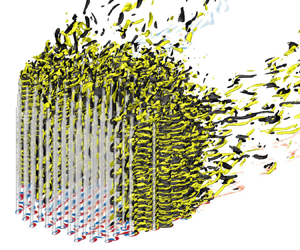
Previous work suggests that the arrangement of elements in an obstruction may influence the bulk flow velocity through the obstruction, but the physical mechanisms for this influence are not yet clear. This is the motivation for this study, where direct numerical simulation is used to investigate flow through an array of cylinders at a resolution sufficient to observe interactions between wakes of individual elements. The arrangement is altered by varying the gap ratio $G/d$ (1.2 – 18, G is the distance between two adjacent cylinders, d is the cylinder diameter), array-to-element diameter ratio $D/d$ (3.6 – 200, D is the array diameter), and incident flow angle ($0^{\circ} - 30^{\circ}$). Depending on the element arrangement, it is found that the average root-mean-square lift and drag coefficients can vary by an order of magnitude, whilst the average time-mean drag coefficient of individual cylinders ($\overline{C_{d}}$), and the bulk velocity are found to vary by up to $50\,\%$ and a factor of 2, respectively. These arrangement effects are a consequence of the variation in flow and drag characteristics of individual cylinders within the array. The arrangement effects become most critical in the intermediate range of flow blockage parameter $\mathit{\Gamma_{D}^{\prime}} = 0.5-1.5$ ($\mathit{\Gamma_{D}^{\prime}}=\overline{C_{d}}aD/(1-\phi)$, where a is frontal element area per unit volume, and $\phi$ is solid volume fraction), due to the high variability in element-scale flow characteristics. Across the full range of arrangements modelled, it is confirmed that the bulk velocity is governed by flow blockage parameter but only if the drag coefficient incorporates arrangement effects. Using these results, this paper proposes a framework for describing and predicting flow through an array across a variety of arrangements.


Antibiotic overuse for asymptomatic bacteriuria is common in older adults and can lead to harmful outcomes including antimicrobial resistance. Our objective was to evaluate the impact of a simple scoring tool on urine culturing and antibiotic prescribing for adults with presumed urinary tract infections (UTI).
Design:
Quasi-experimental study using interrupted time series with segmented regression to evaluate urine culturing and urinary antibiotic use and length of stay (LOS), acute care transfers, and mortality 18 months before and 16 months after the intervention.
Setting:
134-bed complex continuing care and rehabilitation hospital in Ontario, Canada.
Participants:
Nurses, nurse practitioners, physicians, and other healthcare professionals.
Intervention:
A multifaceted intervention focusing on a 6-item mnemonic scoring tool called the BLADDER score was developed based on existing minimum criteria for prescribing antibiotics in patients with presumed UTI. The BLADDER score was combined with ward- and prescriber-level feedback and education.
Results:
Before the intervention, the mean rate of urine culturing was 12.47 cultures per 1,000 patient days; after the intervention, the rate was 7.92 cultures per 1,000 patient days (IRR 0.87; 95% CI, 0.67–1.12). Urinary antibiotic use declined after the intervention from a mean of 40.55 DDD per 1,000 patient days before and 25.96 DDD per 1,000 patient days after the intervention (IRR 0.68; 95% CI, 0.59–0.79). There was no change in mean patient LOS, acute care transfers, or mortality.
Conclusions:
The BLADDER score may be a safe and effective tool to support improved diagnostic and antimicrobial stewardship to reduce unnecessary treatment for asymptomatic bacteriuria.
Anorexia Nervosa (AN) is common in adolescents and has a high mortality and morbidity rate with a lifetime prevalence of 0.5% to 2%.1,2 We aim to review the neurobiology correlation of Anorexia Nervosa in Autism Spectrum Disorder as they are often associated together.
Objectives
1. Understand the correlation between the neurobiology of Autism Spectrum Disorder (ASD) and Anorexia Nervosa.
2. Assess the association and prevalence of Anorexia nervosa in the ASD population.
3. To focus on the implications for the pathogenesis of Anorexia Nervosa and treatment of this disorder in the ASD population.
Methods
We searched PubMed, APA PscyINFO, Embase, CINAHL, and Google scholar databases with the keywords Autism Spectrum Disorder AND Anorexia Nervosa and included 6 relevant human studies out of 187 published in English.
Results
Neilson et al. studied the outcome of ASD in teenage onset AN, and a statistically significant negative dose-response relationship is found in all the 3 Morgan-Russell Outcome Assessment Schedule (MROAS) domains in stable ASD over time, and the results on the subscales ‘mental state,’ ‘psychosexual state’ and ‘socio-economic state, “personal contacts,’ ‘social activities’ and ‘employment record.’3 The outcome of AN onset in adolescence is generally favorable regarding mortality and the persistence of eating disorders in adulthood. A study by Pruccoli et al. noted a high prevalence of ASD traits in a group of young AN patients, predominantly seen in 4 specific EDI-3 subscales and independent of BMI.4 Margari et al. found only AN diagnosis had a statistically significant difference (p = 0.04) in females vs. males when comparing sex differences for comorbidities.5
Conclusions
Morphological changes in brain areas are linked to social cognition and increase the risk of eating disorders in ASD. We recommend future studies with robust study design to explore the full spectrum of pathogenesis and association of AN in ASD.
The assessment of suicide risk remains a critical concern, especially within the psychiatric community. Mental health professionals continually work to identify and support individuals at risk, emphasizing the need for ongoing research and training in this area.
Objectives
The objectives of our study were to understand the characteristics of patients hospitalized after a suicide attempt (SA), analyze the characteristics of these attempts, identify risk factors associated with suicidal behaviors, and determine predictors for recurring suicidal behavior.
Methods
The study’s methodology was retrospective, descriptive, and comparative. It was conducted with 277 patients hospitalized in the psychiatric department “C” of Razi Psychiatric Hospital in Manouba. The sample consists of 72 individuals who attempted suicide, divided into two groups: first-time attempters and recurrent patients, and 205 controls hospitalized for other reasons during the same period.
Results
Results showed a significant increase in the frequency of hospitalizations for SA, rising from 0.7% to 2.25% of the total admissions between 2018 and 2022. Those who attempted suicide were on average 32.5 years old, predominantly female, urban residents, with a moderate socioeconomic status, secondary or higher education, unemployed, unmarried, childless, and lacking strong family support.
The study identified several risk factors associated with suicide attempts, including risky behaviors, previous life events, type II bipolar disorders, personality disorders, the number of psychiatric hospitalizations, and the quality of follow-up. However, schizophrenia was negatively correlated with SA.
Suicidal recurrence was observed in 65.5% of attempters and was linked to personal psychiatric follow-up history, mood disorders, personality disorders, the presence of stress factors, and caustic substance ingestion.
Conclusions
In conclusion, the study underscores the importance of assessing suicide risk among individuals with mental disorders to implement appropriate prevention strategies.
Anxiety disorders represent the most common mental illnesses, which are listed among the ten most important causes of disability worldwide. According to DSM-5, they are defined as “disorders that share characteristics of excessive fear and anxiety and related behavioral disorders”. Patients exhibit low levels of quality of life. Their daily routine is affected negatively. However, Occupational Therapy has been proven to play a crucial role in their treatment, improving quality of life through the involvement in occupations.
Objectives
To highlight the contribution of Occupational Therapy in ameliorating the quality of life in anxiety disorders.
Methods
A review of 50 articles -from 2013 to 2023- on PubMed and Google Scholar, regarding the beneficial impact of Occupational Therapy in the Anxiety Disorders’ treatment.
Results
Occupational Therapists can intervene in many negatively affected -by the disease- life domains such as: Activities of Daily Living, Education, Work, Play, Social Interaction and Sleep. The most effective Occupational Therapy methods are based on the cognitive behavioral approach and include: Psychoeducation, Relaxation techniques, Social skills training and Systematic desensitization.
Other methods involve training in Activities of Daily Living such as feeding, maintaining good personal hygiene, and using public transport. Furthermore, Art Therapy (visual arts, use of clay) has been shown to reduce feelings of anxiety, while promoting creativity and enhancing self-esteem.
Conclusions
Additional research is needed regarding the effectiveness of Occupational Therapy in improving the quality of life for patients suffering from Anxiety Disorders. The important “take home message” is that the amelioration of the patients’ quality of life should be the main goal of the therapeutic intervention and not a secondary result of it.
Few views have seen a more precipitous fall from grace than hedonism, which once occupied a central position in the history of ethics. Recently, there have been efforts to revive interest in the view, including well-motivated pleas for contemporary ethicists to at least take the view seriously. In this article, I argue for the seriousness of hedonism on metaethical grounds. Taking J.S. Mill's argument for hedonism as a test case, I show that historically, classic hedonism was grounded metaethically via a commitment to two positions: empiricist epistemology and the view that pleasure occurs in sensation. Together, these two positions provided principled grounds for various iterations of classic hedonism. Moreover, these two positions are still serious options in both contemporary epistemology and the contemporary literature on the nature of pleasure. Insofar as a contemporary ethicist takes those two views seriously, they ought to take classic hedonism seriously as well.
The phenomenon of self-stimulatory behaviors, commonly referred to as “stimming,” presents a fascinating avenue of exploration within the context of neurodevelopmental disorders. While stimming behaviors are widely associated with ASD, there is emerging evidence suggesting that individuals with ADHD may also engage in similar behaviors. This study seeks to undertake a comprehensive investigation of the neurophenomenology of stimming in individuals diagnosed with ASD and ADHD, aiming to discern potential shared and distinctive characteristics.
Objectives
The principal objective of this research is to conduct an intricate neurophenomenological analysis of stimming behaviors in cohorts diagnosed with ASD (n=60) and ADHD (n=60), with a concurrent control group of neurotypical individuals (n=60). The study aspires to delineate the prevalence, typology, and neurophysiological underpinnings of stimming behaviors in both ASD and ADHD populations. Moreover, this study endeavors to identify whether particular stimming behaviors exhibit differential prevalence or intensity between the two disorders.
Methods
Participants underwent rigorous neurophenomenological assessments, incorporating structured interviews, validated self-report questionnaires and direct observations. Diagnostic confirmation was established through the administration of gold-standard instruments, such as the Autism Diagnostic Observation Schedule (ADOS-2) for ASD and the Conners’ Parent Rating Scale for ADHD. Stimming behaviors were meticulously categorized (e.g., motor, vocal, sensory) and scrutinized for quantitative metrics, including frequency, duration, and complexity.
Results
Preliminary analyses have uncovered profound disparities in the manifestation of stimming behaviors between ASD and ADHD cohorts. Individuals with ASD displayed a significantly higher prevalence of stimming behaviors, with motor stimming predominating, followed by vocal and sensory manifestations. In contrast, individuals with ADHD exhibited a comparatively reduced frequency and intensity of stimming, primarily within the motor domain, albeit notably less elaborate. Control group participants exhibited a negligible occurrence of stimming behaviors.
Conclusions
This multidimensional exploration illuminates the nuanced neurophenomenological distinctions in self-stimulatory behaviors between ASD and ADHD. Stimming emerges as a pivotal feature in ASD, while its presence in ADHD, though discernible, is markedly attenuated. This study’s findings hold implications for precise diagnostic delineation and the prospect of personalized interventions for these complex neurodevelopmental conditions. Future avenues of research may delve into the neural substrates underpinning stimming behaviors, further enhancing our comprehension of these phenomena.
People with schizophrenia have multiple and persistent cognitive deficits. These defects have a deep impact on people’s psycho-social functions. Although computerized cognitive training has positive results in some people, the effect of these treatment programs in schizophrenia is not clear.
Objectives
The purpose of this study was to investigate the effectiveness of computerized cognitive exercises on the components affecting the mental health and cognitive functions of schizophrenic patients.
Methods
Fifty-four adults with schizophrenia were randomly divided into two intervention and control groups. Participants in the intervention group received 30 sessions of 5-45 minutes of computerized cognitive training in addition to the usual treatment programs. While the control group only received their usual rehabilitation programs (Pharmacotherapy, psychotherapy and occupational therapy).
Mental health was evaluated with Warwick-Edinburgh Mental Well-Being Scale and Depression-Anxiety-Stress Scale (DASS), and cognitive functions with CANTAB tests Batteries before the intervention, after and two months after the intervention (follow up). The set of CANTAB tests used in this study included the following tests: Spatial Recognition Memory (SRM), Paired Associates Learning (PAL), Stockings of Cambridge(SOC), Spatial Working Memory (SWM), and Spatial Span (SSP).
Results
The analysis of the findings showed that the patients’ performance in the cognitive tests related to memory and executive functions improved significantly in the intervention group after the intervention. In problem solving skills, despite the better performance in the intervention group, the difference between the two groups was not significant. Also, the intervention was able to significantly improve mental health and reduce stress. But no significant difference was observed in reducing anxiety and depression.
Conclusions
As a result, the study showed that 30 sessions of computerized cognitive training can have a positive effect on overall mental health and some cognitive functions.