Refine search
Actions for selected content:
38 results
A note on transverse sets and bilinear varieties
- Part of
-
- Journal:
- Mathematical Proceedings of the Cambridge Philosophical Society / Volume 180 / Issue 3 / May 2026
- Published online by Cambridge University Press:
- 27 November 2025, pp. 477-489
- Print publication:
- May 2026
-
- Article
-
- You have access
- HTML
- Export citation
-
Let G and H be finite-dimensional vector spaces over $\mathbb{F}_p$. A subset $A \subseteq G \times H$ is said to be transverse if all of its rows $\{x \in G \colon (x,y) \in A\}$, $y \in H$, are subspaces of G and all of its columns $\{y \in H \colon (x,y) \in A\}$, $x \in G$, are subspaces of H. As a corollary of a bilinear version of the Bogolyubov argument, Gowers and the author proved that dense transverse sets contain bilinear varieties of bounded codimension. In this paper, we provide a direct combinatorial proof of this fact. In particular, we improve the bounds and evade the use of Fourier analysis and Freiman’s theorem and its variants.


Equivariant Ehrhart theory of hypersimplices
- Part of
-
- Journal:
- Forum of Mathematics, Sigma / Volume 13 / 2025
- Published online by Cambridge University Press:
- 27 October 2025, e178
-
- Article
-
- You have access
- Open access
- HTML
- Export citation
-
We study the hypersimplex under the action of the symmetric group $S_n$ by coordinate permutation. We prove that its equivariant volume, given by the evaluation of its equivariant $H^*$-series at $1$, is the permutation character of decorated ordered set partitions under the natural action of $S_n$. This verifies a conjecture of Stapledon for the hypersimplex. To prove this result, we give a formula for the coefficients of the $H^*$-polynomial. Additionally, for the $(2,n)$-hypersimplex, we use this formula to show that trivial character need not appear as a direct summand of a coefficient of the $H^*$-polynomial, which gives a family of counterexamples to a different conjecture of Stapledon.


ENUMERATION AND DIVISIBILITY OF HIGHER DIMENSIONAL KING WALKS
- Part of
-
- Journal:
- Bulletin of the Australian Mathematical Society / Volume 113 / Issue 2 / April 2026
- Published online by Cambridge University Press:
- 28 July 2025, pp. 177-188
- Print publication:
- April 2026
-
- Article
- Export citation
-
The lattice walks in the plane starting at the origin $\mathbf {0}$ with steps in $\{-1,0,1\}^{2}\setminus \{\mathbf {0}\}$ are called king walks. We investigate enumeration and divisibility for higher dimensional king walks confined to certain regions. Specifically, we establish an explicit formula for the number of $(r+s)$-dimensional king walks of length n ending at $(a_1,\ldots ,a_r,b_1,\ldots ,b_s)$ which never dip below $x_i=0$ for $i=1,\ldots ,r$. We also derive divisibility properties for the number of $(r+s)$-dimensional king walks of length p (an odd prime) through group actions.


Orthogonal roots, Macdonald representations, and quasiparabolic sets
- Part of
-
- Journal:
- Forum of Mathematics, Sigma / Volume 13 / 2025
- Published online by Cambridge University Press:
- 08 July 2025, e110
-
- Article
-
- You have access
- Open access
- HTML
- Export citation
-
Let W be a simply laced Weyl group of finite type and rank n. If W has type $E_7$, $E_8$ or $D_n$ for n even, then the root system of W has subsystems of type $nA_1$. This gives rise to an irreducible Macdonald representation of W spanned by n-roots, which are products of n orthogonal roots in the symmetric algebra of the reflection representation. We prove that in these cases, the set of all maximal sets of orthogonal positive roots has the structure of a quasiparabolic set in the sense of Rains–Vazirani. The quasiparabolic structure can be described in terms of certain quadruples of orthogonal positive roots which we call crossings, nestings and alignments. This leads to nonnesting and noncrossing bases for the Macdonald representation, as well as some highly structured partially ordered sets. We use the $8$-roots in type $E_8$ to give a concise description of a graph that is known to be non-isomorphic but quantum isomorphic to the orthogonality graph of the $E_8$ root system.


AUTOMORPHISM GROUPS OF BICOSET DIGRAPHS
- Part of
-
- Journal:
- Bulletin of the Australian Mathematical Society / Volume 112 / Issue 1 / August 2025
- Published online by Cambridge University Press:
- 24 March 2025, pp. 30-46
- Print publication:
- August 2025
-
- Article
- Export citation
Bender–Knuth Billiards in Coxeter Groups
- Part of
-
- Journal:
- Forum of Mathematics, Sigma / Volume 13 / 2025
- Published online by Cambridge University Press:
- 24 January 2025, e7
-
- Article
-
- You have access
- Open access
- HTML
- Export citation
-
Let $(W,S)$ be a Coxeter system, and write $S=\{s_i:i\in I\}$, where I is a finite index set. Fix a nonempty convex subset $\mathscr {L}$ of W. If W is of type A, then $\mathscr {L}$ is the set of linear extensions of a poset, and there are important Bender–Knuth involutions $\mathrm {BK}_i\colon \mathscr {L}\to \mathscr {L}$ indexed by elements of I. For arbitrary W and for each $i\in I$, we introduce an operator $\tau _i\colon W\to W$ (depending on $\mathscr {L}$) that we call a noninvertible Bender–Knuth toggle; this operator restricts to an involution on $\mathscr {L}$ that coincides with $\mathrm {BK}_i$ in type A. Given a Coxeter element $c=s_{i_n}\cdots s_{i_1}$, we consider the operator $\mathrm {Pro}_c=\tau _{i_n}\cdots \tau _{i_1}$. We say W is futuristic if for every nonempty finite convex set $\mathscr {L}$, every Coxeter element c and every $u\in W$, there exists an integer $K\geq 0$ such that $\mathrm {Pro}_c^K(u)\in \mathscr {L}$. We prove that finite Coxeter groups, right-angled Coxeter groups, rank-3 Coxeter groups, affine Coxeter groups of types $\widetilde A$ and $\widetilde C$, and Coxeter groups whose Coxeter graphs are complete are all futuristic. When W is finite, we actually prove that if $s_{i_N}\cdots s_{i_1}$ is a reduced expression for the long element of W, then $\tau _{i_N}\cdots \tau _{i_1}(W)=\mathscr {L}$; this allows us to determine the smallest integer $\mathrm {M}(c)$ such that $\mathrm {Pro}_c^{{\mathrm {M}}(c)}(W)=\mathscr {L}$ for all $\mathscr {L}$. We also exhibit infinitely many non-futuristic Coxeter groups, including all irreducible affine Coxeter groups that are not of type $\widetilde A$, $\widetilde C$, or $\widetilde G_2$.


Actions of nilpotent groups on nilpotent groups
- Part of
-
- Journal:
- Glasgow Mathematical Journal / Volume 67 / Issue 2 / May 2025
- Published online by Cambridge University Press:
- 16 January 2025, pp. 228-231
-
- Article
-
- You have access
- Open access
- HTML
- Export citation
-
For finite nilpotent groups $J$ and $N$, suppose $J$ acts on $N$ via automorphisms. We exhibit a decomposition of the first cohomology set in terms of the first cohomologies of the Sylow $p$-subgroups of $J$ that mirrors the primary decomposition of $H^1(J,N)$ for abelian $N$. We then show that if $N \rtimes J$ acts on some non-empty set $\Omega$, where the action of $N$ is transitive and for each prime $p$ a Sylow $p$-subgroup of $J$ fixes an element of $\Omega$, then $J$ fixes an element of $\Omega$.


CAYLEY GRAPHS AND GRAPHICAL REGULAR REPRESENTATIONS
- Part of
-
- Journal:
- Bulletin of the Australian Mathematical Society / Volume 109 / Issue 1 / February 2024
- Published online by Cambridge University Press:
- 15 September 2023, pp. 161-162
- Print publication:
- February 2024
-
- Article
-
- You have access
- HTML
- Export citation
Fixed point conditions for non-coprime actions
- Part of
-
- Journal:
- Proceedings of the Royal Society of Edinburgh. Section A: Mathematics / Volume 155 / Issue 1 / February 2025
- Published online by Cambridge University Press:
- 11 September 2023, pp. 345-351
- Print publication:
- February 2025
-
- Article
-
- You have access
- Open access
- HTML
- Export citation
-
In the setting of finite groups, suppose $J$
 acts on $N$
 via automorphisms so that the induced semidirect product $N\rtimes J$
 acts on some non-empty set $\Omega$
 , with $N$
 acting transitively. Glauberman proved that if the orders of $J$
 and $N$
 are coprime, then $J$
 fixes a point in $\Omega$
 . We consider the non-coprime case and show that if $N$
 is abelian and a Sylow $p$
 -subgroup of $J$
 fixes a point in $\Omega$
 for each prime $p$
 , then $J$
 fixes a point in $\Omega$
 . We also show that if $N$
 is nilpotent, $N\rtimes J$
 is supersoluble, and a Sylow $p$
 -subgroup of $J$
 fixes a point in $\Omega$
 for each prime $p$
 , then $J$
 fixes a point in $\Omega$
 .
.


Rotor-Routing Induces the Only Consistent Sandpile Torsor Structure on Plane Graphs
- Part of
-
- Journal:
- Forum of Mathematics, Sigma / Volume 11 / 2023
- Published online by Cambridge University Press:
- 07 September 2023, e78
-
- Article
-
- You have access
- Open access
- HTML
- Export citation
Simple eigenvalues of cubic vertex-transitive graphs
- Part of
-
- Journal:
- Canadian Journal of Mathematics / Volume 76 / Issue 5 / October 2024
- Published online by Cambridge University Press:
- 10 August 2023, pp. 1496-1519
- Print publication:
- October 2024
-
- Article
-
- You have access
- Open access
- HTML
- Export citation
-
If ${\mathbf v} \in {\mathbb R}^{V(X)}$ is an eigenvector for eigenvalue $\lambda $ of a graph X and $\alpha $ is an automorphism of X, then $\alpha ({\mathbf v})$ is also an eigenvector for $\lambda $. Thus, it is rather exceptional for an eigenvalue of a vertex-transitive graph to have multiplicity one. We study cubic vertex-transitive graphs with a nontrivial simple eigenvalue, and discover remarkable connections to arc-transitivity, regular maps, and number theory.


Quantitative inverse theorem for Gowers uniformity norms $\mathsf {U}^5$ and $\mathsf {U}^6$ in $\mathbb {F}_2^n$
- Part of
-
- Journal:
- Canadian Journal of Mathematics / Volume 76 / Issue 4 / August 2024
- Published online by Cambridge University Press:
- 15 June 2023, pp. 1289-1338
- Print publication:
- August 2024
-
- Article
- Export citation
-
We prove quantitative bounds for the inverse theorem for Gowers uniformity norms $\mathsf {U}^5$ and $\mathsf {U}^6$ in $\mathbb {F}_2^n$. The proof starts from an earlier partial result of Gowers and the author which reduces the inverse problem to a study of algebraic properties of certain multilinear forms. The bulk of the work in this paper is a study of the relationship between the natural actions of $\operatorname {Sym}_4$ and $\operatorname {Sym}_5$ on the space of multilinear forms and the partition rank, using an algebraic version of regularity method. Along the way, we give a positive answer to a conjecture of Tidor about approximately symmetric multilinear forms in five variables, which is known to be false in the case of four variables. Finally, we discuss the possible generalization of the argument for $\mathsf {U}^k$ norms.


A NOTE ON REGULAR SETS IN CAYLEY GRAPHS
- Part of
-
- Journal:
- Bulletin of the Australian Mathematical Society / Volume 109 / Issue 1 / February 2024
- Published online by Cambridge University Press:
- 09 February 2023, pp. 1-5
- Print publication:
- February 2024
-
- Article
- Export citation
-
A subset R of the vertex set of a graph $\Gamma $ is said to be $(\kappa ,\tau )$-regular if R induces a $\kappa $-regular subgraph and every vertex outside R is adjacent to exactly $\tau $ vertices in R. In particular, if R is a $(\kappa ,\tau )$-regular set of some Cayley graph on a finite group G, then R is called a $(\kappa ,\tau )$-regular set of G. Let H be a nontrivial normal subgroup of G, and $\kappa $ and $\tau $ a pair of integers satisfying $0\leq \kappa \leq |H|-1$, $1\leq \tau \leq |H|$ and $\gcd (2,|H|-1)\mid \kappa $. It is proved that (i) if $\tau $ is even, then H is a $(\kappa ,\tau )$-regular set of G; (ii) if $\tau $ is odd, then H is a $(\kappa ,\tau )$-regular set of G if and only if it is a $(0,1)$-regular set of G.


Set superpartitions and superspace duality modules
- Part of
-
- Journal:
- Forum of Mathematics, Sigma / Volume 10 / 2022
- Published online by Cambridge University Press:
- 01 December 2022, e105
-
- Article
-
- You have access
- Open access
- HTML
- Export citation
-
The superspace ring $\Omega _n$ is a rank n polynomial ring tensored with a rank n exterior algebra. Using an extension of the Vandermonde determinant to $\Omega _n$, the authors previously defined a family of doubly graded quotients ${\mathbb {W}}_{n,k}$ of $\Omega _n$, which carry an action of the symmetric group ${\mathfrak {S}}_n$ and satisfy a bigraded version of Poincaré Duality. In this paper, we examine the duality modules ${\mathbb {W}}_{n,k}$ in greater detail. We describe a monomial basis of ${\mathbb {W}}_{n,k}$ and give combinatorial formulas for its bigraded Hilbert and Frobenius series. These formulas involve new combinatorial objects called ordered set superpartitions. These are ordered set partitions $(B_1 \mid \cdots \mid B_k)$ of $\{1,\dots ,n\}$ in which the nonminimal elements of any block $B_i$ may be barred or unbarred.


Conjugacy conditions for supersoluble complements of an abelian base and a fixed point result for non-coprime actions
- Part of
-
- Journal:
- Proceedings of the Edinburgh Mathematical Society / Volume 65 / Issue 4 / November 2022
- Published online by Cambridge University Press:
- 24 November 2022, pp. 1075-1079
-
- Article
-
- You have access
- Open access
- HTML
- Export citation
-
We demonstrate that two supersoluble complements of an abelian base in a finite split extension are conjugate if and only if, for each prime $p$
 , a Sylow $p$
 -subgroup of one complement is conjugate to a Sylow $p$
 -subgroup of the other. As a corollary, we find that any two supersoluble complements of an abelian subgroup $N$
 in a finite split extension $G$
 are conjugate if and only if, for each prime $p$
 , there exists a Sylow $p$
 -subgroup $S$
 of $G$
 such that any two complements of $S\cap N$
 in $S$
 are conjugate in $G$
 . In particular, restricting to supersoluble groups allows us to ease D. G. Higman's stipulation that the complements of $S\cap N$
 in $S$
 be conjugate within $S$
 . We then consider group actions and obtain a fixed point result for non-coprime actions analogous to Glauberman's lemma.


Approximately symmetric forms far from being exactly symmetric
- Part of
-
- Journal:
- Combinatorics, Probability and Computing / Volume 32 / Issue 2 / March 2023
- Published online by Cambridge University Press:
- 18 October 2022, pp. 299-315
-
- Article
- Export citation
-
Let $V$ be a finite-dimensional vector space over $\mathbb{F}_p$. We say that a multilinear form $\alpha \colon V^k \to \mathbb{F}_p$ in $k$ variables is $d$-approximately symmetric if the partition rank of difference $\alpha (x_1, \ldots, x_k) - \alpha (x_{\pi (1)}, \ldots, x_{\pi (k)})$ is at most $d$ for every permutation $\pi \in \textrm{Sym}_k$. In a work concerning the inverse theorem for the Gowers uniformity $\|\!\cdot\! \|_{\mathsf{U}^4}$ norm in the case of low characteristic, Tidor conjectured that any $d$-approximately symmetric multilinear form $\alpha \colon V^k \to \mathbb{F}_p$ differs from a symmetric multilinear form by a multilinear form of partition rank at most $O_{p,k,d}(1)$ and proved this conjecture in the case of trilinear forms. In this paper, somewhat surprisingly, we show that this conjecture is false. In fact, we show that approximately symmetric forms can be quite far from the symmetric ones, by constructing a multilinear form $\alpha \colon \mathbb{F}_2^n \times \mathbb{F}_2^n \times \mathbb{F}_2^n \times \mathbb{F}_2^n \to \mathbb{F}_2$ which is 3-approximately symmetric, while the difference between $\alpha$ and any symmetric multilinear form is of partition rank at least $\Omega (\sqrt [3]{n})$.


FINITE TWO-DISTANCE-TRANSITIVE DIHEDRANTS
- Part of
-
- Journal:
- Journal of the Australian Mathematical Society / Volume 113 / Issue 3 / December 2022
- Published online by Cambridge University Press:
- 26 January 2022, pp. 386-401
-
- Article
- Export citation
-
A noncomplete graph is $2$-distance-transitive if, for $i \in \{1,2\}$ and for any two vertex pairs $(u_1,v_1)$ and $(u_2,v_2)$ with the same distance i in the graph, there exists an element of the graph automorphism group that maps $(u_1,v_1)$ to $(u_2,v_2)$. This paper determines the family of $2$-distance-transitive Cayley graphs over dihedral groups, and it is shown that if the girth of such a graph is not $4$, then either it is a known $2$-arc-transitive graph or it is isomorphic to one of the following two graphs: $ {\mathrm {K}}_{x[y]}$, where $x\geq 3,y\geq 2$, and $G(2,p,({p-1})/{4})$, where p is a prime and $p \equiv 1 \ (\operatorname {mod}\, 8)$. Then, as an application of the above result, a complete classification is achieved of the family of $2$-geodesic-transitive Cayley graphs for dihedral groups.


Symmetry of Narayana Numbers and Rowvacuation of Root Posets
- Part of
-
- Journal:
- Forum of Mathematics, Sigma / Volume 9 / 2021
- Published online by Cambridge University Press:
- 26 July 2021, e53
-
- Article
-
- You have access
- Open access
- HTML
- Export citation
-
For a Weyl group W of rank r, the W-Catalan number is the number of antichains of the poset of positive roots, and the W-Narayana numbers refine the W-Catalan number by keeping track of the cardinalities of these antichains. The W-Narayana numbers are symmetric – that is, the number of antichains of cardinality k is the same as the number of cardinality $r-k$. However, this symmetry is far from obvious. Panyushev posed the problem of defining an involution on root poset antichains that exhibits the symmetry of the W-Narayana numbers.
Rowmotion and rowvacuation are two related operators, defined as compositions of toggles, that give a dihedral action on the set of antichains of any ranked poset. Rowmotion acting on root posets has been the subject of a significant amount of research in the recent past. We prove that for the root posets of classical types, rowvacuation is Panyushev’s desired involution.

An approach to Quillen’s conjecture via centralisers of simple groups
- Part of
-
- Journal:
- Forum of Mathematics, Sigma / Volume 9 / 2021
- Published online by Cambridge University Press:
- 07 June 2021, e48
-
- Article
-
- You have access
- Open access
- Export citation
-
For any given subgroup H of a finite group G, the Quillen poset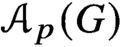 ${\mathcal {A}}_p(G)$ of nontrivial elementary abelian p-subgroups is obtained from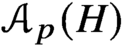 ${\mathcal {A}}_p(H)$ by attaching elements via their centralisers in H. We exploit this idea to study Quillen’s conjecture, which asserts that if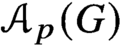 ${\mathcal {A}}_p(G)$ is contractible then G has a nontrivial normal p-subgroup. We prove that the original conjecture is equivalent to the ${{\mathbb {Z}}}$-acyclic version of the conjecture (obtained by replacing ‘contractible’ by ‘ ${{\mathbb {Z}}}$-acyclic’). We also work with the ${\mathbb {Q}}$-acyclic (strong) version of the conjecture, reducing its study to extensions of direct products of simple groups of p-rank at least $2$. This allows us to extend results of Aschbacher and Smith and to establish the strong conjecture for groups of p-rank at most $4$.
$4$.


On symmetric intersecting families of vectors
- Part of
-
- Journal:
- Combinatorics, Probability and Computing / Volume 30 / Issue 6 / November 2021
- Published online by Cambridge University Press:
- 18 March 2021, pp. 899-904
-
- Article
- Export citation
