To save content items to your account,
please confirm that you agree to abide by our usage policies.
If this is the first time you use this feature, you will be asked to authorise Cambridge Core to connect with your account.
Find out more about saving content to .
To save content items to your Kindle, first ensure no-reply@cambridge.org
is added to your Approved Personal Document E-mail List under your Personal Document Settings
on the Manage Your Content and Devices page of your Amazon account. Then enter the ‘name’ part
of your Kindle email address below.
Find out more about saving to your Kindle.
Note you can select to save to either the @free.kindle.com or @kindle.com variations.
‘@free.kindle.com’ emails are free but can only be saved to your device when it is connected to wi-fi.
‘@kindle.com’ emails can be delivered even when you are not connected to wi-fi, but note that service fees apply.
Which form of capitalist governance best fosters peace, prosperity, social cohesion, and environmental protection? I argue that making sense of this complexity calls for revisiting the three different principles of capitalist governance: liberty (freeing the market to unleash growth), solidarity (reining in the free market to protect the weak and the environment), and community (safeguarding the group through protectionism and military might). I contend that studying the European Union helps provide insight into how a compromise between liberty, solidarity, and community capitalisms is struck, as the Union is in a constant process of negotiation among bickering members. Dealing with community capitalism, in particular with protectionism and nationalism, has been the most pressing challenge for Europe in the past, not just today. This book will focus on the interaction between capitalism and European integration between 1945 and 2025, drawing on studies from areas of scholarship that rarely enter into dialogue with one other (history, political science, comparative political economy, international relations), as well as through new archival research.
What is the best form of governance for capitalism? It is a balance between three types of capitalist governance, namely liberty capitalism, solidarity capitalism, and community capitalism, i.e. a trinity. In any given society, leaders emphasise liberty if they believe that freeing markets will unleash plenty; solidarity if they prioritise protecting the weak (the poor, minorities, nature); and community if they emphasise the power of the group to which they belong (through protectionism and military might). Each of these three types has a radical variant, such as neoliberalism for liberty capitalism, or Nazi Germany for community capitalism. This trinity is useful in making comparisons across time and space. Capitalism is not solely based on a compromise between liberty and solidarity. Community capitalism must also be taken into consideration. Community capitalism emphasises protectionism, restrictive migration policy, cartelisation and unilateral foreign policies. The chapter examines these three types of capitalist governance one by one (including the question of neoliberalism, of ordoliberalism, of neomercantilism, of the Commons), and then explores how they have applied to various countries.
How have European countries coped with the challenge of industrial capitalism and the rise of superpowers? Through an analysis of European integration from 1945 to the present day, Laurent Warlouzet argues that the European response was to create both new institutions and an original framework of governance for capitalism. Beyond the European case, he demonstrates that capitalism is not just a contest between free-markeeters and their opponents, those in favour of welfare and environmental policies, because there is a third camp which defends protectionism and assertive defence policies. Hence, the governance of capitalism has three foundational principles – liberty, solidarity and community. The book explores debates among Europeans about how to address global interdependence in political, economic, and environmental terms. It is based on fresh archival evidence collected in eight countries. This title is also available as open access on Cambridge Core.
How should we understand 1970s Kenya, with its combination of inequality and relative political stability? This article offers a new perspective on that by following the early history of the Harambee Co-operative Savings and Credit Society—the most prominent of many such societies that grew in those years. The rise and crisis of this co-operative provides evidence of mismanagement and the pursuit of personal advantage—but also suggests that civil servants saw the importance of enabling wider accumulation. As a result, the lowest-paid employees of government could see through Harambee—and other co-operatives—a possible, if precarious, route to a future as property-owners. That possibility helps explain both the institutional strength of Kenya’s provincial administration (whose employees were the members of Harambee Co-operative) and how a substantial number of Kenyans could develop a sense of themselves as citizens with a stake in the political system.
The contribution that coal miners made to the reconstruction of Europe is hard-wired into popular memory, with widespread tales of the selfless sacrifice that saw miners conduct extra shifts and work longer hours for the nation. This article compares three conflicts that arose when miners were ordered to go the extra mile: the campaign to have miners in the Nord-Pas-de-Calais basin (France) make up public holidays in early 1945, the extension of the Saturday shift in the coal mines of the Ostrava-Karviná basin (Czechoslovakia) in late 1946, and the calls on miners in the Ruhr basin (Germany) to conduct extra shifts to provide the population with coal for the winter of 1946/47. Where trade unionists invoked patriotic sentiments and, when that failed, ethnic resentments to motivate miners to go the extra mile, this article shows that generational conflict between old and young miners was the driving force behind these disputes.
Chapter 1 introduces the region of Kiambu in detail, establishing the stakes of moral debate over wealth amongst men in the region. While an older generation preaches the labour ideology (the notion that hard work will bring success) that allowed them to prosper in the aftermath of independence, it has been undermined by dwindling land holdings and opportunities for ‘off-farm income’, creating a crisis of hopelessness as young men wonder if they will ever reach the ‘level’ of their elders. Framing the study of masculine destitution to follow, the chapter discusses the legacies of the ‘Kenya Debate’, a regional debate in political economy about the relative prosperity of Kenya’s peasantry after independence. It argues for a processual, non-static approach to economic change in central Kenya, allowing us to see how class divides have been opened across generations due to population pressure on land. Its subdivision within families exerts stronger pressure on young family members who find themselves in the situation of being virtual paupers – land poor and ‘hustling’ for cash.
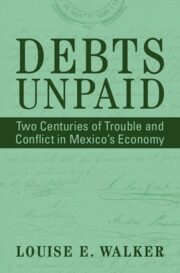
Power struggles between debtors and creditors about unpaid debts have animated the history of economic transformation from the emergence of capitalist relations to the recent global financial crashes. Illuminating how ordinary people fought for economic justice in Mexico from the eve of independence to the early 2000s, this study argues that conflicts over small-scale debts were a stress test for an emerging economic order that took shape against a backdrop of enormous political and social change. Drawing on nearly 1,500 debt conflicts unearthed from Mexican archives, Louise E. Walker explores rapidly changing ideas and practices about property rights, contract law, and economic information. This combination of richly detailed archival research, with big historical and theoretical interpretations, raises provocative new questions about the moral economy of the credit relationship and the shifting line between exploitation and opportunity in the world of everyday exchange.
In Japan in the 1920s, several financial crises and government policy led to bank mergers and the consolidation and expansion of branch networks. Using unique historical bank branch-level lending and deposit data, we show that branch banking integrated peripheral markets with the rest of the country, with large urban banks – those headquartered in Tokyo and Osaka – using deposit supply shocks in peripheral areas to fund lending in their core markets. While these findings support contemporary concerns about branch banking draining funds from peripheral markets, we argue that the export of liquidity by urban banks likely represented an efficient reallocation of credit, driven primarily by competition in funding markets. Faced with high-yielding lending opportunities in central prefectures, urban banks bid up deposit rates in peripheral areas, raising local banks’ funding costs. Local banks responded by lowering intermediation margins and reducing lending to traditional industries, which suggests that they shifted their lending to less risky and more efficient customers. We speculate that this competitive reallocation of capital across regions and sectors allowed banks to maintain a functional specialization in different customer segments, which may explain the continued coexistence of small relationship lenders and large integrated arm’s-length lenders in local banking markets.
The 1970s oil shocks sparked high and persistent inflation in advanced economies, also tied to the collapse of the Bretton Woods international monetary system in 1971 that left monetary policy without a stable institutional reference framework. Only in the following decades did a new monetary regime emerge, centered on inflation targeting schemes adopted by independent central banks. Beyond this, other factors affected inflation persistence, namely wage-price spirals rooted in automatic wage adjustment mechanisms, and fiscal policies financed thanks to the regulatory requirement for the central bank to purchase unsold public debt. This article gives a concise analysis of the rationale and provides descriptive evidence of the role these institutional aspects played in the 1970s, suggesting how their evolution has reduced the likelihood of 1970s-style inflationary episodes today. A structural VAR-based counterfactual exercise confirms that absent wage and fiscal pressures inflation persistence would have been significantly lower.
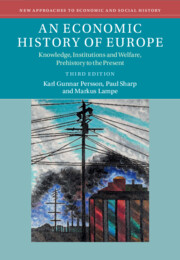
In this revised and updated edition, An Economic History of Europe re-establishes itself as the leading textbook on European economic history. With an expanded scope, from prehistory to the present, it will be invaluable source for students, educators and researchers seeking to better understand Europe's long-run economic development. The authors cover key themes including the rise of institutions, technological advancements, globalization, and the Industrial Revolution, with a fresh emphasis on the wider impact of economic policies on welfare reflecting a broader understanding of societal well-being. The chronological structure, clear explanations, case studies, and minimal use of complex mathematics make this an accessible approach that allows students to apply economic theories in historical practice. The new edition also connects historical development to urgent contemporary issues such as modern-day sustainability goals. This comprehensive guide provides students with both a historical narrative of Europe's economic transformation, and the essential tools for analysing it.
The Introduction outlines the central themes of economic history, focusing on the efficient use of resources and its implications for welfare. It explains how societies have historically used natural, human and manufactured resources to improve living standards, exploring the critical roles of technology and institutions in driving efficiency and growth. The chapter introduces the concept of total factor productivity as a measure of economic efficiency, and emphasizes how historical developments have shaped the wealth of nations. It also links economic history to contemporary concerns by discussing the United Nations’ Sustainable Development Goals and their relevance to resource management and welfare. By tracing historical improvements in efficiency and productivity, the Introduction sets the stage for understanding how economic history informs modern debates on sustainability and inequality.
In Greek literature, the barber is always portrayed as a garrulous chatterbox and his shop as a central place for gossip and rumours. Apart from these numerous anecdotes, however, few scholars have investigated the concrete realities of the profession and the actual status of barbers in the Greek East (including Egypt). This paper seeks to fill this gap. It is based on a careful social and economic analysis of the profession, including barbers’ workspaces, their social recognition as skilled craftsmen, their funerary and religious practices, their relationships with their clients, as well as their income, wages and expenses. It attempts to re-place ancient barbers in their socio-professional and socio-economic environment, and to reconstruct some aspects of their daily lives that go beyond the statements of ancient authors and their elite discourse. By systematically cross-referencing all available historical data (literary texts, inscriptions, papyri, ostraca, iconographic and archaeological sources), the paper shows how their lives and status differ from their representation in the literary sources in order to bring these everyday workers out of the shadows and rehabilitate them as historical actors in Greek and Hellenized societies.
The conventional historiography of eighteenth-century Prussia portrays peasants as completely dominated by their imperious Junker superiors. Since the 1980s, a revisionist tendency has challenged this asymmetrical picture of lord-peasant relations, downplaying the oppressiveness of the manorial system and arguing that peasants were equally capable competitors in the “tug-of-war” with their lords. This article evaluates the revisionists’ claims using the historical findings they, and others, have produced about the relationship of lords and peasants in rural Prussia. The evidence supports the contention that peasants were, to a significant extent, the victims of the Prussian manorial system.
In this chapter, we lay out the basic frame for studying innovation management. To do so, we are going to try to understand why innovation is important for society, for companies, and for individuals, and to do that we take our point of departure in the “urtext” of innovation research, namely Schumpeter’s work on Capitalism, Socialism and Democracy and especially the notion of Creative Destruction. To follow that up, we are going to untangle how innovation management fits within a broader context of capitalism as an economic system, within a particular ideology, and within the operations of the modern corporation.
This chapter deals with a market arrangement at a moment of uncertainty and concern around its continued existence. This arrangement is what I call the impersonal price, or a system of impersonal retail prices, elsewhere also referred to as a system of fixed prices. These phrases describe markets where prices are visible, homogeneous across customers, and non-negotiable. As the chapter shows, impersonal retail prices did not just happen. They are the product of complex interactions between legal regulation, material-technical arrangements, and economic theories, as mobilized in different historical contexts to different socio-political and economic ends.
This chapter reviews how historians and economists have thought about the economic history of Europe. It notes that internal explanations that paid little attention to the non-European world have been dominant for more than a century and reviews some of the reasons for that Eurocentrism. Such navel-gazing, however, has also been increasingly challenged for some time now, at first especially by non-European scholars and activists. The latter parts of the chapter explore current debates within the discipline and its increasing acknowledgment of the interactions between European and non-European economies. Two areas of discussion that have played a crucial role in this evolution are detailed in particular: The question of the role of slavery in European economic development and the rich debates taking place in the relatively new field of global labor history. Overall, efforts to write the economic history of Europe confined to its own ill-defined boundaries might serve particular political needs, but they are, in fact, historically inaccurate.
This article examines the causes and geographical trajectories of the globalisation of vermouth, one of the most famous Made in Italy products in the world. Of all the fortified wines, vermouth stands out for its unique history. Originally a product of Piedmont consumed mainly by the aristocracy and the emerging bourgeoisie, vermouth became the subject of a growing export trade between the nineteenth and twentieth centuries, gaining credibility thanks to the prizes won at international exhibitions and the marketing strategies of the main companies in the sector (Martini & Rossi, Carpano, Gancia, Cinzano). Despite the commercial difficulties it experienced in the twentieth century as a result of protectionist measures, the effects of war, the heterogeneous policies applied to the alcoholic beverage industry and widespread imitation and counterfeiting, vermouth has managed to maintain an appeal that has made it an international icon and one of the most resilient products in the medium to long term. This is partly the result of a media representation that was capable of deeply influencing the collective imagination of consumers.
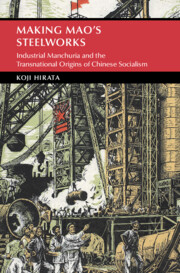
Located in Manchuria (Northeast China), the geopolitical borderland between China, Russia, and Japan, among others, Anshan Iron and Steel Works (Angang) was Mao-era China's most important industrial enterprise. The history of Angang from 1915 to 2000 reveals the hybrid nature of China's accelerated industrialization, shaped by transnational interactions, domestic factors, and local dynamics. Utilizing archives in Chinese, Japanese, Russian, and English, Koji Hirata provides the first comprehensive history of this enterprise before, during, and after the Mao era (1949–1976). Through this unique lens, he explores the complex interplay of transnational influences in Mao-era China. By illustrating the symbiotic relationship between socialism and capitalism during the twentieth century, this major new study situates China within the complex global history of late industrialization.
The early seventeenth century was a period of economic crisis throughout Eurasia. Finance was developed enough for heads of state to raise and equip massive armies, but not developed enough to pay these armies regularly. Within the context of the Mansfeld Regiment’s financial problems, this chapter describes mutiny, desertion, female labor, and the challenges of finding small change during a financial crisis. The Mansfeld Regiment’s operations depended on a network of military finance in central Europe and northern Italy which was broadly ramifying but imperfect and disorganized. The loan that was supposed to support this regiment was delayed; by the time the money arrived, the regiment’s superiors may simply have forgotten about them. The Mansfeld Regiment collapsed two years later.
This chapter places the actions of the Mansfeld Regiment within the context of military pay for the Saxon army during the 1620s. Pay for individual infantrymen varied substantially, and this chapter argues that it can be used as a proxy to determine these men’s social status. Mercenary soldiers and female members of the military community could act as subcontractors in their own right, which shaped the way they found sexual partners. Pay in the Saxon army in the 1620s seems high, and was disbursed on time. Although the Saxon army was at paper strength throughout the 1620s, this massive outlay may have been one reason Saxon finances fell apart in the 1640s. Meanwhile, the Mansfeld Regiment was paid far less than the customary rate in the Saxon army, and was swindled by the Governor of Milan.