To save content items to your account,
please confirm that you agree to abide by our usage policies.
If this is the first time you use this feature, you will be asked to authorise Cambridge Core to connect with your account.
Find out more about saving content to .
To save content items to your Kindle, first ensure no-reply@cambridge.org
is added to your Approved Personal Document E-mail List under your Personal Document Settings
on the Manage Your Content and Devices page of your Amazon account. Then enter the ‘name’ part
of your Kindle email address below.
Find out more about saving to your Kindle.
Note you can select to save to either the @free.kindle.com or @kindle.com variations.
‘@free.kindle.com’ emails are free but can only be saved to your device when it is connected to wi-fi.
‘@kindle.com’ emails can be delivered even when you are not connected to wi-fi, but note that service fees apply.
Akihisa Mori, Kyoto University, Japan,Nur Firdaus, National Research and Innovation Agency, Indonesia ,Yasuhiro Ogura, National Institute of Science and Technology Policy, Japan
This chapter takes the Philippines as a case to elucidate the direction and speed of electricity system transition under a vertically unbundled, competitive wholesale market model, with a focus on changes in the complementary elements of the electricity system. The study employed the analytical framework based on the grid paradigm presented in Chapter 3. The results showed that despite institutional development consistent with systems based on renewable-energy-sourced electricity (RES-E), delays in infrastructure development in high-voltage backbone and interconnection transmission grids and restrictive RES-E policy have stimulated investments in new coal power plants and deterred transitions to RES-based systems. Energy security concerns about the perceived growth of electricity demand and depletion of domestic gas fields motivated the government to use natural gas as additional generation fuel rather than balancing power. Energy oligarchs capitalised on the moratorium on new coal plants to supply ancillary services from fully depreciated coal power, investing in large-scale battery energy storage systems and gas power assets, and increasing economic gains. These factors are likely to direct the Philippines towards a natural-gas-based electricity system, combining the flexible paradigm in the RES-based system with a few clean dispatchable capacities.
In the Philippines, bans on the use of plastic bags have been enacted in 489 cities and towns as a means of stemming waste, while proposed legislation for a nationwide prohibition has been pending for several years. The national single-use plastic (SUP) ban is a significant step forward in mitigating plastic pollution and climate change, but it will have economic and employment impacts on firms and workers. This study fills in a gap by estimating the employment impact of a national ban using firm-level data from official surveys. An exploratory labour-centric methodology interrogates workers’ perceptions of a ban through interviews with unionists. The study finds the employment effect to be significant, as 32,000 workers in almost 500 SUP firms will be directly affected, and another 9.000 workers in the midstream plastic industry will be indirectly impacted. Workers have a range of opinions regarding a proposed ban – from opposition because of the expected layoffs to acceptance as a necessary solution to plastic pollution. However, support for a SUP ban is predicated on the existence of alternative employment for affected workers. The study reveals that workers are receptive to a message that integrates both environmental concerns and labour standards. However, there is a serious lack of information dissemination from plastic firms and government agencies about the proposed SUP ban and the necessary adaptation measures to prepare workers for a transition. The economic, sociocultural, and institutional barriers to an effective just transition for SUP workers are substantial but not insurmountable.
In this article, we investigate the semiotic practices of Filipino K-pop fans (KpopStans) who supported the 2022 presidential bid of former Philippine Vice President Leni Robredo. Through digital ethnography, we analyze the ways in which fans entextualized and resemiotized signifiers of K-pop (e.g., lyrics, imagery, fancams) to create hybrid political messages that translated familiar fandom aesthetics into forms of electoral participation. We argue these practices constitute “civic stanning”—enactments of fan-based citizenship that leverage the cultural resonance of K-pop to build solidarities around Robredo, exercise political agency, promote values of conviviality and progress, and navigate the restrictive political climate of the Philippines. The study highlights the role of popular culture in mediating transnational flows and shaping emergent modes of political activism.
Drawing on a range of fieldwork interviews, this paper discusses the opposition of civil society to nonferrous metals mining in the Philippines. The efforts of the Philippine government to enhance development by encouraging the extraction of the nation’s mineral resources by foreign corporations is discussed, as is the opposition of Philippine civil society to these efforts. This opposition to nonferrous metals mining has involved protests, litigation, administrative proceedings, and implementation of mining moratoriums by local governments. The paper concludes with an examination of the respective costs and benefits of a mining-based development paradigm in the context of the way in which many Filipinos view foreign extraction of their nation’s resources.
This paper discusses an emerging role for Philippine NGOs—building and maintaining intersectoral cooperation among various sectors of society to tackle key issues like agricultural development, HIV/AIDS, and agrarian reform. The three case studies elaborated in the paper show that Philippine NGOs play important intermediary and bridging functions crucial for the success of multistakeholder partnerships. NGOs are well equipped for this because of their middle-class and professional nature and because of various characteristics like autonomy, flexibility, and the ability to mobilize resources.
The Philippine nonprofit sector, including nongovernmental organizations, have enjoyed an enabling and facilitative state environment since the People Power Revolution of 1986. It currently faces a legitimacy challenge in terms of its ability to represent the people, to be accountable to them, and to show its autonomy and difference from the state. It also confronts the challenge of how it can deliver services more effectively as it expands and professionalizes. Raising resources through government, philanthropy, and income generation also continue to be major challenges.
Using novel nighttime lights and high-resolution atmospheric reanalysis, this paper exploits exogenous fluctuations in temperature and precipitation to identify the causal effects of weather disturbances on local economic growth in the Philippines – the world’s most disaster-prone country. Our findings reveal that heightened temperature variability significantly dampens growth, but only in poor municipalities. This effect persists for at least 2 years after the initial shock. Furthermore, the relationship between weather shocks and growth is nonlinear. We also demonstrate that adverse weather events impede growth by disrupting agricultural productivity and essential service sectors, including wholesale and retail trade, health and education. Overall, our results highlight the importance of understanding the distributional impact of climate change within countries, its underlying mechanisms, and how economic development policies can help shield poor municipalities from the vagaries of the weather.
Chapter 1 elaborates on how the assemblage of multilateral, bilateral, transnational, and private nongovernmental actors – the clean energy regime complex – interacts with domestic politics in emerging economies and developing countries (EMDEs) to foster energy transitions. The ripple effects of international norms regarding energy transitions are visible in domestic institutional change in Indonesia and the Philippines, but both cases demonstrate variable outcomes in terms of the relative impacts of the clean energy regime complex in removing barriers to geothermal development. The chapter underlines the importance of studying the interaction between the international and domestic politics in EMDEs to understand how best to catalyze energy transitions to meet global climate mitigation goals. The chapter summarizes the case study selection, research design and methods, and theoretical arguments on regime complex effectiveness mechanisms – including utility modifier, social learning, and capacity building, and their impact in overcoming domestic political lock-in. The chapter also provides a brief overview of the book.
Chapter 6 transitions to the case of the Philippines to provide a comparative analysis of regime complex effectiveness. The chapter begins with a political economy analysis of the domestic actors and interests involved in the energy sector in the Philippines, then delves into the history of geothermal development with an analysis of the impacts of the clean energy regime complex actors on barriers to geothermal development over time. The major findings of this chapter indicate that early domestic political support for geothermal development under the Marcos and Ramos regimes was a response to the exogenous shocks of energy crises. This response to exogenous shocks opened pathways of change that were key in catalyzing geothermal development in the country that later placed the Philippines as the world’s second largest producer for several decades. In the Philippines, an embrace of the energy transition enabled the positive impact of the clean energy regime complex on geothermal development. In Indonesia, domestic political resistance to the energy transition limited regime complex effectiveness.
The book concludes in Chapter 8 with a summary of the major theoretical and empirical findings on the clean energy regime complex’s emergence and effectiveness across Indonesia and the Philippines, and a discussion of the theory’s broader generalizability, further research opportunities, and policy implications and recommendations for fostering energy transitions in a world of complex governance.
Chapter 7 provides a comparative analysis of regime complex effectiveness across cases to better perceive the conditions for impact and how intervening variables such as energy crises or domestic political interests mediate effectiveness. Through the three mechanisms – utility modifier, social learning, capacity building – the regime complex has had a notably different impact in moving renewable energy development in Indonesia and the Philippines. This chapter examines and explains the variable outcomes in geothermal development between the Philippines and Indonesia by illuminating the key role of political will at the domestic level. Major findings of this chapter reveal that throughout the case studies, diverging domestic political interests and lack of political will to develop geothermal energy or adopt renewable energy regulations are key in explaining the variation in effectiveness of the clean energy complex across case studies.
An innovation in this book is the introduction of the mediation staircase as a way to estimate the “success” of mediation efforts by connecting achievements to mandates. The steps in this staircase (levels 0 to 5) extend from establishing direct contacts to arriving at accords between the warring parties and include participation in agreement implementation. Most of the Nordic cases that had been terminated by the end of 2024 are assessed in this way. It is hoped that this approach to evaluating success will provide a better understanding of what mediation wants to – and can – achieve. The chapter shows that mediation is more than a one-person commitment, as it involves a more long-term effort. It also discusses the impact of military developments on the outcome.
As the world moves with increasing urgency to mitigate climate change and catalyze energy transitions to net zero, understanding the governance mechanisms that will unlock barriers to energy transitions is of critical importance. This book examines how the clean energy regime complex-the fragmented, complex sphere of governance in the clean energy issue area characterized by proliferating and overlapping international institutions-can be effective in fostering energy transitions at the domestic level, particularly in emerging market and developing economies (EMDEs). Through comparative case studies of geothermal development in Indonesia and the Philippines, the chapters provide two different tales of energy transitions, demonstrating how domestic factors have hindered or facilitated progress. This book will be useful for students, researchers, and practitioners working in international relations, energy politics, political science, development studies, public policy, international law, and sociology. This title is also available as Open Access on Cambridge Core.
Exploring the already observable impacts of climate change, this chapter features stories from regions including Asia, Africa, and the Caribbean, amongst others. Ramon Apla-on, a farmer from the Philippines, describes how unpredictable weather patterns affect agriculture, while Isaac Nemuta, a Maasai pastoralist from Kenya, discusses the severe droughts impacting livestock. Nadia Cazaubon from Saint Lucia highlights marine impacts such as coral bleaching. These personal accounts, supported by scientific data, underscore the urgency of addressing current climate realities affecting millions. The chapter illustrates how climate change is no longer a future threat but a present crisis requiring immediate action.
On what basis may the International Criminal Court (“ICC”) exercise its jurisdiction over States that have withdrawn from the Rome Statute? Is it enough that the alleged crimes occurred before the State withdrew from the treaty? When acting proprio motu, does the Prosecutor have to seek authorization from a Pre-Trial Chamber before they are allowed to proceed with the criminal investigation post-State withdrawal? This issue has received only cursory attention from the ICC and the academic community but the lack of clarity around the Court’s post-withdrawal jurisdiction is a serious concern, and not only for States that have withdrawn their membership (such as the Philippines). It is important because, as things stand, and given what the Court has said so far, States parties cannot be sure of the parameters of the Court’s temporal jurisdiction, nor of the legal effects of a State’s withdrawal.
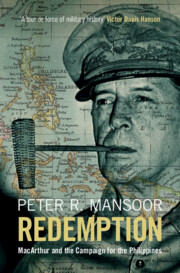
Redemption is a sweeping new history of the largest and costliest campaign waged by US armed forces during the Pacific War. Peter Mansoor surveys the course of the Philippines campaign, from the Japanese invasion and the Filipino guerrilla operations which contested occupation to the US Army's return to Leyte and the subsequent battles of liberation. Central to the book is a re-evaluation of the leadership of General Douglas MacArthur, one of the most controversial military commanders in US history. At times brilliant, courageous, and politically astute, MacArthur was also egotistical, publicity hungry, often ignorant of conditions at the front, and self-certain to a fault. In their return to the Philippines, MacArthur and his forces liberated millions of Filipinos and severed a critical Japanese resource lifeline. But he also achieved something much rarer – redemption on the same ground and against the same enemy that defeated him earlier in the war.
In this paper, I marked the critical alter-political works of urban scholar-activists in the Philippines. Slums are at the heart of capitalist dispossessions. Slumdwellers live, survive, negotiate, and resist on an everyday basis. In the Philippines, the struggles of slum community organisations are strongly influenced, formed, and pulled in divergent ideological trajectories by contending larger political formations.
I draw on my own experience and that of 20 Filipino urban scholar-activists with varied political commitments, reflecting on decades of community work, to highlight the alter-works and challenges of navigating the web of political heterogeneity within urban poor organisations and movements. By scholar-activists, I do not refer solely to those who are based in universities, but to the many who struggle every day to unearth subaltern political knowledges and collectively fight for the right to adequate housing, as well as, for some, the right to the city. I enumerate the multiple functions and necessary labours of being 'embedded' in these complex politics. We engage in political advising, framing, networking, organizing, translating, and capacity-building. Caught in a complex web that may necessitate strategic essentialisation, silencing, and foreclosures, scholar-activists play a crucial role of strategic facilitation that connects collective forms of living among urban surplus lives and corrodes neoliberal urban dispossessions. These alter-works are continuous efforts towards situated solidarities, where urban scholar activists critically draw from and reshape ‘inherited’ social movement frames and strategies grounded on actually existing subaltern realities, capacities, and political opportunities.
The COVID-19 pandemic caused massive disruptions in the job market. It also put the gig economy in the spotlight since many workers began seeing it as a viable career option to their 9-to-5 jobs. Even before the pandemic, the gig economy was forming a significant portion of the workforce in different countries. In light of these changes, this paper has sought to understand the journey and experiences of both location-dependent and purely online gig economy workers in the Philippines. We conducted focus group discussions (FGDs) to explore the experience of those working in the gig economy in the Philippines, with two out of the four groups working as location-dependent gig workers while the remaining two groups working as purely-online gig workers. The study revealed that while gig workers appreciated the flexibility of managing their own time, they also expressed the need for greater government support and regulation to ensure that their welfare is protected. Moreover, while gig work has created additional opportunities for many, certain drawbacks have also emerged over time. It is essential for the government to intervene to safeguard the well-being of these workers, and ensure that labour laws and regulations are adapted to these new circumstances.
Biodiversity knowledge gaps and biases persist across low-income tropical regions. Genetic data are essential for addressing these issues, supporting biodiversity research and conservation planning. To assess progress in wildlife genetic sampling within the Philippines, I evaluated the scope, representativeness, and growth of publicly available genetic data and research on endemic vertebrates from the 1990s through 2024. Results showed that 82.3% of the Philippines’ 769 endemic vertebrates have genetic data, although major disparities remain. Reptiles had the least complete coverage but exhibited the highest growth, with birds, mammals, and amphibians following in that order. Species confined to smaller biogeographic subregions, with narrow geographic ranges, or classified as threatened or lacking threat assessments were disproportionately underrepresented. Research output on reptiles increased markedly, while amphibian research lagged behind. Although the number of non-unique authors in wildlife genetics studies involving Philippine specimens has grown steeply, Filipino involvement remains low. These results highlight the uneven and non-random distribution of wildlife genetic knowledge within this global biodiversity hotspot. Moreover, the limited participation of Global South researchers underscores broader inequities in wildlife genomics. Closing these gaps and addressing biases creates a more equitable and representative genetic knowledge base and supports its integration into national conservation efforts aligned with global biodiversity commitments.
Death penalty policy and practice in the Philippines have been characterised by ambivalence and repeated vacillation between retention and abolition. In 2006, the death penalty was abolished for the second time, but Duterte renewed the call for reimposition by presenting the death penalty as a solution to the so-called ‘war on drugs’. In March 2017, the House of Representatives overwhelmingly passed a Bill to reintroduce the death penalty for drug-related offences and heinous crimes. Although the Bill was stalled in the Senate, legislators continued filing bills pushing for capital punishment. This chapter analyses the period during 2016–2022, drawing on interviews carried out with those involved in anti-death penalty advocacy on the ground in the Philippines. It uses the framework of ‘networked governance’ to understand how various organisations banded together to oppose the reintroduction of the death penalty. While scholarship on death penalty abolition has stressed the importance of ‘leadership from the front’, this chapter argues that small organisations and individuals coalescing together had been pivotal in steering the trajectory of the death penalty in the Philippines.