Refine search
Actions for selected content:
67 results
Three-dimensional nonlinear responses of a floating ice sheet to moving loads
-
- Journal:
- Journal of Fluid Mechanics / Volume 1033 / 25 April 2026
- Published online by Cambridge University Press:
- 14 April 2026, A13
-
- Article
- Export citation
Forced second-order hydroelastic waves near a vertical wall
-
- Journal:
- Journal of Fluid Mechanics / Volume 1030 / 10 March 2026
- Published online by Cambridge University Press:
- 10 March 2026, A66
-
- Article
- Export citation
Laminar uni- and bi-directional boundary-layer flow of a melting vertical ice face: experiments and direct numerical simulations
-
- Journal:
- Journal of Fluid Mechanics / Volume 1027 / 25 January 2026
- Published online by Cambridge University Press:
- 22 January 2026, A33
-
- Article
-
- You have access
- Open access
- HTML
- Export citation
-
A combined experimental and direct numerical simulation (DNS) investigation is undertaken to study the laminar boundary-layer (BL) flow adjacent to a melting vertical ice face at two far-field water salinities ( $S_\infty =0$ and 34 ‰) and a range of far-field temperatures ( $T_\infty$). Wall-normal distributions of vertical velocity and temperature within the BL are measured by a modified molecular tagging velocimetry and thermometry technique. Experimental data match with DNS only when a nonlinear equation of state (EoS) for density is used rather than a linear EoS. For all $S_\infty =0$, i.e. freshwater cases, the flow remains uni-directional, although the flow reverses direction at $T_\infty =4^{\,\circ} \text{C}$. A bi-directional flow, however, exists for $S_\infty =$ 34 g kg−1, where an inner salinity-driven upward flow of fresher water is accompanied by a downward-flowing temperature-driven outer flow. Although the contribution of temperature to density relative to salinity is small $({\approx}1/40)$, the thermal BL region is larger owing to higher diffusivity. This results in increased total buoyancy force when the buoyancy is integrated across the BL, which combined with effects of wall shear stress on salinity BL and a freer thermal BL growth reveals that buoyancy from temperature contributes almost equally to the overall flow. Melt rates ( $V$) also show differing features in uni- and bi-directional flows. The uni-directional flows exhibit the standard scaling of increasing velocity magnitude and BL thickness, and decreasing $V$ with distance along the flow direction. Such scalings are not followed in the bi-directional flows. These show a more uniform $V$ with height, which is attributed to the counteracting effects of an upward-growing salinity BL and a downward-growing temperature BL, combined with the necessity of maintaining salinity and temperature flux balance at the ice–water interface.


Buckling of a floating fluid layer
-
- Journal:
- Journal of Fluid Mechanics / Volume 1026 / 10 January 2026
- Published online by Cambridge University Press:
- 07 January 2026, A42
-
- Article
-
- You have access
- Open access
- HTML
- Export citation
-
Roll patterns on floating ice shelves have been suggested to arise from viscous buckling under compressive stresses. A model of this process is explored, allowing for a power-law fluid rheology for ice. Linear stability theory of uniformly compressing base flows confirms that buckling modes can be unstable over a range of intermediate wavelengths when gravity does not play a dominant role. The rate of compression of the base flow, however, ensures that linear perturbations have wavelengths that continually shorten with time. As a consequence, linear instability only ever arises over a certain window of time $t$, and its strength can be characterised by finding the net amplification factor a buckling mode acquires for $t\to \infty$, beginning from a given initial wavenumber. Bi-axial compression, in which sideways straining flow is introduced to prevent the thickening of the base flow, is found to be more unstable than purely two-dimensional (or uni-axial) compression. Shear-thinning enhances the degree of instability in both uni-axial and bi-axial flow. The implications of the theoretical results for the glaciological problem are discussed.


A quantile regression forest estimate of Greenland’s subglacial topography
-
- Journal:
- Journal of Glaciology / Volume 71 / 2025
- Published online by Cambridge University Press:
- 18 July 2025, e115
-
- Article
-
- You have access
- Open access
- HTML
- Export citation
Interactions of flexural-gravity and interfacial waves in a two-layer fluid with a discontinuous background mean flow
-
- Journal:
- Journal of Fluid Mechanics / Volume 1015 / 25 July 2025
- Published online by Cambridge University Press:
- 16 July 2025, A22
-
- Article
- Export citation
FirnLearn: A neural network-based approach to firn density modeling in Antarctica
-
- Journal:
- Journal of Glaciology / Volume 71 / 2025
- Published online by Cambridge University Press:
- 17 April 2025, e71
-
- Article
-
- You have access
- Open access
- HTML
- Export citation
-
Understanding firn densification is essential for interpreting ice core records, predicting ice sheet mass balance, elevation changes and future sea-level rise. Current models of firn densification on the Antarctic ice sheet (AIS), such as the Herron and Langway (1980) model are either simple semi-empirical models that rely on sparse climatic data and surface density observations or complex physics-based models that rely on poorly understood physics. In this work, we introduce a deep learning technique to study firn densification on the AIS. Our model, FirnLearn, evaluated on 225 cores, shows an average root-mean-square error of 31 kg m−3 and explained variance of 91%. We use the model to generate surface density and the depths to the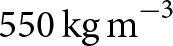 $550\,\mathrm{kg\,m}^{-3}$ and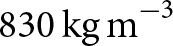 $830\,\mathrm{kg\,m}^{-3}$ density horizons across the AIS to assess spatial variability. Comparisons with the Herron and Langway (1980) model at ten locations with different climate conditions demonstrate that FirnLearn more accurately predicts density profiles in the second stage of densification and complete density profiles without direct surface density observations. This work establishes deep learning as a promising tool for understanding firn processes and advancing towards a universally applicable firn model.
Thermal Sidewall Ice Corer (TSIC) to recover samples from boreholes drilled in glaciers and ice sheets
-
- Journal:
- Journal of Glaciology / Volume 71 / 2025
- Published online by Cambridge University Press:
- 08 April 2025, e63
-
- Article
-
- You have access
- Open access
- HTML
- Export citation
20 - Climate(s) of the Twenty-First Century
- from Part V - Our Changing Climate
-
- Book:
- The Science of Our Changing Climate
- Published online:
- 05 April 2024
- Print publication:
- 02 May 2024, pp 355-376
-
- Chapter
- Export citation
Laboratory experiments of melting ice in warm salt-stratified environments
-
- Journal:
- Journal of Fluid Mechanics / Volume 984 / 10 April 2024
- Published online by Cambridge University Press:
- 05 April 2024, A42
-
- Article
-
- You have access
- Open access
- HTML
- Export citation
-
Melting icebergs provide nearly half of the total freshwater flux from ice shelves to the ocean, but the availability of accurate, data-constrained melting rate parametrisations limits the correct representation of this process in ocean models. Here, we investigate the melting of a vertical ice face in a warm, salt-stratified environment in a laboratory setting. Observations of the depth-dependent melting rates ${m}$ and boundary layer flow speed $U$ are reported for a range of initially uniform far-field ambient temperatures $T_a$ above ${10}\,^{\circ }{\rm C}$. Ice scallops are characteristic features observed in all experiments, with the width of the scallops consistent with the theory of double-diffusive layers. The morphology of the scallops changes from symmetric about the scallop centre in the colder experiments to asymmetric in the warmer experiments. Observed melting rates are consistent with a melting rate scaling of the form ${m}\propto U\,\Delta T_a$ proposed by previous work in less extreme parameter regimes, where $\Delta T_a$ is the magnitude of thermal driving between the ambient and ice–fluid interface. Our results indicate that ice scalloping is closely linked to the naturally convecting flow of the ambient fluid. Depth-averaged melting rates depend on the buoyancy frequency in the ambient fluid, and double-diffusive convection promotes a turbulent-flux regime distinct from that explained previously in an unstratified regime. These findings have implications for parametrising melting rates of icebergs and glaciers in numerical models or potential freshwater harvesting operations, and provide insights into the interplay between stratification and ice melting.


A thin-plate approximation for ocean wave interactions with an ice shelf
-
- Journal:
- Journal of Fluid Mechanics / Volume 984 / 10 April 2024
- Published online by Cambridge University Press:
- 05 April 2024, A48
-
- Article
-
- You have access
- Open access
- HTML
- Export citation
Grounding-line flux conditions for marine ice-sheet systems under effective-pressure- dependent and hybrid friction laws
-
- Journal:
- Journal of Fluid Mechanics / Volume 975 / 25 November 2023
- Published online by Cambridge University Press:
- 10 November 2023, A6
-
- Article
- Export citation
Evolution of an elastic blister in the presence of sloping topography
-
- Journal:
- Journal of Fluid Mechanics / Volume 967 / 25 July 2023
- Published online by Cambridge University Press:
- 12 July 2023, A5
-
- Article
-
- You have access
- Open access
- HTML
- Export citation
A thermomechanical model for frost heave and subglacial frozen fringe
-
- Journal:
- Journal of Fluid Mechanics / Volume 964 / 10 June 2023
- Published online by Cambridge University Press:
- 07 June 2023, A42
-
- Article
-
- You have access
- Open access
- HTML
- Export citation
The drainage of glacier and ice sheet surface lakes
-
- Journal:
- Journal of Fluid Mechanics / Volume 961 / 25 April 2023
- Published online by Cambridge University Press:
- 14 April 2023, A4
-
- Article
-
- You have access
- Open access
- HTML
- Export citation
Hydroelastic wave diffraction by a vertical circular cylinder standing in a channel with an ice cover
-
- Journal:
- Journal of Fluid Mechanics / Volume 941 / 25 June 2022
- Published online by Cambridge University Press:
- 26 April 2022, A13
-
- Article
-
- You have access
- Open access
- HTML
- Export citation
Numerical approximation of viscous contact problems applied to glacial sliding
-
- Journal:
- Journal of Fluid Mechanics / Volume 938 / 10 May 2022
- Published online by Cambridge University Press:
- 15 March 2022, A21
-
- Article
- Export citation
4 - Discovering an Age of Ice
-
- Book:
- Ice Ages
- Published online:
- 16 February 2022
- Print publication:
- 10 February 2022, pp 42-60
-
- Chapter
- Export citation
Ice breaking by a high-speed water jet impact
-
- Journal:
- Journal of Fluid Mechanics / Volume 934 / 10 March 2022
- Published online by Cambridge University Press:
- 11 January 2022, A1
-
- Article
- Export citation
-
Ice breaking has become one of the main problems faced by ships and other equipment operating in an ice-covered water region. New methods are always being pursued and studied to improve ice-breaking capabilities and efficiencies. Based on the strong damage capability, a high-speed water jet impact is proposed to be used to break an ice plate in contact with water. A series of experiments of water jet impacting ice were performed in a transparent water tank, where the water jets at tens of metres per second were generated by a home-made device and circular ice plates of various thicknesses and scales were produced in a cold room. The entire evolution of the water jet and ice was recorded by two high-speed cameras from the top and front views simultaneously. The focus was the responses of the ice plate, such as crack development and breakup, under the high-speed water jet loads, which involved compressible pressure ${P_1}$ and incompressible pressure ${P_2}$. According to the main cause and crack development sequence, it was found that the damage of the ice could be roughly divided into five patterns. On this basis, the effects of water jet strength, ice thickness, ice plate size and boundary conditions were also investigated. Experiments validated the ice-breaking capability of the high-speed water jet, which could be a new auxiliary ice-breaking method in the future.


Three-dimensional interaction between uniform current and a submerged horizontal cylinder in an ice-covered channel
-
- Journal:
- Journal of Fluid Mechanics / Volume 928 / 10 December 2021
- Published online by Cambridge University Press:
- 04 October 2021, A4
-
- Article
- Export citation
