To save content items to your account,
please confirm that you agree to abide by our usage policies.
If this is the first time you use this feature, you will be asked to authorise Cambridge Core to connect with your account.
Find out more about saving content to .
To save content items to your Kindle, first ensure no-reply@cambridge.org
is added to your Approved Personal Document E-mail List under your Personal Document Settings
on the Manage Your Content and Devices page of your Amazon account. Then enter the ‘name’ part
of your Kindle email address below.
Find out more about saving to your Kindle.
Note you can select to save to either the @free.kindle.com or @kindle.com variations.
‘@free.kindle.com’ emails are free but can only be saved to your device when it is connected to wi-fi.
‘@kindle.com’ emails can be delivered even when you are not connected to wi-fi, but note that service fees apply.
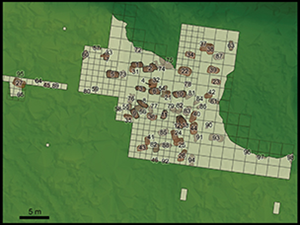
The north-western Negev is an under-researched ecotonal region. We excavated two late Middle Palaeolithic open-air sites and recovered rich lithic industries that could be refitted, as well as remains of fauna, and charcoal. Palaeoenvironmental information and dates indicate interesting inter-site differences.
In 1936 the author, politician and garden designer Harold Nicolson bought four, round antique altars and a Corinthian capital from the sale of Shanganagh Castle, Co Wicklow. Nicolson and his wife, Vita Sackville-West, placed these marbles in a garden compartment at Sissinghurst that was intended to evoke the landscape and antiquities of the Cycladic island of Delos. These are among the most important antiquities in the collections of the National Trust, yet their provenance and significance has been obscured by their presumed status as ‘mere’ ornaments to the celebrated gardens at Sissinghurst Castle. This paper traces the provenance of this group of antiquities back to Delos and their discovery by a hero of the Greek War of Independence. Historic context for Vita and Harold’s use of the altars as adornments to their garden will be examined in the context of earlier use of similar Delian altars in earlier garden design – the seventeenth-century ‘garden museum’ at Arundel House, Strand, London, or the eighteenth-century gardens at Wrest Park. Finally, entry of the Sissinghurst altars into British collections will be examined through a political lens and through Nicolson’s philhellenism.
This project examines the local impact of Neolithic and Steppe population dispersals on archaeological cultures west of the Rhine, using new high-coverage ancient genomes from present-day Luxembourg. In addition, we sampled the Beaker-period grave of Dunstable Downs in England, which offers close parallels to the grave of Altwies in Luxembourg.
The Big Exchange project investigates large-scale exchange systems in Eurasia and Africa (8000–1 BC). We concentrate on raw materials of known origin (‘sourced finds’). Network analysis of tools and artificial intelligence methods are used to analyse the combined data sets. We invite broad collaboration on bimodal exchange networks.
We present a photogrammetric model and new line drawing of Sacul Stela 3 at the ancient Maya site of Sacul 1, Guatemala. Although virtually illegible in person and from photographs, the inscription on the eroded stela can largely be read or reconstructed in the 3D model. Our reading confirms a previous argument that the kingdom based at Sacul 1 was attacked in A.D. 779 by forces from the site of Ucanal. Traveling by night, warriors from Sacul retaliated with a raid at dawn next day on an unidentified site and, months later, followed up with an attack on Ucanal itself. The same narrative appears substantially on a well-known monument, Ixkun Stela 2, but there are differences between the two texts which suggest that Sacul and Ixkun had their own sculptors and record-keepers and which offer insights into the implications of verbs (pul, “to burn” and ch'ak, “to chop”) commonly attested in Classic Maya accounts of war. We then present the results of GIS analysis which suggests that the site area of El Rosario (between Sacul 1 and Ucanal) is an appealing candidate for the unidentified site mentioned in the stela text.
Studies of early fourth-millennium BC Britain have typically focused on the Early Neolithic sites of Wessex and Orkney; what can the investigation of sites located in areas beyond these core regions add? The authors report on excavations (2011–2019) at Dorstone Hill in Herefordshire, which have revealed a remarkable complex of Early Neolithic monuments: three long barrows constructed on the footprints of three timber buildings that had been deliberately burned, plus a nearby causewayed enclosure. A Bayesian chronological model demonstrates the precocious character of many of the site's elements and strengthens the evidence for the role of tombs and houses/halls in the creation and commemoration of foundational social groups in Neolithic Britain.
The lack of radiocarbon measurements of funerary contexts is a major shortcoming of the Late Bronze Age and Early Iron Age of the Eastern Carpathian Basin, especially in the Banat region. The present batch of samples tries to address these drawbacks, by detailing sampling strategies, employed pre-treatment and by providing a robust and coherent dataset of radiocarbon measurements. Implications of the new radiocarbon dates is discussed from a supra-regional perspective, while keeping aspects of typo-chronology, circulation of goods, and social nuances of employment of Bronze Age bronzes in the forefront. Ten burials were selected from four Banatian burial grounds according to the occurrence of metal finds in the funerary inventories. Beyond establishing a broad frame of absolute chronology for these sites of interment, the radiocarbon data provide reliable arguments for the precise attribution of metal discoveries. In addition, the data allow us to challenge some previously stated chronological assignments.
This paper describes the analysis of the Late Prehispanic rock-art site of Villavil 2 (Catamarca, Argentina). Despite its modest and inconspicuous nature, this is one of the few examples of rock-art sites known in the area to date. The relationship of the site with the surrounding landscape and the distribution of rock art throughout the site are analysed using a combination of GIS and 3D modelling. This analysis makes it possible to gain an understanding of the factors behind the location and distribution of rock art on different spatial scales. The interpretation presented here suggests that this rock art reproduces, on a modest local scale, patterns of production of Inka landscapes of control and dominion that have been recognized elsewhere, in sites with a much more obvious monumental scale. The internal organization of the site mimics, on a small scale, forms of interaction with the wider landscape that have been regionally observed, usually focusing on more conspicuous elements such as architecture.
The symbiotic relationship between people and the genus Agave spans millennia and a vast geographical area encompassing Mexico, the southwestern United States, and the Texas borderlands. In the early 1950s, Richard MacNeish's investigations in Tamaulipas yielded evidence of past agave use in the mountains of northeastern Mexico. Excavations in the Ocampo Caves revealed 9,000 years of sporadic occupations by hunter-gatherers, mixed forager-farmers, and finally, periodic visits by residents of nearby agricultural villages. Although these discoveries are incompletely published—and existing publications largely underemphasize the range of utilized wild resources in favor of domesticated maize, beans, and squash—agave is among the wild plant taxa most often mentioned in use throughout the Holocene. Unpublished field notes, curated plant assemblages recovered during MacNeish's excavations, and data from recent archaeological survey complement the published literature to explore the role of this prominent plant in this important archaeological region.
Why do the ancient Maya fascinate us so much? The field of Maya studies is filled with stories of a single site visit or artwork that changed the course of someone’s life – suddenly we must know all we can about this very foreign culture located so close to home. There are scores of Maya conferences open to the public, and magazines like National Geographic or Archaeology seem to run a story about the ancient Maya in nearly every other issue. Is it because they are mysterious and unknown? Or because they mastered a challenging tropical environment for over a thousand years? Is it that many Americans travel to Mexico and become familiar, even if only in a passing sense, with the deep history of Indigenous Mexico? Or is it simply the superb artwork and architecture of Classic Maya culture, with its graceful lines and intricate stonework? This book sets out to introduce the new student or admirer of ancient Maya society to the best approximation that current scholarship has to offer of the glorious achievements and challenges of this unique ancient society. To those who have already visited the ancient cities of the Maya scattered throughout southern Mexico, Guatemala, Belize, and Honduras, this book will help the reader see the people who populated those wonderfully diverse and complex cities, and the countryside in between. To those who are new to this culture, I hope to share some of the excitement scholars like myself have for the rich history of Maya society, and to bring you a few steps closer to what life was like in ancient Maya times.
The major Maya cities of the Classic period all contain one or more palace compounds composed of numerous separate rooms linked by interior patios and courtyards. Difficult to access, they were private spaces for the royal extended family to practice courtly arts and enjoy the company of one another in safety. Excavation of a large palace complex at the powerful site of Calakmul provides artifactual evidence that different activities were conducted in each of the many rooms of the palace.1 Lower terrace rooms were used for less important tasks, such as cooking and production of utilitarian stone tools, while the rooms on higher terraces were used for making more prestigious goods such as marine shell ornaments and cotton cloth. Artisans seem to have lived at the base of the palace complex and left few material objects, perhaps because they did not have access to goods other than basic provisions. In the largest cities the presence of more than one such palace compound underscores a persistent competition between dynasties that is also evident in hieroglyphic inscriptions commissioned by those elite who succeeded in taking the throne and installing their family in a secure position of power. Mirroring the lives of the majority of Maya people, the palaces had places for the preparation of food, for craft activities, and for sleeping and rest. But in contrast to most Maya families, the lives of the royalty were full of leisure, with their needs attended to by a large court of attendants, servants, and likely enslaved people (although the evidence for slavery is scant). This left them free to spend time in ritual, perfecting their artistic skills, or reading the almanacs or codices that predicted the nature of each day. Many hours were also spent entertaining visiting dignitaries, hosting feasts, and in private discussion with political allies. Most Classic Maya art depicts these activities, indicating how important it was for dynasties to commemorate the skillful participation of their members in such courtly arts. Diplomacy, the reckoning of time, and spiritual mediation were skills not only that elite members of society possessed but that royals needed to proclaim and display in order to reinforce their highly privileged status within society. It is certain that within Classic Maya society the majority of the population believed deeply in the semi-divine nature of their rulers, but it is also apparent that the rulers took great pains to reinforce this idea whenever possible.
The cemetery at Sutton Hoo in East Suffolk includes tumuli dating to the sixth–seventh centuries ad. The largest contained an intact ship-burial. The man commemorated is not identifiable, but is often presumed to be Rædwald, rex Anglorum c ad599–624/5. Excavation was curtailed by the outbreak of war in 1939. Despite subsequent re-excavation and lengthy research, questions remain.
Information dispersed in the definitive publication is correlated and developed. Digital 3D imaging of the ship’s iron fastenings are used here to extrapolate curved lines of missing rivets and superimpose them on the burial chamber plan. A digital roof reconstruction is also presented.
Mechanisms of collapse of the objects are deduced from their positioning and damage, revealing space for access to the chamber. A cross-section depicts the calculated height of the deck and known tilt of the ship. Residues of phosphate, Middle Eastern bitumen, tar and tape cumulatively suggest embalming practices. A temporary coffin and a bed on which possessions were placed are proposed.
The most valuable object relinquished is deduced to be the ship. Fragments of a possible anchor are identified. The suggested identification of the iron stand as a raised light would allow supporting ships to follow.
Se presentan los primeros resultados del análisis de pieles procesadas recuperadas en el sitio Puerto Tranquilo 1, ubicado en el extremo norte de la Isla Victoria, en el Parque Nacional Nahuel Huapi, Provincia de Neuquén, Argentina. El material estudiado proviene de un nivel tardío, por encima de un fogón fechado en 640 ± 60 años aP (1288–1431 cal dC). El conjunto incluye tanto fragmentos de piel con pelo como depilados, con costuras de tendón y pelo, pintados y con reparaciones. Se aplicó una metodología específica para el análisis de las pieles y las fibras, con una descripción técnico-morfológica detallada a partir del análisis macro- y microscópico (SEM/óptico). Las características de la médula y de la cutícula de las fibras permitieron la identificación de Lama guanicoe y Mustelidae (cf. Galictis). Se aplicaron estrategias analíticas y metodológicas novedosas y se generaron datos acerca de las diferentes dimensiones del uso humano de los recursos faunísticos y de la producción de tecnologías en el área boscoso-lacustre norpatagónica. La comparación con otras evidencias arqueológicas, etnográficas y etnohistóricas permitió reconocer rasgos tecnológicos recurrentes en la preparación de las pieles y en la manufactura de artefactos, como parte del proceso productivo del cuero en Norpatagonia.
The landscape in Classic Maya times was a patchwork of large areas of sparsely settled agricultural production interspersed with chaotic and sprawling urban centers of varying size. Urbanism has been long debated in Maya studies but is usefully defined as a measure of geographical size, density of occupation, and range of social differentiation.1 Much of what we know about ancient Maya culture comes from the investigation of large cities (anywhere from 3 to 60 square kilometers of settlement with populations estimated to be from 5,000 to 60,000 people at a time)2 where elites ruled and daily life was filled with the spectacle and hardship to be found in any city. Crowded and noisy, but cleaner and more beautiful than the ancient cities of Europe according to firsthand accounts by Spanish explorers, each Maya city was unique. There was no template for how a city was designed, and they grew in what appears to be a haphazard manner, according to the changing fortunes of their leaders and economies. Recently, the idea of “low-density, agro-urbanism” has been applied to Maya cities, and they may have grown according to the environmental and farming potential of different neighborhoods. This would be an energy-efficient way to produce food close to consumers, especially in the absence of wheeled transport or pack animals.3 As in all cities, a great diversity of activities took place on a daily basis – from marketing to construction to performance. Literacy was available to some members of Maya urban centers. It was practiced by scribes and other professionals who studied how to write complicated hieroglyphic inscriptions, by craftspeople who carved texts into stone or wood, and by the members of royal families who consulted books and commissioned monuments to celebrate their accomplishments. Maya cities had ball courts, a central institution of elite culture where men competed against rivals in a reenactment of a mythological cycle that encapsulated the core values of Maya people. New research shows Maya cities had central markets where the goods and crafts produced in small households described in earlier chapters were exchanged or bartered among all levels of society. Often seen as an urban culture, it was the interplay of rural and urban that made city life possible.
While most discussions of Maya culture emphasize the central importance of maize agriculture to Maya identity and daily life, interregional trade in natural resources from a huge variety of micro-environments was equally central to the everyday habits of Maya people during the Classic period. The Yucatan peninsula makes up the majority of the landmass where Maya-speaking people lived in the past, and it is defined by an enormous coastline with hundreds of barrier islands and shallow bays. At the base of the peninsula there are river systems that flow from the southern Maya lowlands out to the Gulf of Mexico and the Caribbean Sea. Goods from the highlands and southern lowlands moved along these rivers, and then in turn up the coastline. Inland farmers, craftspeople, and their rulers relied on coastal trade for daily necessities, not just exotic jewelry and ritual items. Traders frequented coastal settlements, which were some of the most diverse and interesting places in the Classic period, where people from throughout the Maya world and beyond met and exchanged ideas as well as goods. These ports of trade emphasized economic exchange over dynastic lineage as a means to acquire influence and power, although some ports were controlled by large inland dynastic cities and certain commodities seem to have moved in and out of trade centers based on political alliances crafted or destroyed by the elite. The daily activities of those who lived near the sea were different from those of Maya people who lived at inland centers, and full- and part-time traders held positions of great influence in Maya society. In addition to economic activity, coastal settlements were often places of spiritual significance, even pilgrimage, as they embodied Maya conceptualizations of the sea as a boundary place between one world and another. Scenes from Classic mythology show supernatural creatures traveling to the underworld on a carved wooden canoe – and perhaps in part for its ability to provide not only subsistence but also rare materials, the sea was understood as a metaphor for the primordial place of origin, a realm where deities and potent spirits resided (Figure 6.1).
Today approximately 6 million people who live in the area explored in this book, but also in a diaspora that includes places like Dallas, Texas, and Vancouver, British Columbia, speak one of the many Mayan languages. Learning Mayan at home is a key component of what it means to be a Maya person in the 21st century, as Maya culture is no longer centered only on the maize agricultural system and dynastic kingship we discovered in earlier chapters. Now Maya people create hip-hop, practice law, win the Nobel prize, and also continue to farm small-scale maize fields where they plant corn, beans, and squash as did their ancestors. They live in the large cities of modern Guatemala and in small villages high in the remote mountain ranges of Belize. They do not agree on what it means to be Maya, a term that originated in the colonial period1 but was not embraced by people in the area until much later. They do not agree if the name “Maya” is even meaningful to all of them in the same way,2 other than describing their language family. However, from an outside perspective, Maya culture has both transformed and survived and is an example of one of the most resilient cultures known to scholars of history and culture. But how did we go from royal palaces to hip-hop? What happened between the 9th and 21st centuries? How do Maya people today understand their glorious ancient past – the queens, hieroglyphic panels, and masterpieces of art? What parts of the ancient daily lives we have just discussed are still salient to Maya people today?