To save content items to your account,
please confirm that you agree to abide by our usage policies.
If this is the first time you use this feature, you will be asked to authorise Cambridge Core to connect with your account.
Find out more about saving content to .
To save content items to your Kindle, first ensure no-reply@cambridge.org
is added to your Approved Personal Document E-mail List under your Personal Document Settings
on the Manage Your Content and Devices page of your Amazon account. Then enter the ‘name’ part
of your Kindle email address below.
Find out more about saving to your Kindle.
Note you can select to save to either the @free.kindle.com or @kindle.com variations.
‘@free.kindle.com’ emails are free but can only be saved to your device when it is connected to wi-fi.
‘@kindle.com’ emails can be delivered even when you are not connected to wi-fi, but note that service fees apply.
This paper discusses gilded wreaths from the Greek world, which were sometimes buried in graves in the period between the fourth century BC and Roman times. It is based upon a study undertaken by the author for her doctoral thesis. A categorisation into seven types is proposed, based on first-hand study of some 170 wreaths. Some of the wreaths studied are presented here and a detailed description of one representative example of each type with contextual information is set out in the Appendix. It is not clear whether gilded wreaths were worn in life, but their main use seems to have been funerary. Most were intended for the head, and some ideas as to how the various types may have been worn are proposed. Suggestions as to the probable origin of each of the various types are made, with caveats. The author was able to analyse many wreaths, enabling her to draw some conclusions as to the materials used; the results most relevant to the seven specimens described in the Appendix are set out in the two tables. There follows a discussion of the gilding technique used, which in most cases involved an application of a clay coating and adhesive beneath the gold. Some items with similarities to gilded wreaths are then discussed to set them in context: gold wreaths, terracotta jewellery and single leaves. The paper reviews the four main uses with which wreaths are associated in ancient Greece, all connected (religious purposes; on death; at the symposium and banquets; and to honour victorious athletes and other outstanding persons) before offering some explanations as to why gilded wreaths may have been buried in graves.
Chapter 1 investigates how in the late Republic private gardens came to symbolize the qualities and cultural aspirations of their owners, essentially becoming a means for self-representation. This ideological development was the outcome of the blurring of boundaries between private and public architecture in terms of social and political significance. The chpater then focuses on two grand examples of garden planning that brought the symbolic use of green spaces into the political discourse and political competition: Lucullus’ Horti and Pompey’s Porticus. Plants displayed in a garden could convey specific meanings; when such plants were exotica imported from newly conquered lands, they spoke also of territorial conquests. The multi-layered cultural complexity of late Republican garden spaces was the basis on which horticulture and plant transplanting grew as an elite, ideologically charged activity.
Chapter 3 argues that the Augustan era was crucial for the development of commercial arboriculture and horticulture more generally. The interest of Augustan intellectuals in writing works on horticulture, the introduction of new fruits into Italy, the appearance of garden tombs and of specific terms to indicate types of cultivations, the wider application of water-lifting technology to irrigation, all point to a considerable development of horticulture and intensification of cultivations in the late first century BC and the early first century AD.While horticultural exploitation in Rome’s suburbium changed gear during the early principate, the chapter argues that further stimulus to investigate horticultural matters came also from land assignments to veterans in provincial territories and from wealthy landowners who were acquiring an increasing number of properties overseas. Identifying the best varieties to be cultivated commercially in the specific environmental conditions present in the provincial territories must have been of great interest to the farmer-colonists as it was for the Romanized local elites investing in cash crop cultivations.
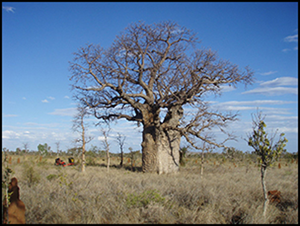
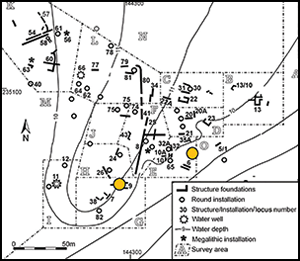
Found only in a restricted area of north-west Australia, the Australian boab (Adansonia gregorii) is recognisable by its massive, bottle-shaped trunk, and is an economically important species for Indigenous Australians, with the pith, seeds and young roots all eaten. Many of these trees are also culturally significant and are sometimes carved with images and symbols. The authors discuss the history of research into carved boabs in Australia, and present a recent survey to locate and record these trees in the remote Tanami Desert. Their results provide insight into the archaeological and anthropological significance of dendroglyphs in this region and add to a growing corpus of information on culturally modified trees globally.
The authors discuss new sediment coring at the Early Neolithic submerged site of Atlit-Yam, Israel, that reveals stratified archaeological deposits 0.7–0.9m below the seabed. They demonstrate the potential of micro-geoarchaeological analysis to generate new chrono-stratigraphic data for the onset of Early Neolithic coastal occupation in the Eastern Mediterranean.
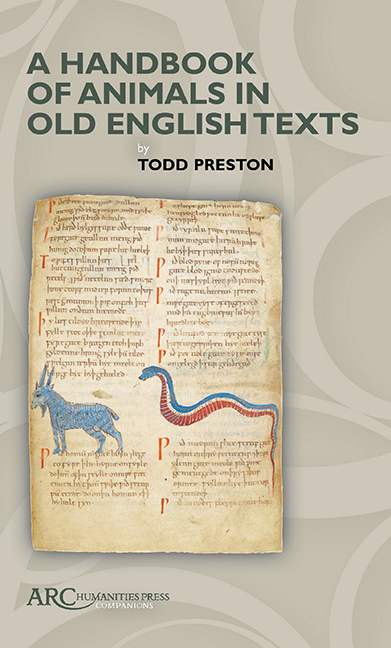
A Handbook of Animals in Old English Texts is the definitive handbook for students, scholars, and observers of the non-human in early medieval England. In this interdisciplinary compendium to the animal inhabitants of medieval Britain, Preston documents each creature mentioned in the Old English literary textual canon and correlates its standard literary interpretation with relevant historical, archaeological, and ecological studies. Beyond its usefulness as a reference work, Preston's text challenges the reader to move beyond a literary analysis of the figural beast to one that leaves space for the actual animal.
This is an Element about some of the largest sites known in prehistoric Europe – sites so vast that they often remain undiscussed for lack of the theoretical or methodological tools required for their understanding. Here, the authors use a relational, comparative approach to identify not only what made megasites but also what made megasites so special and so large. They have selected a sample of megasites in each major period of prehistory – Neolithic, Copper, Bronze and Iron Ages – with a detailed examination of a single representative megasite for each period. The relational approach makes explicit comparisons between smaller, more 'normal' sites and the megasites using six criteria – scale, temporality, deposition / monumentality, formal open spaces, performance and congregational catchment. The authors argue that many of the largest European prehistoric megasites were congregational places.
This article presents 6637 radiocarbon dates from archaeological sites in southernmost Sweden, from 9000 cal bc to the present. Based on summed probability distributions (SPDs) of the calibrated radiocarbon dates, the authors consider long-term trends in settlement and human population. Most dates are from the fertile and densely populated plains of south-western Scania, but coastal lowlands and forested uplands are also represented, allowing for a discussion of the relationship between central and peripheral areas. The authors distinguish between different types of archaeological contexts and features and between different types of dated material, so as to better understand the processes behind population and settlement change. They highlight three periods and phenomena revealed by the SPDs: a strong population increase at the onset of the Neolithic (4000–3700 cal bc), followed by a sharp decline; a steady and long-lasting expansion from the Early Bronze Age to the Roman Iron Age (1500 cal bc–cal ad 200); and a decrease in the Nordic Late Iron Age (seventh century ad), particularly in recently colonized upland areas. The SPDs presented provide a new framework for archaeology in southern Sweden and offer an empirical basis for discussion of long-term trends in settlement and population development.
The book investigates the cultural and political dimension of Roman arboriculture and the associated movement of plants from one corner of the empire to the other. It uses the convergent perspectives offered by textual and archaeological sources to sketch a picture of large-scale arboriculture as a phenomenon primarily driven by elite activity and imperialism. Arboriculture had a clear cultural role in the Roman world: it was used to construct the public persona of many elite Romans, with the introduction of new plants from far away regions or the development of new cultivars contributing to the elite competitive display. Exotic plants from conquered regions were also displayed as trophies in military triumphs, making plants an element of the language of imperialism. Annalisa Marzano argues that the Augustan era was a key moment for the development of arboriculture and identifies colonists and soldiers as important agents contributing to plant dispersal and diversity.
Much needed within scholarship related to archaeology, the construction of nations, and the politics of epistemic practice, the two books under review—Bureaucratic archaeology and Archaeology, nation, and race—are certainly welcome additions. The first, by Ashish Avikunthak, is a deep and engaged ethnographic study of the ways by which the Archaeological Survey of India (ASI) produces archaeology, and links it to religiosity, at the excavation site. Through this study, Avikunthak lays open “this social, cultural, and scientific universe of postcolonial archaeologies and demonstrate the impact of bureaucratic ontologies on epistemological practices” (p. xix). The second volume, co-authored by Raphael Greenberg and Yannis Hamilakis, can be considered autoethnographic, fashioned around conversations during a seminar at Brown University. In a series of fascinating chapter-conversations, they provide nuance to otherwise very difficult, slippery and easily conflated arguments that bring together and reflect upon the histories of archaeological imaginaries and contemporary politics of Greece and Israel/occupied Palestine. Both texts are grounded in an ethnographic modality that allows for clarity of their epistemic critiques of the nation. It is remarkable how much political work both texts are doing by carefully holding and contextualising history and contemporary politics, while also providing critical insights into the ways in which archaeology is used to further the politics of the nation.
Germania Inferior and Germania Superior, along the Rhine, and neighbouring Raetia were provinces inherited by Hadrian which lacked major external threats and had the potential to become flourishing parts of the Roman Empire. Relying on his personal knowledge of the regional situation he strengthened civilian self-government by gradually reducing the role of the military. Apart from the legions, all other units were stationed in a small defined cordon at the edge of Roman territory. Together with the now well-dated building of the palisade as a continuous running barrier, Hadrian's initiatives might be seen as an imperial gift to the provincials.
During the Late Pleistocene (MIS 5e-2), the brown bear Ursus arctos was widespread in the Czech Republic. From this time interval, the species was recorded in 51 Czech localities, including 10 open-air and 41 cave sites. A total of 18 radiocarbon dates obtained from the material showed the presence of the species in this territory 46–12.6 kyr ago during the Late Pleistocene, but most of the dates are concentrated between 45.7 and 29.3 kyr. Later, its occurrence continued into the Holocene. Three dates confirmed the presence of U. arctos just before and during the LGM. However, during the coolest part of the GS-2.1b interval (about 20.9–19.0 kyr), the species was not recorded in the territory of the Czech Republic. A large, broad-toothed, highly carnivorous priscus ecomorph adapted to live in open grasslands occurred during the Late Pleistocene, while the arctos ecomorph was rarely recorded from that period. The post-LGM time (17.5–14.7 kyr) was characterised by increasing numbers of brown bear dates on the territory of the Czech Republic. It was also a period of progressive afforestation and the disappearance of the priscus ecomorph. The latest occurrence of the priscus ecomorph in the territory of the Czech Republic was represented by a robust mandible from the Býčí skála Cave, dated at 15.4–14.9 kyr.
AMS radiocarbon dating has been widely applied in Palaeolithic art research and its value has been proven over the past three decades. Yet it still suffers from issues that need to be discussed and analysed to improve future sampling strategies and strengthen the interpretation of the results. This study presents new AMS dates for the parietal art in Cueva de Las Chimeneas in northern Spain, describes the quality of the samples, and discusses their reliability. The joint assessment of the dates and its comparison with previously obtained dates as well as stratified and dated portable art makes it possible to put forward a hypothesis about the time of creation of the cave's parietal art and the degree of synchrony or diachrony in its production. Consequently, it is proposed that the cave art at Las Chimeneas was created in the lower Magdalenian, between 19,000 and 17,500 cal bp.
Perforated stone plaques, known as bracers, are found across late prehistoric Europe and many of them have been recovered in Bell Beaker funerary contexts, usually associated with adult individuals. Experimental, technological, and use-wear studies have determined that the bracers were both utilitarian and symbolic objects. Very few are found in children's graves, but examples are known in the Iberian Peninsula, two of which are presented here. The analyses conducted on the two bracers, including archaeological contextualization, raw material identification, and technological and use-wear studies, allow the authors to reconstruct their respective biographies. Although these pieces were associated with young children, they had long lives before their final deposition in the graves. Use-wear marks on one of the bracers suggest that it was used in archery, despite its small size.