To save content items to your account,
please confirm that you agree to abide by our usage policies.
If this is the first time you use this feature, you will be asked to authorise Cambridge Core to connect with your account.
Find out more about saving content to .
To save content items to your Kindle, first ensure no-reply@cambridge.org
is added to your Approved Personal Document E-mail List under your Personal Document Settings
on the Manage Your Content and Devices page of your Amazon account. Then enter the ‘name’ part
of your Kindle email address below.
Find out more about saving to your Kindle.
Note you can select to save to either the @free.kindle.com or @kindle.com variations.
‘@free.kindle.com’ emails are free but can only be saved to your device when it is connected to wi-fi.
‘@kindle.com’ emails can be delivered even when you are not connected to wi-fi, but note that service fees apply.
Dispatch of the Inquisitori di Stato to Andrea Corner, provveditore general of the Kingdom of Candia, dated May 19, 1646. ASV Inquisitori di Stato, b. 32, no. 12.
1646, 19 Maggio: al Provveditore General nel Regno di Candia
La fellonia di Garles Van colonello Olandese et Alessandro Babiani Vicentino, sudditi della Repubblica, ha commosso gravemente l’animo del Senato, et a noi medessimi ha resa tale perturbatione, giustamente dovemo riffletter non pure nella qualità dell’accidente, per se stesso pernicioso, ma nelle consequenze peggiori per l’essempio, che con ogni mezzo, et industria pos-sibile deve togliersi, per non dar fomento à cosi scelerate rissolutioni; anzi toglierne affetto il pensiero a di chi si sià. Questo essentialissimo fine, tanto importante al publico servitio, non può d’altra maniera conseguirsi, che co’l far seguir la morte d’ambidue questi tristi, co’l mezzo di veleno, a d’altra maniera, che vaglia al colpo sicuro; se dovesse anche spendersi qualche mediocre summa di danaro, con le intelligenze che Vostra Eccelenza conserva utilissime nella piazza di Canea, ò di Mormori, ò d’altri, et con qualle preme dispositioni, che saran stimati conferenti dalla singular prudenza di lei, alla quale raccomandamo con tutta e’fficacia del cuore per l’affetto che porta alla patria, per il zelo, con che inviglia à publici interessi, questo rilevantissimo servitio, che ben’ esseguito acquiterà grandemente li nostril animi, consolerà il Senato, frenerà la petulanza di cattivi, et accrescerà a gran segui il merito di lei per cosi degna utilissima opratione; la desterità, la secretezza,
ASV Notarile Atti, Notai di Venezia, Nicolo Velano, b. 13750, fols. 231r–244r. Copy in ASV Giudici di Petizion, b. 374, Filza 39: Inventari dal 1666, 5 Genn. al 1668, 23 Febb., no. 2.
Die 17 Martii 1667 [231r] Essendo capitata in questa città la Reverenda Madre Theonimphy Mormori dalla Canea con le robbe, scritture, e danari portati con lei de Can-dia come commesaria del quondam clarissimo Signor Zorzi Mormori fù suo fratello istituita per il suo testamento rogato dal Signor Tomaso Sachiellari notaro secretario Ducal vice Cancellier Grande in Candia sotto li 17 Jugno prossimo passato, et dovendo essa Reverenda [231v] commissaria, in esse-cutione del sudetto testamento consegnarli all’Eccelentissimo Signor Zuane Mormori suo nipote. Perciò desiderando esso Eccelentissimo Signor Zuane per sua cautione che appara distintamente notato quanto da detta Reve-renda Madre gli sara consegnato, hanno chiamato me notaro per inventa-riare le sopradette robbe, scritture, e danari che vengono da detta commes-saria consegnati al sudetto Eccelentissimo Signor Zuane Mormori in presen-tia dell’infrascritti testimonij, quali seguono
Una scatola dentro la quale vi sono due priviliggi de Dottorati, con le bolli d’argento, et una Ducale della confirmation della Nobilità Cretense del Signor Nicolo Mormori del 1608 con bollo d’argento pendente
Trè quadri, li due di Dottori, dissero da Ca’ Mormori, et l’altro di personaggio fatto con l’armadura pur da Ca’ Mormori antico—numero
ASV Notai di Candia, notary Giacomo Cortesan, busta 64, filza 27, fol. 140r.
In nomine Dei eterni Amen, L’anno dall’incarnatione del nostro Signor Jesù Christo 1644/Indictione 12, a di /6/Jugno nella città di Candia.
Le parti infrascritte il clarissimo et eccelentissimo Signor Emmanuel Mormori Dr figlio del clarissmimo et eccelentissimo Signor Zuanne Dr Nobile Cretese dalla città della Canea al presente essente in questa città dall’una et la clarissima Signora Pigi figlia del quondam clarissimo et eccelentissimo Signor Vettor Meseri Dr Nobile Cretese dall’altra, et e converso, contratendo, et affermando il matrimonio infrascritto in hora buona, et benedetta, chiamando in aiuto loro gloriosissimo dell’individua et santissima Trinita, Padre, Figlio, et Spirito Santo, et della immaculata sempre Vergine Maria Regina celestiale, dalla inspiratione delli quali nomi gloriosissimi ogni buon recto guide, et consiglio procede imperoche detta clarissima Signora Pigi si consenta tuor et ricever sicome riceve, per suo marito, et sposo legitimo il supradetto clarissimo Signor Emanuel Mormori, secondo commanda la Sancta de Iddio chiesa, et le costitutioni delli sacri Canoni, et per dote sua et doni del predetto Signor sposo gli promette tutta quella dote, che al quondam clarissimo Signor Nicolo Lombardo suo primo marito hanno promesso, dato, et consegnato dalli beni di detto quondam Signor Vettor Meseri suo padre; et dalla quondam clarissima Signora Pandà Coressi sua madre; et anco dal quondam clarissimo Signor Michel Meseri sio barba, come per il suo conratto pregato con detto quondam Signor Nicolo Lombardo più chiaramente, si vede et si habbia relatione per la sua continenza, item gli promette qualsivoglia altra sorte di beni, si mobeli come stabeli, che hà, et che s’attrova haver, et posseder, et che gli aspettano nunc et in future per qualsivoglia modo, via, raggion, attion, causa,
Scrittura per la resa di Canea, BNM, MS It. VII 211 (7468), fols. 72r–73r.
[72r] Perche doppo essersi bravamente difesa questa piazza nel corso di giornate 56, dall’assedio che la circonda, e oppugna, si trovano indebolite le forze per la mancanza de Capi et officiali, et de genti non restandovi più che 550 fanti circa sani, et senza officiali, tutta essa gente atterrita, et estenuata, essendo anche gravemente ferito il Signor Governator della piazza come pur tutti li Signori ingegneri et essendo morto il Capo de fuochi artificiali con tutti li suoi aggiutanti, et trovandosi l’inimici avvanzati nella facilità maggiore dall’espugnatione della piazza per la appertura fattagli nelle mura con le sue mine et batterie fu da Signori Capi da guerra consultato et concordmente concluso esser impossibile che più si possa nello stato delle cose presente sostennere et diffender la piazza, ridottisi pero nuovamente insieme gl’Illustrissimi et Eccelentissimi Signori Rettore, Provveditore, et Capi da guerra, con altri della città, invocata l’assistenza dello Spirito Santo havuto discorso et stabilito di condescendere a far esponer la bandiera bianca sopra la breccia fatta dall’inimico et chiamarlo à parlamento per trattar le conditioni più honorabili, et più avvantaggiose che ottennersi possono per la resa della medessima piazza, à fine d’evitar quella universal stragge di tutti che trà poco succedesse dall’iminente caduta della piazza stessa, che è in stato di non poter più ressistere ad altri assalti mentre à l’oppugnato balloardo San Dimitri non s’è potuto in tempo ridur in sufficiente difesa le ritirate, essendo anche grandemente diminuito il numero della nobiltà dell’uno e dell’altro ordine, cosi di cittadini,
Despite the long-standing proximity between Ottoman and Iranian reformists, the Young Turk policy toward Iran was notably reserved. The numerous tensions between Istanbul and Tehran during the constitutional period are often attributed to Young Turk pragmatism. Conversely, this study emphasizes the cultural factors in Irano-Ottoman relations and their influence on the Ottoman perception of Iran following the Ottoman Revolution of 1908. Drawing on the reports written by Hüseyin Hasib Efendi, Ottoman ambassador in Iran from 1909 to 1913, it argues that the multilayered nature of Ottoman modernity and the anxieties of the late Ottoman bureaucratic elite were crucial in shaping the Porte’s policy toward Iran. The article introduces the concept of entangled Orientalism to describe the process of Ottoman discursive adaptation to the West-dominated international order. Additionally, it aims to reassess the role of the Russian menace in the Ottoman understanding of regional politics.
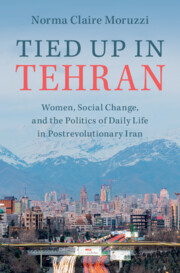
Tied Up in Tehran offers a richly interdisciplinary study of ordinary life in Iran since the 1979 revolution and a critical intervention in political theory debates on knowledge and method. Drawing from over ten years of field work in Iran since the 1990s, and originating in the author's surreal experience of being served tangerines during a home invasion in Tehran, Norma Claire Moruzzi examines the experiences of women, young people, artists, and activists: at home, at work, and in the street. These stories - of food and family, film and politics, shopping and crime-reckon with the past, demonstrate resilient democratization in the present, and provide glimpses of a plausible future while offering a refreshing model to ethically engaged modes of study. Moruzzi's lucid and engaging writing explores Iranian daily life as unexpected, contradictory, and full of political promise.
A collection of critical analyses of the structure, historical development, and composition of the elite strata of late Roman, Byzantine, and early Islamic societies in the eastern Mediterranean basin. Culture change, economic foundations, political roles and function, social composition, and background and origins of old and new elites are the focus of the contributions by scholars who deal with the fate of the later Roman elite and its successors.
The 'Constitution of Medina' is probably the first legal document of Mu?ammad and dates back to the first year after his hijra (622 CE), or 'emigration', which brought him from his hometown Mecca to the cluster of towns known as Yathrib or Medina in the Hijaz (northern Arabia) and marked the beginning of the Islamic era.
Muslim historians and jurists have been familiar with this important document for centuries, and aware of its legal and theological implications for Islamic law. It was first brought to the attention of scholars in the West at the end of the nineteenth century by Wellhausen, who accepted it as an authentic document from the time of the Prophet. Since then, such leading orientalists as Goldziher, Gil, Serjeant, Goto, U. Rubin and J. B. Simonsen have studied various aspects of it.
This monograph offers an edited translation and interpretation of the earliest and most important document from the time of Mu?ammad. Lecker's focus is on the Jewish tribes, the Treaty of the Mu'minun and the Treaty of the Jews.
This work focuses on the intellectual and educational history of Baghdad in the early ?Abbasid and Buyid periods (eighth-tenth centuries). It covers a wide range of disciplines taught in the metropolis before the institutionalization of the madrasa system. Among these fields of knowledge are Arabic poetry and literature, the transmission of prophetic reports, Arabic historiography and astronomical-astrological teaching. Christian learning in the city is highlighted by two contributions, while two more papers focus on Jewish practices of knowledge production.
The volume seeks to promote a better understanding of Baghdad's multi-cultural circles of learning, the transmission of knowledge, and common patterns of patronage during this period.
A collection of all of Martin Hinds' (1941-1988) full-length articles which appeared in journals as well as one of his articles for the 'Encyclopaedia of Islam, Second Edition'. Most of the articles have to do with the early period of Islamic history, while two others deal with the early Abb sid caliphate.
The volume is especially important in light of the fact that all of the articles were revised by the editors based on Hinds' own corrected copies.
A comparative analysis of Byzantine, Sasanian and Muslim armies and their impact on state resources. Contributions discuss the organization and financing of the army in the late Roman state, the transformations and continuities of the late Sasanid state and with authority and armies in the early Muslim state. Thus, the volume brings together perspectives from neighbouring fields, presents military issues in an intercultural manner and assembles important pieces of knowledge in a comprehensive manner.
This volume revisits archaeological evidence from Syria, Palestine, the Arabian Peninsula, Iraq and Egypt describing a variety of land-use patterns and the development of a particular type of settlement across the Near East.
States of emergency are usually approached separately in social, political, and economic policy spheres while they are generally tied to a concrete time frame: security, disasters, and economic crises are portrayed as discrete emergencies occupying specific periods. This paper shows that seemingly different and sometimes contradictory processes of states of emergency often intertwine with each other despite their variegated domains, scales, reasonings, and political endeavors. Moreover, their legacies and origins are found in the broader history of articulation of new forms of governance and accumulation of wealth. The paper presents two cases in Turkey that differ in terms of the violence they entailed while both exploited the same emergency declaration against disasters and the new Law No. 6306 on land grabbing. The first is a series of spectacular incidents in the southeastern Kurdish city of Diyarbakır and the second is an ethnographic study from Eskişehir, a mundane setting in western Anatolia. The study develops a historical–relational framework to examine how emergency governance operates through dual, interwoven logics of ruling and capital accumulation. This allows us to move beyond ready-made, reductionist understandings of contemporary emergency governance. Discerning institutionalization of states of emergency also shows their fragility and blurs the line between spectacular and non-spectacular.
A century ago, in summer 1925, the Great Syrian Revolt erupted in opposition to French mandate rule. In Saydnaya a village murder happened to coincide with the outbreak of the revolt. The young killer, in avenging his father’s earlier murder, became, first a fugitive, then an unlikely revolutionary hero, and eventually, during his long absence, a legendary figure, and repository for a number of mostly erroneous historical claims and memories. After ten years on the run, he surrendered and was defended by a famous nationalist lawyer. He was tried, jailed, and released. An American brother paid his legal bills and helped him emigrate to West Virginia. He never returned to Syria. This article is based on a French mandate archival court record, extensive interviews with eyewitnesses, American consular records, and finally, interviews and documents from surviving family in West Virginia. It offers a dizzying microhistory of rural Syria in upheaval, colonial myopia, sectarianism, revolution, international migration, and the immigrant experience in the United States. The article argues for the colonial origins of sectarian rule, but shows how a tool of colonial fragmentation changed and collided with revolution, colonial and postcolonial politics, migration, and memory in unpredictable ways.
The Russo-Ottoman War of 1877-78 was a pivotal event for the Ottoman Empire in various ways, but one of its defining characteristics is its association with the large-scale displacement of people. This article seeks to contribute to the history of migration and displacement in the late Ottoman Empire by exploring how Muslim refugees understood and narrated their experiences. Methodologically it underscores the use of narrative sources, such as memoirs and literary works. The aim is to examine displacement from the perspective of the refugees through sources reflecting their voices, rather than from the standpoint of state and administrative actors. The article focuses on an account of the Russo-Ottoman War of 1877-78 and subsequent flight (hicret) by Hüseyin Raci, a Muslim ʿalim, teacher, and poet from Eski Zağra, a city in the Balkans, while also drawing connections with other literary works penned by Muslim refugees.
Salafism is a theological movement whose radical wing is today affiliated with al-Qaʿida and the Islamic State, but which draws on precedents stretching back to the medieval theology of Ibn Taymiyya. This innovative study focuses on the concept of theonomy in salafi thought: the tenet that rule by God's law is an essential component of faith, and the corresponding notion that other forms of rule based on human legislation are inherently polytheistic and thereby illegitimate. It is this tenet which furnishes radical militants with their principal casus belli against ruling regimes in the Muslim world. In this book, Daniel Lav details the intellectual grounding for modern salafi theonomy in Ibn Taymiyya's doctrine of tawhid and the writings of the early Wahhabi movement, in addition to the twentieth-century thought of Abu al-Aʿla Mawdudi and Sayyid Quṭb, while drawing on insights from comparative political theology to analyze this key school of thought.