Refine search
Actions for selected content:
178589 results in Earth and Environmental Sciences
Constraints on iron silicide formation from a fulgurite from Southwick, Massachusetts, USA
-
- Journal:
- Mineralogical Magazine / Volume 89 / Issue 4 / August 2025
- Published online by Cambridge University Press:
- 14 January 2025, pp. 476-482
-
- Article
- Export citation
Zirconolite CaZrTi2O7 from the Kovdor phoscorites and carbonatites, Kola Alkaline Province: composition, recrystallisation and thermal expansion
-
- Journal:
- Mineralogical Magazine / Volume 89 / Issue 4 / August 2025
- Published online by Cambridge University Press:
- 14 January 2025, pp. 492-505
-
- Article
- Export citation
-
This investigation investigates geologically old, ca. 370 Ma, metamict zirconolite from the Kovdor phoscorites and carbonatites in the Kola Alkaline Province. Mineral composition, crystallisation behaviour, and thermal expansion of the recrystallised samples were analysed using electron microprobe analysis, Raman spectroscopy, and in situ high-temperature powder X-ray diffraction (HTPXRD). The zirconolite crystals investigated are different in their morphology, internal texture, composition, alteration degree, and can be divided into four distinct groups. The zirconolite is a high Nb and Fe3+ variety (10.8–24.1 wt.% Nb2O5 and 7.9–9.0 wt.% Fe2O3), it is enriched in Th (up to 8.7 wt.% ThO2), Ta (up to 5.3 wt.% Ta2O5) and rare earth elements (up to 5.0 wt.% REE2O3). Raman spectroscopy confirmed that metamict zirconolite is anhydrous.
The recrystallisation process of the metamict zirconolite is complex, as detected by HTPXRD. A fluorite-type phase starts to crystallise at 420°C. The formation of a pyrochlore phase can be identified at 750°C. The major phases detected in the sample after the recrystallisation are: zirconolite-3T (53 wt.%), srilankite (25 wt.%), pyrochlore (15 wt.%), baddeleyite (5 wt.%) and zircon (3 wt.%). The average coefficients of thermal expansion (CTE) values in the temperature range 25–1200°C are as follows: ${{\bar \alpha }}$a = ${{\bar \alpha }}$b = ${{\bar \alpha }}$11 = ${{\bar \alpha }}$22 = 8.95·10–6 deg–1. Similarly, the thermal expansion along the c-axis yields a similar value: ${{\bar \alpha }}$a = ${{\bar \alpha }}$b = 8.93·10–6 deg–1, indicating an almost isotropic thermal expansion of zirconolite-3T. The lower CTE value compared to a pure synthetic zirconolite observed for zirconolite-3T might be attributed to the complex chemistry and polyphase nature of the material investigated.


Paleomagnetic data from volcanic rocks in the southern Central Andes of Argentina and their implications for tectonics and geomagnetic field behavior
-
- Journal:
- Quaternary Research / Volume 124 / March 2025
- Published online by Cambridge University Press:
- 14 January 2025, pp. 153-170
-
- Article
- Export citation
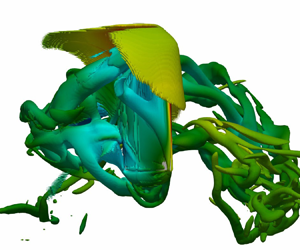
A scaling law for the lift of a bio-inspired wing hovering in low-density compressible flows
-
- Journal:
- Journal of Fluid Mechanics / Volume 1003 / 25 January 2025
- Published online by Cambridge University Press:
- 13 January 2025, A10
-
- Article
- Export citation
-
Aircraft with bio-inspired flapping wings that are operated in low-density atmospheric environments encounter unique challenges associated with the low density. The low density results in the requirement of high operating velocities of aircraft to generate sufficient lift resulting in significant compressibility effects. Here, we perform numerical simulations to investigate the compressibility effects on the lift generation of a bio-inspired wing during hovering flight using an immersed boundary method. The aim of this study is to develop a scaling law to understand how the lift is influenced by the Reynolds and Mach numbers, and the associated flow physics. Our simulations have identified a critical Mach number of approximately $0.6$ defined by the average wing-tip velocity. When the Mach number is lower than 0.6, compressibility does not have significant effects on the lift or flow fields, while when the Mach number is greater than $0.6$, the lift coefficient decreases linearly with increasing Mach number, due to the drastic change in the pressure on the wing surface caused by unsteady shock waves. Moreover, the decay rate is dependent on the Reynolds number and the angle of attack. Based on these observations, we propose a scaling law for the lift of a hovering flapping wing by considering compressible and viscous effects, with the scaled lift showing excellent collapse.


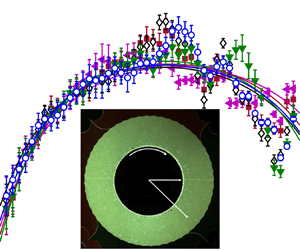
Dilatancy and its coupling to the kinematics in sheared granular media
-
- Journal:
- Journal of Fluid Mechanics / Volume 1003 / 25 January 2025
- Published online by Cambridge University Press:
- 13 January 2025, A11
-
- Article
-
- You have access
- Open access
- HTML
- Export citation
De-extinction beyond species: Restoring ecosystem functionality through large herbivore rewilding
- Part of
-
- Journal:
- Cambridge Prisms: Extinction / Volume 3 / 2025
- Published online by Cambridge University Press:
- 13 January 2025, e3
-
- Article
-
- You have access
- Open access
- HTML
- Export citation
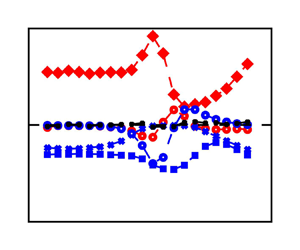
Energy thickness in turbulent boundary layer flows
-
- Journal:
- Journal of Fluid Mechanics / Volume 1003 / 25 January 2025
- Published online by Cambridge University Press:
- 13 January 2025, A7
-
- Article
- Export citation
-
In this study, we investigate the properties of energy thickness $\delta _3$ in turbulent boundary layer (TBL) flows, a parameter derived solely from the mean streamwise velocity ( $U$) profile. Through an analysis of the energy integral equation for zero pressure gradient TBLs, we establish a close relationship between turbulent kinetic energy (TKE) production and $\delta _3$, offering a practical method to estimate TKE production, which is particularly useful in physical experiments where direct measurements are challenging. The significance of $\delta _3$ becomes even more pronounced in TBLs under pressure gradient. Through extensive analysis of numerical and experimental data, we show that the ratio between $\delta _3$ and the momentum thickness $\delta _2$ is a promising criterion for predicting flow separation. Moreover, we derive a new energy integral equation for TBLs under arbitrary pressure gradients, and provide approximations for TKE productions terms by $R_{uv}\,\partial U/\partial y$ and $R_{uu}\,\partial U/\partial x$, and dissipation term by the mean shear. Here, $x, y$ represent the streamwise and wall-normal directions, respectively, and $R_{uu}$ and $R_{uv}$ are the Reynolds normal and shear stresses. The accuracy and robustness of the new energy integral equation and the approximation equations are validated using direct numerical simulations data. Our results show that the TKE production by $R_{uv}\,\partial U/\partial y$ and the overall productions consistently remain positive, reflecting a continuous conversion of mean kinetic energy into TKE across all TBLs. However, under strong favourable pressure gradients, TKE production by $R_{uu}\,\partial U/\partial x$ becomes negative, indicating a reverse energy transfer from TKE to mean kinetic energy.


Clastic sedimentary record impacted by carbonate bioclasts in the Late Ediacaran
-
- Journal:
- Geological Magazine / Volume 162 / 2025
- Published online by Cambridge University Press:
- 13 January 2025, e2
-
- Article
-
- You have access
- Open access
- HTML
- Export citation

Predicting burst events in a forced two-dimensional flow: a wavelet-based analysis
-
- Journal:
- Journal of Fluid Mechanics / Volume 1003 / 25 January 2025
- Published online by Cambridge University Press:
- 13 January 2025, A5
-
- Article
-
- You have access
- Open access
- HTML
- Export citation
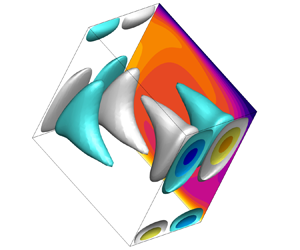
Three-dimensional stability of natural convection flows in inclined square enclosures
-
- Journal:
- Journal of Fluid Mechanics / Volume 1003 / 25 January 2025
- Published online by Cambridge University Press:
- 13 January 2025, A8
-
- Article
-
- You have access
- Open access
- HTML
- Export citation
-
The three-dimensional stability of two-dimensional natural convection flows in a heated, square enclosure inclined to the horizontal is investigated numerically. First, the computational procedure is validated by comparison of base flow solutions to results reported in literature across a range of inclinations. A bi-global linear stability analysis is then conducted to investigate the stability of these two-dimensional base flows to infinitesimal three-dimensional perturbations, and the effect that buoyancy forces (defined by a buoyancy number $R_N$) and enclosure inclination $\theta$ have on these stability characteristics. The flow is first observed to become three-dimensionally unstable at buoyancy number $R_N = 213.8$ when $\theta$ is $180^\circ$; this increases to $R_N = 2.54 \times 10^4$ at inclination $\theta =58^\circ$. It is found that the two-dimensional base flow is more unstable to three-dimensional perturbations with the critical $R_N$ corresponding to three-dimensional instability being significantly lower than its two-dimensional counterpart across all considered inclinations except $83^\circ \leq \theta \leq 88^\circ$, where the most unstable mode is a two-dimensional oscillatory mode that develops in the boundary layers along the conducting walls. Eight different leading three-dimensional instability modes are identified, with inclinations $58^\circ \leq \theta < 88^\circ$ transitioning through an oscillatory mode, and inclinations $88^\circ \leq \theta \leq 180^\circ$ transitioning through a stationary mode. The characteristics of the primary instability modes corresponding to inclinations $88^\circ \leq \theta \leq 179^\circ$ indicate the presence of a Taylor–Görtler instability.


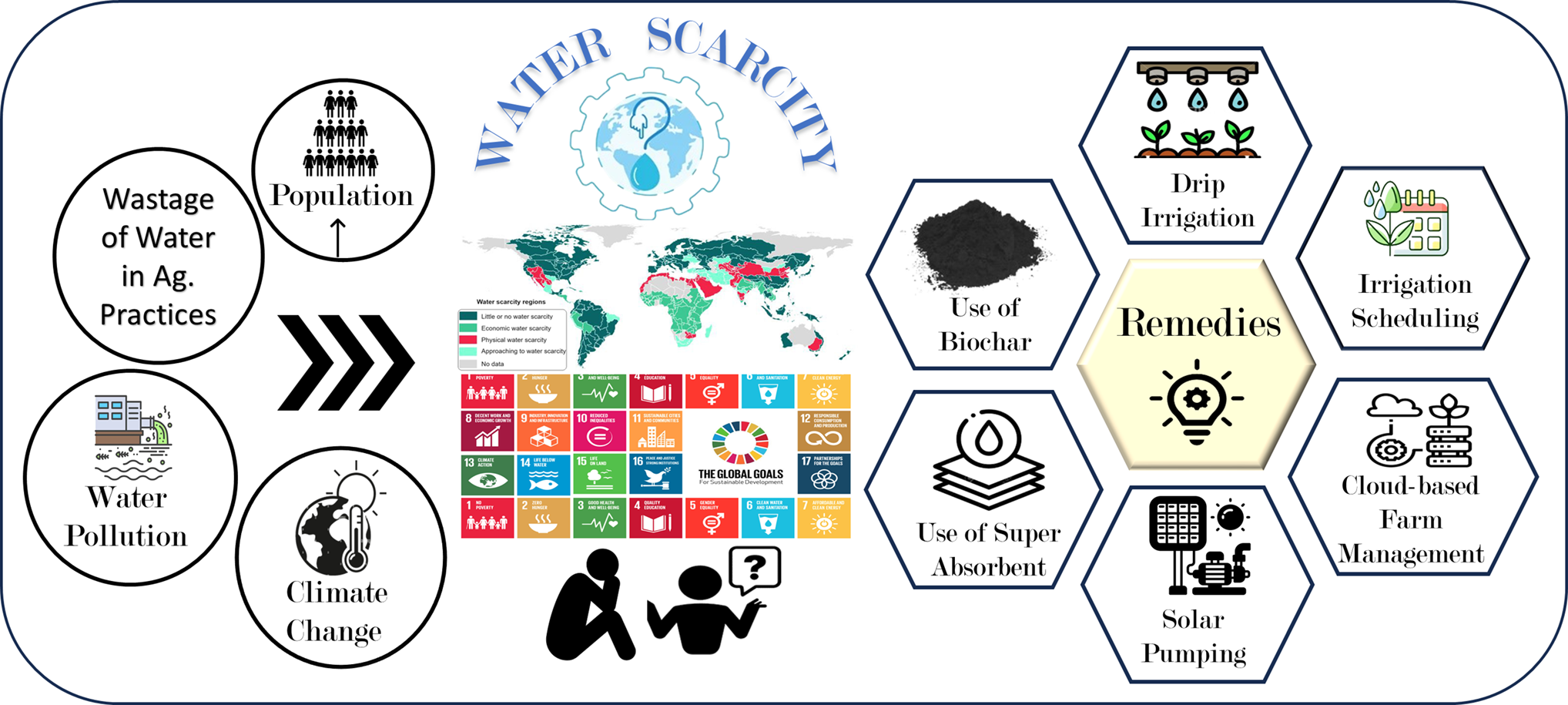
Water scarcity: A global hindrance to sustainable development and agricultural production – A critical review of the impacts and adaptation strategies
-
- Journal:
- Cambridge Prisms: Water / Volume 3 / 2025
- Published online by Cambridge University Press:
- 13 January 2025, e4
-
- Article
-
- You have access
- Open access
- HTML
- Export citation
First report of bumblefoot in the south polar skua (Stercorarius maccormicki)
-
- Journal:
- Antarctic Science / Volume 37 / Issue 1 / February 2025
- Published online by Cambridge University Press:
- 13 January 2025, pp. 67-68
-
- Article
-
- You have access
- Open access
- HTML
- Export citation
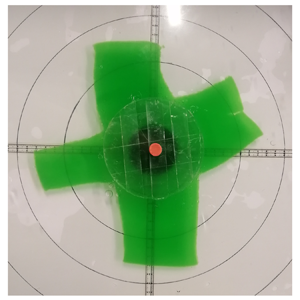
Fracturing behaviour of a shear-thinning fluid in a lubricated Hele-Shaw cell
-
- Journal:
- Journal of Fluid Mechanics / Volume 1003 / 25 January 2025
- Published online by Cambridge University Press:
- 13 January 2025, A6
-
- Article
-
- You have access
- Open access
- HTML
- Export citation
Manipulation of Richtmyer–Meshkov instability on a heavy–light interface via successive shocks
-
- Journal:
- Journal of Fluid Mechanics / Volume 1003 / 25 January 2025
- Published online by Cambridge University Press:
- 13 January 2025, A9
-
- Article
- Export citation
Structure and properties of paleosols of the last two interglacial cycles of the Khovaling Loess Plateau, Tajikistan (Obi–Mazar section)
-
- Journal:
- Quaternary Research / Volume 124 / March 2025
- Published online by Cambridge University Press:
- 13 January 2025, pp. 47-63
-
- Article
- Export citation
Evaluation of Claytone-ER as a novel rheological additive for enhancing oil-based drilling fluid performance under high-pressure high-temperature conditions
-
- Journal:
- Clays and Clay Minerals / Volume 73 / 2025
- Published online by Cambridge University Press:
- 13 January 2025, e3
-
- Article
- Export citation
Winter warming of McMurdo Dry Valleys soils
-
- Journal:
- Antarctic Science / Volume 37 / Issue 1 / February 2025
- Published online by Cambridge University Press:
- 10 January 2025, pp. 49-66
-
- Article
-
- You have access
- Open access
- HTML
- Export citation
Damping of solitons by coastal vegetation
-
- Journal:
- Journal of Fluid Mechanics / Volume 1002 / 10 January 2025
- Published online by Cambridge University Press:
- 10 January 2025, A45
-
- Article
- Export citation
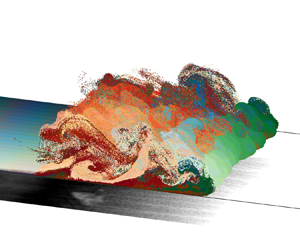
On the suspension and deposition within turbidity currents
-
- Journal:
- Journal of Fluid Mechanics / Volume 1003 / 25 January 2025
- Published online by Cambridge University Press:
- 10 January 2025, A1
-
- Article
-
- You have access
- Open access
- HTML
- Export citation
Reflexivity as a transformative capacity for sustainability science: introducing a critical systems approach
- Part of
-
- Journal:
- Global Sustainability / Volume 8 / 2025
- Published online by Cambridge University Press:
- 10 January 2025, e1
-
- Article
-
- You have access
- Open access
- HTML
- Export citation
