Refine search
Actions for selected content:
178622 results in Earth and Environmental Sciences
Structural characteristics of flow units in Svalbard valley glaciers and their utility for investigating ice-dynamic changes over centennial timescales
-
- Journal:
- Journal of Glaciology / Volume 71 / 2025
- Published online by Cambridge University Press:
- 26 December 2024, e26
-
- Article
-
- You have access
- Open access
- HTML
- Export citation
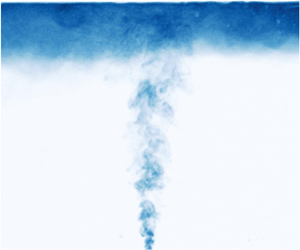
The impact of natural convection and turbulent mixing on mechanical ventilation
-
- Journal:
- Journal of Fluid Mechanics / Volume 1002 / 10 January 2025
- Published online by Cambridge University Press:
- 26 December 2024, A7
-
- Article
-
- You have access
- Open access
- HTML
- Export citation
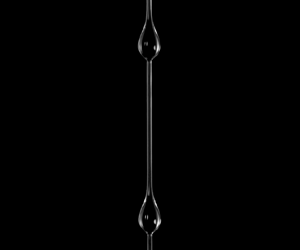
Scaling analysis for the frequency of Ostwaldian and Newtonian bead-on-fibre flows
-
- Journal:
- Journal of Fluid Mechanics / Volume 1002 / 10 January 2025
- Published online by Cambridge University Press:
- 26 December 2024, A12
-
- Article
-
- You have access
- Open access
- HTML
- Export citation
-
Liquid flowing down a fibre readily destabilises into a train of beads, commonly called a bead-on-fibre pattern. Bead formation results from capillary-driven instability and gives rise to patterns with constant velocity and time-invariant bead frequency $f$ whenever the instability is absolute. In this study, we develop a scaling law for $f$ that relates the Strouhal number $St$ and capillary number $Ca$ for Ostwaldian power-law liquids with Newtonian liquids recovered as a limiting case. We validate our proposed scaling law by comparing it with prior experimental data and new experimental data using xanthan gum solutions to produce a low capillary number $Ca \leq 10^{-2}$ regime. The experimental data encompasses both Ostwaldian and Newtonian flow, as well as symmetric and asymmetric patterns, and we find the data collapses along the predicted trend across seven orders of magnitude in $Ca$. Our proposed scaling law is a powerful tool for studying and applying bead-on-fibre flows where $f$ is critical, such as heat and mass transfer systems.


Crystal chemistry and Raman spectroscopy of the johnbaumite–hydroxylellestadite mineral series and associated As- and B-bearing minerals from a pyrometamorphic xenolith of the Upper Chegem Caldera, North Caucasus, Kabardino-Balkaria, Russia
-
- Journal:
- Mineralogical Magazine / Volume 89 / Issue 2 / April 2025
- Published online by Cambridge University Press:
- 25 December 2024, pp. 272-284
-
- Article
-
- You have access
- Open access
- HTML
- Export citation
Metamict thorium orthosilicates from the syenite pegmatites of the Larvic Plutonic Complex, Norway: phase transformations and thermal behaviour
-
- Journal:
- Mineralogical Magazine / Volume 89 / Issue 3 / June 2025
- Published online by Cambridge University Press:
- 25 December 2024, pp. 393-410
-
- Article
- Export citation
-
Three metamict thorium orthosilicate samples from the syenite pegmatites of the Larvic Plutonic Complex, Norway, were thoroughly examined using Raman spectroscopy, electron probe microanalyses (EPMA), electron back-scatter diffraction (EBSD) and differential scanning calorimetry (DSC). Their thermal evolution upon heating was investigated using in situ powder X-ray diffraction (HTXRD) in the range of 25–1200°C. One of the samples is a colour-zoned metamict thorium silicate with a preserved tetragonal shape. The zonation is due to the increasing hydration and element distribution. The EBSD indicates that the ratio of huttonite to thorite after the crystallisation significantly varies from zone to zone within the same sample. The crystallisation of thorite starts in the range of 420–480°C (lower than reported previously for mineral samples), while the emergence of huttonite peaks in HTXRD patterns occurs at 870–930°C. In contrast to huttonite, no thorite crystallisation peak is observed in the DSC curve. A wide temperature range is observed where both thorite and huttonite can coexist. Several fluorite-type phases form upon heating. Thorianite exists in the range of 810–1140°C. After the cooling, except for huttonite and thorite, the minor crystallised phases vary and may be represented by Ca–Th oxides and rhombohedral CaUO4.
The thermal expansion of the crystalline huttonite and thorite was determined as $\overline\alpha$V = 20.66 × 10⁻⁶ deg–1 for huttonite and $\overline\alpha$V = 12.54 × 10⁻⁶ deg–1 for thorite in the temperature range 25–1200°C. These findings contribute to a more in-depth understanding of the behaviour of thorium orthosilicates with complex compositions, both metamict and crystalline, at elevated temperatures. They have potential applications in mineralogy, nuclear chemistry and high-level waste management.


Importance of Ca-rich fluids for the formation of secondary Sc-minerals. An example from a metaluminous pegmatite Kožichovice II, Czech Republic
- Part of
-
- Journal:
- Mineralogical Magazine / Volume 88 / Issue 6 / December 2024
- Published online by Cambridge University Press:
- 25 December 2024, pp. 787-803
-
- Article
-
- You have access
- Open access
- HTML
- Export citation
Ternary geopolymer with calcined halloysite: impact on mechanical properties and microstructure
-
- Journal:
- Clay Minerals / Volume 59 / Issue 4 / December 2024
- Published online by Cambridge University Press:
- 25 December 2024, pp. 310-324
-
- Article
- Export citation
Obituary: Bill Block (1937–2023)
-
- Journal:
- Antarctic Science / Volume 36 / Issue 6 / December 2024
- Published online by Cambridge University Press:
- 23 December 2024, pp. 526-527
-
- Article
-
- You have access
- HTML
- Export citation
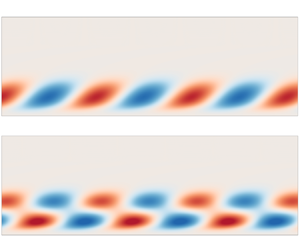
Optimisation and modelling of eddy viscosity in the resolvent analysis of turbulent channel flows
-
- Journal:
- Journal of Fluid Mechanics / Volume 1001 / 25 December 2024
- Published online by Cambridge University Press:
- 23 December 2024, A20
-
- Article
-
- You have access
- Open access
- HTML
- Export citation
-
The eddy-viscosity model, as initially used to model the mean Reynolds stress, has been widely used in the linear analysis of turbulence recently by direct extension. In this study, the mechanism of the eddy viscosity in improving the prediction of fluctuation structures with linear analysis is clarified by investigating the statistical properties of forcing, eddy-viscosity term and their correlations. From the direct numerical simulation (DNS) results of turbulent channel flows with $Re_{\tau }=186$– $2003$, the spatial correlation of forcing is partially cancelled due to its interaction with eddy-viscosity terms. The stochastic forcing after excluding the eddy-viscosity term is nearly uncorrelated spatially, which better matches the condition where the resolvent modes are consistent with the spectral proper orthogonal decomposition (SPOD) modes from DNS. With the above findings, an optimisation framework is developed by minimising the spatial correlations of the stochastic forcing. The optimised eddy-viscosity profiles nearly overlap with the mean-quantity-based model in the near-wall region, but have different maximum values. Compared with the mean-quantity-based model, the optimised results enhance the consistency between the resolvent and DNS results significantly. Based on the optimised results, a new modelling framework is further abstracted, leaving only one to-be-modelled parameter of the maximum value of the eddy-viscosity profile. This parameter follows distinctive rules with spanwise flow scales, based on which a simplified predictive model is constructed. The resolvent modes predicted by the new model exhibit high consistency with SPOD modes, which are essentially comparable to the optimised results for wide ranges of streamwise and spanwise scales.


Parisite-(Nd), ideally CaNd2(CO3)3F2, a new mineral from Bayan Obo FeNbREE deposit, Inner Mongolia, China
-
- Journal:
- Mineralogical Magazine / Volume 89 / Issue 3 / June 2025
- Published online by Cambridge University Press:
- 23 December 2024, pp. 370-379
-
- Article
- Export citation
Education and outreach activities by the Antarctic Treaty Parties: topics and target audiences
-
- Journal:
- Antarctic Science / Volume 36 / Issue 6 / December 2024
- Published online by Cambridge University Press:
- 23 December 2024, pp. 514-523
-
- Article
- Export citation
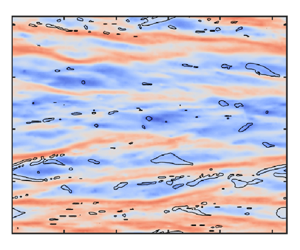
How interfacial tension enhances drag in turbulent Taylor–Couette flow with neutrally buoyant and equally viscous droplets
-
- Journal:
- Journal of Fluid Mechanics / Volume 1002 / 10 January 2025
- Published online by Cambridge University Press:
- 23 December 2024, A2
-
- Article
- Export citation
-
The presence of dispersed-phase droplets can result in a notable increase in a system's drag. However, our understanding of the mechanism underlying this phenomenon remains limited. In this study, we use three-dimensional direct numerical simulations with a modified multi-marker volume-of-fluid method to investigate liquid–liquid two-phase turbulence in a Taylor–Couette geometry. The dispersed phase has the same density and viscosity as the continuous phase. The Reynolds number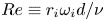 $Re\equiv r_i\omega _i d/\nu$ is fixed at 5200, the volume fraction of the dispersed phase is up to $40\,\%$, and the Weber number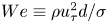 $We\equiv \rho u^2_\tau d/\sigma$ is approximately 8. It is found that the increase in the system's drag originates from the contribution of interfacial tension. Specifically, droplets experience significant deformation and stretching in the streamwise direction due to shear near the inner cylinder. Consequently, the rear end of the droplets lags behind the fore head. This causes opposing interfacial tension effects on the fore head and rear end of the droplets. For the fore head of the droplets, the effect of interfacial tension appears to act against the flow direction. For the rear end, the effect appears to act in the flow direction. The increase in the system's drag is attributed primarily to the effect of interfacial tension on the fore head of the droplets which leads to the hindering effect of the droplets on the surrounding continuous phase. This hindering effect disrupts the formation of high-speed streaks, favouring the formation of low-speed ones, which are generally associated with higher viscous stress and drag of the system. This study provides new insights into the mechanism of drag enhancement reported in our previous experiments.

On aerobreakup in the stagnation region of high-Mach-number flow over a bluff body
-
- Journal:
- Journal of Fluid Mechanics / Volume 1002 / 10 January 2025
- Published online by Cambridge University Press:
- 23 December 2024, A1
-
- Article
- Export citation
-
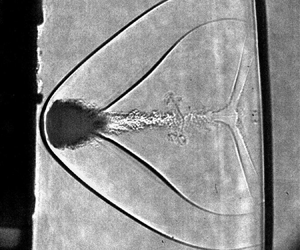
In this paper, aerobreakup in the stagnation region of high-Mach-number flow over a bluff body is studied with experiments and computations. Water drops of diameter 0.51–2.30 mm were acoustically levitated at sea level along the flight path of a rectangular $100\ {\rm mm} \times 150\ {\rm mm}$ rail-gun launched projectile. This enabled the study of aerobreakup at high Mach (3.03–5.12), post-shock Mach (1.5–1.9), Weber $(5 \times 10^4\unicode{x2013}4 \times 10^5)$ and Reynolds $(6 \times 10^4\unicode{x2013}3 \times 10^5)$ numbers. High-speed backlit shadowgraphy is used to record the flow structure. Computations are made for two cases, and it was found that the drop behaviour is not dominated by viscous or surface-tension effects and can be adequately captured by treating the gas as calorically perfect with the ratio of specific heats set to 1.3 to account for thermochemical effects. To assess drop surface stability at early breakup times, results from Newton's inclination method are used to determine the flow along the drop surface and input to a linear-stability analysis; from this, it was found that viscosity and surface tension can be neglected. Moreover, the acceleration term dominates the shear term at the stagnation point, a point accentuated as a drop flattens; this relation inverts closer to the drop equator. Linear-stability analysis was insufficient for modelling late-stage aerobreakup because the predicted wavelengths were too small and the expected aerobreakup times were non-physically short. To address this discrepancy, a nonlinear instability model with constant-rate growth is used that treats the accelerated drop surface as analogous to bubbles rising through a liquid; agreement with computations is good.
The effect of parent rocks on river sediment composition and implication for regional tectono-magmatic events: a case from two tributaries of the Songhua River, NE China
-
- Journal:
- Geological Magazine / Volume 161 / 2024
- Published online by Cambridge University Press:
- 23 December 2024, e24
-
- Article
-
- You have access
- Open access
- HTML
- Export citation
Differential dissolving kinetics of trioctahedral lizardite, chlorite and talc, and water-interface reactions in an acid environment
- Part of
-
- Journal:
- Mineralogical Magazine / Volume 89 / Issue 1 / February 2025
- Published online by Cambridge University Press:
- 23 December 2024, pp. 36-46
-
- Article
- Export citation
Metamorphic P-T evolution and tectonic implications of UHT metamorphism from the Shillong Meghalaya Gneissic Complex, India: evidence from phase equilibria modelling, monazite U-Pb-Th geochronology, K-Ar dating and geochemistry
-
- Journal:
- Geological Magazine / Volume 161 / 2024
- Published online by Cambridge University Press:
- 23 December 2024, e25
-
- Article
-
- You have access
- Open access
- HTML
- Export citation
Local transition indicator and modelling of turbulent mixing based on the mixing state
-
- Journal:
- Journal of Fluid Mechanics / Volume 1002 / 10 January 2025
- Published online by Cambridge University Press:
- 23 December 2024, A4
-
- Article
- Export citation
Predicting mire distribution using species distribution models: a case study of the sub-Antarctic Prince Edward Islands
-
- Journal:
- Antarctic Science / Volume 36 / Issue 6 / December 2024
- Published online by Cambridge University Press:
- 23 December 2024, pp. 487-499
-
- Article
- Export citation
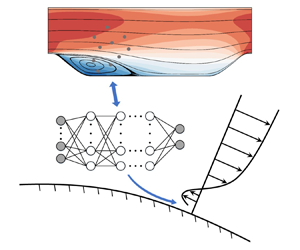
A wall model for separated flows: embedded learning to improve a posteriori performance
-
- Journal:
- Journal of Fluid Mechanics / Volume 1002 / 10 January 2025
- Published online by Cambridge University Press:
- 23 December 2024, A3
-
- Article
- Export citation

Convective flows near a solid embedded in a fluid-saturated porous medium heated from above
-
- Journal:
- Journal of Fluid Mechanics / Volume 1002 / 10 January 2025
- Published online by Cambridge University Press:
- 23 December 2024, A5
-
- Article
- Export citation
