To save content items to your account,
please confirm that you agree to abide by our usage policies.
If this is the first time you use this feature, you will be asked to authorise Cambridge Core to connect with your account.
Find out more about saving content to .
To save content items to your Kindle, first ensure no-reply@cambridge.org
is added to your Approved Personal Document E-mail List under your Personal Document Settings
on the Manage Your Content and Devices page of your Amazon account. Then enter the ‘name’ part
of your Kindle email address below.
Find out more about saving to your Kindle.
Note you can select to save to either the @free.kindle.com or @kindle.com variations.
‘@free.kindle.com’ emails are free but can only be saved to your device when it is connected to wi-fi.
‘@kindle.com’ emails can be delivered even when you are not connected to wi-fi, but note that service fees apply.
In this chapter, we present and discuss the theory of energy demand for the residential sector and for the industrial sector. For the residential sector, we provide a discussion of household production theory, whereas for firms, we discuss duality and production theory. We also provide an extensive discussion on how researchers are estimating energy demand models using empirical methods to derive income and price elasticities, and we provide tables with information on price, income, and substitution elasticities derived in studies that have been recently published. At the end of the chapter, we discuss issues in developing countries related to the topics discussed in the chapter.
The maximum temperature that a geotechnical bentonite barrier in a deep geological repository for radioactive waste can withstand while maintaining its integrity and meeting safety requirements is still an open question. Therefore, an international consortium set up an in situ heater test (HotBENT experiment) at the Grimsel Test Site (GTS) in Switzerland at relevant scales and gradients with temperatures ranging from 175°C to 200°C at the heater/canister surface. After dismantling (5 and 20 years, respectively), the identification of bentonite alteration processes of (clay) minerals has to be based on the comparison of data with reference values determined before the heating started. The experiment was set up using ~150 tons of two different clays (Wyoming and BCV from the Czech Republic) provided in different batches. The bentonites were used both as compacted bentonite blocks and as granular bentonite material (GBM). The determination of representative mineralogical and geochemical bentonite reference values must be based on a significant number of samples taken from all parts of the experiment, which is presented here. Most of the compositional variability was close to the accuracy of the methods used. However, chemical, mineralogical and exchangeable cation analyses showed that different raw materials were used to produce the BCV top blocks. The Wyoming bentonite used is similar to MX80 bentonite in that it is dominated by Na-rich smectite, but the HotBENT material contains slightly more feldspar and zeolite and slightly less smectite. Overall, 55 samples were analysed from different parts of the experiment, providing a statistical basis for post-excavation investigations.
Excavation at the site of Bhagatrav yielded four layers of cultural deposits: the lowermost being the Sorath Harappan, the upper two are medieval, and layer three caps the Sorath Harappan layer. A horn-deity painted dish was found in a stratified context at the lowest level. The medieval deposit includes turquoise glazed and celadon wares, followed by an abundance of Monochrome Glazed Ware, which is otherwise known as Khambhat ware. The date of the Sorath Harappan layer of the site, the time and space of the horn-deity motif in the Harappan world, and the date of Khambhat ware have long been subjects of discussion. With the help of a series of absolute dating (radiocarbon and luminescence), this paper attempts to place the site, horn-deity motif, and the Khambhat ware in the cultural chronology of Gujarat.
Halloysite nanotubes (often abbreviated as HNTs) are technologically important owing to their unique structural and morphological features. Some of these features pre-exist in the naturally hydrated halloysite-(10 Å) parent clay mineral; others may develop during its dehydration towards halloysite-(7 Å). This is the first infrared spectroscopic study of the transition to halloysite-(7 Å), which, in combination with X-ray diffraction (XRD), aimed at advancing the structural description of the process. Three cylindrical and two polygonal halloysite-(10 Å) samples, in both their H- and D-forms, were measured by attenuated total reflectance (ATR), non-invasively and in situ, following step-wise equilibration from 70% relative humidity (RH) to <10% RH and back to 70% RH at ambient temperature. This approach allowed for recording the spectrum of the dehydrating (but not rehydrating) interlayer in the νO–D range, without interference from the inner νOH groups, or from the inner-surface νOH of anhydrous interlayers already present in the parent material. Besides the well-known ‘hole’ H2O species, a new type of H2O-decorated defect was detected at frequencies normally dominated by the inner νOH. This defect is linked to the microenvironment created by the detachment between layer packets and forming ‘crevices’ or ‘slits’ upon dehydration. In addition, the study of the νSi–O spectrum demonstrated that the dehydration of halloysite-(10 Å) leads to the parallel formation of localized, ordered, kaolinite-like domains co-existing with regions of accumulated disorder. The as-produced halloysite-(7 Å) had a non-ideal, open structure that resisted rehydration because the kaolinite-like domains do not rehydrate and act as permanent cross-links.
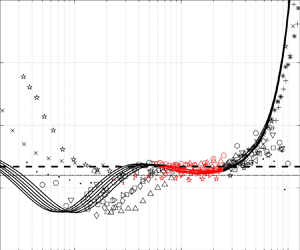
Empirical evidence is provided that within the inertial sublayer (i.e. logarithmic region) of adiabatic turbulent flows over smooth walls, the skewness of the vertical-velocity component $S_w$ displays universal behaviour, being a positive constant and constrained within the range $S_w \approx 0.1\unicode{x2013}0.16$, regardless of flow configuration and Reynolds number. A theoretical model is then proposed to explain this behaviour, including the observed range of variations of $S_w$. The proposed model clarifies why $S_w$ cannot be predicted from down-gradient closure approximations routinely employed in large-scale meteorological and climate models. The proposed model also offers an alternative and implementable approach for such large-scale models.

Drosophila melanogaster has given enormous contributions to Space Biology Research. This organism is an important tool to be manipulated in genetic engineering and molecular experiments in order to understand different biological processes homologous to other multicellular systems, including humans. Their milestone contribution in microgravity conditions and radiation, the two most important variables in space, have allowed new knowledge and perspectives on the positive and negative effects on cellular, molecular and genetic levels. In this review, we expose the historical contribution of Drosophila melanogaster in Astrobiology.
This book brings a critical perspective to post-disaster reconstruction in Italy, and the sometimes radical changes in individual and collective behaviours that persist following such events. Considering the impacts of climate change and COVID-19, this edited book will stimulate debate on policy and practice in disaster recovery.
Regional warming rates experienced in the Antarctic Peninsula since the mid-twentieth century, linked to global climate change, have been amongst the world's fastest. The majority of studies of change in this region have focused on temperature, and while precipitation is also predicted to change (both in form and quantity) in the models, fewer studies have set out to document and test this prediction. In this study, we examined trends in research publications on precipitation variability over the Antarctic Peninsula from 1990 to 2023 using the Web of Science Core Collection database. A total of 86 relevant papers were retained and used to identify patterns in scientific outputs. VOSviewer and Bibliometrix software packages were used to illustrate the subject content of and trends in publications retrieved by key word analysis. Our findings revealed a positive trend in the number of papers published by year. Within the analysed period, research on precipitation variability in the Antarctic Peninsula region was initiated by a study of Turner and colleagues from 1997. The UK and US research communities were the two largest contributors to this field of Antarctic research globally, with their researchers also holding strong positions within international collaborative networks.
Deception Island is an Antarctic Specially Managed Area that houses historically important sites such as the remains of historical wooden buildings. The impacts of fungal communities on wood in polar historical sites have been investigated, but little is known of the impacts of other eukaryote groups. In the current study we used high-throughput sequencing to investigate the diversity of non-fungal eukaryotic organisms present in wood samples from Whalers Bay. Four sites were sampled, and DNA sequences representing three kingdoms (Chromista, Protozoa and Viridiplantae) and four phyla (Ciliophora, Perclozoa, Chlorophyta and Magnoliophyta) were identified, representing a total of 43 taxa. Biscoe House Annex hosted the richest diversity, with 20 taxa, followed by the whaling boat, Biscoe House and the Hunting Lodge, with 16, 15 and 12 taxa, respectively. The most frequently detected sequences were assigned to the ciliate group Sporadotrichida, some of which are known to play a role in cellulose degradation. Among the Chlorophyta, the sequences detected included common taxa previously recorded, but the flowering plant data represented only exotic taxa, probably associated with human activity or airborne transfer. The use of high-throughput sequencing provided valuable data on communities associated with anthropogenically sourced and now decaying wood in Antarctica.
Past hydrogeological processes and human impacts may exert substantial memory effects on today’s groundwater systems. Thorough characterization of such long-term processes is required for scientists and policymakers to predict the hydrogeological impacts of land management options. Especially in data-scarce areas, historical data are essential to unravel long-term hydrogeological processes, which could not be identified by short-term fieldwork or model simulations alone. However, historical data are often overlooked or only used as background information in most hydrogeological studies. We show that the combination of historical reports and quantitative data yields major insights in the hydrogeological system of Curaçao, a small semi-arid Caribbean island. Reconstructing the island’s groundwater conditions over the past 500 years revealed that deforestation and excessive abstraction has had a detrimental effect on the island’s groundwater reserves. Historical notes and data revealed major signs of seawater intrusion, especially during abstraction peaks in the island’s industrial era. Intrusion effects are still observed locally on the island today, but additional groundwater recharge by waste water has caused freshening elsewhere. We hypothesize that the observed aquifer replenishment locally enhances submarine groundwater discharge, flushing accumulated nutrients and pollutants towards Curaçao’s fringing coral reefs. We expect that this study’s insights motivate more hydrogeologists to use historical reports and data in future studies.
Cape Welchness is an uncovered ice area on Dundee Island (north-east of the Antarctic Peninsula), mostly covered by Holocene-age glacial-glaciomarine deposits of up to 70 m in depth. In some areas, rocks from the Trinity Group and the Gustav Group outcrop. Syngenetic cryounits with an active layer development of 0.8 m and ice content ranging from 6% to 15%, increasing with depth, have been detected. Epigenetic units develop an active layer of up to 1.25 m (6–16% ice content), with similar depth values. Along the coastal zone, cryopeg reaches nearly 8 m in depth, alternating between ice, fresh water and saline water. The low and high plains exhibit extensive areas of open talik. In the low plain, a suprapermafrost summer aquifer with a thickness of 1.25–1.50 m develops. Glacial-fed creeks discharge 98% of the water input, while snow-fed creeks contribute only 0.04 Hm3/month. The ponds are divided into those fed by glaciers (linked to open talik) and those fed by precipitation (linked to closed talik). Creeks have an average salinity of 198 mg/l, lakes 190 mg/l and groundwater 223 mg/l. This study focuses on the area of the new Petrel Base, designed to enhance Argentine logistics.
Knowledge of Antarctic permafrost is mainly derived from the Antarctic Peninsula and Victoria Land. This study examines the 2019–2023 temperature and humidity conditions, distribution and development of polygonal terrain and the origin of ground ice in soils of the Untersee Oasis. In this region, the surface offset (MAAT ≅ MAGST) and the thermal offset (MAGST ≤ TTIT) reflect the lack of vegetation, absence of persistent snow and a dry soil above the ice table. The mean annual vapour pressure at the ground surface is approximately ~2× higher than in the air but is ~0.67× lower than at the ice table. The size of polygons appears to be in equilibrium with the ice-table depth, and numerical modelling suggests that the depth of the ice table is in turn in equilibrium with the ground surface temperature and humidity. The ground ice at the ice table probably originates from the partial evaporation of snowmelt that infiltrated the dry soil column. As such, the depth of the ice table in this region is set by the water vapour density gradient between the ground surface and the ice-bearing ground, but it is recharged periodically by evaporating snowmelt.
The Central Asian Orogenic Belt is the world’s largest accretionary orogenic belt, associated with the closure of the Paleo-Asian Ocean (PAO). However, the final closure timing of the eastern PAO remains contentious. The Permian-Triassic sedimentary sequences in the Wangqing area along the Changchun-Yanji suture zone offer important clues into this final closure. New data on petrology, whole-rock geochemistry, zircon U-Pb geochronology and zircon Hf isotopes of sedimentary rocks from the Miaoling Formation and Kedao Group in Wangqing area provide new insights into the final closure of the eastern end of the PAO. The maximum deposition ages of the Miaoling Formation and Kedao Group have been constrained to the Late Permian (ca. 253 Ma) and early Middle Triassic (ca. 243 Ma), respectively. These sedimentary rocks exhibit similar geochemical characteristics, showing low textural and compositional maturities, implying short sediment transport, with all detrital zircons suggesting their origins from felsic igneous rocks. The εHf(t) values of the Miaoling Formation range from −6.09 to 12.43 and from −2.20 to 7.59 for the Kedao Group, implying these rocks originated from NE China. Considering our new data along with previously published data, we propose that a reduced remnant ocean remained along the Changchun-Yanji suture zone in the early Middle Triassic (ca. 243 Ma), suggesting the final closure of the eastern PAO likely occurred between the latest Middle Triassic and early Late Triassic.
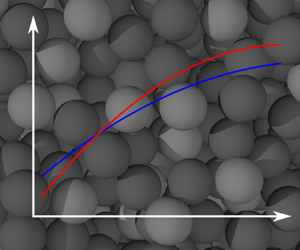
The shear-induced diffusivity of non-Brownian spheres in monodisperse suspensions undergoing viscous flow was calculated using simulations that account for particle roughness and friction as independent parameters. The diffusivity increases significantly as the friction coefficient is increased, and the effect is largest on rougher particles. Roughness reduces the transverse diffusivities relative to smoother particles for sufficiently concentrated suspensions of frictionless and low-friction particles. However, the diffusivity of roughened particles is larger than smoother ones at high values of the friction coefficient. The increase of the diffusivity with friction is associated with a significant broadening of the variance of the rotational velocities. The most prevalent observation, when correlating the microstructure to changes in diffusivity for frictionless particles, is that less diffusive systems, with larger roughness, form layers along the flow direction. These results confirm previous experimental and simulation results that roughness can decrease diffusivity at large concentrations using a more detailed model. Also, comparisons of the simulation results with previously published experimental measurements indicate that friction improves the alignment of the results with experiments.
Serpentine is widely distributed in the regolith and occurs in different types (chrysotile, lizardite, antigorite). The physical and chemical processes such as composition dissolution and structure evolution of serpentine occur constantly under the action of aqueous solutions. Based on the similarities and differences of polysomic structures and properties of chrysotile (tubular shapes) and lizardite (flat structural layers), the mineral–water interfacial reaction of these two minerals was carried out in a sulfuric acid solution with a concentration of 1 mol L–1. The mineral samples were characterized by powder X-ray diffraction, Fourier-transform infrared spectroscopy, scanning and transmission electron microscopy, Brunauer–Emmett–Teller surface area analysis, magic angle spinning nuclear magnetic resonance, and inductively coupled plasma mass spectrometry. The Si, Mg, and Fe dissolution concentrations, dissolution rates, and dissolution rules and structural changes of chrysotile and lizardite were studied and compared. The results show that H+ is more aggressive toward lizardite in sulfuric acid solution. The dissolution rate of Si, Mg, and Fe was faster, the dissolution concentration was greater, and structural changes occurred preferentially in lizardite. Specifically, Mg dissolved first in the octahedral sheets, and Si and Fe dissolved later in the tetrahedral sheets. After the water interfacial reaction with the sulfuric acid solution, the ion dissolution rates of both chrysotile and lizardite were Mg > Fe > Si. In summary, this work investigates the mineral–water interfacial reaction of chrysotile and lizardite in sulfuric acid media from different crystal structures and demonstrates that the crystal structure has a significant effect on the acid reactivity of lizardite minerals. Furthermore, the crystal chemistry patterns for the structural dissociation of different two-dimensional structural units were studied. This work provides a mineralogical basis for the study of the mechanisms of ion migration and crystal-structure evolution of serpentine under acidic media.