Refine search
Actions for selected content:
178607 results in Earth and Environmental Sciences
Performance of the new MICADAS spectrometer at the Radiocarbon and Mass Spectrometry Laboratory, Gliwice, Poland
-
- Journal:
- Radiocarbon / Volume 67 / Issue 2 / April 2025
- Published online by Cambridge University Press:
- 27 December 2024, pp. 365-377
- Print publication:
- April 2025
-
- Article
-
- You have access
- Open access
- HTML
- Export citation

Groundwater resources: Challenges & solutions
-
- Journal:
- Cambridge Prisms: Water / Volume 3 / 2025
- Published online by Cambridge University Press:
- 27 December 2024, e1
-
- Article
-
- You have access
- Open access
- HTML
- Export citation
Distribution and morphometry of large supraglacial channels on five Antarctic ice shelves
-
- Journal:
- Journal of Glaciology / Volume 71 / 2025
- Published online by Cambridge University Press:
- 27 December 2024, e18
-
- Article
-
- You have access
- Open access
- HTML
- Export citation
Ferroinnelite, Ba4Ti2Na(NaFe2+)Ti(Si2O7)2[(SO4)(PO4)]O2[O(OH)], a new mineral of the lamprophyllite group (seidozerite supergroup) from the Kovdor alkaline massif, Kola Peninsula, Russia: description and crystal structure and new data for innelite, Ba4Ti2Na(NaMn2+)Ti(Si2O7)2[(SO4)(PO4)]O2[O(OH)]
-
- Journal:
- Mineralogical Magazine / Volume 89 / Issue 2 / April 2025
- Published online by Cambridge University Press:
- 27 December 2024, pp. 285-297
-
- Article
-
- You have access
- Open access
- HTML
- Export citation
-
Ferroinnelite, Ba4Ti2Na(NaFe2+)Ti(Si2O7)2[(SO4)(PO4)]O2[O(OH)], is a new mineral from the Phlogopite deposit, Kovdor alkaline massif, Kola Peninsula, Russia. In an agpaitic pegmatite, ferroinnelite occurs as transparent elongated platy to tabular crystals up to 0.15 mm long. Associated minerals are cancrinite, orthoclase, aegirine–augite, magnesio-arfvedsonite, golyshevite and fluorapatite. The mineral is yellow to yellow brown with a vitreous lustre and a white streak, Dcalc. is 4.088 g/cm3. Ferroinnelite is triclinic, space group P $\bar 1$, a = 5.3994(8), b = 7.09239(13), c = 14.7345(4) Å, α = 98.4086(19), β = 94.3275(18), γ = 90.0133(13)°, V = 556.56(8) Å3. The chemical composition of ferroinnelite is SO3 5.47, Nb2O5 0.45, P2O5 4.59, ZrO2 0.13, TiO2 16.91, SiO2 17.55, Al2O3 0.06, BaO 42.83, SrO 1.01, FeO 3.34, MnO 0.97, CaO 0.09, MgO 0.64, K2O 0.01, Na2O 4.47, H2O 1.11, F 0.15, O = F –0.06, total 99.72 wt.%, with H2O calculated from structure refinement. The empirical formula calculated on 26 (O + F) apfu is (Na1.95Fe2+0.64Mg0.21Mn2+0.19Ca0.02)Σ3.01(Ba3.84Sr0.13Na0.03)Σ4.00(Ti2.91Nb0.05Al0.02Zr0.01Mg0.01)Σ3.00Si4.02S0.94P0.89H1.70O25.89F0.11, Z = 1. The crystal structure was refined to an R1 index of 7.45% from 4485 unique reflections (Fo > 4σF). The structure is a combination of a TS (Titanium Silicate) and an I (intermediate) blocks. The TS block consists of HOH sheets (H – heteropolyhedral and O – octahedral). The O sheet is composed of Ti-, Na- and (Na,Fe2+)-octahedra, the H sheet, of [5]Ti-polyhedra and Si2O7 groups. The I block contains T sites, statistically occupied by S and P, and Ba atoms. Ideal compositions of the TS and I blocks are {Ti2Na(NaFe2+)Ti(Si2O7)2O2[O(OH)]}3– and {Ba4[(SO4)(PO4)]}3+. Ferroinnelite is a new member of the lamprophyllite group of the seidozerite supergroup. It is isostructural with innelite-1A, Ba4Ti2Na(NaMn2+)Ti(Si2O7)2[(SO4)(PO4)]O2[O(OH)]. Ferroinnelite and innelite are related by the following cation substitution at the MO3 site in the O sheet: Fe2+fer ↔ Mn2+inn. IR and Raman spectroscopies confirm presence of OH and H2O groups in ferroinnelite and innelite.

Steiningerite, Ba2Zr2(Si4O12)O2, a new cyclosilicate from the Löhley quarry, Germany
- Part of
-
- Journal:
- Mineralogical Magazine / Volume 89 / Issue 6 / December 2025
- Published online by Cambridge University Press:
- 27 December 2024, pp. 819-829
-
- Article
-
- You have access
- Open access
- HTML
- Export citation
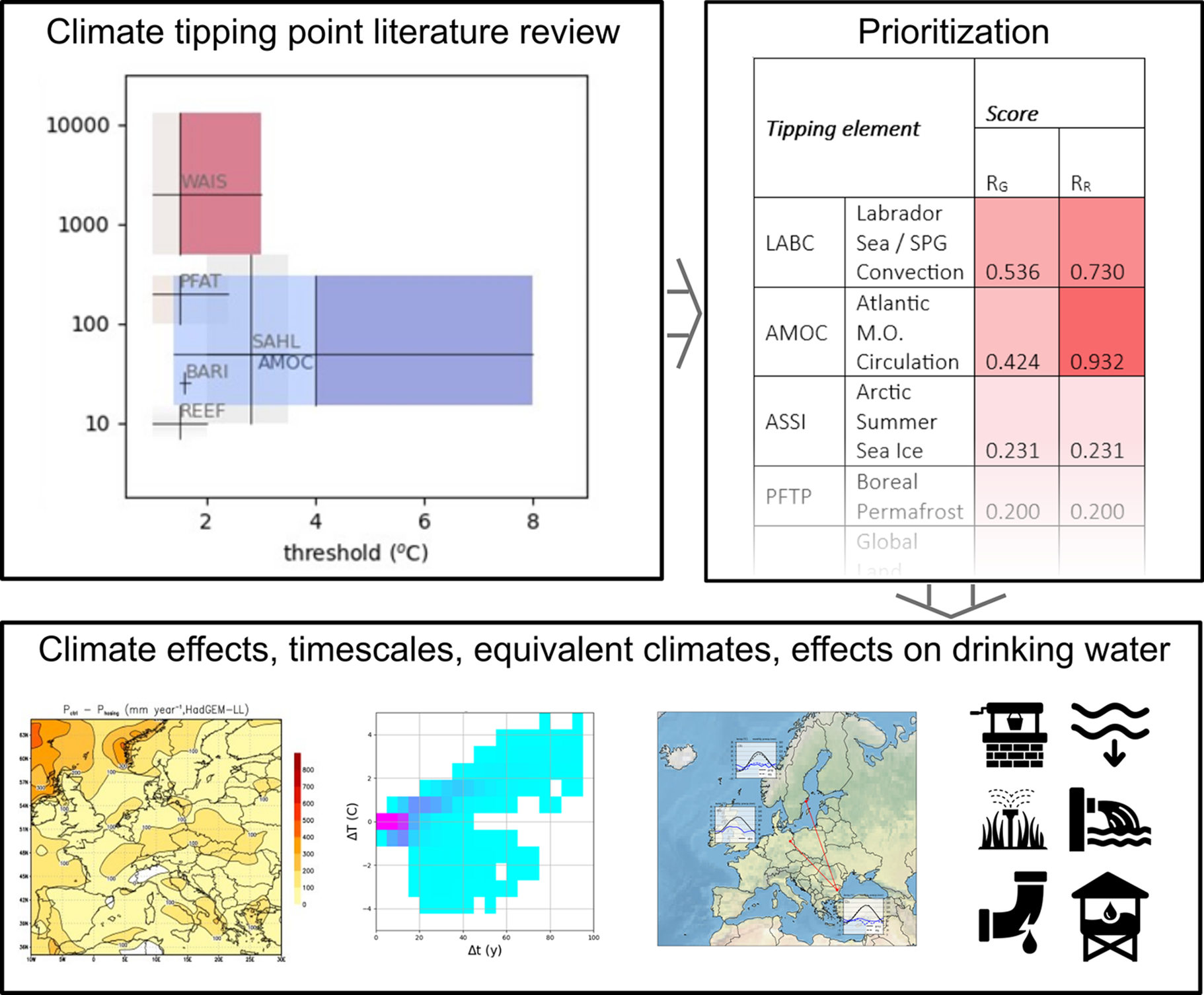
Climate tipping points and their potential impact on drinking water supply planning and management in Europe
-
- Journal:
- Cambridge Prisms: Water / Volume 3 / 2025
- Published online by Cambridge University Press:
- 27 December 2024, e3
-
- Article
-
- You have access
- Open access
- HTML
- Export citation
Dispersant-assisted rotating liquid film reactor separation strategy for low-grade palygorskite purification with improved dye absorption performance
-
- Journal:
- Clay Minerals / Volume 59 / Issue 4 / December 2024
- Published online by Cambridge University Press:
- 27 December 2024, pp. 325-336
-
- Article
- Export citation
Development and characterization of organically grafted clay minerals for the removal of methylene blue from water
-
- Journal:
- Clays and Clay Minerals / Volume 72 / 2024
- Published online by Cambridge University Press:
- 27 December 2024, e34
-
- Article
- Export citation
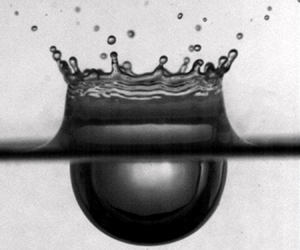
Splash on a liquid pool: coupled cavity–sheet unsteady dynamics
-
- Journal:
- Journal of Fluid Mechanics / Volume 1002 / 10 January 2025
- Published online by Cambridge University Press:
- 27 December 2024, A13
-
- Article
- Export citation
-
Splashes from impacts of drops on liquid pools are ubiquitous and generate secondary droplets important for a range of applications in healthcare, agriculture and industry. The physics of splash continues to comprise central unresolved questions. Combining experiments and theory, here we study the sequence of topological changes from drop impact on a deep, inviscid liquid pool, with a focus on the regime of crown splash with developing air cavity below the interface and crown sheet above it. We develop coupled evolution equations for the cavity–crown system, leveraging asymptotic theory for the cavity and conservation laws for the crown. Using the key coupling of sheet and cavity, we derive similarity solutions for the sheet velocity and thickness profiles, and asymptotic prediction of the crown height evolution. Unlike the cavity whose expansion is opposed by gravitational effects, the axial crown rise is mostly opposed by surface tension effects. Moreover, both the maximum crown height and the time of its occurrence scale as ${\textit {We}}^{5/7}$. We find our analytical results to be in good agreement with our experimental measurements. The cavity–crown coupling achieved enables us to obtain explicit estimates of the crown splash spatio-temporal unsteady dynamics, paving the way to deciphering ultimate splash fragmentation.

New radiocarbon dates from the Bronze Age Tiszafüred-Majoroshalom site (Eastern Hungary)
-
- Journal:
- Radiocarbon / Volume 67 / Issue 2 / April 2025
- Published online by Cambridge University Press:
- 27 December 2024, pp. 428-440
- Print publication:
- April 2025
-
- Article
-
- You have access
- Open access
- HTML
- Export citation
Marsaalamite-(Y), Y(MoO4)OH, a new molybdate mineral from the Um Safi area, Marsa Alam District, Central Eastern Desert, Egypt
-
- Journal:
- Mineralogical Magazine / Volume 89 / Issue 3 / June 2025
- Published online by Cambridge University Press:
- 27 December 2024, pp. 443-453
-
- Article
- Export citation
Chukhrovite-(Ce), (Ca3Ce)[AlF6]2(SO4)F·12H2O, from the Tripi mine, Alì, Messina Province, Sicily, Italy: definition of neotype material
-
- Journal:
- Mineralogical Magazine / Volume 89 / Issue 3 / June 2025
- Published online by Cambridge University Press:
- 27 December 2024, pp. 328-335
-
- Article
- Export citation
-
Neotype material of chukhrovite-(Ce), ideally (Ca3Ce)[AlF6]2(SO4)F·12H2O, was established on the basis of a new occurrence from the Tripi mine, Alì, Peloritani Mountains, Sicily, Italy. In fact the Russian specimens originally considered as type material of this species were later found to correspond to Ce-rich chukhrovite-(Y). At the Tripi mine, chukhrovite-(Ce) occurs as white cube-octahedral crystals, up to 0.05 mm in size, associated with creedite, quartz and fluorite. Electron microprobe analysis gave (in wt.%, normalised to sum = 100.00): SO3 8.40, P2O5 0.16, ZrO2 0.12, Al2O3 11.95, Y2O3 0.48, La2O3 3.64, Ce2O3 7.63, Pr2O3 1.00, Nd2O3 3.23, Sm2O3 0.97, Eu2O3 0.13, Gd2O3 0.97, Dy2O3 0.21, CaO 20.47, F 22.09, Cl 0.07, O = (F, Cl) –9.31, H2Ocalc 27.80. On the basis of 29 anions per formula unit, assuming the presence of 13 (F+Cl+OH) atoms and 12 H2O groups, the empirical formula of chukhrovite-(Ce) from the Tripi mine is Ca3.17(Ce0.40La0.19Nd0.17Pr0.05Sm0.05Gd0.05Y0.04Eu0.01Dy0.01)Σ0.97Zr0.01Al2.04(S0.91P0.02)Σ0.93O4[F10.10Cl0.02(OH)2.88]Σ13.00·12H2O. The occurrence of H2O groups was supported by micro-Raman spectroscopy. Chukhrovite-(Ce) is cubic, Fd $\bar 3$, with a = 16.7608(5) Å, V = 4708.5(4) Å3 and Z = 8. Its crystal structure was refined to R1 = 0.0378 for 604 unique reflections with Fo > 4σ(Fo) and 36 least-square parameters. Chukhrovite-(Ce) belongs to the chukhrovite group and it is isotypic with chukhrovite-(Y), whereas it is homeotypic with chukhrovite-(Ca).

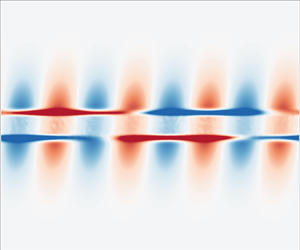
Instability of a dusty shear flow
-
- Journal:
- Journal of Fluid Mechanics / Volume 1002 / 10 January 2025
- Published online by Cambridge University Press:
- 27 December 2024, A17
-
- Article
-
- You have access
- Open access
- HTML
- Export citation
Oyster allometry: growth relationships vary across space
-
- Journal:
- Journal of the Marine Biological Association of the United Kingdom / Volume 104 / 2024
- Published online by Cambridge University Press:
- 26 December 2024, e119
-
- Article
-
- You have access
- Open access
- HTML
- Export citation

Multiscale modelling and simulation of coexisting turbulent and rarefied gas flows
-
- Journal:
- Journal of Fluid Mechanics / Volume 1002 / 10 January 2025
- Published online by Cambridge University Press:
- 26 December 2024, A10
-
- Article
- Export citation
-
Simulating complex gas flows from turbulent to rarefied regimes is a long-standing challenge, since turbulence and rarefied flow represent contrasting extremes of computational aerodynamics. We propose a multiscale method to bridge this gap. Our method builds upon the general synthetic iterative scheme for the mesoscopic Boltzmann equation, and integrates the $k$–
$k$– $\omega$ model in the macroscopic synthetic equation to address turbulent effects. Asymptotic analysis and numerical simulations show that the macroscopic–mesoscopic coupling adaptively selects the turbulence model and the laminar Boltzmann equation. The multiscale method is then applied to opposing jet problems in hypersonic flight surrounding by rarefied gas flows, showing that the turbulence could cause significant effects on the surface heat flux, which cannot be captured by the turbulent model nor the laminar Boltzmann solution alone. This study provides a viable framework for advancing understanding of the interaction between turbulent and rarefied gas flows.


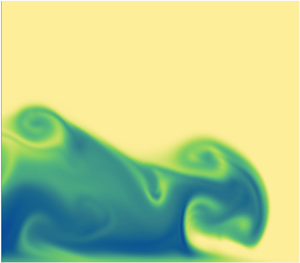
Gravity currents under oscillatory forcing
-
- Journal:
- Journal of Fluid Mechanics / Volume 1002 / 10 January 2025
- Published online by Cambridge University Press:
- 26 December 2024, A14
-
- Article
-
- You have access
- Open access
- HTML
- Export citation
Mechanisms underlying how free surfaces influence very-large-scale motions in turbulent plane open channel flows based on linear non-modal analysis
-
- Journal:
- Journal of Fluid Mechanics / Volume 1002 / 10 January 2025
- Published online by Cambridge University Press:
- 26 December 2024, A9
-
- Article
-
- You have access
- Open access
- HTML
- Export citation
Isochoric unsteady multipolar spherical oscillations in compressible radial and cylindrical background flows
-
- Journal:
- Journal of Fluid Mechanics / Volume 1002 / 10 January 2025
- Published online by Cambridge University Press:
- 26 December 2024, A11
-
- Article
-
- You have access
- Open access
- HTML
- Export citation
-
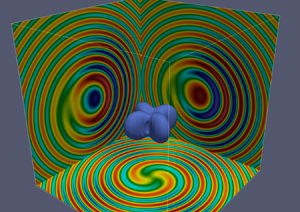
The multipolar spherical vortex solutions to the Euler and Navier–Stokes equations in background cylindrical flow with swirl admit an additional background divergent radial flow with arbitrary time-dependent amplitude. In this case the radial wavenumber $k$, fundamental frequency $\omega$ and overall amplitude $U$ of the multipolar mode superposition become time-dependent and related functions. Assumption of an additional constraint, as a constitutive equation defining the time evolution of the spatially homogeneous divergence of the background flow, is required for the time evolution of the total flow to be completely evaluated from the initial conditions. It is found that flow compression implies an increase of the absolute values of the fundamental frequency $\omega$ and overall velocity amplitude $U$ of the oscillations.


The periodic injection and extraction of fluid in a porous medium for hydrogen storage
-
- Journal:
- Journal of Fluid Mechanics / Volume 1002 / 10 January 2025
- Published online by Cambridge University Press:
- 26 December 2024, R2
-
- Article
-
- You have access
- Open access
- HTML
- Export citation
Heating reduction with shock control for a V-shaped blunt leading edge
-
- Journal:
- Journal of Fluid Mechanics / Volume 1002 / 10 January 2025
- Published online by Cambridge University Press:
- 26 December 2024, A15
-
- Article
- Export citation
