Refine search
Actions for selected content:
212630 results in Engineering
Appendix C - The Integral Theorems
-
- Book:
- Electromagnetism
- Published online:
- 26 June 2025
- Print publication:
- 19 June 2025, pp 404-425
-
- Chapter
- Export citation
Copyright page
-
- Book:
- Electromagnetism
- Published online:
- 26 June 2025
- Print publication:
- 19 June 2025, pp iv-iv
-
- Chapter
- Export citation
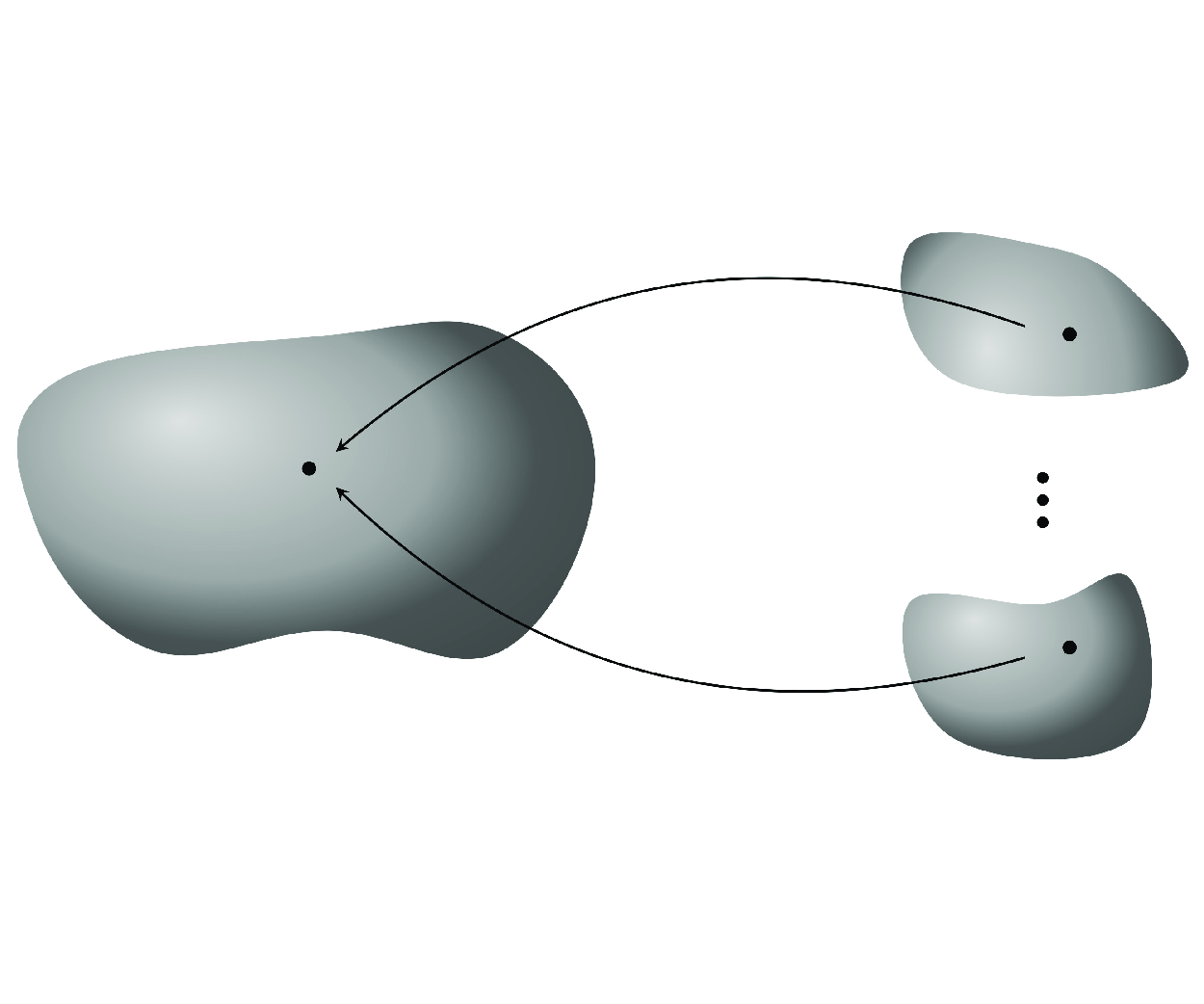
A unified framework for N-phase Navier–Stokes Cahn–Hilliard Allen–Cahn mixture models with non-matching densities
-
- Journal:
- Journal of Fluid Mechanics / Volume 1013 / 25 June 2025
- Published online by Cambridge University Press:
- 19 June 2025, A26
-
- Article
-
- You have access
- Open access
- HTML
- Export citation
Appendices: - Vector Calculus
-
- Book:
- Electromagnetism
- Published online:
- 26 June 2025
- Print publication:
- 19 June 2025, pp 337-338
-
- Chapter
- Export citation
4 - Electrodynamics
-
- Book:
- Electromagnetism
- Published online:
- 26 June 2025
- Print publication:
- 19 June 2025, pp 107-141
-
- Chapter
- Export citation
8 - Electromagnetism in Matter
-
- Book:
- Electromagnetism
- Published online:
- 26 June 2025
- Print publication:
- 19 June 2025, pp 273-336
-
- Chapter
- Export citation
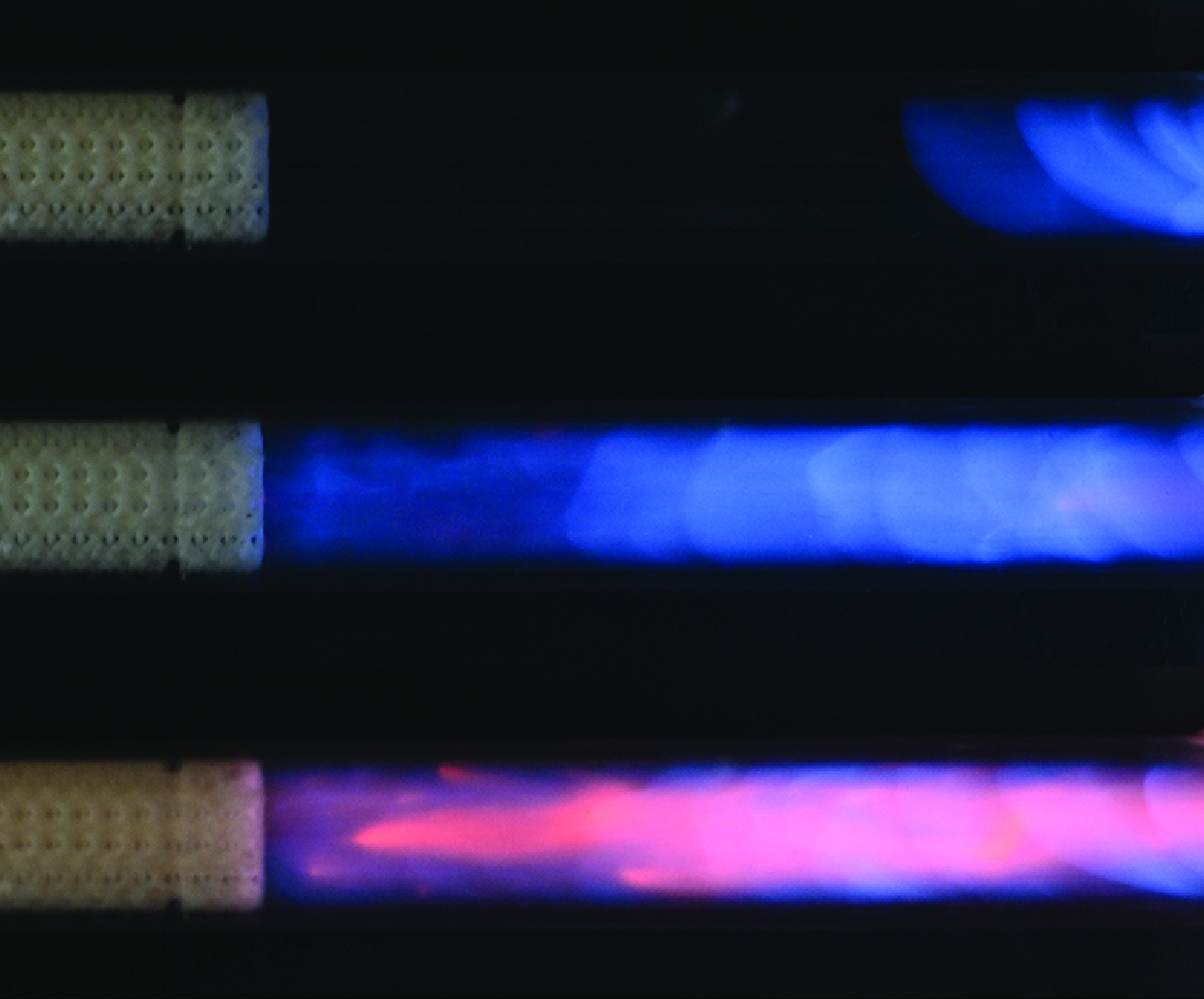
Mitigation of thermoacoustic instabilities via porous plugs
-
- Journal:
- Journal of Fluid Mechanics / Volume 1013 / 25 June 2025
- Published online by Cambridge University Press:
- 18 June 2025, A25
-
- Article
-
- You have access
- Open access
- HTML
- Export citation

Dynamics of cavitation bubbles near a gas-entrapping rigid surface
-
- Journal:
- Journal of Fluid Mechanics / Volume 1013 / 25 June 2025
- Published online by Cambridge University Press:
- 18 June 2025, A9
-
- Article
- Export citation
-
We investigate the dynamics of a cavitation bubble near rigid surfaces decorated with a single gas-entrapping hole to understand the competition between the attraction of the rigid and the repulsion of the free boundary. The dynamics of laser-induced bubbles near this gas-entrapping hole is studied as a function of the stand-off distance and diameter of the hole. Two kinds of toroidal collapses are observed that are the result of the collision of a wide microjet with the bubble wall. The bubble centroid displacement and the strength of the microjet are compared with the anisotropy parameter $\zeta$, which is derived from a Kelvin impulse analysis. We find that the non-dimensional displacement $\delta$ scales with $\zeta$.


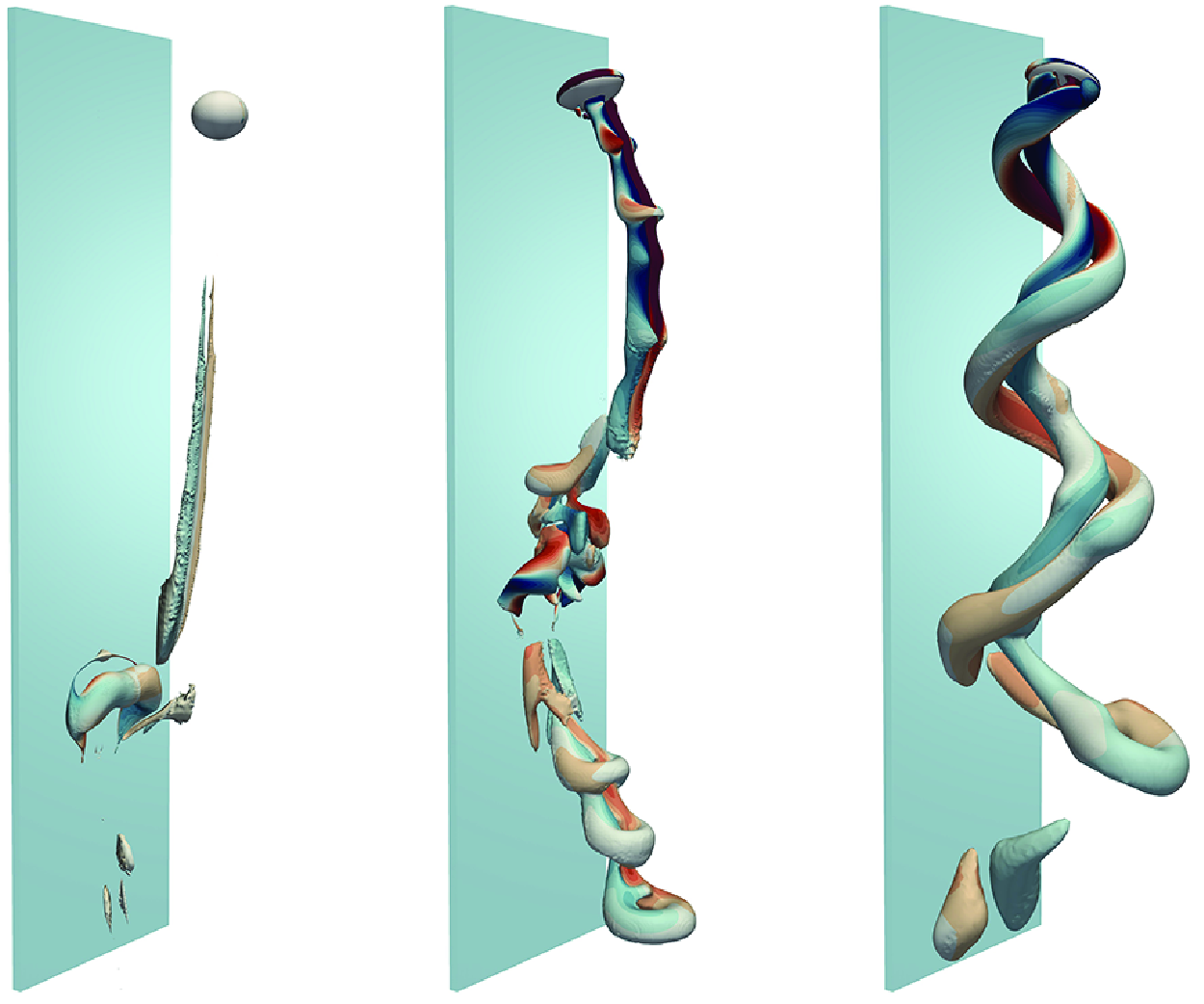
Lateral migration and bouncing of a deformable bubble rising near a vertical wall. Part 2. Highly inertial regimes
-
- Journal:
- Journal of Fluid Mechanics / Volume 1013 / 25 June 2025
- Published online by Cambridge University Press:
- 18 June 2025, A19
-
- Article
-
- You have access
- Open access
- HTML
- Export citation
-
The fate of deformable buoyancy-driven bubbles rising near a vertical wall under highly inertial conditions is investigated numerically. In the absence of path instability, simulations reveal that, when the Galilei number, $Ga$, which represents the buoyancy-to-viscous force ratio, exceeds a critical value, bubbles escape from the near-wall region after one to two bounces, while at smaller $Ga$ they perform periodic bounces without escaping. The escape mechanism is rooted in the vigorous rotational flow that forms around a bubble during its bounce at high enough $Ga$, resulting in a Magnus-like repulsive force capable of driving it away from the wall. Path instability takes place with bubbles whose Bond number, the buoyancy-to-capillary force ratio, exceeds a critical $Ga$-dependent value. Such bubbles may or may not escape from the wall region, depending on the competition between the classical repulsive wake–wall interaction mechanism and a specific wall-ward trapping mechanism. The latter results from the reduction of the bubble oblateness caused by the abrupt drop of the rise speed when the bubble–wall gap becomes very thin. Owing to this transient shape variation, bubbles exhibiting zigzagging motions with a large enough amplitude experience larger transverse drag and virtual mass forces when departing from the wall than when returning to it. With moderately oblate bubbles, i.e. in an intermediate Bond number range, this effect is large enough to counteract the repulsive interaction force, forcing such bubbles to perform a periodic zigzagging-like motion at a constant distance from the wall.


A rasterization-based ray-tracing method for laser–plasma interactions
- Part of
-
- Journal:
- High Power Laser Science and Engineering / Volume 13 / 2025
- Published online by Cambridge University Press:
- 18 June 2025, e37
-
- Article
-
- You have access
- Open access
- HTML
- Export citation
Behavioral modelling of RF power amplifiers using a time-domain characterization approach – ERRATUM
-
- Journal:
- International Journal of Microwave and Wireless Technologies / Volume 17 / Issue 3 / April 2025
- Published online by Cambridge University Press:
- 18 June 2025, p. 560
-
- Article
-
- You have access
- HTML
- Export citation
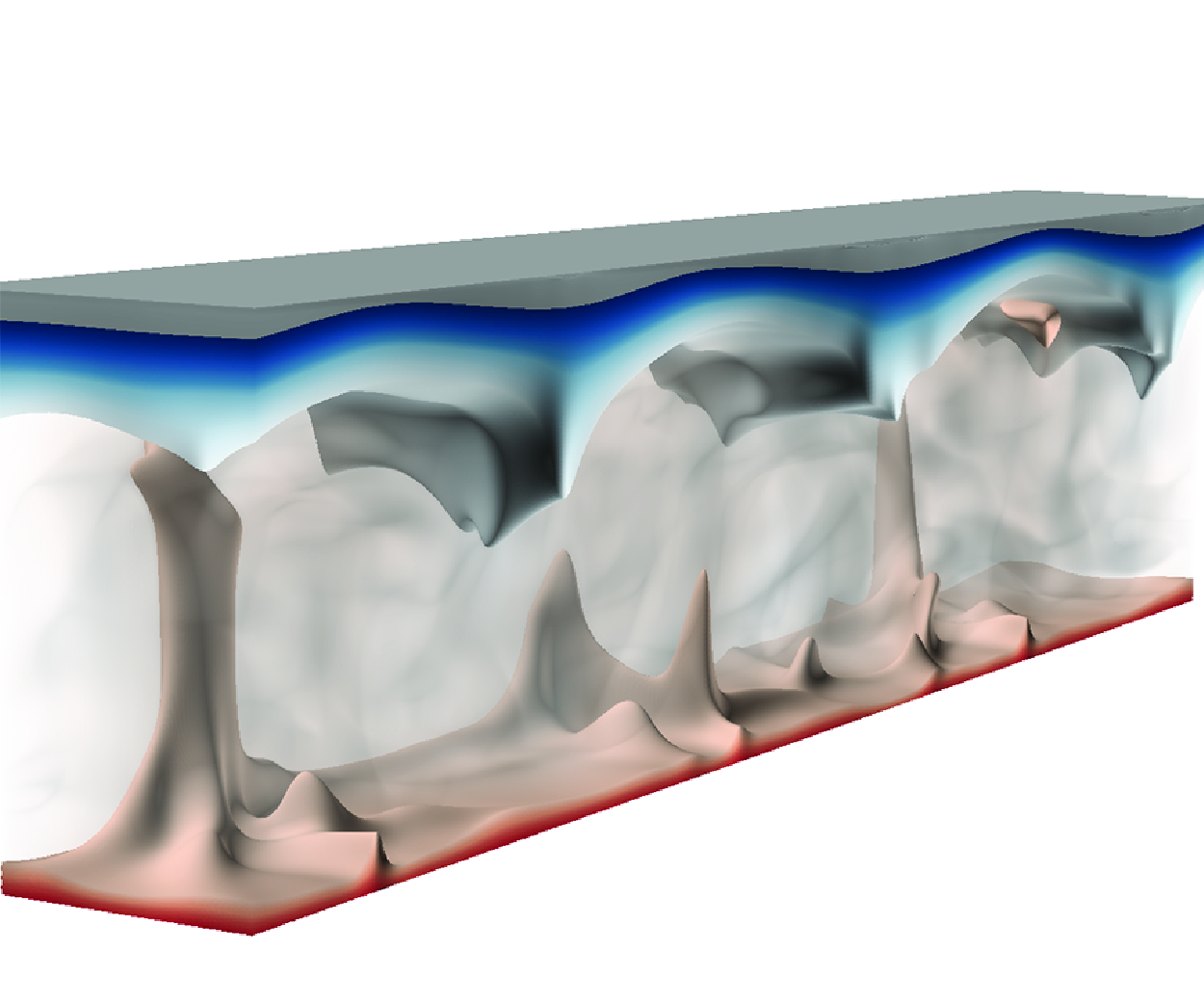
The effects of double diffusive convection on the basal melting of solid ice in seawater
-
- Journal:
- Journal of Fluid Mechanics / Volume 1013 / 25 June 2025
- Published online by Cambridge University Press:
- 18 June 2025, A24
-
- Article
- Export citation
Machine learning and partial differential equations: benchmark, simplify, and discover
-
- Journal:
- Data-Centric Engineering / Volume 6 / 2025
- Published online by Cambridge University Press:
- 18 June 2025, e29
-
- Article
-
- You have access
- Open access
- HTML
- Export citation
Design, development, and evaluation of a novel shoulder phantom testbed for analyzing interaction forces and reachability of wearable exoskeletons
-
- Journal:
- Wearable Technologies / Volume 6 / 2025
- Published online by Cambridge University Press:
- 17 June 2025, e24
-
- Article
-
- You have access
- Open access
- HTML
- Export citation
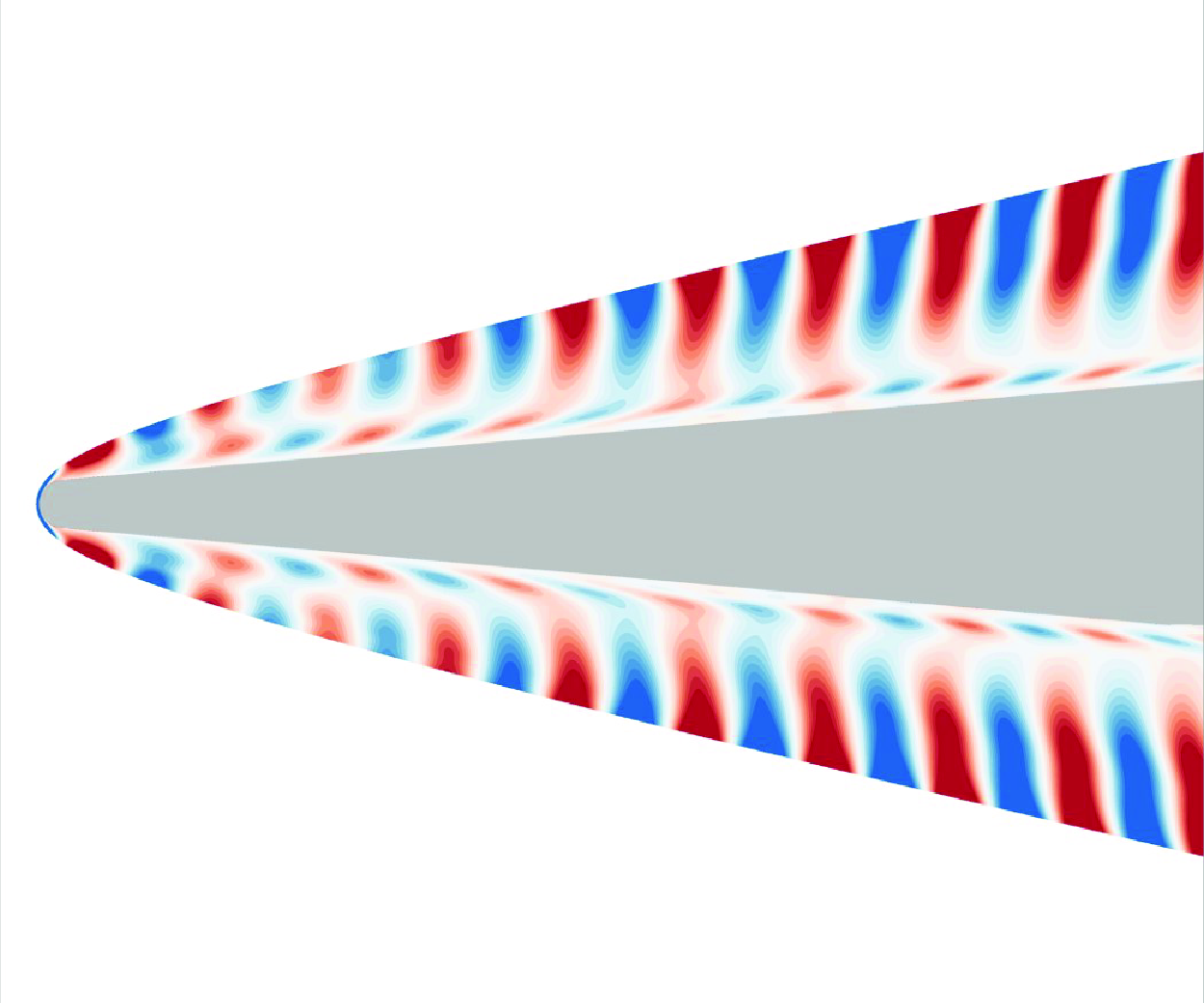
Hypersonic boundary-layer receptivity to free-stream acoustic waves with thermochemical non-equilibrium effects
-
- Journal:
- Journal of Fluid Mechanics / Volume 1013 / 25 June 2025
- Published online by Cambridge University Press:
- 17 June 2025, A16
-
- Article
- Export citation
-
Many hypersonic flows of interest feature high free-stream stagnation enthalpies, which lead to high flow-field temperatures and thermochemical non-equilibrium (TCNE) effects, such as finite-rate chemistry and vibrational excitation. However, very few studies have considered receptivity for high-enthalpy flows. In this paper, we investigate the receptivity of a high-enthalpy Mach 5 straight-cone boundary layer to slow and fast acoustic free-stream waves using direct numerical simulation alongside linear stability theory and the linear parabolised stability equations. In addition, we investigate the TCNE effect on receptivity by comparing results between the TCNE gas model and a thermochemically frozen gas model. The dominant instability mechanism for this flow configuration is found to be Mack’s second mode, with the unstable mode being the fast mode. Second-mode receptivity coefficients are obtained for a number of frequencies. For free-stream slow acoustic waves, these receptivity coefficients are found to generally increase with frequency. For a small subset of the considered frequency range, the receptivity coefficients corresponding to free-stream fast acoustic waves are found to be several times larger than for free-stream slow acoustic waves. The TCNE effects are found to lead to higher peak $N$-factors while also reducing second-mode receptivity coefficients, indicating that TCNE effects have competing impacts on receptivity versus stability for the considered frequencies.

Numerical simulation on the influence of aerothermodynamics on forward-facing cavities in hypersonic rarefied flow
-
- Journal:
- The Aeronautical Journal / Volume 129 / Issue 1339 / September 2025
- Published online by Cambridge University Press:
- 17 June 2025, pp. 2575-2602
-
- Article
- Export citation
-
The cavities over the re-entry vehicle alter the aerothermodynamic properties, leading to enhanced thermal protection as well as effective aerothermodynamic performance. This paper investigates the estimation of aerothermodynamic properties over a re-entry vehicle with different types of cavities on the frontal face of the vehicle. The direct simulation Monte Carlo (DSMC) simulation of hypersonic flow over the Crew module Atmospheric Re-entry Experiment (CARE) capsule was simulated with the re-entry velocity of 7,422 m/s and the freestream temperature of 225 K at an altitude of 110 km. A transient flow Knudsen number of 0.1 and air consists of 78.09% of ${N_2}$ and 21.91% of ${O_2}$ are used in the simulations. Two types of cavities, namely trapezoidal and the semi-circular cavity on the frontal face of the re-entry vehicle with different length to depth ratios, are analysed. The simulation results show that the recirculation regions are formed at the base of the cavity in the case of a cavity with sharp corners, whereas in the case of a cavity with rounded corners, the recirculation formed at the lip of the cavity for both trapezoidal and the semi-circular cavities. Increasing the length and depth of the cavity leads to smaller decrement in the drag when compared to the capsule without cavity for both trapezoidal and the semi-circular cavities. The heat flux is low for a cavity with the small L/D ratio (L/D = 0.5) for both fixed length and depth for trapezoidal-type cavity, whereas for large L/D ratio (L/D = 1.5) increasing the length of the cavity increases the overall heat flux.


Dynamics-based realistic simulator for rotation rate estimation of quadcopter drones with multistatic radar
-
- Journal:
- International Journal of Microwave and Wireless Technologies / Volume 17 / Issue 9 / November 2025
- Published online by Cambridge University Press:
- 17 June 2025, pp. 1664-1679
-
- Article
-
- You have access
- Open access
- HTML
- Export citation
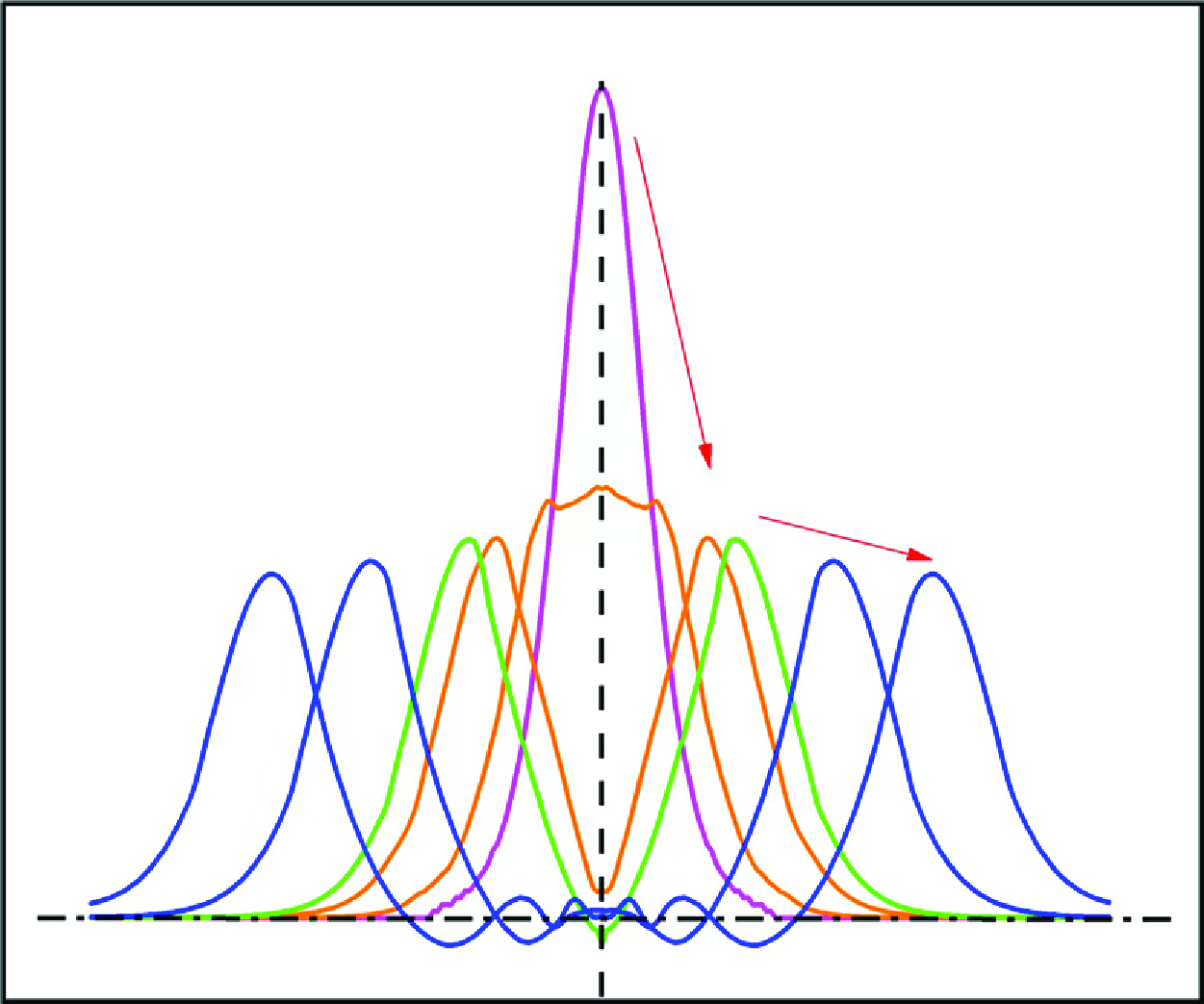
Bulge evolution on shallow water
-
- Journal:
- Journal of Fluid Mechanics / Volume 1013 / 25 June 2025
- Published online by Cambridge University Press:
- 16 June 2025, A15
-
- Article
- Export citation
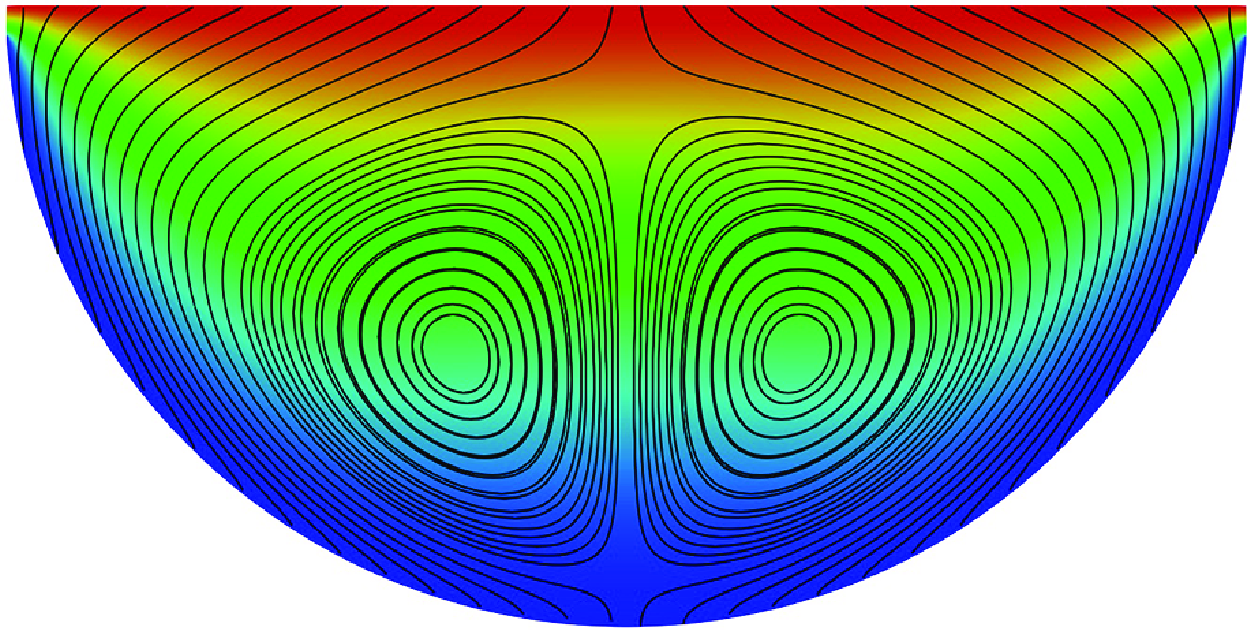
Suppressing instabilities in mixed baroclinic flow using an actuation based on receptivity
-
- Journal:
- Journal of Fluid Mechanics / Volume 1013 / 25 June 2025
- Published online by Cambridge University Press:
- 16 June 2025, A20
-
- Article
-
- You have access
- Open access
- HTML
- Export citation
Study on the dynamic modelling method of a coilable mast based on hinge equivalent rotational stiffness identification
-
- Journal:
- The Aeronautical Journal / Volume 129 / Issue 1340 / October 2025
- Published online by Cambridge University Press:
- 16 June 2025, pp. 2671-2690
-
- Article
- Export citation
