Refine search
Actions for selected content:
212742 results in Engineering

Asymptotic approximations for convection onset with Ekman pumping at low wavenumbers
-
- Journal:
- Journal of Fluid Mechanics / Volume 1003 / 25 January 2025
- Published online by Cambridge University Press:
- 10 January 2025, A3
-
- Article
-
- You have access
- Open access
- HTML
- Export citation

Fundamentals of Turbulent Flows
-
- Published online:
- 09 January 2025
- Print publication:
- 12 December 2024
-
- Textbook
- Export citation

Information Theory
- From Coding to Learning
-
- Published online:
- 09 January 2025
- Print publication:
- 02 January 2025
-
- Textbook
- Export citation

Electromagnetic Fields for Engineers
-
- Published online:
- 09 January 2025
- Print publication:
- 26 September 2024
-
- Textbook
- Export citation

Optimization Models in Electricity Markets
-
- Published online:
- 09 January 2025
- Print publication:
- 13 June 2024
-
- Textbook
- Export citation
5 - Digital Signal Processing for RFID Applications
-
- Book:
- Radio Frequency Identification Engineering
- Published online:
- 02 January 2025
- Print publication:
- 09 January 2025, pp 93-130
-
- Chapter
- Export citation
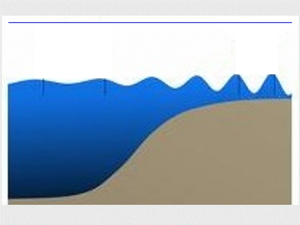
Transformation of small-amplitude internal waves passing over a bottom step in a two-layer fluid
-
- Journal:
- Journal of Fluid Mechanics / Volume 1002 / 10 January 2025
- Published online by Cambridge University Press:
- 09 January 2025, A49
-
- Article
-
- You have access
- Open access
- HTML
- Export citation
4 - An Overview of the ISO 18000-63 Standard
-
- Book:
- Radio Frequency Identification Engineering
- Published online:
- 02 January 2025
- Print publication:
- 09 January 2025, pp 77-92
-
- Chapter
- Export citation

Regimes of near-inertial wave dynamics
-
- Journal:
- Journal of Fluid Mechanics / Volume 1002 / 10 January 2025
- Published online by Cambridge University Press:
- 09 January 2025, A22
-
- Article
-
- You have access
- Open access
- HTML
- Export citation
-
When atmospheric storms pass over the ocean, they resonantly force near-inertial waves (NIWs), internal waves with a frequency close to the local Coriolis frequency $f$. It has long been recognised that the evolution of NIWs is modulated by the ocean's mesoscale eddy field. This can result in NIWs being concentrated into anticyclones which provide an efficient pathway for NIW propagation to depth. Here we analyse the eigenmodes of NIWs in the presence of mesoscale eddies and heavily draw on parallels with quantum mechanics. Whether the eddies are effective at modulating the behaviour of NIWs depends on the wave dispersiveness $\varepsilon ^2 = f\lambda ^2/\varPsi$, where $\lambda$ is the deformation radius and $\varPsi$ is a scaling for the eddy streamfunction. If $\varepsilon \gg 1$, NIWs are strongly dispersive, and the waves are only weakly affected by the eddies. We calculate the perturbations away from a uniform wave field and the frequency shift away from $f$. If $\varepsilon \ll 1$, NIWs are weakly dispersive, and the wave evolution is strongly modulated by the eddy field. In this weakly dispersive limit, the Wentzel–Kramers–Brillouin approximation, from which ray tracing emerges, is a valid description of the NIW evolution even if the large-scale atmospheric forcing apparently violates the requisite assumption of a scale separation between the waves and the eddies. The large-scale forcing excites many wave modes, each of which varies on a short spatial scale and is amenable to asymptotic analysis analogous to the semi-classical analysis of quantum systems. The strong modulation of weakly dispersive NIWs by eddies has the potential to modulate the energy input into NIWs from the wind, but we find that this effect should be small under oceanic conditions.


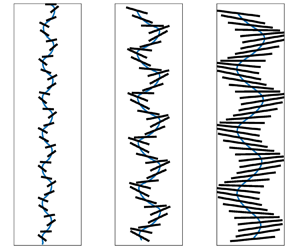
Fluttering motion of a confined cylinder falling freely in fluid at rest
-
- Journal:
- Journal of Fluid Mechanics / Volume 1002 / 10 January 2025
- Published online by Cambridge University Press:
- 09 January 2025, A46
-
- Article
-
- You have access
- Open access
- HTML
- Export citation
-
We investigate experimentally the planar paths displayed by cylinders falling freely in a thin-gap cell containing liquid at rest, by varying the elongation ratio and the Archimedes number of the cylinders, and the solid-to-fluid density ratio. In the investigated conditions, the oscillatory falling motion features two main characteristics: the mean fall velocity $\overline {u_v}$ does not scale with the gravitational velocity, which overestimates $\overline {u_v}$ and is unable to capture the influence of the density ratio on it; and high-amplitude oscillations of the order of $\overline {u_v}$ are observed for both translational and rotational velocities. To model the body behaviour, we propose a force balance, including proper and added inertia terms, the buoyancy force and vortical contributions accounting for the production of vorticity at the body surface and its interaction with the cell walls. Averaging the equations over a temporal period provides a mean force balance that governs the mean fall velocity of the cylinder, revealing that the coupling between the translational and rotational velocity components induces a mean upward inertial force responsible for the decrease of $\overline {u_v}$. This mean force balance also provides a normalization for the frequency of oscillation of the cylinder in agreement with experimental measurements. We then consider the instantaneous force balance experienced by the body, and propose three contributions for the modelling of the vortical force. These can be interpreted as drag, lift and history forces, and their dependence on the control parameters is adjusted on the basis of the experimental measurements.


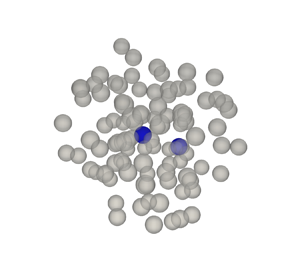
Accurate models of the added mass force of a uniform random distribution of spherical particles or bubbles
-
- Journal:
- Journal of Fluid Mechanics / Volume 1002 / 10 January 2025
- Published online by Cambridge University Press:
- 09 January 2025, A21
-
- Article
-
- You have access
- Open access
- HTML
- Export citation
8 - Self-Jamming in Backscatter Radio Systems
-
- Book:
- Radio Frequency Identification Engineering
- Published online:
- 02 January 2025
- Print publication:
- 09 January 2025, pp 175-197
-
- Chapter
- Export citation
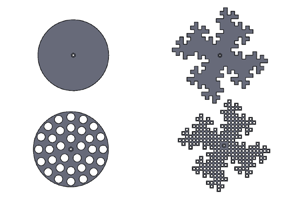
Turbulent shear flow without vortex shedding, Reynolds shear stress and small-scale intermittency
-
- Journal:
- Journal of Fluid Mechanics / Volume 1002 / 10 January 2025
- Published online by Cambridge University Press:
- 09 January 2025, A51
-
- Article
-
- You have access
- Open access
- HTML
- Export citation
Modelling dispersion in stratified turbulent flows as a resetting process
-
- Journal:
- Journal of Fluid Mechanics / Volume 1002 / 10 January 2025
- Published online by Cambridge University Press:
- 09 January 2025, A48
-
- Article
-
- You have access
- Open access
- HTML
- Export citation
-
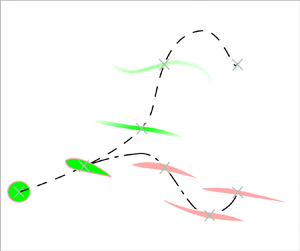
In freely decaying stably stratified turbulent flows, numerical evidence shows that the horizontal displacement of Lagrangian tracers is diffusive while the vertical displacement converges towards a stationary distribution, as shown numerically by Kimura & Herring (J. Fluid Mech., vol. 328, 1996, pp. 253–269). Here, we develop a stochastic model for the vertical dispersion of Lagrangian tracers in stably stratified turbulent flows that aims to replicate and explain the emergence of a stationary probability distribution for the vertical displacement of such tracers. More precisely, our model is based on the assumption that the dynamical evolution of the tracers results from the competing effects of buoyancy forces that tend to bring a vertically perturbed fluid parcel (carrying tracers) to its equilibrium position and turbulent fluctuations that tend to disperse tracers. When the density of a fluid parcel is allowed to change due to molecular diffusion, a third effect needs to be taken into account: irreversible mixing. Indeed, ‘mixing’ dynamically and irreversibly changes the equilibrium position of the parcel and affects the buoyancy force that ‘stirs’ it on larger scales. These intricate couplings are modelled using a stochastic resetting process (Evans & Majumdar, Phys. Rev. Lett., vol. 106, issue 16, 2011, 160601) with memory. More precisely, Lagrangian tracers in stratified turbulent flows are assumed to follow random trajectories that obey a Brownian process. In addition, their stochastic paths can be reset to a given position (corresponding to the dynamically changing equilibrium position of a density structure containing the tracers) at a given rate. Scalings for the model parameters as functions of the molecular properties of the fluid and the turbulent characteristics of the flow are obtained by analysing the dynamics of an idealised density structure. Even though highly idealised, the model has the advantage of being analytically solvable. In particular, we show the emergence of a stationary distribution for the vertical displacement of Lagrangian tracers. We compare the predictions of this model with direct numerical simulation data at various Prandtl numbers $Pr$, the ratio of kinematic viscosity to molecular diffusion.

7 - A Software-Defined RFID Reader Design
-
- Book:
- Radio Frequency Identification Engineering
- Published online:
- 02 January 2025
- Print publication:
- 09 January 2025, pp 148-174
-
- Chapter
- Export citation
Dedication
-
- Book:
- Radio Frequency Identification Engineering
- Published online:
- 02 January 2025
- Print publication:
- 09 January 2025, pp v-vi
-
- Chapter
- Export citation

On wave-driven propulsion – CORRIGENDUM
-
- Journal:
- Journal of Fluid Mechanics / Volume 1002 / 10 January 2025
- Published online by Cambridge University Press:
- 09 January 2025, E1
-
- Article
-
- You have access
- Open access
- HTML
- Export citation
Foreword
-
- Book:
- Radio Frequency Identification Engineering
- Published online:
- 02 January 2025
- Print publication:
- 09 January 2025, pp x-xi
-
- Chapter
- Export citation
10 - Unconventional Wireless Power Transmission
-
- Book:
- Radio Frequency Identification Engineering
- Published online:
- 02 January 2025
- Print publication:
- 09 January 2025, pp 212-231
-
- Chapter
- Export citation

A statistically stationary minimal flow unit for self-similar Rayleigh–Taylor turbulence in the mode-coupling limit
-
- Journal:
- Journal of Fluid Mechanics / Volume 1002 / 10 January 2025
- Published online by Cambridge University Press:
- 09 January 2025, A19
-
- Article
- Export citation
